




Abstract
To prevent juvenile delinquency, there is growing interest in the use of sports-based interventions. To date, there is little empirical research that provides insights into for whom, how, and when sports-based crime prevention programs are most effective. Therefore, the current study assessed which youth, coach, and context factors were predictive of change in risk factors and protective factors for delinquency in a sports-based crime prevention program for at-risk adolescents. Participants (N = 155) and their teachers filled in questionnaires about risk and protective factors for delinquency at the start of the intervention and 13 months later. In addition, the coaches and participants filled in questionnaires about the predictors of intervention success. The youths showed significant improvements over the course of the intervention. Various youth, coach, and context factors (e.g., the type of education of youth and the sociomoral climate at the sports club) were associated to change in the outcome variables.
Keywords
Introduction
Since ancient history, sports are thought to have a positive influence on the development of youths. This belief can even be traced back to Plato, who saw sports as an important part of education with regard to building character (Reid, 2007). During the mid-19th century, the British, who adopted this belief, introduced sports participation in public schools to positively stimulate youths’ character development, such as their confidence, self-reliance, and responsibility (Hargreaves, 1986; D. L. L. Shields & Bredemeier, 1995). Only more recently, the attention of youth policy makers has shifted toward the use of sports in preventing juvenile delinquency.
Sports-based interventions to prevent delinquent behaviors in at-risk adolescents have been widely implemented by local governments and institutions (Cameron & MacDougall, 2000; Kelly, 2013; Nichols, 2007; Sandford, Armour, & Warmington, 2006). To date, there is a growing interest of scholars in determining whether sports-based interventions can be effective in preventing delinquent behaviors in youth. Nonexperimental studies have reported on the success of sports-based crime prevention programs (Hartmann & Depro, 2006; McMahon & Belur, 2013; Theeboom, De Knop, & Wylleman, 2008), but these studies do not permit causal inferences. More recently, the first quasiexperimental study on the effects of a sports-based crime prevention program found positive results on juvenile delinquency (Spruit, Hoffenaar, Van der Put, Van Vugt, & Stams, 2016). Over and above experimental effectiveness research, it is important to examine for whom, how, and under which conditions sports-based crime prevention programs are effective (Coatsworth & Conroy, 2007). Researchers, intervention developers, and practitioners should identify best practices and general principles that can help guide and improve the development and implementation of sports-based interventions (Coatsworth & Conroy, 2007). Therefore, the current study focuses on identifying predictors of intervention success of a sports-based intervention aimed at preventing juvenile delinquency in at-risk adolescents.
Several theories have tried to explain why sports-based interventions can be effective in preventing juvenile delinquency. These theories do not so much assume that sports participation in itself prevents juvenile delinquency but emphasize the learning opportunities and opportunities to form social bonds within the sports context that contribute to the prevention of juvenile delinquency (Agnew & Petersen, 1989; Lawson, 2005; D. L. L. Shields & Bredemeier, 1995). For example, several scholars have argued that when youths participate in sports activities, they learn to obey rules and authority, and learn morality, self-control, conflict resolution, skills to cope with disappointments, and to cooperate with others (Arnold, 1994; Hansen, Larson, & Dworkin, 2003; Kreager, 2007; D. L. L. Shields & Bredemeier, 1995). Practicing these positive skills and virtues within the sports context may protect against the development of delinquent behavior (Sage, 1990; Segrave, 1983; Spruit, Van Vugt, Van der Put, Van der Stouwe, & Stams, 2016). Furthermore, it is assumed that sports participation strengthens social bonds to society (Agnew & Petersen, 1989), which in turn reduces the chances of developing delinquent behaviors (Hirschi, 1969). Through the attachment to positive members of society and commitment to conventional activities, youths may desist from delinquent behaviors (Hirschi, 1969; Hoeve et al., 2012). For example, by participating in sports activities, youths become members of a team, generally supervised by a coach who is closely related to all members. By being committed to conventional activities, such as sports, youths may refrain from delinquent acts, as delinquency may compromise their opportunity to participate in sports (Spruit, Van Vugt, et al., 2016). Thus, because of the learning opportunities and creation of social bonds within the sports contexts, it is expected that risk factors for delinquency (such as low self-control and antisocial attitudes; Andrews & Bonta, 2010) are reduced and protective factors for delinquency (such as positive peer interaction; Dishion & Tipsord, 2011) are promoted.
Previous research on the relation between the sports environment and behavior of youths provides insights into the conditions under which sports-based interventions can be effective and how (i.e., what coaching behaviors) to optimize the potential positive effects of these interventions. Rutten and colleagues (Rutten et al., 2008; Rutten et al., 2007) found that several aspects of the sports environment were related to the level of off-field antisocial and prosocial behaviors of adolescent athletes. More precisely, higher quality of the coach–athlete relationships, better sociomoral atmosphere within the team, higher level of fair play attitudes by the coaches and the athletes, and more relational support of the coach were all related to lower levels of antisocial behavior and higher levels of prosocial behavior (Rutten et al., 2008; Rutten et al., 2007).
Positive effects of sports participation on the development of youths may be expected when there is a pedagogical sports environment, because many scholars have found a relation between the quality of the sports climate and the behavior of athletes (Gano-Overway et al., 2009; Gould, Flett, & Lauer, 2012; Kavussanu, 2006; Ntoumanis, Taylor, & Thøgersen-Ntoumani, 2012). We refer to an adequate pedagogical sports climate if the sports environment is beneficial for pedagogical outcomes, also referred to by the terms sociomoral climate (Rutten et al., 2007), caring climate (Gano-Overway et al., 2009), or motivational climate (Ntoumanis et al., 2012; Smith, Cumming, & Smoll, 2008). A pedagogical sports climate is characterized by a “fair play” mentality, in which the social and personal development of athletes is more important than winning the game, positive relationships between peers and between the athletes and coaches, mutual trust and respect for all the actors in the sports environment, and shared prosocial norms about acceptable behaviors within the sports context (Gano-Overway et al., 2009; Guivernau & Duda, 2002; Rutten et al., 2007).
The sports coach plays a central role in providing a pedagogical sports environment (Côté & Gilbert, 2009; Hodge & Lonsdale, 2011; Morgan & Bush, 2016; Riley, Anderson-Butcher, Logan, Newman, & Davis, 2016). Educational skills and the ability to be sensitive and responsive to the developmental needs of adolescent athletes are important characteristics of coaches, especially in dealing with socially vulnerable youths (Haudenhuyse, Theeboom, & Coalter, 2012; Super, Verkooijen, & Koelen, 2016; Vierimaa, Erickson, Côté, & Gilbert, 2012). For example, Allan and Côté (2016) found that calm, inquisitive coaching behaviors were associated with more prosocial and less antisocial behaviors in adolescent athletes, compared with intense, hustling coaching behaviors. Altogether, there are indications that when the sports context is a pedagogical environment and the coach is supportive and responsive to the educational needs of the child, youths may have more positive leaning opportunities and develop stronger bonds to society, which in turn reduces the chance of delinquency.
To date, we have little to no insight into for whom sports-based crime prevention programs are most effective due to the overall lack of effect studies on these programs. Within the broader field of crime prevention, research has shown that different participant characteristics, such as gender, age, and ethnicity, moderate the effects of crime prevention programs (De Vries, 2016; Hawkins, Kosterman, Catalano, Hill, & Abbott, 2005; Reynolds, Temple, Robertson, & Mann, 2001). For example, Hawkins and colleagues (2005) found significant, positive effects of the Seattle Social Development Project on arrest rates for men but negative intervention effect for women. Therefore, it is important to examine whether the effects of sports-based crime prevention programs are influenced by participant characteristics.
The current study aims to gain insights into how, under which conditions, and for whom sports-based interventions are most effective. “Only You Decide Who You Are” [Alleen Jij Bepaalt Wie Je Bent (AJB)] is a Dutch sports-based intervention providing team sports training at local sports clubs to adolescents at risk of developing delinquent behaviors. The primary aim of AJB is to prevent juvenile delinquency by reducing risk factors and increasing protective factors for delinquency in the participating adolescents. The definition of juvenile delinquency in this article is behavior that is prohibited by Dutch criminal law. This includes theft, burglary, assault, robbery with violence, vandalism, graffiti, sex offenses, and arson but excludes, for example, cannabis possession, underage drinking, and truancy.
In this study, predictors of intervention success (i.e., reduction of risk factors and promotion of protective factors for delinquency) are identified. We collected data about risk and protective factors for delinquency at the start of AJB (T1) and approximately 13 months later (T2) using self- and teacher reports. The following outcomes were assessed: conduct problems, aggression, acceptance of authority, friends’ participation in delinquent behaviors, perceived peer pressure, resistance to social pressure, prosocial behavior, and academic engagement. These risk and protective factors for juvenile delinquency were selected based on previous research on predictors of juvenile delinquency and the preventive effects of sports on juvenile delinquency (Assink et al., 2015; Kreager, 2007; Loeber, Burke, & Pardini, 2009; Lösel & Farrington, 2012; Shields & Bredemeier, 1995). In addition, at T2, the AJB-coaches and participants filled in questionnaires about the different predictors of change in risk and protective factors for delinquency. Youth-related characteristics assessed for their predictive power of intervention success were age, sex, ethnicity, and type of education. Coach-related characteristics were level of education of the coach, previous experience with at-risk adolescents, whether the coach made rules about behavior during the training, motivated youths to participate in prosocial activity, and provided individual guidance. Finally, context-related characteristics were the sociomoral climate at the club, the quality of the coach–athlete relationship, and the type of sports.
Method
Participants
The study was conducted at 13 community-based sports clubs where the program AJB was implemented. Participants of this study were 155 adolescents (91.6 % male; between 12 and 18 years of age) who participated in AJB, their teachers, and their sports coaches. All participants attended the lowest level of Dutch regular education—(lower vocational education [VMBO]; basis and kader)—or attended a form of special education for youths with learning disabilities (practical training [Praktijkonderwijs]). Dutch schools for practical training have the following admittance criteria: (a) an IQ between 55 and 85 and (b) learning delays of 50% or more in at least two major subjects (e.g., mathematics or reading comprehension). AJB is targeting (mostly male) adolescents from disadvantaged neighborhoods with high crime rates involved in special education or the lowest educational level. In a previous study on this sample, it was concluded that the sample was at risk of delinquency due to elevated levels of conduct problems, aggression, and procriminal attitudes, more involvement with delinquent peers, and lower levels of prosocial behavior compared with Dutch norm groups (Spruit, Van Vugt, Van der Put, Stams, & Bloch, 2015).
In total, 38 AJB-coaches (94.7% male, between 18 and 56 years of age, with M = 31.45 years old, and 47.4% Dutch ethnic background) participated in the study. The sports coaches were working at the different sports clubs where AJB was implemented.
Procedure
Participants for this study were recruited at the sports clubs where AJB was implemented. At the start of the first season of AJB in March 2014 (T1), 247 participants of AJB and their teachers filled in questionnaires about the outcome measures in this study (risk and protective factors for delinquency). At the end of the second season (T2; average of 13.2 months after the start of AJB), 155 participants of AJB and their teachers filled in the same questionnaire about the outcome measures of interest for the current study. In addition, the adolescents were asked about context factors of AJB (see “Measures” section). Only the adolescents who completed the questionnaires at both measurement occasions were included in the current study. The AJB-coaches filled in questionnaires at T2 about their characteristics and their coaching behaviors during AJB.
All study participants were asked for consent. Also, the parents of the adolescents were informed about the study. Three participants were excluded from the study because either they refused to participate themselves or their caregivers did not give consent.
Intervention
AJB is a sports-based intervention targeting adolescents at risk of developing delinquent behavior. AJB was developed by the Dutch Ministry of Security and Justice to prevent juvenile delinquency. Through sports clinics given by professional athletes at selected schools, adolescents were encouraged to participate in AJB. In AJB, partnerships are created between the schools and the local sports clubs. Each school has a connection with a sports club that offers one type of sports. Partnerships between schools and sports clubs are based on geography (the sports club had to be on biking distance from the school), the type of sports (soccer, basketball, or baseball), and the assessment of the Ministry of Security and Justice if the particular sports club would be an appropriate location for the intervention. Therefore, the youths do not have a choice in the type of sports. If the youths were interested in participating in AJB, they could become a member of the locally partnered sports club. Contribution fees and sports materials were covered by the Ministry of Security and Justice. At the sports clubs, adolescents participated in (indoor) soccer, baseball, or basketball training in special AJB-teams. The Ministry of Security and Justice selected the coaches on their ability to act as a role model and to adequately deal with the characteristics of at-risk adolescents. During the training, specific attention was given to behavioral difficulties of the participants. The aim of the training was to create an adequate, safe (educational) environment, with positive relationships between the coach and the participants. The coach had to be clear about desirable and undesirable behavior, and to set a good example. The participants were approached in a positive, respectful way and were motivated to participate in prosocial activities at the club. If necessary, the trainer provided individual guidance to the participants and discussed concerns about the behavior with the school. AJB-coordinators ensured good coordination between the schools and sport clubs. During the first sports season, the teams consisted only of participants of AJB. In the course of the second season, participants were encouraged to join the regular sports teams of the club if their behavior and development allowed this.
Measures
Outcome variables
In total, eight risk and protective factors for delinquency were assessed: conduct problems, aggression, acceptance of authority, friend’s participation in delinquent behaviors, perceived peer pressure, resistance to social pressure, prosocial behavior, and academic engagement.
Conduct problems
Teachers reported on their student’s conduct problems with the use of a subscale of the Dutch version of the Strenghts and Difficulties Questionnaire (SDQ; Van Widenfelt, Goedhart, Treffers, & Goodman, 2003). The five items had to be scored on a 3-point Likert-type scale (not true, somewhat true, and certainly true). Higher scores indicated more conduct problems. The Cronbach’s alphas were .73 and .77 for the two measurement occasions.
Aggression
Juveniles reported on their aggressive behaviors using the Overt aggression scale of the Dutch Adaptation of the Buss–Durkee Hostility Inventory (BDHI-D; Lange, Hoogendorn, Wiederspahn, & de Beurs, 2005). The BDHI-D presents 16 statements that were scored true or false. Higher scores indicated more aggression. Internal consistency was .64 and .71 at T1 and T2, respectively.
Acceptance of authority
Teachers and juveniles reported on the juvenile’s ability to accept authority using a subscale of the Tasks and Skills of Adolescents questionnaire (TVA; Van der Knaap, Beenker, & Bijl, 2004). The seven-item scale assessed how well adolescents deal with authority. With a 5-point Likert-type scale (ranging from does not apply to me at all to totally applies to me), the juveniles answered to what extent a statement applied to them, such as “I accept that there are people who have something to say about me.” The teacher scale ranged from does not apply to X to totally applies to X. Higher scores indicated better acceptance of authority. Cronbach’s alpha reliability coefficients of the self-report scale were .75 and .79, and of the teacher scale being .94 and .95.
Friends’ participation in delinquent behavior
To assess the involvement with deviant peers, a six-item scale of Megens and Weerman (2010) was used. The juveniles reported on how many of their friends (none, some or most or all of them) committed offenses. Higher scores indicated more delinquent friends. Internal consistency alpha coefficients were .82 and .85.
Peer pressure and support for delinquent behavior
Juveniles reported on perceived peer pressure and support for delinquent behavior by their friends on a six-item scale of Megens and Weerman (2010). For example, juveniles were asked whether their friends would find it funny if he or she showed deviant behavior. Answers were given on a 5-point Likert-type scale, ranging from completely agree to completely disagree. Higher scores indicated that youths experienced more peer pressure. Cronbach’s alpha reliabilities were .82 and .84.
Resistance to social pressure
The teachers and juveniles reported on the juvenile’s resistance to social pressure using a four-item subscale of the TVA (Van der Knaap et al., 2004). An example of an item is the following: “If a friend tries to convince me to do something I do not really want, then I refuse it.” Higher scores indicated more resistance to social pressure. Internal consistency alpha coefficients of the self-report scale were .77 and .88, and of the teacher scale being .89 and .93.
Prosocial behavior
To assess the level of prosocial behavior, the teachers and juveniles filled in a subscale of the SDQ (Van Widenfelt et al., 2003). Higher scores indicated more prosocial behavior. Cronbach’s alpha reliabilities of the self-report scale were .52 at T1 and .68 at T2, and of the teacher scale being .82 and .87. Because the internal validity of the SDQ Prosocial self-report was unacceptably low at T1 (α = .52), we excluded this scale from further analyses.
Academic engagement
The teachers and juveniles reported on the juvenile’s academic engagement using a subscale of the TVA (Van der Knaap et al., 2004). The scale consisted of six items, such as the following: “I spend the time I need to do my homework.” Higher scores indicated more academic engagement. Internal consistency alpha coefficients of the self-report scale were .83 and .84, and of the teacher scale being .89 and .90.
Predictors
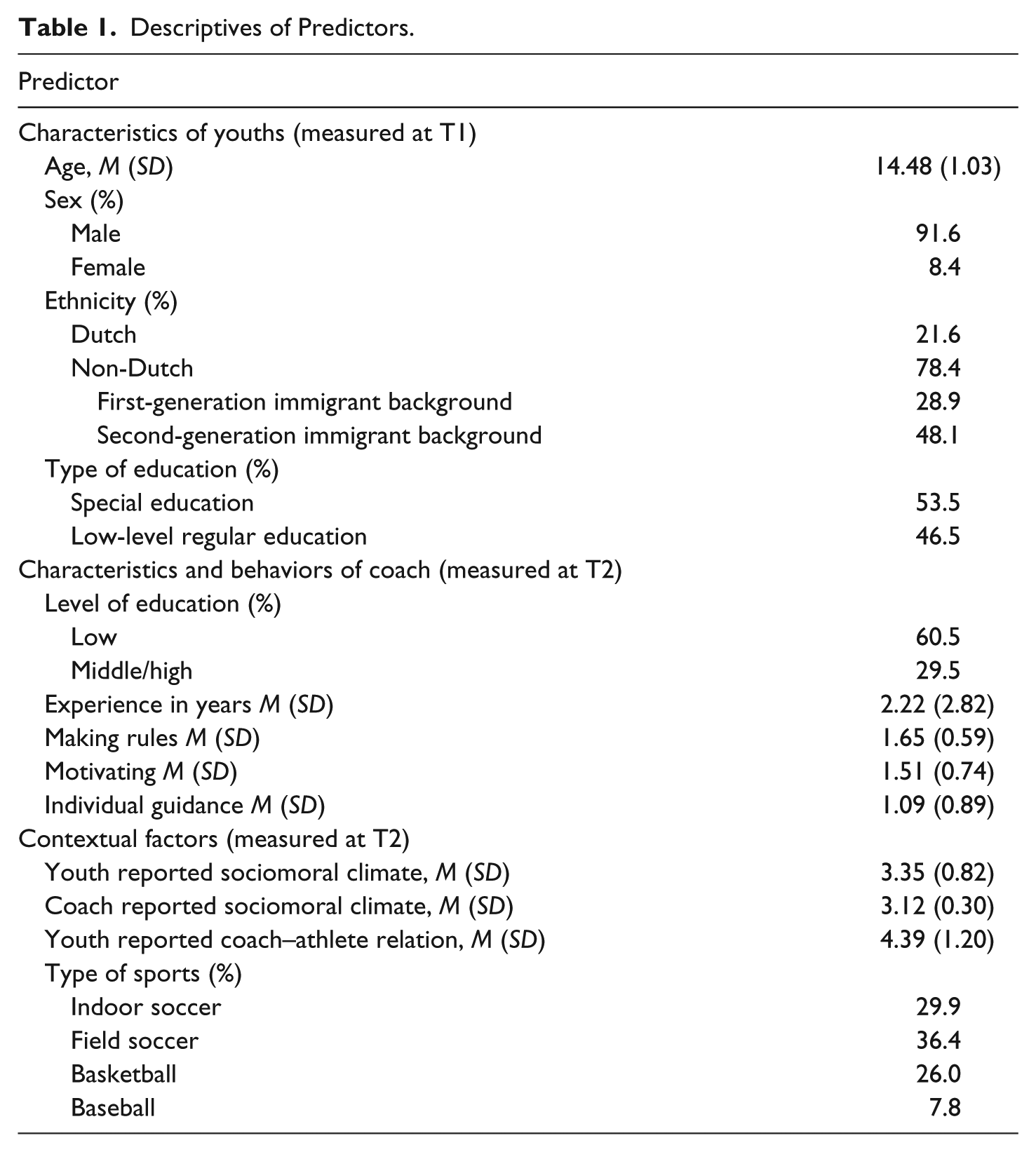
In total, 15 predictors were measured that could be divided into characteristics of youths, characteristics and behaviors of the coach, and context factors. The characteristics of youths were measured at T1, and the coach and context factors at T2. Table 1 shows descriptive information on the predictors.
Descriptives of Predictors.
Characteristics youths
Information about age, sex, ethnicity (Dutch or non-Dutch background), and the type of education (special education or lowest levels of regular education) was gathered in the self-report questionnaires.
Characteristics and behaviors of the coach
All coaches were asked about their level of education (which was categorized as low or middle/high) and their experience with at-risk adolescents (in years). In addition, the coaches reported about their behaviors toward the youths using the following questions: Have you made rules with the youths on how they should behave? (0 = no, not at all, 1 = yes, but more indirect, 2 = yes, very direct); Did you motivate the youths to participate in prosocial activities? (0 = no, not at all, 1 = yes, but more indirect, 2 = yes, very direct); and Did you provide individual guidance to the youths? (ranging from 0 = no, never to 3 = very often).
Context factors
Sociomoral atmosphere at the sports club and the quality of the coach–athlete relationship were assessed using the Sociomoral Atmosphere at the Sporting Environment (SASE) and the Quality of the Relationship (QoR) scales, developed by Rutten and colleagues (2007). The coaches filled in the full version of the SASE, the youths filled in shortened versions of both the SASE and the QoR. The SASE contains 19 statements regarding the sociomoral atmosphere of their sports environment. Responses are given on a 5-point Likert-type scale ranging from completely untrue to completely true. The QoR scale consisted of 14 items and was answered on a 6-point Likert-type scale ranging from completely agree to completely disagree. Higher scores indicated higher quality of sociomoral sports environment and better coach–athlete relationships.
The data of Rutten et al. (2007) were retrieved to shorten the SASE and QoR in the questionnaire for the youths. Using factor analyses with a one-dimensional solution, the five items with the highest factor loadings of each scale were combined to create shortened versions of the SASE and QoR (see Appendix A). The shortened versions correlated high with the original scales (r = .88 for the SASE and r = .86 for the QoR). The coaches filled in the full version of the SASE with a Cronbach’s alpha of .66. Internal consistency alpha coefficients of the youths reported shortened SASE was .91, and for the shortened QoR being .98.
The final context factor was the type of sports that was offered at the sports club (indoor soccer, field soccer, basketball, or baseball).
Analyses
For each outcome variable, change scores were calculated by subtracting the T1 score from the T2 score. The data of the current study have a multilevel structure, in which the individual participants of AJB (Level 1) are nested within the 13 different sports clubs (Level 2). In the case of multilevel data, the assumption of independent observations that underlie linear regression models is violated. The level of change in the outcome variables may be more similar for the youths in the same sports club than the level of change in the outcome variables for youths in different sports clubs. However, none of the outcome variables had significant Level 2 variance, indicating that there were no systematic differences in mean level of change between the different sports clubs. As the assumption of independent observations was not violated, we used linear regression models to examine the predictive effects of youths, coach, and context characteristics on change in outcome variables.
First, using t tests for paired samples, we calculated the difference on the outcome variables between T1 and T2. Second, we examined the predictive effects of each of the youth, coach, and context factors on the change scores of the outcome variables by conducting simple linear regression analyses (bivariate analyses). The change scores of the outcome variables were the dependent variables, and the youth, coach, and context characteristics were the independent variables. For the coach characteristics, aggregate scores (sports club averages) were calculated. Third, in case significant predictors of change were identified, we proceeded to hierarchical regression analyses for each of the outcome variables. The significant predictors were entered in planned steps. At the first step, significant predictors at the youth level were entered, followed by the significant predictors at the coach level, and the significant predictors at the context level. When inspecting multicollinearity statistics, none of the tolerance values approaches 0.1, indicating that multicollinearity was not an issue (Brace, Kemp, & Snelgar, 2012).
Results
Development of Intervention Group
Table 2 presents the descriptives of the T1, T2, change scores, and paired t tests on the outcome variables. Results indicated that the participants of AJB displayed significant improvements on all outcome variables, except for aggression, over the course of T1 to T2. At T2, the youths involved in AJB showed less conduct problems, better acceptance of authority, fewer friends with delinquent behavior, a reduction in perceived peer pressure, better resistance to social pressure, more prosocial behavior, and academic engagement compared with T1.
Descriptives of Outcome Variables.
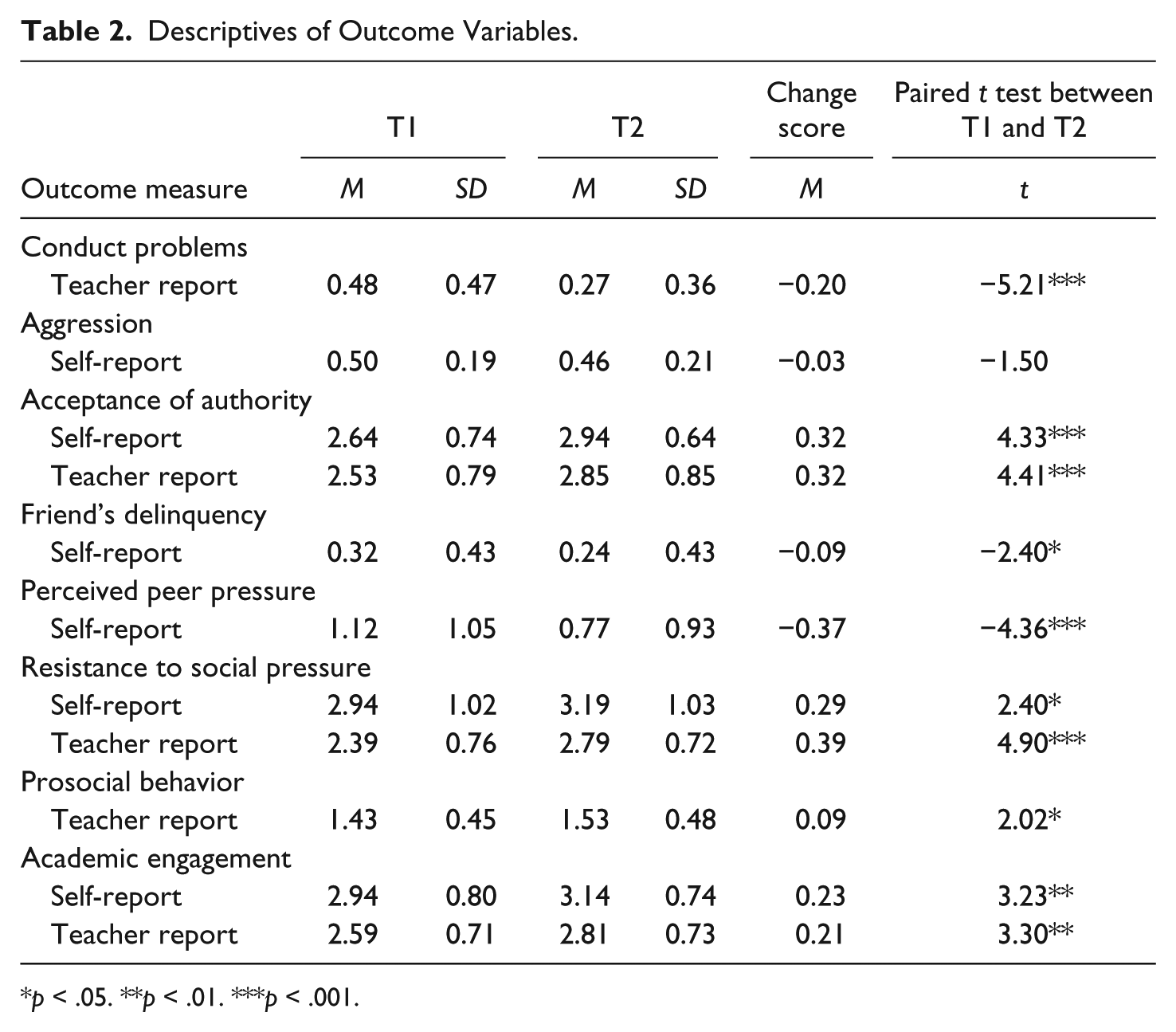
p < .05. **p < .01. ***p < .001.
Predicting Change in Outcome Variables by Youth, Coach, and Context Characteristics: Simple Regression Analyses
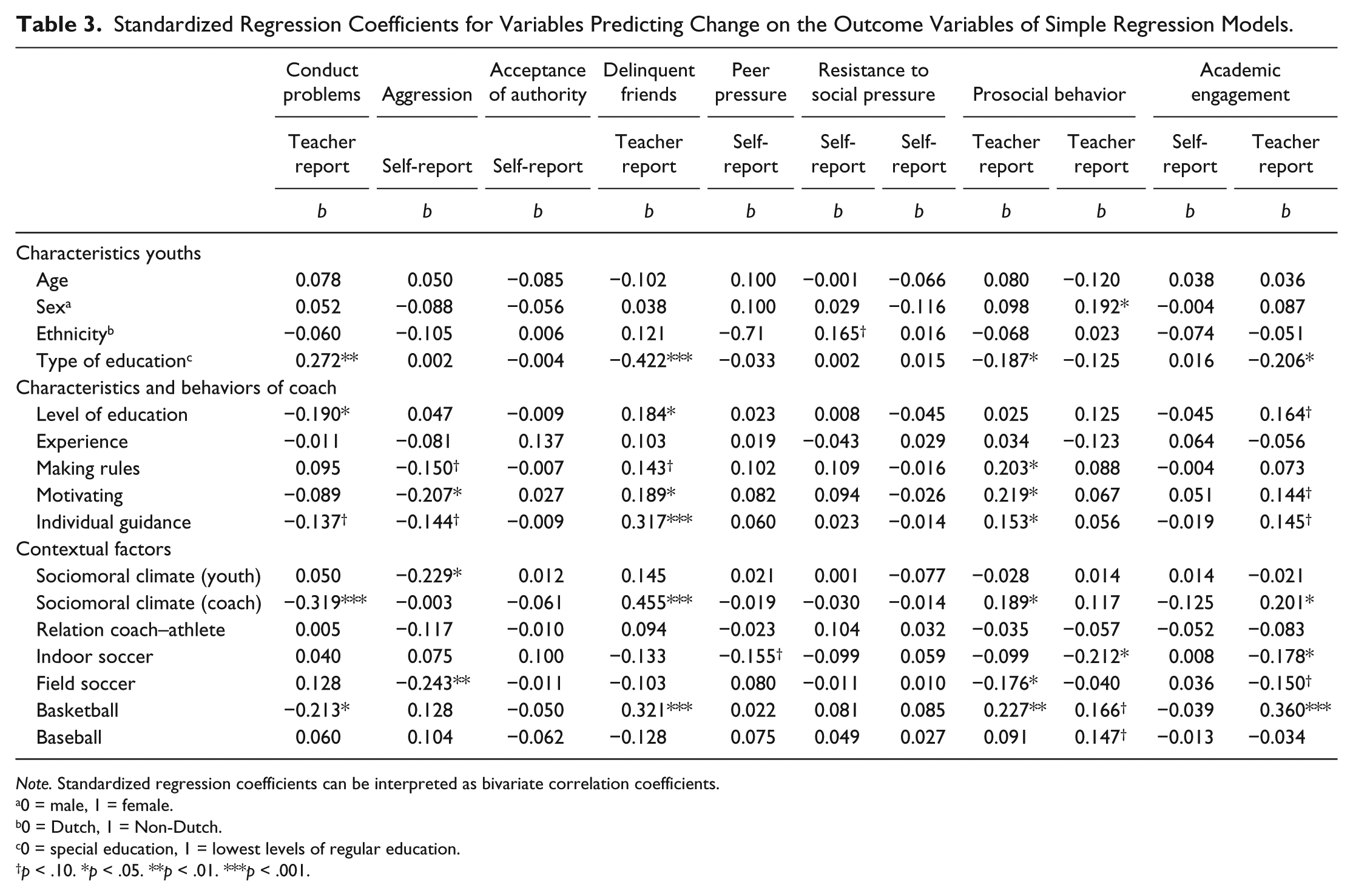
Table 3 contains the results of the simple regression analyses of the predictive effect of each of the youth, coach, and context characteristic on change in the outcome variables.
Standardized Regression Coefficients for Variables Predicting Change on the Outcome Variables of Simple Regression Models.
Note. Standardized regression coefficients can be interpreted as bivariate correlation coefficients.
0 = male, 1 = female.
0 = Dutch, 1 = Non-Dutch.
0 = special education, 1 = lowest levels of regular education.
p < .10. *p < .05. **p < .01. ***p < .001.
Self-reported outcomes
Change in aggression was significantly predicted by coach and context factors. Larger reductions in aggressive behavior were shown when the coach provided specific attention to motivation, the youths reported a better sociomoral atmosphere, and the type of sports was field soccer. None of the youth, coach, or context factors significantly predicted change in self-reported acceptance of authority, friend’s delinquent behavior, perceived peer pressure, resistance to social pressure, and academic engagement.
Teacher-reported outcomes
Larger reductions in conduct problems were found when youths were enrolled in special education, the coaches had higher levels of education, the coach reported a better sociomoral atmosphere, and the type of sports was basketball. Furthermore, special education enrollment of the youths, higher levels of education of the coach, directing attention toward motivation, individual guidance by the coach, better sociomoral atmosphere according to the coach, and the participation in basketball were associated with larger increases in teacher-reported acceptance of authority. Moreover, enrollment in special education, directing attention toward making rules about behavior, motivation, individual guidance by the coach, a better sociomoral atmosphere as reported by the coach, and participation in basketball were associated with larger increases in resistance to social pressure. Field soccer predicted reductions in resistance to social pressure. Change in prosocial behavior was only predicted by the type of sports. Participation in indoor soccer was associated with a reduction in prosocial behavior. Finally, larger improvements in academic engagement were predicted by enrollment in special education, a better sociomoral atmosphere according to the coach, and participation in basketball. Indoor soccer was related to a reduction in academic engagement.
Predicting Change in Outcome Variables by Youth, Coach, and Context Characteristics: Hierarchical Regression Analyses
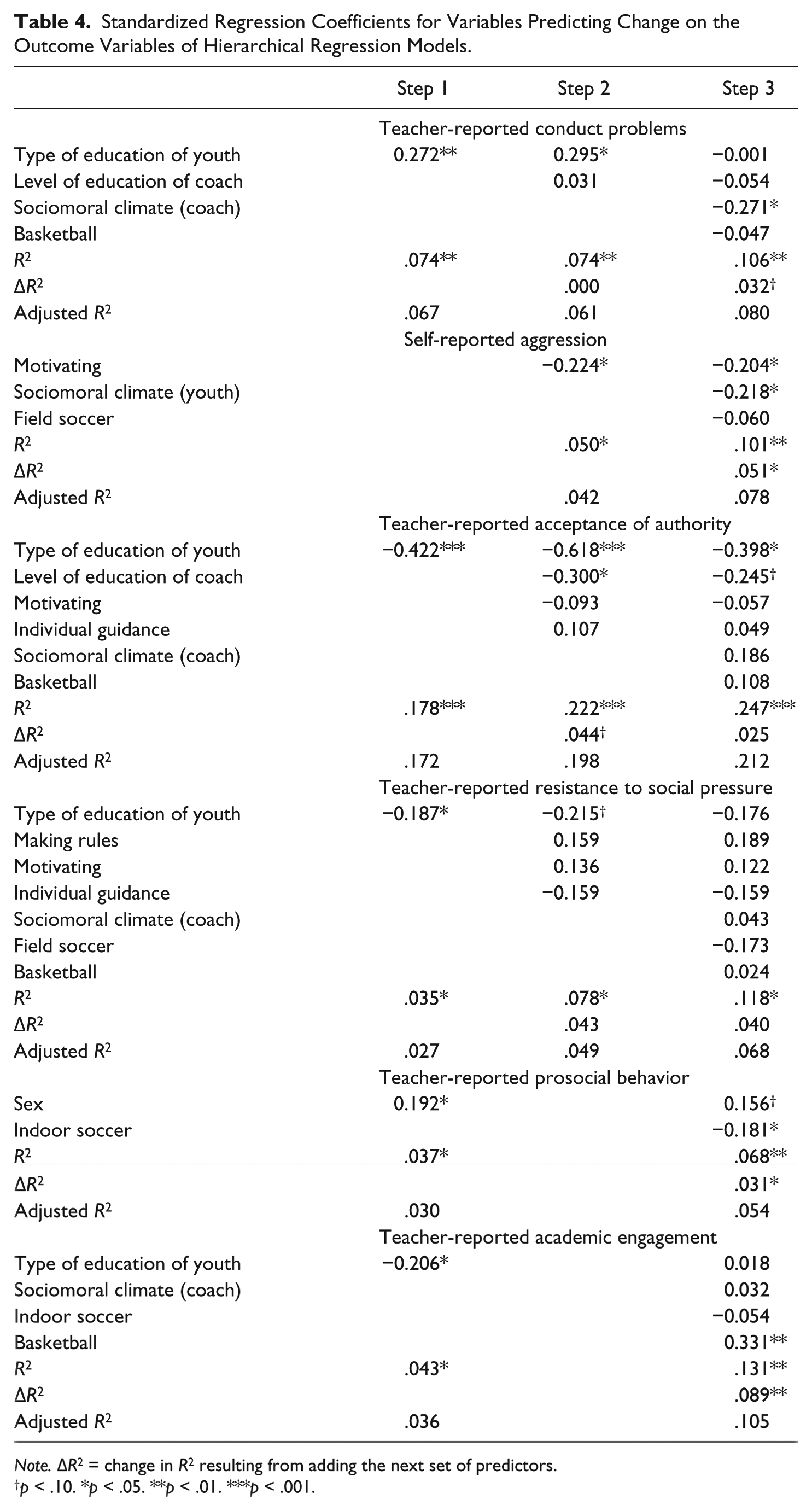
Table 4 shows the results of the hierarchical regression analyses for the change in five outcome variables that were significantly predicted by youths, coach, and/or context factors. Only factors that had been significant predictors in the simple regression analyses were entered in the hierarchical regression analyses. In Step 1, the youth characteristics were entered, in Step 2, the characteristics and behaviors of the coach, and in Step 3, context factors from the sports environment (including the type of sports).
Standardized Regression Coefficients for Variables Predicting Change on the Outcome Variables of Hierarchical Regression Models.
Note. ΔR2 = change in R2 resulting from adding the next set of predictors.
p < .10. *p < .05. **p < .01. ***p < .001.
The type of education significantly predicted change in conduct problems. Youths enrolled in special education showed more reduction in conduct problems than youths enrolled in the lowest levels of regular education. Adding the coach reported sociomoral atmosphere significantly contributed to the model, indicating that higher quality of the sociomoral atmosphere was associated with larger reductions in conduct problems. In adding the context factors, the type of education ceased to be a significant predictor. The final model explained 8.0% of the variance.
For self-reported aggression, more motivating behaviors of the coach predicted larger reductions in aggression. Adding context factors significantly improved the prediction of change in aggression. A better sociomoral atmosphere was associated to larger reductions in aggression. The full model accounted for 7.8% of the variance.
Change in teacher-reported acceptance of authority was significantly predicted by the type of education of the youth, indicating that youths enrolled in special education showed larger improvements in acceptance of authority. The level of education of the coach added significantly to the prediction. Smaller improvements in acceptance of authority were found in youths with coaches with a higher level of education. Adding context factors did not significantly improve the prediction of change in acceptance of authority. However, when adding context factors, the level of education of the coach was no longer a significant predictor. The final model accounted for 21.2% of the variance.
The type of education of youths significantly predicted change in teacher-reported resistance to social pressure. Youths enrolled in special education showed larger improvements than youths enrolled in the lowest levels of regular education. Adding coach factors did not significantly improve the prediction of change in resistance to social pressure, and neither did the context factors. The final model, accounting for 6.8% of the variance, significantly predicted change in resistance to social pressure. However, none of the factors were unique significant predicators.
Change in teacher-reported prosocial behavior was significantly predicted by sex. Larger improvements in prosocial behavior were found for females compared with males. Adding indoor soccer to the model significantly improved the prediction of change in prosocial behavior, with 5.4% of the variance explained. Youths participating in indoor soccer showed reductions in prosocial behavior. In the full model, sex became a marginal significant predicator of change in prosocial behavior.
Finally, change in teacher-reported academic engagement was significantly predicted by the type of education. Youths enrolled in special education showed larger improvements in academic engagement than youths from the lowest levels of regular education. Adding context factors significantly improved the predication of change in academic engagement, accounting for 10.5% of the variance. Larger improvements in academic engagement were found in youths participating in basketball. In the full model, type of education was no longer a significant predicator of change in academic engagement.
Discussion
The current study aimed to provide insights into for whom, how, and under which conditions sports-based crime prevention programs are most effective. We tested whether youth, coach, and context factors predicted the level of change of risk and protective factors for delinquency in at-risk adolescents participating in the Dutch sports-based crime prevention program AJB. Overall, the youths showed significant improvements on seven out of eight risk and protective factors for delinquency during the intervention. In the simple regression models, youth (sex and type of education), coach (educational attainment, making rules about behavior, motivation behavior, and individual guidance), and context factors (sociomoral climate at the club and type of sports) predicted the level of intervention success. By adding the significant predictors from the simple regression analyses simultaneously in the multivariate analyses, the unique contribution of each of the predictors was assessed. Change in conduct problems was then uniquely predicted by sociomoral climate at the sports club. Higher quality of the sociomoral climate at the sports club was associated with larger reductions in conduct problems. Moreover, in case the coach displayed more motivation behaviors and the sociomoral climate was more beneficial, larger reductions in aggression were found. In addition, change in acceptance of authority was uniquely predicted by the type of education. Larger improvements were found in youths enrolled in special education. Furthermore, indoor soccer was associated with less favorable outcomes on prosocial behavior. Finally, participation in basketball was associated with improvements in academic engagement. Therefore, we conclude that the level of intervention success (i.e., reductions in risk factors and improvements in protective factors for delinquency) of the sports-based crime prevention program AJB is predicted by youth, coach, and context factors.
The findings that coach behaviors and the sociomoral climate at the sports club predicted intervention success were in line with expectations that arose from previous studies on the relation between sports participation and youth development (Hodge & Lonsdale, 2011; Rutten et al., 2007). In a pedagogical sports environment, there are more opportunities for meaningful learning experiences and building prosocial relationships (Gano-Overway et al., 2009; Gould et al., 2012). A pedagogical sports environment is characterized by positive peer interactions, a caring climate, and “fair play” attitudes, where youths can develop themselves cognitively, emotionally, and socially (Gano-Overway et al., 2009; Gould et al., 2012; Schipper-van Veldhoven, 2013). Positive educational behaviors of the coach may directly reduce antisocial tendencies and reinforce prosocial behavior (Kazdin, 2008), and contribute to the quality of the sports environment (Côté & Gilbert, 2009; Perkins & Noam, 2007). Coaches for at-risk youths should be sensitive and responsive toward developmental needs, signal and discuss problems in the development of youth, and be reflective of their own behaviors as a role model to maximize the potential of sports-based interventions. The positive skills, virtues, and relationships that are developed in the sports environment can then be used into the broader life domains, improving risk and protective factors, and preventing juvenile delinquency (Agnew & Petersen, 1989; Perkins & Noam, 2007).
Participation in basketball was generally associated with more positive outcomes, and participation in soccer with less positive outcomes. This finding may be explained by differences in the sports environment and behaviors of coaches between the two sports. The basketball coaches had a significantly higher level of education (r = .382) reported that they directed more attention toward making rules about behavior (r = .195), motivation (r = .487), and individual guidance (r = .527), and reported a more positive sociomoral climate (r = .519) than coaches from the other sports.
Besides the differences between basketball and soccer in the sports environment and the behaviors of the coaches in AJB, there may be more structural, “cultural” differences between the two sports that could be generalized beyond the current program. Although this has not yet been described in scientific literature, observations from the media and analyses of the rules and history of the two sports would suggest relevant differences between basketball and soccer. For example, it seems that the media reports more frequently about aggressive incidents on the soccer field, there appears to be more incidents with spectator aggression in soccer, and basketball has more strict rules to prevent ego-oriented, antisocial behavior (such as time-outs, no physical contact allowed, fouls for holding on to the ball, and strict rules regarding (non)verbal communication toward the referee). These “cultural” differences could imply that basketball is more protective, or even discouraging, of antisocial and aggressive behavior than soccer, explaining the more positive results in basketball in the current study. Previous studies that have been conducted do indeed suggest that there is less antisocial or aggressive behavior in basketball players compared with soccer players (Pedersen, 2007; Rutten, Schuengel, Dirks, Stams, & Biesta, 2011; E. W. Shields, 1999).
Youths enrolled in special education (admittance criteria are an IQ between 55 and 85 and significant learning delays) benefited more from the intervention than youths enrolled in regular education. This is an interesting finding, as this challenges the common belief that interventions are less effective in youths with intellectual disabilities (ID) or borderline intellectual deficiencies compared with youths without ID (Adams & Boyd, 2010). An explanation may be that sports-based interventions are grounded in experiential learning (Gatzemann, Schweizer, & Hummel, 2008). In the sports context, learning evolves around practicing skills and behaviors, and not so much by talking about skills and behaviors. Youths with ID especially benefit from learning from experience, because of their problems with abstract thinking (De Wit, Moonen, & Douma, 2011), explaining why youths enrolled in special education benefited the most from AJB. Moreover, youths with ID or borderline intellectual deficiencies benefit from structure, routine, and consistency (De Wit et al., 2011). Sports-based interventions provide for that need by offering highly structured leisure activities, with a lot of repetition, and continuity in the people involved in the program (Spruit, Van der Stouwe, & Moonen, 2017). In the case of AJB, there was a practice twice a week at the same location, with the same structure (all training sessions contained a warm-up, skills practice, an element of play or competition, and a cooling down), clear rules, and the same coaches and team members. In addition, youths with ID have an elevated risk of developing delinquent behaviors compared with youths without ID due to their social economic circumstances, deficient moral reasoning, trouble in adequately understanding interpersonal situations, and cognitive weakness (Collot d’Escury, 2007). Because the risk of developing delinquent behaviors is relatively high for youths with ID, the finding that youths enrolled in special education benefited more from the intervention than youths enrolled in regular education is very positive.
Elaborating on the previous point, we would like to emphasize that AJB did not incorporate individual risk assessments to identify whether participants were indeed “at-risk” of delinquency. Instead, AJB labeled these youths “at-risk” based on the fact that most participants were male, had an immigration background, came from disadvantaged neighborhoods with high crime rates, and had a low intellectual or educational performance. However, it is debated in the literature whether it is appropriate to label youths “at-risk” without individual risk assessment (see, for example, Farrington & Welsh, 2008). The effects of AJB could possibly increase if the program would narrow the target group by conducting individual risk assessments. By doing so, potential iatrogenic effects caused by stigmatization may be reduced, and the program could be more likely to target youths who may actually benefit from a crime prevention program.
This study has some limitations. First, some of the predictor variables (such as sociomoral climate and the coaching behaviors) were assessed at T2 in retrospect. Statements about the causal effects of these predictors on the level of change in the outcome variables should therefore be treated with great care. It may be possible that within teams with larger improvements on the risk and protective factors for delinquency, the coach rated his own behaviors and the sociomoral climate as more positive than in teams with smaller improvements. This could result in an inflation of the association between the predictor and outcome variables. Second, we used self- and teacher reports to assess the outcome variables. In all types of psychological or criminological research, there is a chance of bias when using questionnaires to evaluate one’s own behavior or another one’s behavior (see Podsakoff, MacKenzie, & Podsakoff, 2012). In this study, the sample consisted of at-risk youths, some of whom had an ID or an IQ below average, which makes the use of self-report in potential even more precarious (Finlay & Lyons, 2001). Even though we have made efforts to limit self-report bias and have measures from another source (i.e., teachers), this should be taken into consideration when interpreting the results. Further studies should therefore use additional measures, such as behavioral observations or official measures of incidents or criminal conduct. Third, to assess the coaching behaviors, we only used self-report questionnaires filled in by the coaches, which, again, brings a risk of bias, especially in the form of socially desirable answers. Future research should add behavioral observation scales to measures coaching behaviors. Finally, the youths in the study rated the QoR with their coach and the sociomoral climate generally as very high. Therefore, there was little variance on these measures, which may explain why the quality of the coach–athlete relationship was not a significant predictor.
Despite the limitations, the current study contributed considerably to insights into for whom, how, and under which conditions sports-based interventions can be effective. This was the first study to assess whether youths, coach, and context factors predicted the level of intervention success in a sports-based crime prevention program. The finding that these factors have predictive power implicates that in the development and implementation of sports-based crime prevention programs, it is important to specify the target group and to make sure that the intervention is delivered by pedagogically strong coaches in a pedagogical sports environment. Future research should evaluate sports-based crime prevention programs with experimental research designs, including youth, coach, and context measures. This will increase the knowledge for whom, how, and under which conditions sports-based crime prevention programs are most effective, which can be used to improve sports-based interventions.
Supplemental Material
Spruit_Predictors_intervention_success_AJB_Supplement – Supplemental material for Predictors of Intervention Success in a Sports-Based Program for Adolescents at Risk of Juvenile Delinquency
Supplemental material, Spruit_Predictors_intervention_success_AJB_Supplement for Predictors of Intervention Success in a Sports-Based Program for Adolescents at Risk of Juvenile Delinquency by Anouk Spruit, Claudia van der Put, Eveline van Vugt, and Geert Jan Stams in International Journal of Offender Therapy and Comparative Criminology
Footnotes
Declaration of Conflicting Interests
The author(s) declared no potential conflicts of interest with respect to the research, authorship, and/or publication of this article.
Funding
The author(s) received no financial support for the research, authorship, and/or publication of this article.
References
Supplementary Material
Please find the following supplemental material available below.
For Open Access articles published under a Creative Commons License, all supplemental material carries the same license as the article it is associated with.
For non-Open Access articles published, all supplemental material carries a non-exclusive license, and permission requests for re-use of supplemental material or any part of supplemental material shall be sent directly to the copyright owner as specified in the copyright notice associated with the article.
