




Abstract

Hong Kong residents worry about giving up personal data at a time when freedoms are fast being eroded in the city state, write
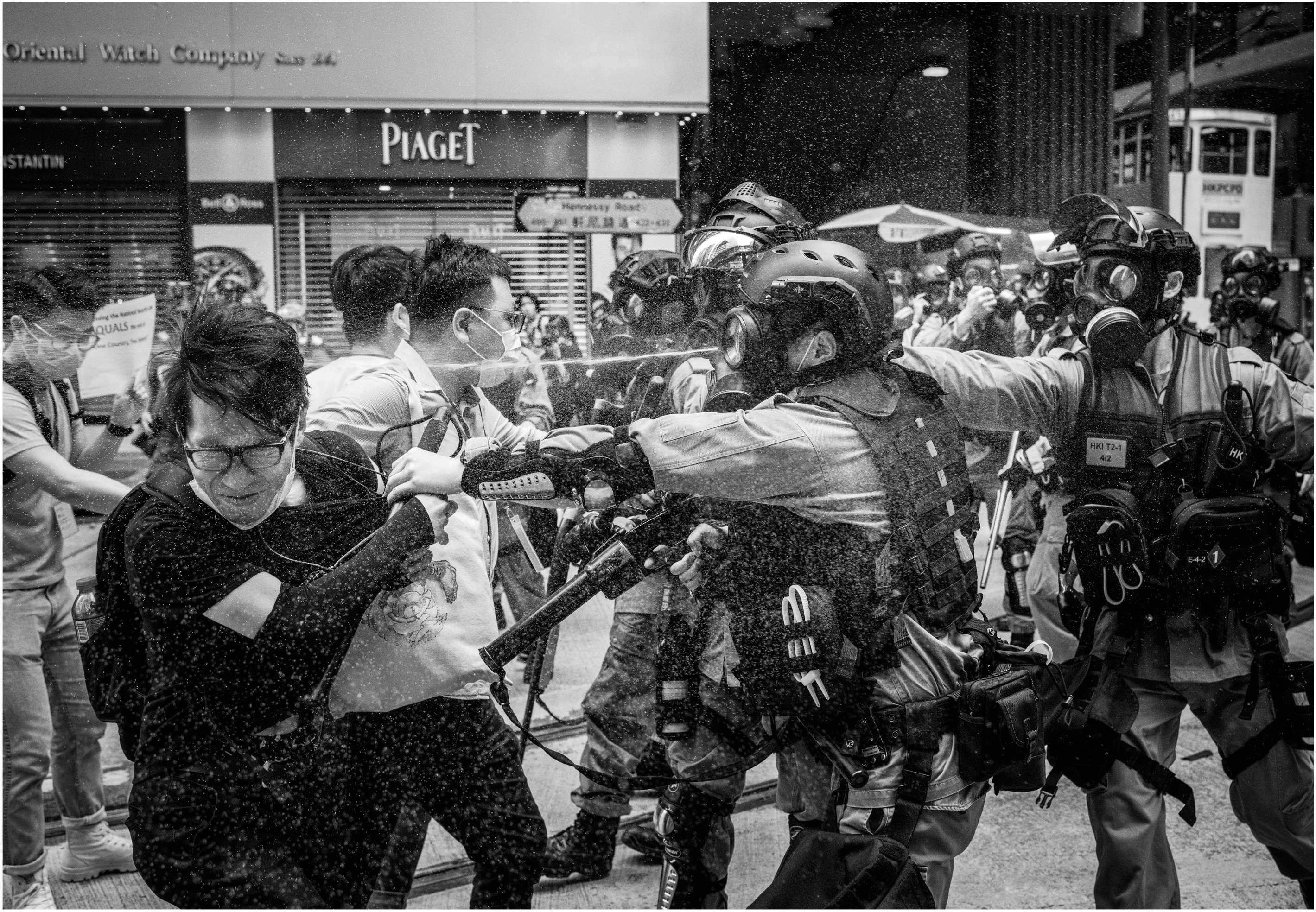
At the end of May, Beijing announced it would impose a national security law on Hong Kong, and the streets swelled with people.
The protests, also sparked by the passage of a controversial national-anthem bill, were the first large-scale demonstrations since the outbreak of the coronavirus pandemic and high-lighted the extent of many residents’ outrage.
The new security law was felt to be the most blatant violation of the “one country, two systems” framework, which was established as part of the 1997 handover of Hong Kong to give its residents more freedom than those on the mainland.
Many protesters went out on the streets despite fears about Covid-19 because there were also concerns that measures imposed to curb its spread had eroded rights further.
“Since last summer, the Hong Kong government and the police have been trying to cow people by refusing permits in advance, in violation of the basic law, and they will continue to do so, as long as social distancing regulations remain in place. This makes people vulnerable to arrest should they turn up at so-called illegal gatherings, which the arrest of 15 people in April demonstrated,” said Tammy Lai-Ming Ho, a poet living in Hong Kong.
Karen Wong, a 37-year-old professional who had previously joined in peaceful pro-democracy protests, was one of those who stayed away. She is worried about joining protests now that the government might be able to trace people’s movements and access personal data easily.
“I don’t think I’m being paranoid when I say [that] with Covid-19, authorities have the right to stop any demonstration from taking place, even if you’re following guidelines,” she told Index. “What’s to stop them from seizing your phone and accessing all your data? It’ll only be easier for groups to be busted in the future.”
Wong also spoke about an announcement in May from the Hong Kong government that it would distribute free, reusable masks to all residents with valid identity cards who registered on the website. Even this straightforward initiative raised eyebrows.
“Of course, we’re willing to do what we can as a collective to stop the spread of Covid-19. But the point is, we have no trust in the government now,” she said. “That’s why I don’t want to trade my information with the government in return for a few face masks.”
Fearing the state gaining access to private information, pro-democracy groups have urged members on private WhatsApp groups to think twice before signing up for masks.
Fresh protests erupted in Hong Kong in May over Beijing’s announcement that it intends to introduce new national security laws
CREDIT: Jose Cabezas/Reuters
Responding to the concerns, the authorities emphasised that “information provided by citizens in obtaining the masks will not be used for other purposes”, and that the “retention period of the personal data is no longer than the time required for the purposes for which the data is used”.
People have also been worried about a tracking app that they are required to download if they want to leave and re-enter the city.
While the government has tried to reassure users that the surveillance app poses no privacy concerns, many are distrustful.
“Who knows what they’ll do with our data?
I’ve no idea what I even downloaded to my phone. I go to China for work and, in the past, I’ve deleted traces of protest material from my phone just to stay on the safe side,” said Jeff Cheng, who used the government-mandated tracking app StayHomeSafe after returning from Singapore earlier this year.
“To be honest, I just hope that the data is truly wiped.”
May’s protests were not the first time the city’s residents have come out to fight. Indeed, protesting has been key to Hongkongers’ ability to call for change and is firmly embedded in the city’s sense of identity.
“Hong Kong is a city where issues of identity and protest have been entwined very tightly, which is highlighted each year on 4 June, when large vigils are held at Victoria Park to commemorate the massacre in Beijing on that date in 1989,” said historian Jeffrey Wasserstrom, whose book Vigil: Hong Kong on the Brink was published in February.
In 2003, an attempt by the Hong Kong government to pass similar legislation was stopped as a result of mass protests. Last year saw large-scale protests in response to the extradition bill, which proposed similar legislation to the new law.
Many believe that the current pandemic has provided a perfect opportunity for Beijing to push through controversial legislation.
“It is certainly an opportune time for Beijing to do this while other countries are otherwise occupied,” said Ho, although she added that it was in line with what the Chinese government had been doing for several years.
The national security law could come into play within months. Will Hongkongers risk protesting further given the toxic mix of Covid19 fears, new laws, increased surveillance and reports of police brutality?
“Covid-19 had already altered some forms of protests and these will alter the mix of activities still more,” said Wasserstrom.
But despite this, he believes protests will continue, just in more creative ways.
“When gatherings in public posed a real health risk, some activists, for example, began voicing their concerns by putting up posters criticising the Hong Kong police and [Hong Kong chief executive] Carrie Lam in the virtual world of the Animal Crossing game, which led to that game being banned on the mainland,” he said.
“Now that gatherings pose less of a health risk, due to the pandemic being largely under control – but with the government still refusing to authorise protests that have been authorised in the past, such as the 4 June vigil – activists are looking at ways to express themselves in public in small groups. There has been a call, for instance, for people to light candles in many different places across the city rather than in one park this year.”
As for Ho, she wasn’t at the most recent protests due to work commitments, but she says she intends to go to ones in the future.