




Abstract

As Covid-19 spreads to Yemen and Iraq, there are fears that it will provide the perfect excuse for religious militia to further strangle free expression, writes
The four journalists were charged with “spreading false news in support of the crimes of Saudi aggression and its allies against the Republic of Yemen”.
At the same court proceedings, six other detained journalists were given “time-served” sentences and three years’ probation. Unlike in the past, the lawyer Abdel Majeed Farea Sabra could do nothing for them:
“I was unable to properly represent my clients,” he told Index. “They would not let me into the courtroom so I could not defend them. When the sentence was handed down, I wasn’t allowed to appeal.”
Militia in Yemen are using the distraction of Covid-19 to clean the country of “un-savoury” voices and push their religious agenda further. Part of that process involves downplaying the presence of Covid-19 in the country.
Online daily Al-Monitor reported that Mohammed Abdulqudoos, deputy director of Saba, North Yemen’s official news agency, had tweeted that one case of Covid19 – a woman coming from Saudi Arabia who was placed in isolation after testing positive – had been discovered in Sana’a, only to retract it a few hours later.
In a similar vein, a medical professional working with teams handling Covid-19 cases in Sana’a, who asked to remain anonymous, reported that four suspected coronavirus cases were identified in the first week of April. He said the patients were in isolation at the Movenpick Hotel in the city but that “these cases must remain a secret. If the Houthi find out that the news has leaked, there will be severe consequences”.
The secrecy serves a very specific purpose. Abdulqudoos said: “They don’t want the people, especially potential fighters, to be scared and distracted from the main cause, which is the war against the Saudis and their Yemeni government allies, which they are finally winning.”
Even when the North Yemeni militias admitted their first coronavirus death in an announcement by health minister Taha al-Mutawakkil, the virus was still not presented as a risk.
Elisabeth Kendall, a senior research fellow at Pembroke College, Oxford, and an expert on the fragmented network of Islamist militias in Yemen, believes that the groups controlling the different parts of the country are using the pandemic to further their own causes.
“The propaganda machine – fed by Yemen’s Houthi at present, al-Qaeda affiliate Aqap remaining silent for now – is spreading the message that the virus was sent by Allah to punish the west and other enemies of Islam, like China.
“According to this narrative, the virus is an invisible soldier who would punish infidel societies, which are based on capitalism and globalisation, and whose governments have wasted money on fighting wars on Islam instead of investing in healthcare.”
In this version of events, Islam is to be embraced because it is a hygienic religion and people should use the time in quarantine and lockdown as an essential time to learn more about Islam. Kendall said: “There is this imagery of humanity trapped in the dark, like the Koranic (and also Biblical) story of Jonah inside the whale. It looks like the time for an apocalyptic showdown is approaching.”
Fatima Abo Alasar, a Yemeni scholar at the Middle East Institute in Washington DC, also believes that the situation is being used to extend the message of religious extremism.
“After years and years of war, it’s very difficult to react to religious extremism and censorship, especially if these militia provide you [with] essentials that the government wasn’t able to give you in years,” she told Index. “I don’t want to simplify the complexity, but people at the beginning accepted Houthis – like in Iraq they did with Islamic State – because they were able to provide electricity, heaters, jobs, fuel, in areas neglected by the government. This is the strategy of religious militias.
“Then, after everything settles down, they start the law enforcement, the censorship, the threats.”
It’s a similar situation in Iraq. In the province of Saladin, for example, around the city of Jurf al-Nasr, north of Babylon, the jihadist groups that survived the collapse of Isis are targeting Iraq-state sponsored Shia Hashd al-Shaabi militias, equivalent to ranks within the Iraqi military. Both sides have incurred deaths in the clashes.
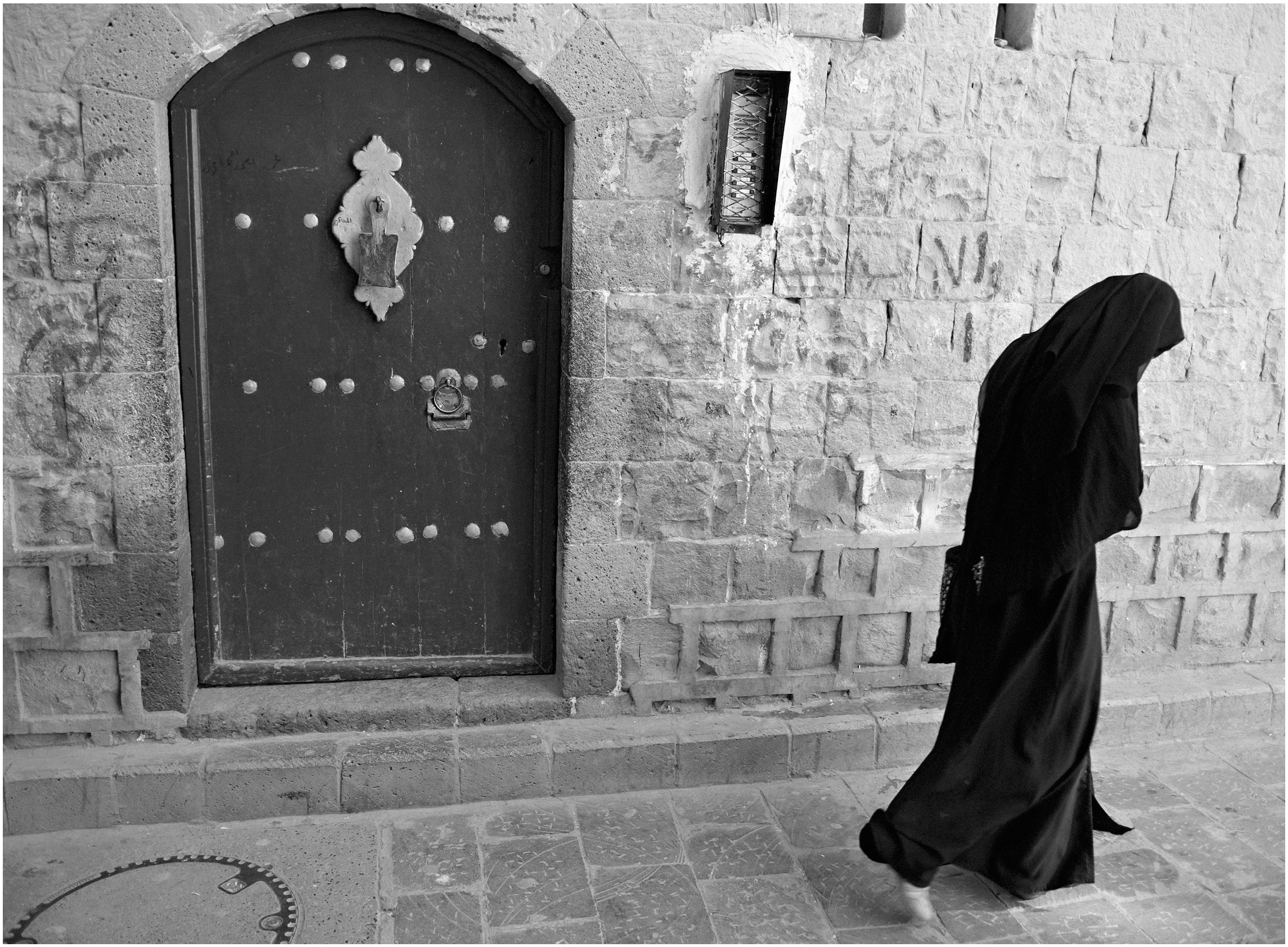
A woman walking through the old town in Sanaa, Yemen
CREDIT: Robert Harding/Alamy
The pandemic has been used here as a pretext to enforce greater control, including over the press. In Iraqi Kurdistan and Baghdad, a number of restrictive actions have been taken against the broadcaster NRT after it accused the authorities in Erbil of altering the number of Covid-19 infections and deaths to discourage the demonstrations that have been inflaming the country since summer 2019. Reuters has also clashed with the Baghdad government. Its licence was suspended when it published a story saying Covid-19 cases were not being correctly reported.
As in Yemen, the narrative that is often being pushed is firmly along religious lines.
Emma Sky, author of The Unravelling: High Hopes and Missed Opportunities in Iraq, said: “Muqtada al-Sadr [a Shia politician and cleric] and his militia blamed Trump for the spread of Covid-19 and said he will never accept any cure made by the infidels. Also, he blamed same-sex marriage for Covid-19.”
Some mullahs are using the opportunity to fight secular tendencies amongst millennials, calling for people to observe Islamic prayers strictly. They’re saying that if people do this, and perform the correct rituals around washing, Covid-19 will not arrive.
In Yemen, the fear and confusion are tangible when you talk to people on the street.
Aisha al-Jalal, a mother-of-seven from Atharish, a suburb on the outskirts of the capital, told Index: “Until now, we always thought no one could get it here because Yemen has been isolated for five years. They told us that all we had to do was wash our hands and wear masks, and also to drink infusions of lemon, ginger and other herbs to protect ourselves. I make it for my children every day. Allah will save us.”
She wouldn’t say any more because of fears for her own safety.
But in Iraq, where there is more freedom from religion, street protests that began last year continue. Even amid the lockdown, daily demonstrations are staged in Baghdad’s Tahrir Square. This might be in part because of Iraq’s new prime minister, Mustafa al-Kadhimi, who took office in May.
“[He] maintains that Iraqis have the right to protest and he insists on the freedom of the media,” said Sky.
“He himself has a background in civil society and was once a journalist. Now there are some elements in the security forces who are arresting protesters, but these actions are condemned by the new prime minister.”
Whether he will be able to improve the situation has yet to be seen. Tariq Alturfi, a journalist from Karbala who reports on militia violence and corruption in government, says it is becoming impossible to enforce the law in his city, and pressure is mounting on protesters and secular voices demanding government transparency.
“I may have to leave Iraq soon but, for now, I’m trying to work as much as possible, providing press coverage with my colleagues in Karbala,” he said. He is being closely watched but he feels his mission is a duty towards his homeland.
He continued: “They accuse us of working for Saudi Arabia and America, and they say, ‘You are inciting against Iran and the local parties’. But we are working impartially, standing with the people, and working on peaceful demonstrations.”
Translated by