




Abstract

If only it began and ended with food on the table.
Over the years I have learnt there are topics that you only discuss and challenge if you feel really strongly about them. Circumcision, for example. Speak out against it and you could soon find yourself ostracised. I was relieved when, recently, I had a child four days after a friend’s son was born. It gave me a ready-made excuse to not attend the bris (circumcision party) without saying why I was actually not attending. We’re still friends; she has no idea.
But no single topic is likely to send you to a blacklist quicker than saying the “wrong” thing about Israel. This has, sadly, become a lot worse recently. As Israel’s government has swung to the right, so have some in the Jewish community. And because these people are often the oldest or the loudest, their voices are the ones that have dominated. I have become used to discussing the subject only with those I vet as ultra-left-wing, or not Jewish at all. Those I know would share similar values. There are, after all, plenty of other topics to talk about, so why bring up the ones I know will create friction? Why ruin a good dinner party? In short, I have housed myself in my own echo chamber.
The biggest flashpoint in my life, though, was the December 2019 general election in the UK, when the conversation turned to whether Labour leader Jeremy Corbyn was an anti-Semite (and headed a party of anti-Semites). In Jewish circles, the jury had made its decision – he most definitely was. Say anything contrary to that and you would be labelled a rabid anti-Semite yourself.
In this arena there was only one side – forget about debate, nuance, reason, even agreeing to disagree. I pondered writing about my feelings (namely that while some claims of anti-Semitism stood up, I wasn’t convinced by all). Some brave souls did speak out. The author Michael Rosen, for example, was very vocal about the fact he felt the charge of anti-Semitism was being weaponised for political gain. Rosen – with his 162,000 followers, his multi-million-pound book empire, his age, his maleness – had the guts where I, and others in my community, did not.
Instead I watched, quiet, at the sidelines as my Facebook feed became a bulletin board of people declaring that we needed to vote in a certain way if we wanted to avoid the Fourth Reich. People spoke for me, as a British Jew, even though I didn’t share their views. I made one attempt to discuss this topic over dinner with relatives, during which I was likened to the disillusioned Jews in Weimar Germany who thought Hitler could be contained. Needless to say, I made no further attempts. The family decided politics was off the menu for meals after that.
I was not the only one having such heated conversations. As reported in the New York Times: “Online and over Shabbat dinners, arguments about the election have grown bitter. Those grudgingly planning to vote for Labour have been called traitors to the community and self-hating Jews.”
CREDIT: Neil Webb/Ikon
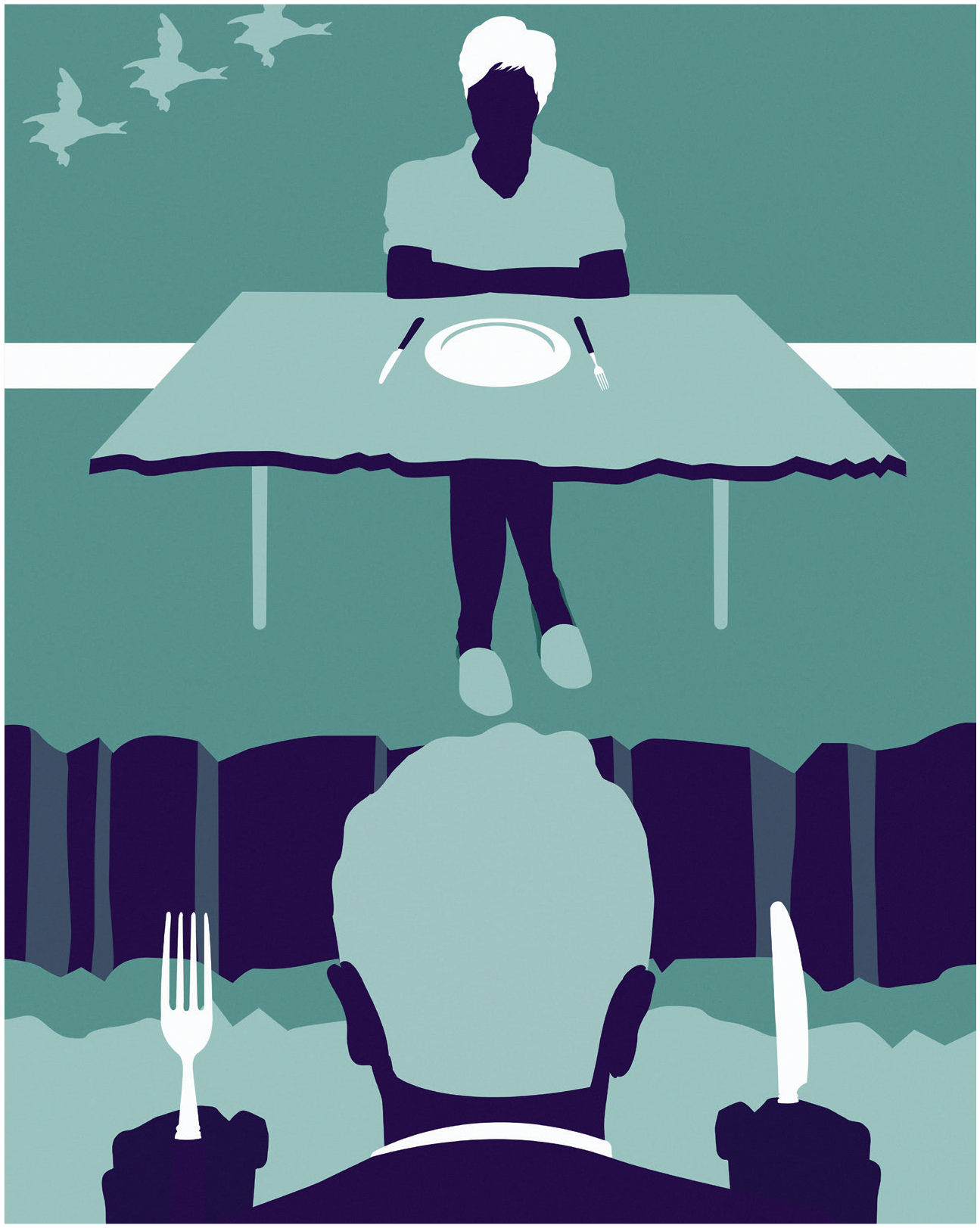
The election has been and gone, but it’s left a nasty aftertaste. And the paramount question: What topic will become the next conversational minefield? US President Donald Trump’s Middle East peace plan?
As a British Jew whose family was murdered in the Holocaust, I champion the protection of minority rights. Indeed, I work day-in, day-out to promote these. I believe we need to practise religious tolerance, that we need to make everyone feel welcome whatever their faith, and that we need to keep calling out anti-Semitism until this religious hatred is relegated to history textbooks. What I do not believe in is the shutting down of entirely reasonable discussions, nor in bold claims escaping forensic examination, nor in granting some views more respect than others just because those espousing them might offend more easily.
Have I contributed to this censorial environment? In a way, yes. Every time I have kept shtum, I have helped foster an atmosphere where only one opinion is valid. My people-pleasing, my desire to not ruin a nice dinner, to maintain friends on Facebook and good relationships with relatives – all of this has had the unintended effect of emboldening some people, of silencing the views of others, and of making people less confident – on all sides – in dealing with confrontation. We don’t need more confrontation in this world, but we do need to know how to deal with it when it emerges.
Of course, this extends beyond Jewish circles: my non-believer friends who have Christenings so as not to offend grandparents; the people who shrug off racist jokes from elderly uncles – many trade free expression for an easy life.
There is a reason German Lutheran pastor Martin Niemoller’s poem First They Came is so often quoted – because people recognise their own shortcomings in its words. Democracy dies not in grand gestures but in the moments when we are weak and complicit. When we don’t speak up when we know we could, or when we feel we should. I have bitten my tongue for too long; I hope that I won’t continue. But I can’t promise that. The wine might be flowing, the food delicious, and so when that older, more conservative guest starts spouting off unpalatable views I might just bring up The Masked Singer instead.