Abstract

Transversals, a Brazilian documentary TV series about transgender people, has yet to be made as a result of President Jair Bolsonaro cancelling its financing. Here, for the first time, we publish excerpts from its pitch
Why it should be commissioned
To document in a TV series the story of five transgender people in the process of changing their bodies to match their gender identity is, first of all, to give voice to an urgent debate in our society. A population that is still unknown to most, the trans community is viewed with strangeness and distrust, even amongst members of the gay and lesbian community.
Casting a spotlight on such a niche theme is of fundamental importance for the establishment, and the exercise, of full rights for these people. Only from the deconstruction of stereotypes and from a real representation of their daily lives and dramas will we be able to envision the real inclusion of these people. And this is what Transversais proposes.
With Transversais, we will approach this largely unknown universe. But our guiding approach will not be that of strangeness or that of the attractions of “freak shows” commonly directed at them. Our approach will start from the opposite bias. We will show that trans people lead a normal life, with regular ambitions and joys like anyone else: feeling comfortable in front of the mirror, being happy in love, being respected at work, being able to use public bathrooms without fear of violence, being close to the family.
We will monitor their daily lives, their personal relationships, their family tensions, their life goals. We will investigate their memories, traumas, decisive moments, joy, pride. The protagonist will not be that of just transgender but actually of the person they are in all aspects. At the same time, we will research the construction of this public idea of transgender and the physical transformation they must undergo. We will bring to the foreground this population that usually lives on the margins. We will shed light on them, making the invisible notable and giving a voice to the silenced.
Who it will target
The target audience of this documentary series is young people and adults, of both sexes and all social classes, interested in discussions around current affairs and society, such as the perception of the other, the sense of otherness, gender identity, the reaction of the population and the media is great, [Bolsonaro] backs off and says that everything was just a misunderstanding; otherwise, it advances and rises another step in the stifling of democratic principles.
“I think that each day is getting harder and the trend is getting worse. There is a great polarisation in Brazil today – a polarisation that reaches the verge of irrationality. And this polarisation is part of the continuous stimulus to what they call ‘cultural war’ – that is, the systematic disqualification of any cultural product that does not reflect the world view of a certain group.”
Today, there is a great tug-of-war over Brazil’s history. And the right, which is now in power, pays special attention to this. Maranhão says this cultural war relies on historical revisionism. It argues, for instance, that Nazism was a left-wing political movement, that African slavery was voluntary, that the Earth is flat, or that there was no torture during the military dictatorship in Brazil. In fact, they assert that there was no “dictatorship” but simply a “military regime”.
“It is strategic for these politicians on the extreme right that their versions are dominant and unquestionable. Any attempt at questioning their values is quashed,” said Maranhão.
Meanwhile, there are ongoing attacks on the documentary The Edge of Democracy by director Petra Costa. The film, which was nominated for an Oscar for Best Documentary, argues that former president Dilma Rousseff was overthrown by a parliamentary coup. The news of the nomination was scorned by the government, which accused the director of being “anti-Brazil”.
The Transversais series competed in a public tender for funding and was announced as a finalist in the Projects on Gender Diversity category in May 2019. In August, the president announced he was to cancel some of the funding. The first on the list was Transversais, and the cancellation of three other projects on sexuality and gender diversity were also announced.
Maranhão appealed to the courts, which ruled in his favour. The government appealed but lost. At the end of January 2020, the result of the public tender was finally announced. To the shock of no one, none of the four projects whose censorship had previously been announced by Bolsonaro was included.
Efforts are currently being made to obtain the minutes of the judging committee’s meetings made public. Maranhão wants to be sure of what really happened and to know if there was an order for those projects to be excluded.
“Each Day is Getting Harder”
RACHAEL JOLLEY talks to film director Emerson Maranhão about how his TV show on transgender people has been censored by Brazil’s president
“It was the first time that the president has acted explicitly to prevent the production of cultural products that he considers ‘inadequate’,” he said.
President Jair Bolsonaro has removed nearly $17 million of funding for the film industry. At the same time this happened, says Maranhão, censorship of other arts projects was announced, theatrical shows were closed down, exhibitions were censored and book launches at public universities were cancelled.
“All these artistic events had themes at odds with the thinking of the current government,” he said. The most obvious area of conflict was respect for the “traditional family” and the “Christian faith”, a favourite policy area of the ultra-conservative and evangelical voters who support the president.
The feeling we have is that this government tests the strength of our democracy all the time, he said. “When civil rights and prejudice. It is also an audience interested in knowing good stories and getting in touch with a world that, although most of the time seems invisible, actually lives alongside us. As one of the aims of this work is to demystify transgender, which is still obscure for the majority of the population, the broader its scope the greater its effectiveness. Therefore, we want it to be accessible to large numbers of viewers.
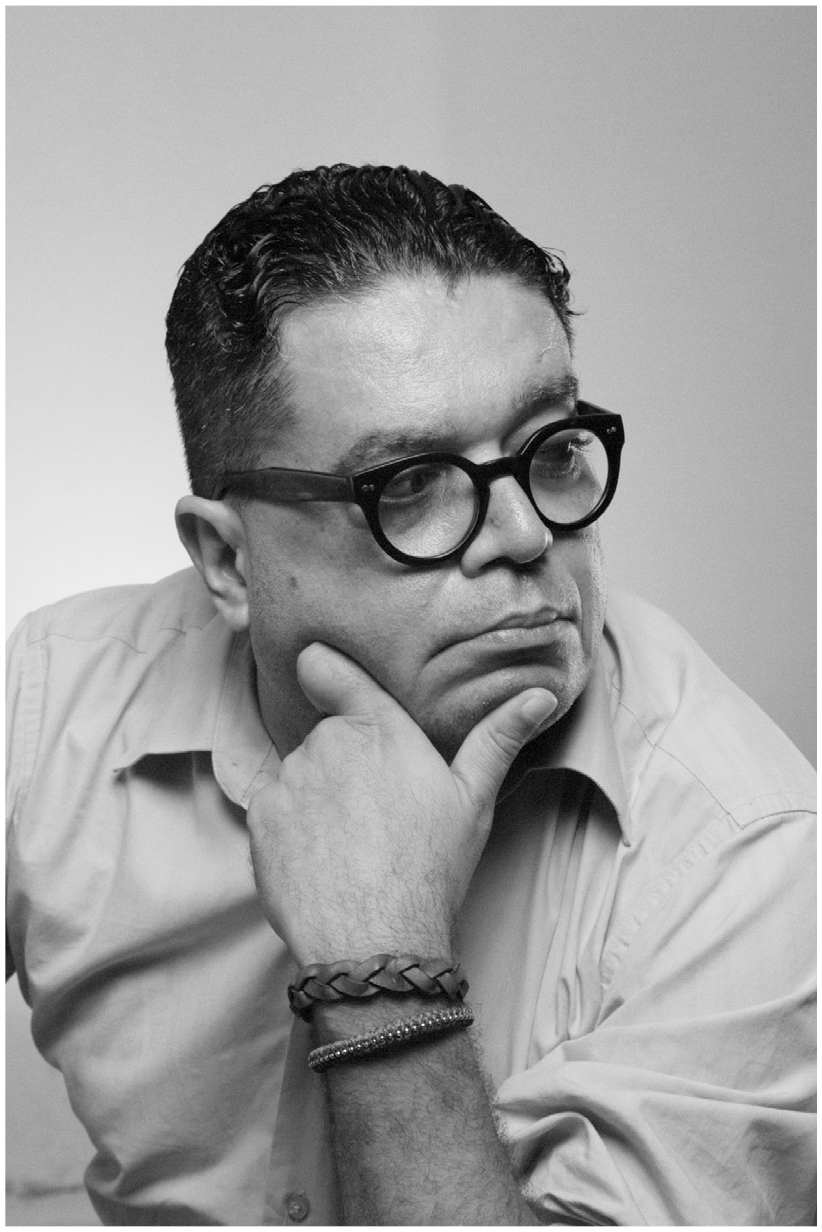
The director Émerson Maranhão, whose film about trans people has been cancelled in Brazil
CREDIT: Émerson Maranhão
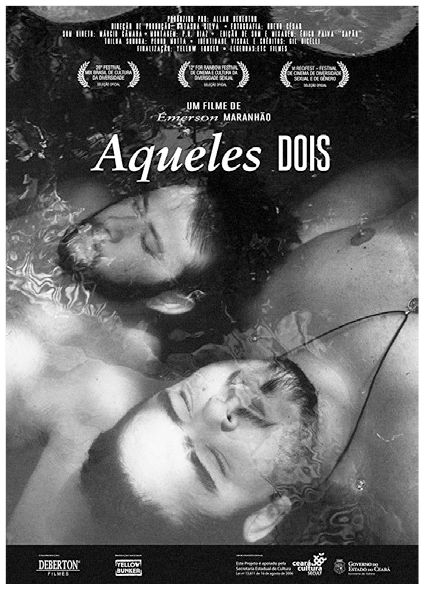
Poster for the short film Aqueles Dois (Those Two), also by Émerson Maranhão, which looks at the relationship of two trans people
CREDIT: Émerson Maranhão
Who it will feature: Kaio Lemos
Transgender man. Lemos, 38 years old, is an academic researcher and has a bachelor’s degree in humanities. The youngest of five children from his parents’ first marriage, he was raised by an evangelical mother as a girl. To this day, his mother does not accept his gender status. He is a trans activist, and in 2017 he founded a shelter to help transsexual people in vulnerable situations. Fourteen people have so far been sheltered. The house is maintained thanks to donations.
What it will cover: Episode 4
Pacatuba, Ceara. Samilla Marques made adversity the driving force for her personal revolution. Born and raised in an evangelical family, she faced challenges from everyone when she decided to become a woman. She left home, became a hairdresser, entered university and, slowly, gained the respect of those who had judged her. Through her own merits, she held important public positions and was a pioneer in the fight for sexual diversity and the rights of trans people in Ceara. Today, she returns to the church where she was raised and takes her parents to Sunday services. She is also her nephews’ favourite aunt.
CREDIT: Mitch Blunt/Ikon