




Abstract

He later removed the video and apologised for it, but his apology clearly lacked weight. Another similar video emerged, while he was in Saudi Arabia in October. This 20 minute clip on Facebook saw him attacking the media as “putrid” and “immoral” after a story emerged in October connecting him to the murder of a human rights activist in Rio de Janeiro.
These are clear reflections of how the former army captain sees himself, and his relationship with others. Bolsonaro’s relationship with journalists is nothing short of confrontational: he didn’t take part in preelection debates, he regularly slams media companies and he often uses his personal social media channels to criticise or make fun of reporters.
This can all leave journalists feeling at risk. Patrícia Campos Mello never previously felt the need to use security personnel, even when reporting in conflict areas, such as the Turkish-Syrian border, or Ebola-plagued Sierra Leone.
But her newspaper, Folha de São Paulo, had to employ a bodyguard for three weeks last year to protect her in her home town after receiving threats from Bolsonaro supporters.
“It was very weird,” Campos Mello said. “I’ve never had a bodyguard because I think it’s intrinsically against being a journalist: you have to be in the same position as everybody else. So it was very strange that I needed a bodyguard in Brazil just because of some stories I had worked on.”
Campos Mello’s phone number was passed on to WhatsApp groups of Bolsonaristas who started attacking her, showing up at events where she was scheduled to take part and name-calling her on the street. After receiving personal threats and threats against her family, she decided to cancel all public engagements for a month, and the newspaper’s parent company hired security on her behalf.
Even though the threats have stopped, she says she is still regularly confronted at political rallies and events.
Campos Mello is clear about the involvement of Bolsonaro in this dangerous game. She says it normally starts with a meme that attacks the journalist, often showing his or her face and some personal detail. The meme is tweeted to one of Bolsonaro’s accounts.
“Then the president retweets it, and the president has over five million followers, so once he retweets it you have all those followers and bots going after you,” she said.
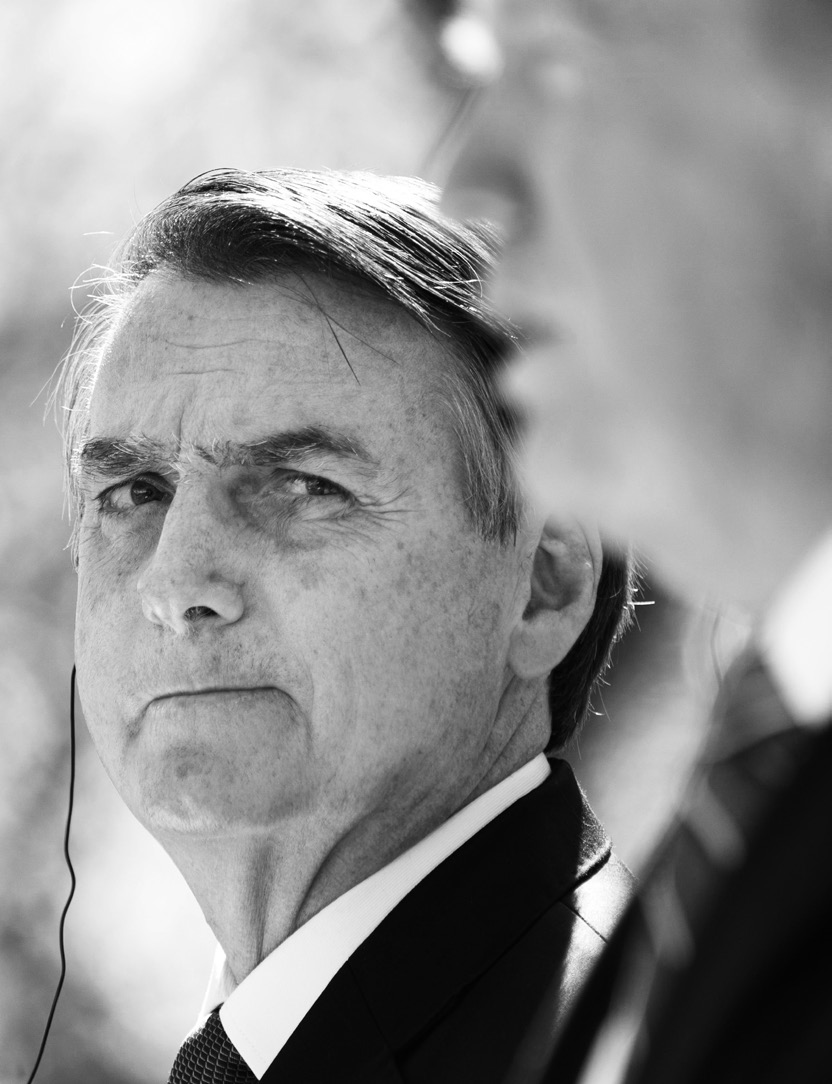
President Jair Bolsonaro with US President Donald Trump at a press conference at The White House, Washington DC, in March 2019
CREDIT: Jim Lo Scalzo/Shutterstock
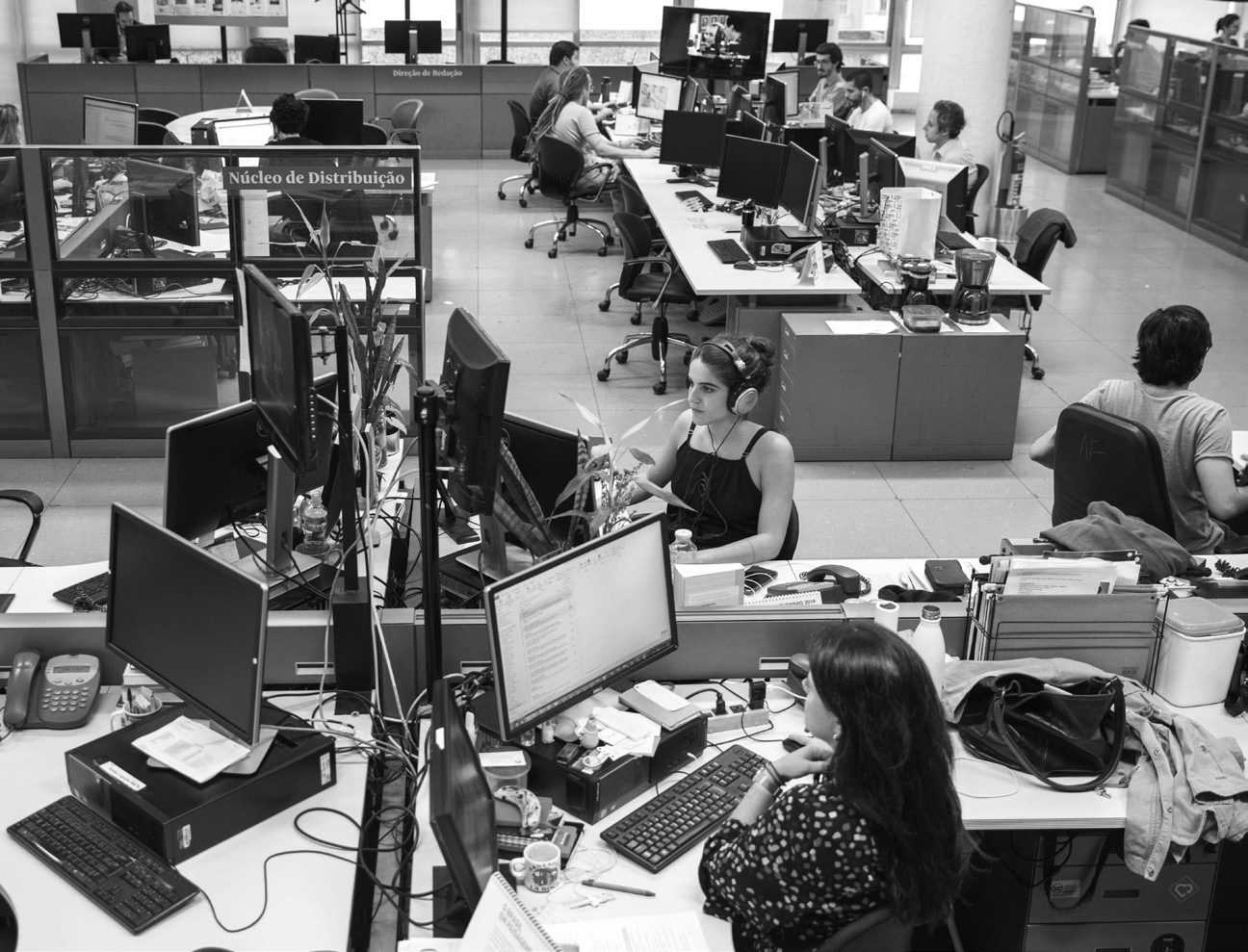
The newsroom of Folha de São Paulo. Brazilian journalists face regular harassment from Bolsonaro’s supporters
CREDIT: Fabiola Ferrero/VII Mentor Program for Index
“And what usually happens is that they have your phone number and start calling you at all hours and throw insults at you.”
This role of Bolsonaro marshalling his troops online is highlighted by other members of the media. Journalists point out that these attacks are often directed at women with the intent of scaring and silencing them, focusing on their physical appearance rather than their record.
Ana Freitas, a journalist who worked as a political reporter for several years before joining the fact-checking start-up Aos Fatos, agrees that the president’s online behaviour has deep consequences for Brazilian society. “I think [Bolsonaro’s] personal opinions kind of authorise opinions that people in the past were ashamed of sharing, and not only against women but also against homosexuals and other groups.”
For many of Bolsonaro’s supporters, his strong personal views and comments – such as when he appeared to enjoy a meme comparing French first lady Brigitte Macron unfavourably with his own wife – are simply part of the president’s online persona and should not be confused with his political record.
This is part of a wider debate taking place around the world, in countries such as India under the government of Narendra Modi, Turkey under Recep Tayyip Erdogan and the USA in the Donald Trump era. Many of these leaders enjoy a direct relationship with their political base and often this relationship is fuelled by attacks against their opponents and critics, with the media being one of the favourite targets. The base often applauds because it portrays the politician as an “authentic” character, as opposed to the camera-friendly, constructed persona of many contemporary politicians.
But media advocates worldwide agree that this resurgent “macho culture” from politicians is directly harming freedom of the press, and the health of democracy with it. According to the 2019 Freedom and the Media report by Freedom House, “in some of the most influential democracies in the world, populist leaders have overseen concerted attempts to throttle the independence of the media sector”. Attacks against the press are often the precursor to further reductions in civil liberties and personal rights. Such is the current state in Brazil, which is a country that still enjoys a healthy democratic debate but where the media feel under attack.
Campos Mello said: “If you compare [Brazil] with Venezuela or Nicaragua, we may even feel bad about complaining because we are not getting arrested or anything. But compared with what used to be the environment for media in Brazil, I think now there’s a striking difference.”
She points at potential legislation being discussed that could hamper the finances of media groups at a time when the government has already limited public advertisements and notices in newspapers. A damaged outlet could find it more difficult to publish critical pieces that could result in lawsuits and litigation. Campos Mello’s newspaper is one of the most trusted outlets in the country and has fought, and won, several defamation cases in the past 12 months, but smaller players might not be able to afford to instruct a similar team of lawyers.
The government also has influence on these defamation trials. Campos Mello was sued by Bolsonaro over an article she wrote in 2018. The trial took place in September 2019 and was won by Folha, but Campos Mello says the court allowed only Bolsonaro’s witnesses to testify, and declined to hear any defence witnesses, including Campos Mello herself. “That’s when I think it’s scary, when they start to gain a lot of control over the judiciary system… and then I think we are walking towards a Poland scenario or a Hungary scenario,” she said.
Personal attacks against reporters, financial restrictions and defamation suits are just some of the weapons Brazil’s powerful people employ against the media. Another strategy is simply making journalists’ jobs more difficult. Until this year, any statement by the president was posted online, but recently many of the smaller pronouncements or interviews have not been published.
“We used to have everything in the same place and [it was] easy to find, and now we have to scroll through YouTube and television channels to verify what the president said and when. It’s a small thing, but it makes the journalist’s job much harder,” said Freitas, from Aos Fatos. This media start-up was founded in Rio de Janeiro in 2015 as a service to verify politicians’ statements and separate facts from fake news. It rose to prominence during the 2018 election, when false information was being spread on social media with no control whatsoever.
“One example from last year was this story about the voting machines being controlled to favour the Workers’ Party candidate,” said Freitas. “It was completely false, but before we were able to prove it, the story was shared more than 700,000 times on social media.”
Aos Fatos launched a new project this year to check every statement made by the president. In the first nine months of the year, it found Bolsonaro had released more than 385 false or incorrect statements. Its prominence came at a cost: its website is under constant attack from hackers trying to infiltrate the server and shut down the site. The company now employs a coder whose sole role is to repel these attacks.
But amid increasing challenges, Brazil is witnessing a flourishing of new digital-first outlets, more adapt at surviving the changing environment. Aos Fatos, founded by a team of former political reporters, is just one of them. Many others, such as Midia Ninja, Agência Pública and Marco Zero, are trying to establish themselves as independent outlets, relying on donations by foundations and crowdfunding campaigns rather than the usual mix of advertisements and public funding that sustains much of the Brazilian media.
An outlet that has gained particular prominence this year is the Manaus-based news agency Amazônia Real, which specialises in environmental and indigenous coverage. It was founded in 2013 by two reporters, Elaize Farias and Kátia Brasil, who used to work in the traditional media until they found themselves out of jobs after a round of newsroom cuts.
Thanks to an initial grant by the Ford Foundation, the pair managed to fund Amazônia Real and find a niche in quality reporting on the Amazon. Bolsonaro’s election, while presenting them with the same challenges that other outlets face, is giving new prominence to the region.
“The same day that Bolsonaro got elected, two attacks against indigenous territories took place,” said Brasil. “That was the start.”
The 2019 deforestation fires also increased the news agency’s visibility, and Amazônia Real now receives visits from more than 180 countries, totalling an average of more than 60,000 unique readers per month. The success of the agency, Brasil says, is a testament to journalists’ commitment.
“It’s our duty. If we didn’t have the guts to do this job, we would be silenced and, right now, we simply cannot allow being silenced.”