Abstract
Can music be a form of resistance?
Alas, the German philosopher’s view is not shared by everyone.
Since time eternal, music has been banned for many reasons – “moral pollution” being a common charge – with Index frequently campaigning for, and championing, musicians who are censored.
This year has been no exception. From the sentencing of a rapper in Morocco this November to one year in prison (linked to a song he co-wrote) to the musicians who are seeing their work banned in China for speaking out in favour of the Hong Kong protesters, censorship of musicians is alive – and thriving – around the globe.
And yet, as shown by Laura Silvia Battaglia’s piece (p.57-60) discussing the emergence of an orchestra in Yemen after years of a musical blackout, there are glimmers of hope.
For this issue, we spoke to two other artists who are challenging the limits of musical free expression. Opera singer Jamie Barton, from Georgia, USA, says she has people telling her to get off stage because of her liberal views. Her response? Programming as many female composers as her time allows and headlining the BBC’s Last Night of the Proms this year with Pride flag in hand.
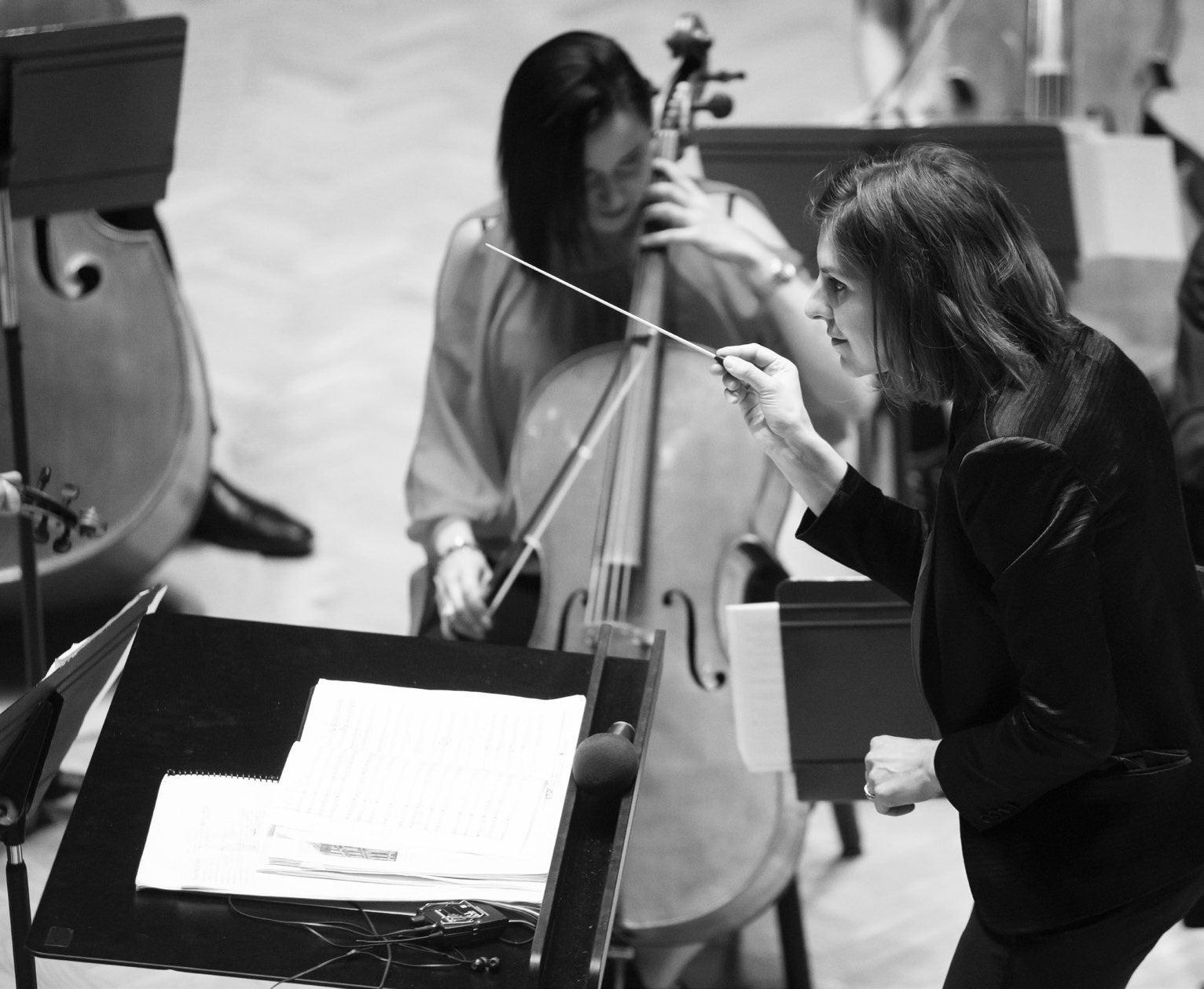
Conductor and music director Lidiya Yankovskaya, who originally comes from Russia, has not been affected by censorship in the country in the same way as musicians such as Pussy Riot, but her experience as a refugee led to her founding the Refugee Orchestra Project. Through this she works with people who lived in countries, such as Afghanistan, at a time when playing music could result in instruments being smashed, beatings or imprisonment.
Both musicians are working in the USA, where their messages aren’t always well received. But they’re unwilling to be silenced and instead are amplifying their own voices and the voices of the marginalised. And they’re producing great music in the process.
Nietzsche would be happy.
Discordant Notes
The award-winning opera singer, who closed this year’s BBC Proms concerts in London and has sellout performances coming up in the UK and the USA, is passionate about giving women a voice.
And she says she would support an initiative focusing on recovering “lost” female composers.
“Just going to the Wikipedia page I knew about 1% of the women composers they had listed and I do this for my job,” she said.
“Sometimes the compositions of women of the past are so unknown that you have to find library collections that might have the rare reprints available to be able to look through their music because it’s unavailable for purchase. At this point, there is a lot of extra effort that goes into finding music by women of past eras, and that presents a hurdle for many performers.”
Barton’s own voice – which has been described as velvety rich – is at its boldest when she’s rallying the marginalised.
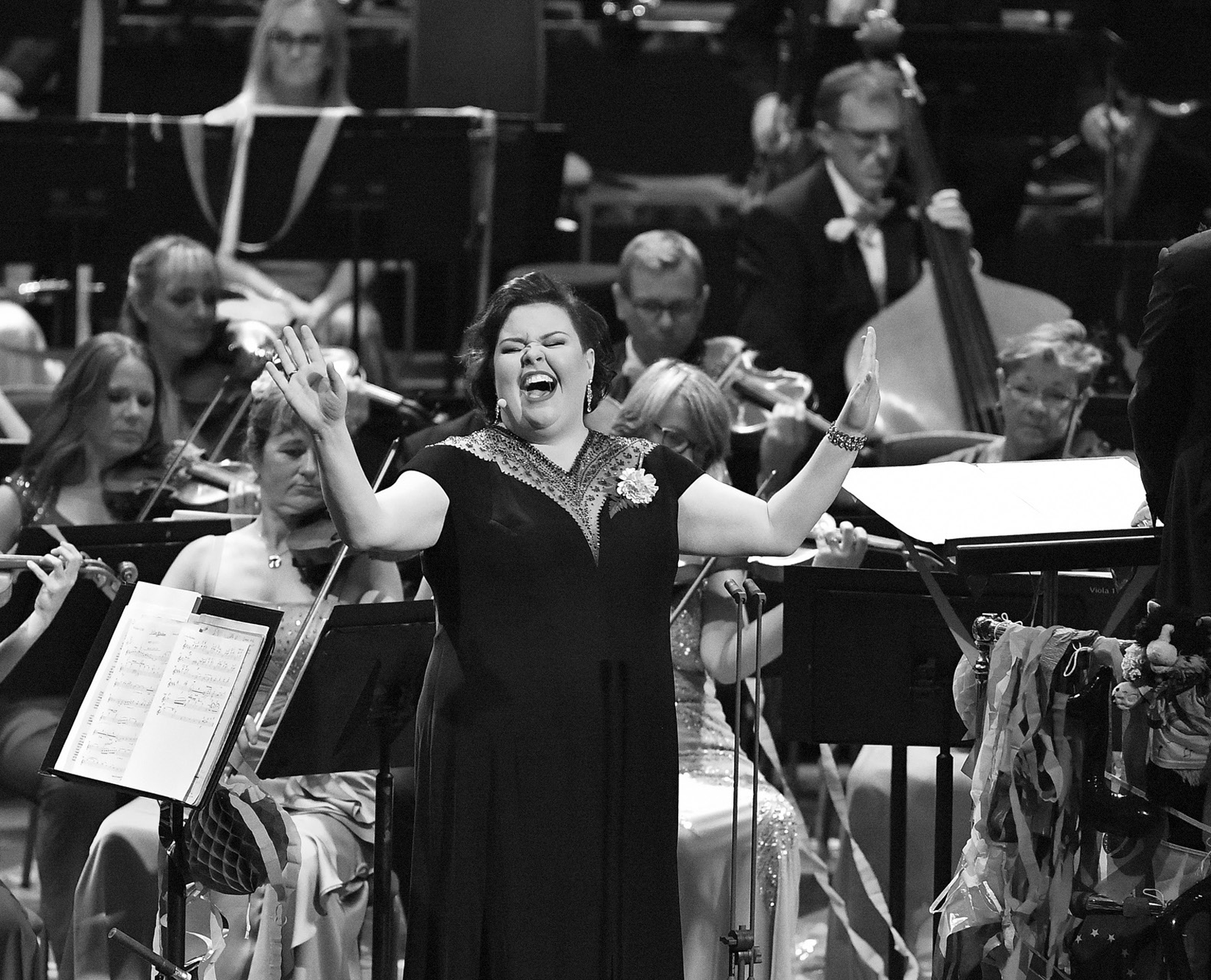
With a nose stud and hair that varies from hot pink to purple, the 37-year-old waved the Pride flag at the Proms as a reminder of 50 years since the Stonewall riots. Today she is touring with a recital that she describes as feminist and gender-bending.
Opera singer Jamie Barton performs at the 2019 Last Night of the Proms, held in the Royal Albert Hall, London. She waved the Gay Pride flag there as a reminder it was 50 years since the Stonewall riots
CREDIT: Chris Christodoulou
“When I started putting this recital together it was when a lot of political things were happening and, as a woman in particular, I was feeling really downtrodden,” she said. “This recital was really born out of the idea of a celebration of women – women composers, women poets, the stories of women – and also toying with gender constructs.
“Really it’s just an opportunity to try to challenge the audience to think outside of the normal recital bounds. The fact of the matter is most of the composers, particularly in classical music, are old, dead, white guys so the opportunity to bring in a different perspective is something that really caught me.”
Barton says her recitals attract a younger-than-average audience. “With those kinds of crowds it’s almost automatically built in that they’re really interested in sharing these kinds of things [and they are] very into seeing themselves reflected on stage,” she said. This is especially so for women. “They are excited to see and hear something different.”
Excited, and emotional too.
“Several would get to me in the receiving line after a recital and would burst into tears, and what they said over and over again was ‘Thank you. Thank you, I didn’t know this existed, I didn’t know there was a place for me in this’.”
She continued: “On the other side, I have a fabulous base of older, classical music listeners and I’ve often gotten a lot of positive response from them. A lot of the time it’s surprise – surprise that the group of women composers that I have that start the recitals are as breathtaking as they are, because these are composers who maybe they’ve heard of, or maybe they’ve even heard some of their music, but they certainly don’t know them very well.”
Barton describes the response to her recital tour across the USA as “overwhelming”, but overwhelming doesn’t always mean positive.
“Sometimes it was really negative,” she said. “I recall getting messages on Instagram and Twitter – someone wrote at one point: ‘Get your bigoted ass out of my town.’
“There’s a very loud, and very small, faction of people who were so very much against it. They didn’t want me and my progressive values anywhere close to them.”
Aware of this, Barton is careful with the words she chooses, and one she avoids when speaking from the stage is “feminist” – not because she has an issue with it (to her it’s a “really beautiful word”) but because she knows others do.
“I say: ‘This is a celebration of women.’ There’s something about that that becomes more palatable to people of all ages. They get that women don’t get celebrated in this form often.”
What of working in the age of #metoo? Barton says that she is feeling encouraged, at least within the classical music industry where change is afoot.
“In the last year of my career opera companies have begun to implement sexual harassment training. In my 10 years of doing this professionally on the road, this is the first season that I have known for most opera houses who the HR person is or how to get in touch with them,” she said.
Barton hopes that other important conversations will rise up the agenda. This champion of body positivity is incredibly keen to play Carmen but has been overlooked due to her size.
“We’ve just gotta get the gatekeepers to open their eyes and understand how exclusive, in the negative sense, it is at this point and how beautiful, truthful and powerful it could be if the casting gates were opened a little bit wider,” she said.
If anyone can take on the gatekeepers, it’s Barton.
The Message is in the Music
The opera singer and composer, who is music director of the Chicago Opera Theater, recently founded the Refugee Orchestra Project. Through this she interacts with people who have not always been granted musical free expression.
“One composer we work with quite a bit is a young man named Milad Yousufi, who now lives in the United States but is originally from Afghanistan,” she said. After the fall of the Taliban, when music had been banned, he was one of the first students of music in Afghanistan.
She says that the project promotes togetherness, but adds that “the kind of discord that we are seeing nationwide makes it much more difficult to bring that message of unity and dialogue”.
The project has many admirers. A quick look at its Facebook page shows happy concert-goers asking for more, but it has also attracted the occasional message of hate – possibly because of the current tense political climate in the USA.
“When we started the orchestra it wasn’t really a political statement to say, ‘We are a country of immigrants and a country with a plurality of voices and we’d like to highlight that and celebrate that’, but, over the last few years, even reminding people of that has become much more political and elicits a very different response from some individuals,” she said.
And as well as musicians from all over the world, she is also working with a large number of composers.
“[They] are combining the traditions that come from the countries where they are from with what they are studying here – with American music, even American popular music – and that’s really beautiful, valuable and incredible. That’s what moves any art form forward,” she said.
“The arts serve such an important role in starting dialogue and bringing people together. Music in particular can start a dialogue in a way that is so relatable to anyone, that is not boxing anyone in, that doesn’t have the same connotations or assumptions that language or a visual might presuppose.”
Another challenge comes in the form of funding. The US arts funding model is almost wholly reliant on private donors, whose money is often given with certain conditions and expectations attached.
“For the larger arts organisations that means that they are extremely risk averse, that they are afraid to touch more political subject matter out of fear of alienating a donor,” said Yankovskaya.
As someone who grew up in a country where the state poured cash into music, she can appreciate what good funding can do.
“In Russia then, and still today, there was so much access to music. One huge positive of the communism era was that music performances were very affordable for people and music education was very widely available.
“I was very fortunate to grow up in this environment because from before I can remember I was regularly going to performances,” said Yankovskaya.
Clearly her early music education has stood her in good stead. She might not have left Russia on good terms, but she did leave with good music.
Music director and founder of the Refugee Orchestra Project Lidiya Yankovskaya with the orchestra
CREDIT: Nick Rutter