Abstract
Graphic novels can reach a wider audience than other types of journalism,
“A 1,500-word article or a two-minute video could not communicate the families’ profound sense of loss, pain and anxiety,” she said.
She had been living alongside the students’ families and knew that the stories needed to be told in full, so she began to see the power of graphic novels.
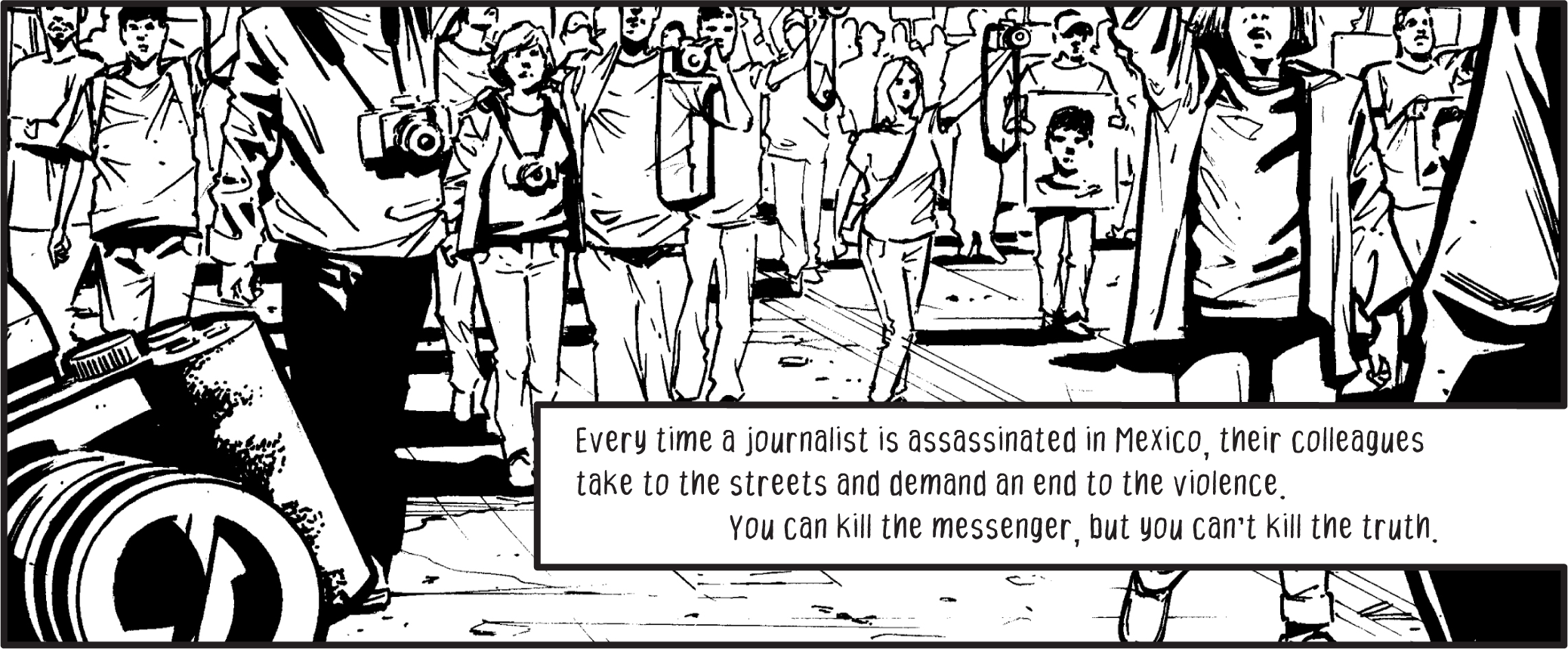
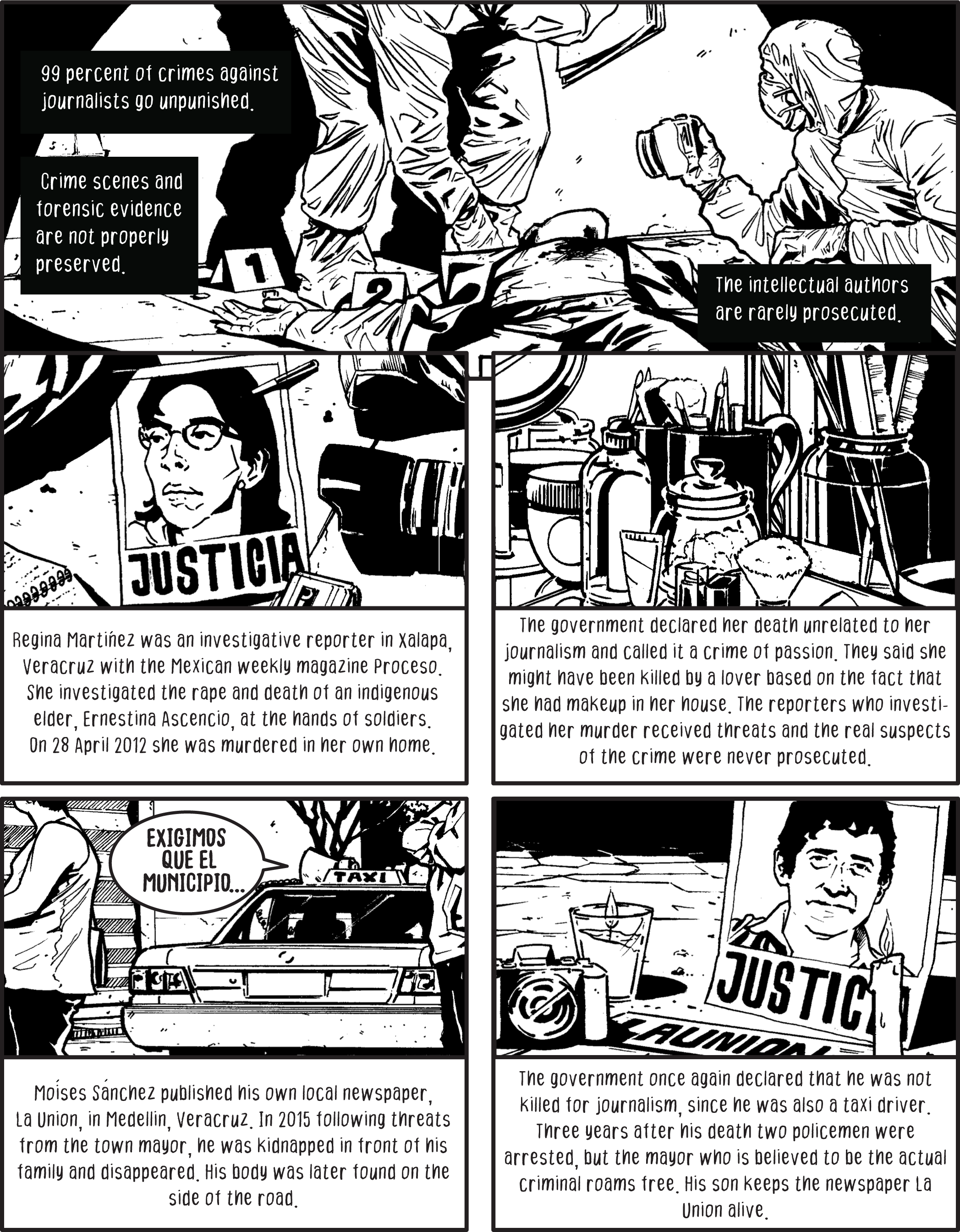
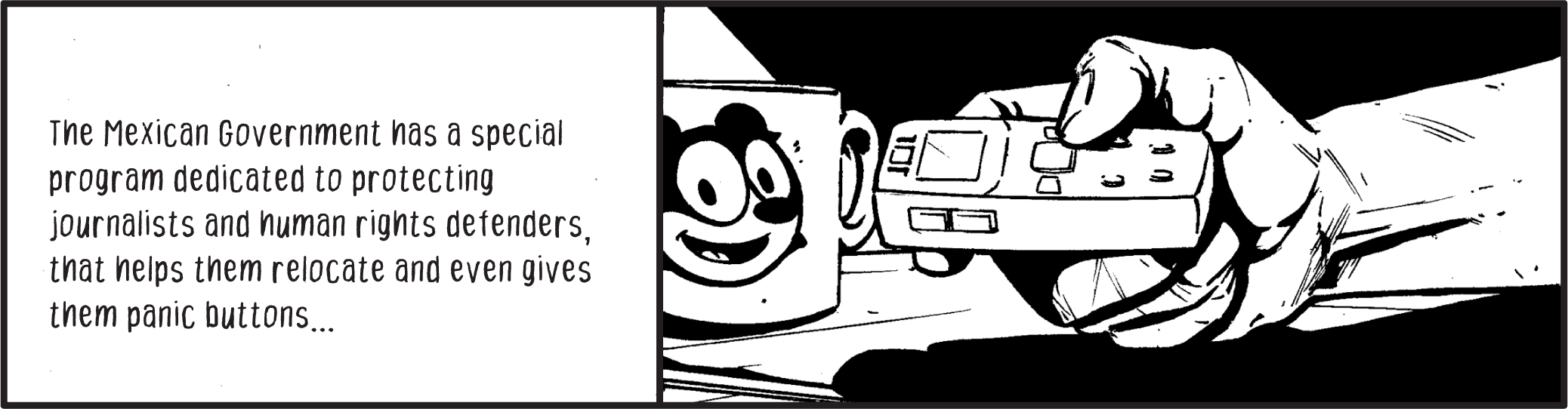
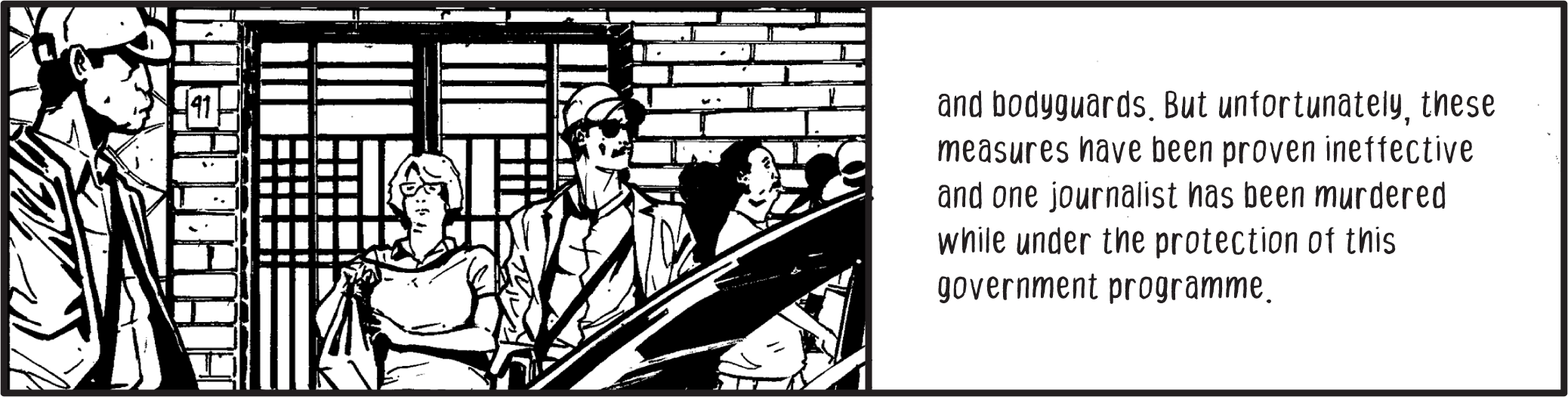
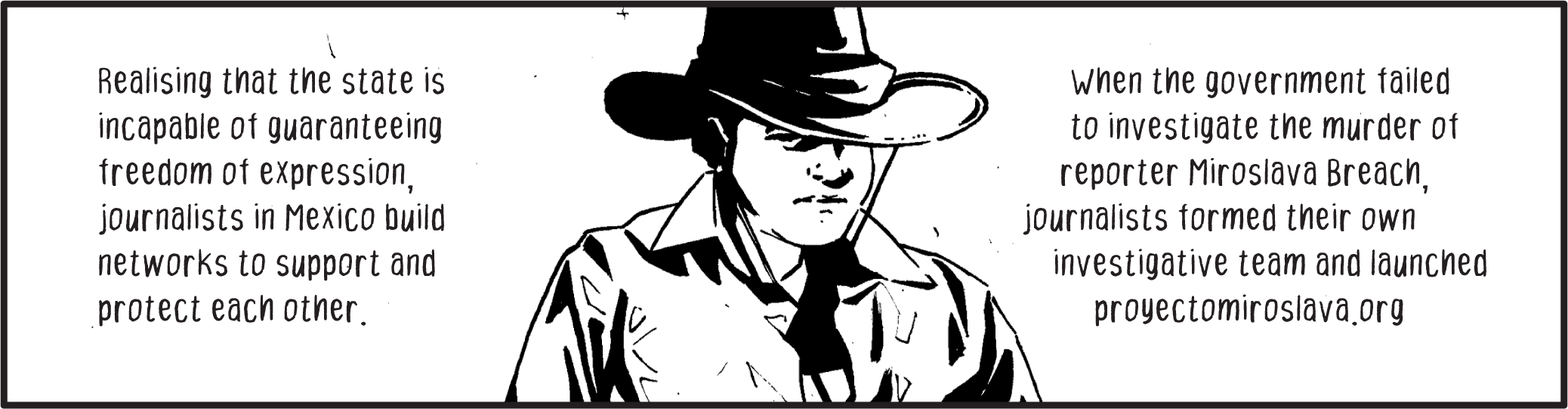
In the graphic novelette They Are Killing Us, published by Index for the first time here, Knoll Soloff and illustrator Marco Parra commemorate some of Mexico’s murdered journalists and demonstrate the ongoing risks facing journalists there.
“Every year, more journalists are forcibly ‘disappeared’ and murdered, and their cases are not solved,” Knoll Soloff said. “People think that Mexico is just violent because of organised crime, but there’s a whole system of collusion between the government and organised crime that enables journalists to be killed.
“We thought that things would improve now that there is a new, more progressive president, but many of the journalists who are killed are working in small isolated places, where the federal government has been unable to effect change,” she said. “Journalists have to be advocates for their own safety. Being in solidarity with your colleagues is not just an option – it’s a necessity.”
Knoll Soloff, who is originally from the USA and works as a reporter in Mexico for Al-Jazeera, among others, added: “As a teenager, I used to love reading graphic novels. I learned about things, such as the war in the Balkans, that I would never have known about if they were not in that format.”
The ability of the graphic novel to make complicated issues more accessible is one of the reasons why she also decided to work on a book about the 43 missing students from the Ayotzinapa teaching college, who in 2014 were detained by police and then “disappeared”. Her upcoming book, Vivos se los Llevaron (Taken Alive), which was published in Spanish this November, follows the students’ parents as they search for their sons. Knoll Soloff said relating individual stories without being repetitive would have been difficult if not for the graphic novel format.
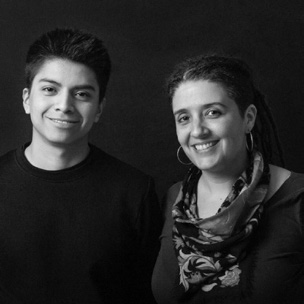
Andalusia Knoll Soloff and Marco Parra
CREDIT: Andalusia Knoll Soloff
When the parents visited towns in the state of Guerrero to gather support and put pressure on the government, people came out in their thousands. She said she could show that support in the faces of the people in the drawings.
The case of the Ayotzinapa students has come to represent the difficulty faced by Mexico’s lower social strata to have their voices heard. “Some of the parents are partially illiterate,” she said. “When reports were published about the investigation, they would not read them – they were 400 pages of text. But they [can] read the graphic version.”
As well as being one of Mexico’s poorest states, Guerrero has one of the highest rates of violence – including against journalists. “Being a journalist in Guerrero is how I got involved in press freedom issues,” said Knoll Soloff. “I often report on the same issues that journalists [who] have been murdered, or at least threatened or harassed, report on.” ®
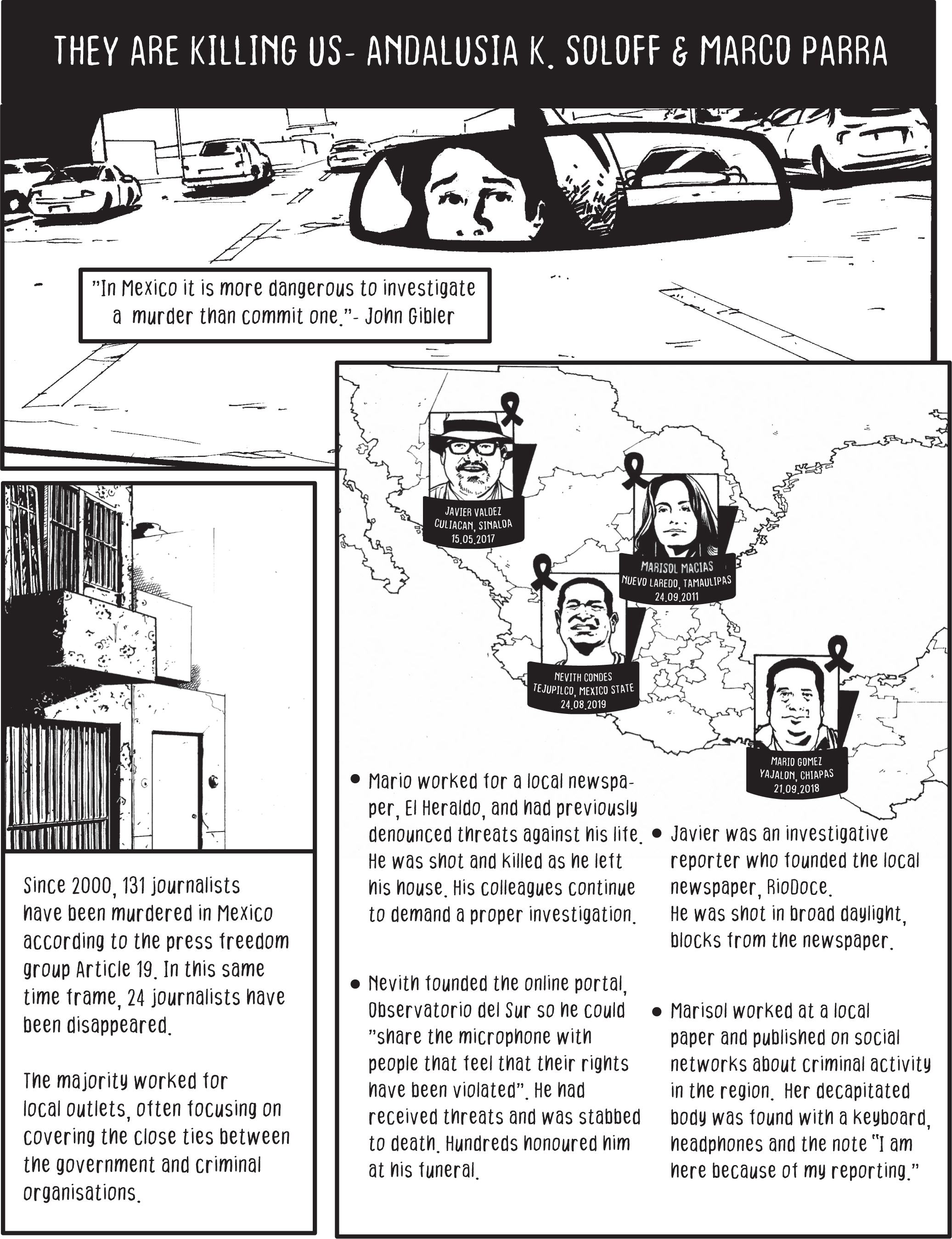
SOURCES: Article 19; CPJ; Animal Politico; Proceso; Vice; El Pais; Knight Center; NPR; AP News; El Heraldo De Chiapas; Pólitica; Reuters; El Universal; Borderland Beat