Abstract
Before Stieg Larsson posthumously achieved great fame as the author of The Girl with the Dragon Tattoo, he was reporting on anti-fascism in Sweden.
From John Mortimer, the barrister and free-speech defender who dreamed up Rumpole of the Bailey, to Robert Harris, who was a correspondent for the BBC and political editor of UK newspaper The Observer before writing thrillers including Fatherland and Enigma, the shelves in the crime sections in bookshops are packed with novels by authors with a social conscience who use fiction to open up stories which are not being told.
Bestselling crime novelist Val McDermid was a reporter for papers including the Daily Record in Glasgow and the Sunday People in Manchester. During this time she wrote about two of the UK’s most notorious killing sprees – the Yorkshire Ripper and the Moors murders. She began writing crime while she was a journalist, learning a lot, she says, from the People’s investigative team – “How you dig, how you get beneath the surface, how you find ways to the truth that you don’t necessarily have a need for in day-to-day news journalism,” she told Index.
She also discovered “the frustration of spending a long time on an investigation that gets killed by the lawyers because they run scared of it”. One report she worked on looked into a pregnancy-testing clinic that was giving a “disturbingly high” rate of false positives. The team discovered, says McDermid, that the women with the false positives were then being funnelled to a particular abortion clinic owned by the husband of the woman who owned the pregnancy testing clinic. It was a case of “join the dots” but, she says, the “legal team ran scared because essentially we were accusing doctors of complicity in this”.
The story was not published in the newspaper but McDermid told Index: “I used the guts of that in one of the Kate Brannigan novels. Of course, they got brought down, the good guys won. That for me was one of the great joys of writing fiction – that I could tell some stories that had slipped between the cracks for one reason or another, and tell them in such a way that probably the people involved in it would have recognised it, but insufficient to get me sued for libel.”
McDermid has a particularly notorious example of this. In her early days as a journalist she was sent to interview Jimmy Savile and found him to be a “deeply unpleasant man, but you couldn’t say that, you had to go with the myth of Jimmy Savile”.
Working in Manchester, there were also “several instances of people contacting us to claim they had been abused by Savile”, but the difficulty was there was never any corroborative evidence, and often, she says, these were people who were damaged by what had happened to them and there was no way they could have been put in the witness box – it would have been an act of cruelty.
So she filed the stories away “in the back of my head”.
But on a visit to America in the mid-1990s, during the OJ Simpson trial, she met a woman whose company had been involved in the first allegations of paedophilia against Michael Jackson, and she came away thinking “celebrity was the new shield. That if you were famous enough you could get away with anything”, and that she would write about this.
She created the character of Jacko Vance, a villain who appears in novels including The Wire in the Blood. “He’s a former athlete who has a television programme called Vance’s Visits. That was when Savile’s Travels was still on the telly. He does charity work, visits hospital patients. Nobody made the connection,” she said. “I knew how litigious Savile was and I really didn’t want to lose all my money. It was only after Savile died that I felt able to respond when people asked – to say ‘yes’.”
There is a sense, McDermid says, that fiction can be used to tell stories that could not be told in the media at the time they were happening.
“However we do it, there are things for all sorts of reasons you can’t tell in journalism or documentary form that the writer of fiction can plunder,” she said.
American crime novelist Scott Turow is the author of 11 bestselling novels, but is best known for the multi-million seller Presumed Innocent, the story of Chicago prosecutor Rusty Sabich, who stands accused of raping and murdering a colleague with whom he has had an affair. Turow is also a lawyer, specialising in criminal litigation, and has continued to practise while writing.
His debut book was the memoir One L, about being at Harvard Law School.
CREDIT: Alex Williamson/Ikon
“Going to law school was the great break of my literary career, not just because I ended up with a contract to write a book about my experience,” he said. “But also because in going to law school I’d discovered a route to questions that were very much at my core, about differentiating right from wrong, and the difficulty of ever fully categorising human behaviour in ways that are just.”
Turow’s novels explore the fallibility of the legal system and how the black and white results of a trial play out against the many shades of grey which is real life.
This, he says, has always been key for him. When he met Sydney Pollack to talk about the film of Presumed Innocent, Pollack told Turow he could name one thing he didn’t want them to lose in the translation to film. “I said, ‘the shades of grey’,” Turow told Index. “Life is usually far more complex, and a poorer fit for the boxes the law of necessity has to make.”
More recently, Turow has moved away from his fictional setting of Kindle County to replace domestic murders with war crimes in Testimony, taking on a wider canvas and looking more closely at a different kind of atrocity.
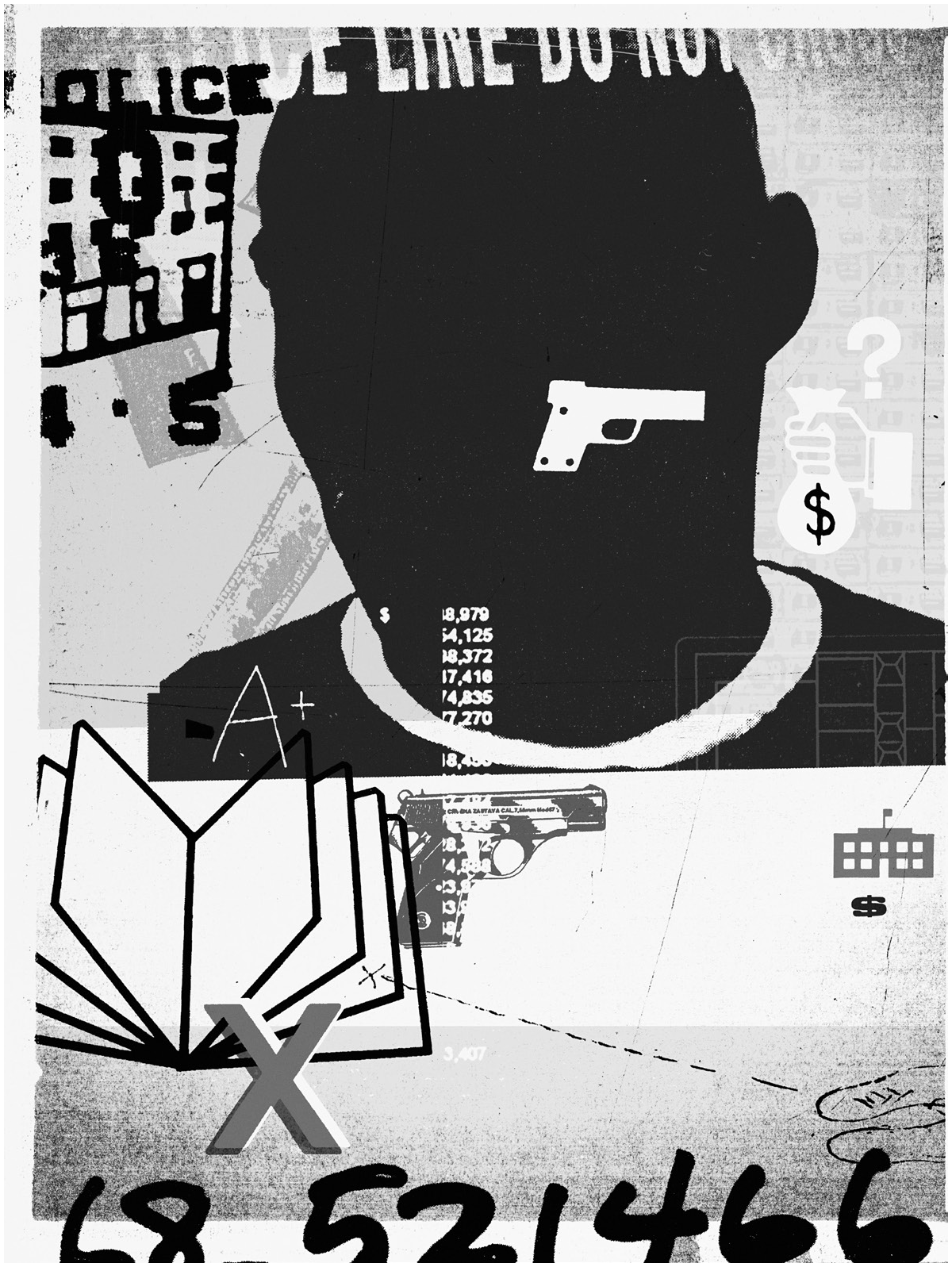
American author and lawyer Scott Turow in Lincoln’s Inn Fields, London where traditionally barristers have their chambers
CREDIT: Daniela Zedda
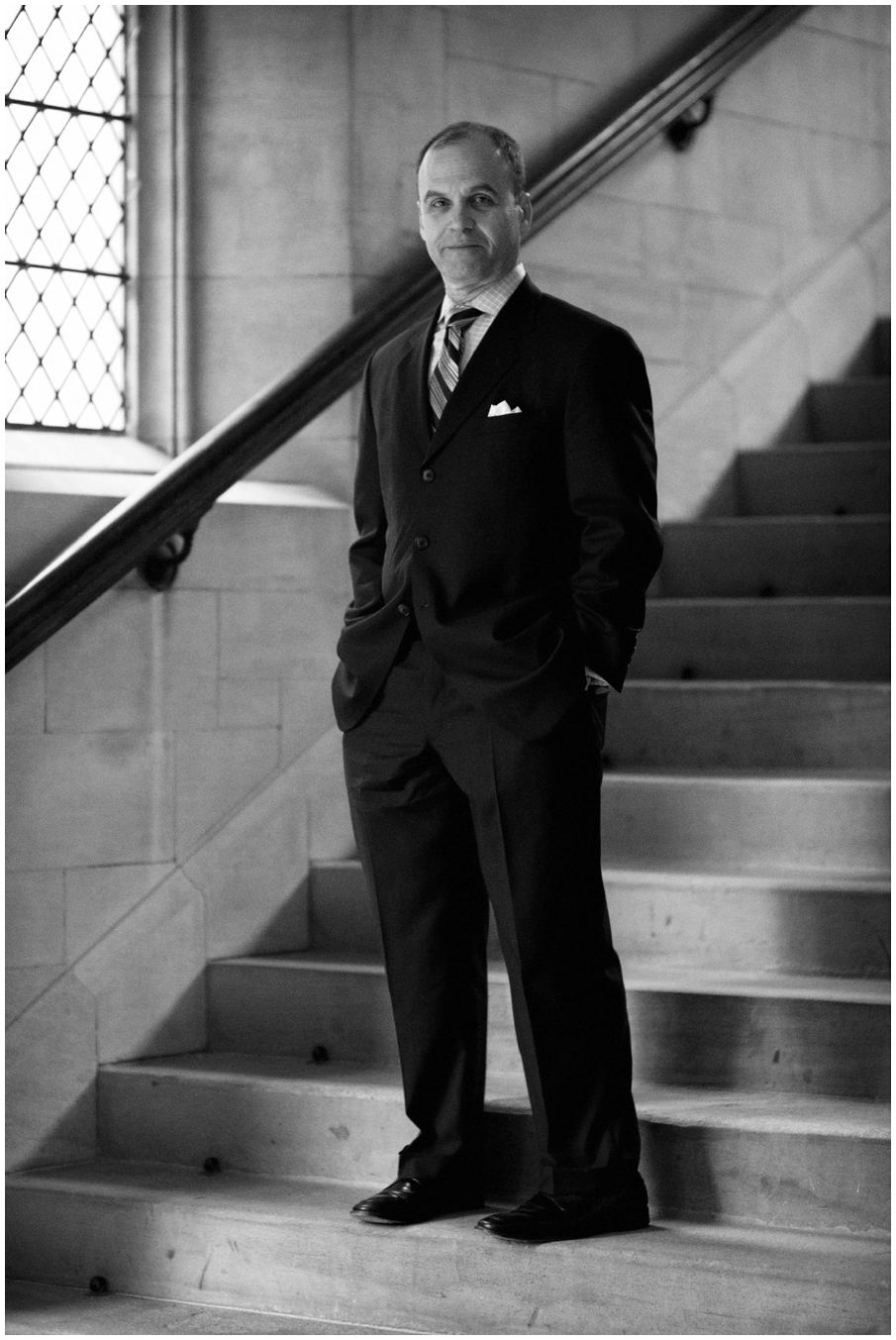
Italian crime author and playwright Massimo Carlotto
CREDIT: Geoff Pugh/Shutterstock
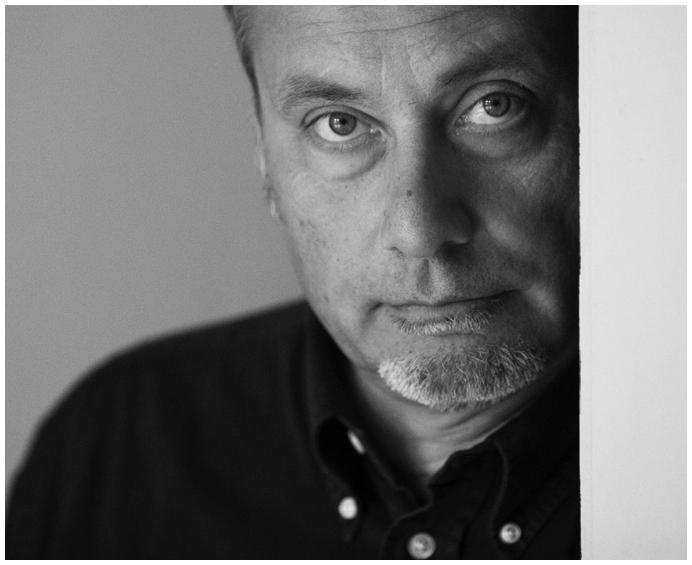
This time, his prosecutor is confronted with an alleged massacre of 400 Roma in Bosnia in 2004. Part of it, he says, was taking “a breather” from Kindle County, but he also had a lifelong interest in the Roma and the two things came together.
“I came to greatly respect the mission of the International Criminal Court, which has exposed some deficiencies in US foreign policy, even before the current administration,” Turow told Index. “I loved the learning that went into the book.”
Turow agrees that fiction can be a way of looking at difficult themes in more detail, and appealing to a different audience, than a straight piece of non-fiction might.
“I think fiction works from ambiguity, what Faulkner called ‘the human heart in conflict with itself’,” he said. “The genius of fiction, over and above film, or even journalism, is that it dwells so deeply within the character. Fiction works from the inside out, and film the reverse. Journalism is also supposed to be objective, so it’s much more about the outer view of people.”
Massimo Carlotto was a reporter before he witnessed a brutal murder – a murder he didn’t commit but which led to years spent in Italian prison before an international campaign saw him pardoned. Once he was freed, Carlotto turned to crime fiction, dreaming up his investigator “the Alligator”. The series is published in English by Europa Editions, and is becoming a major proponent of “Mediterranean noir”.
Fiction, Carlotto told Index, is “democratic, open to all, and allows the writer to tell things the Italian press won’t publish”.
“I decided to write fiction because it’s a genre I love very much,” he said. “In my novels I delve deep into the links between organised crime and financial, political and monetary power: Italy’s system. The readers are completely aware of this.”
He is not sure if he would have taken the step into novel-writing if he hadn’t been imprisoned for seven years, but admits that “having been a guest of the Italian state has allowed me to get to know many criminals, and as a result I’ve been to tell their stories more realistically than other writers may have done”.
Carlotto draws from real life – real criminals, real killings – to tell his stories. He does this, he says, because the relationship between crime and society has changed.
“Nowadays, mafias and organised crime are no longer confined to the margins but have infiltrated much of society. In a break with the past, they want to have real influence,” he said. “This is why they invest in politics. Just this week two politicians from two different regions of Italy were arrested and accused of being linked to the ‘Ndrangheta, the Calabrese mafia. Today, organised crime is involved in illegal waste disposal and food adulteration, in effect jeopardising people’s health. These are all very good reasons to tell readers, by means of compelling plots and good writing, of the sad reality in which we live.”
Globalisation “has caused a historic, momentous revolution in organised crime”. This makes it particularly important to him to expose criminal activity in his fiction. “We find a number of criminal activities behind every global phenomenon: migration, pollution, finance… so goes the world,” he said.
Turkish author and journalist Ahmet Altan explores, in his literary noir novel Endgame, the ways in which corruption envelops Turkish life. He describes it as a novel which “brings a journalist’s observations into the world of a novelist”.
“If you look at the great classics closely, you’ll see that most of them are developed versions of newspaper stories,” he said. “The literary worth of a novel depends on the skill of the novelist, but its story is nothing but a news story. A journalist informs you about what happened; a novelist tells you the story of the emotional world behind what happened.”
Altan’s historical novels are also highly political – his Ottoman Quartet spans the half-century before the rise of Mustafa Kemal Atatürk, the founder of the Turkish Republic. “When you look back at people’s greed, their hunger for power, their desire to rule… the absurdity of all of these becomes even more evident,” he told Index, from prison. An exclusive English language extract of Altan’s novel The Longest Night was recently published in the magazine (Index vol 48.2, p84). Altan was sentenced to life in prison in 2016. In early July, his life sentence was overturned, with the case due to be reheard by a lower court. He said that while in prison he had written a new novel, called Lady Life. “My life in prison hasn’t shaped or influenced this novel. I have exhausted my literary ties to prison by writing my latest book of essays, I Will Never See the World Again,” he said. “I don’t think I’ll go back to the subject.”
Turkish novelist and journalist Ahmet Altan who is in jail for criticising the government
CREDIT: Alan Peebles
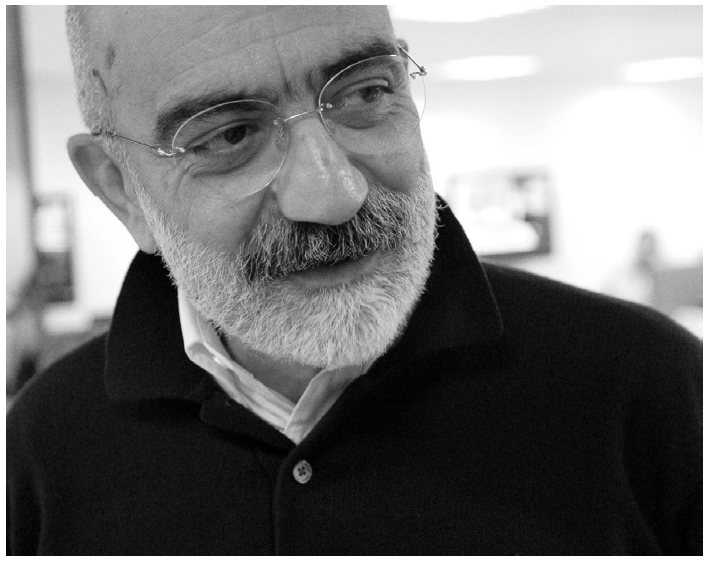
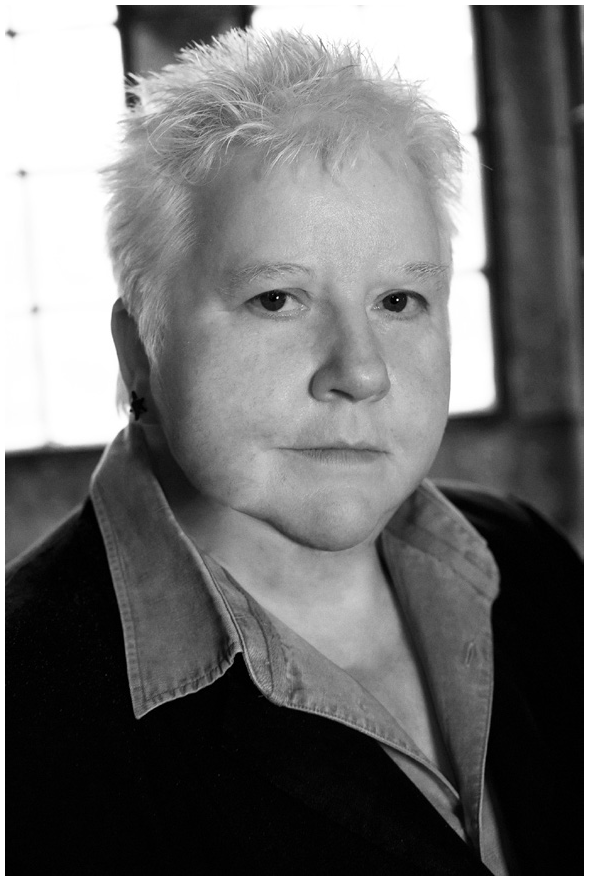
Scottish crime-writer Val McDermid
CREDIT: ABC Ajansi/Shutterstock