




Abstract

Thirty years after the fall of the Berlin wall and the disbanding of East Germany’s secret police, the Stasi, Germans are worried about who is watching them.
It is all part of interior minister Horst See-hofer’s draft law on the “modernisation of the Office for the Protection of the Constitution”. This office, one of several German security agencies, has only minimal power to enforce laws and is mostly charged with keeping a close eye on would-be terrorists inside the country.
The proposal caused an immediate outcry. Internet privacy advocates called it a “licence to hack”. Journalists saw it as an attack on press freedom, saying they wouldn’t be able to protect sources. And parents worried that security services would be watching their children after Seehofer said that even under-14s could have been radicalised by extremist groups.
In East Germany, the communist government would often put cameras or listening devices in homes without citizens knowing and, as Konstantin von Notz, current deputy leader of the Green party in the German parliament, pointed out, these new plans would “endanger the fundamental rights of millions of people and the digital economy. Instead of a million more bugs in our apartments we need more secure devices and more clearly defined legal standards [for them].”
This year marks 30 years since the fall of the Berlin Wall and the end of the East German government and its secret police, better known as the Stasi (short for Staats-sicherheitsdienst, or state security service).
East Germany was well known as one of the most surveilled nations in the world, and when the government dissolved in 1989, the ministry for state security had 91,000 employees and a further estimated 100,000 informers on its books. These informers were known as “unofficial employees”, and at their peak they made up almost 1% of the East German population. They were everywhere, all the time – children spied on parents, sports coaches on athletes and teachers on students. There is no doubt that almost 40 years of this level of surveillance and the constant need for self-censorship has had an enormous impact on German policy in this area. History has taught Germans the price of privacy.
“Some online platforms know more about us than the Stasi knew about their citizens,” Iyad Rahwan, an expert in information systems and director at the Max Planck Institute for Human Development, told news magazine Der Spiegel.
Last year, locals in Berlin who were protesting against Google opening a campus in their neighbourhood gleefully drew parallels when the US company was rumoured to be considering moving into former Stasi headquarters.
And – opening an exhibition in Berlin in June 2019 – Roland Jahn, the federal commissioner for the Stasi Records Archive, confirmed that his office saw “the archive of Stasi files as a monument to the misuse of data”.
This is part of the reason why Germany has been at the forefront of both national and European-wide attempts to regulate data-harvesting digital giants such as Facebook and Google.
In 2018, a study by consultancy Ernst and Young found that Germany had been the most active in Europe in imposing fines related to the European General Data Protection Regulation, fining 42 violators and issuing warnings to another 58.
The plan by the German Federal Cartel Office to change the way Facebook does business by using national law on monopolies – have had worldwide resonance. The office forbade Facebook to combine German users’ data from the three social platforms it owns – Facebook, Instagram and Whatsapp – because of worries about the resulting power. In effect, they were “breaking up” the company’s data collection abilities. “Germans understand that information is power, so their sensitivity to surveillance and data protection is very much alive now,” argued Dagmar Hovestädt, head of communications for the Stasi Records Archive.
“There is a great deal of knowledge to be gained by studying a fully developed state system of surveillance, like the one the Stasi built. Even though it was not very digital, it was very data-hungry, unrestricted in its reach and uncontrolled by a parliament, the judiciary or public discourse,” she explained. “And it could use the data any way it wanted.”
But, as Christian Katzenbach, a senior researcher at the Alexander von Humboldt Institute for Internet and Society, points out, contemporary German fears about protecting personal information started before that – in West Germany.
“The German discourse on data protection started in the 1960s in West Germany and culminated there in the early 1980s, around the national census of the time,” he said.
In 1983, West Germans were supposed to answer detailed questions for a national census. But Germany’s National Socialists, the Nazis, had used similar information to lethal effect when they were in power.
Germany’s baby boomers, the ’68ers, were coming to terms with the previous generation’s collusion with the Nazi government and the 1983 attempt to collate this kind of information led to nationwide criticism and calls to boycott the process.
In the end, a legal challenge to the project went all the way to Germany’s highest court, which eventually ruled that aspects of the census violated a constitutional right to privacy and what Germans call “ informationelle Selb-stbestimmung”. That’s “informational self-determination” – something the court described as a fundamental right in a democratic society.
CREDIT: Patrick George/Ikon
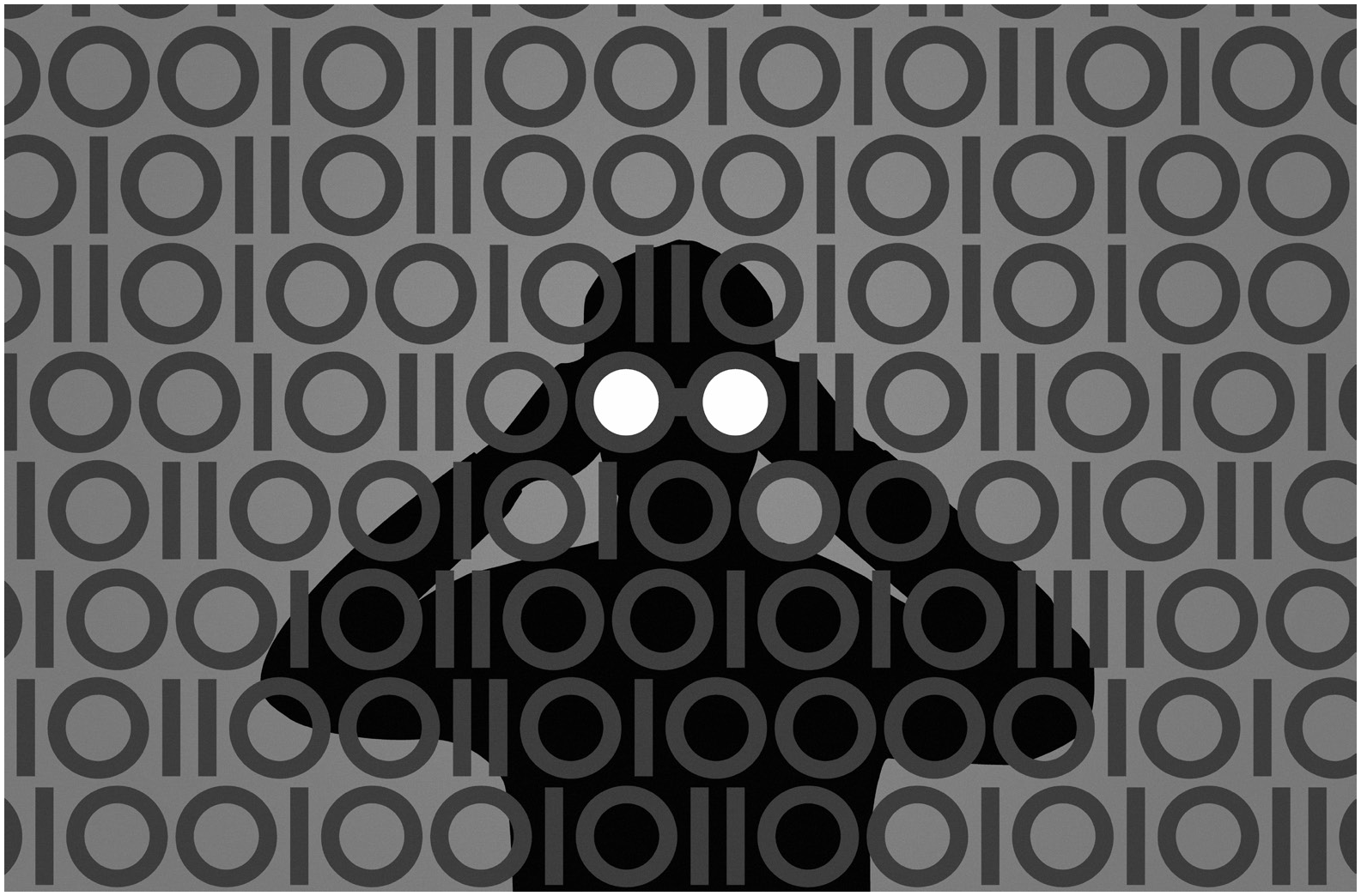
Today, those twin cultural currents – from East and West German experiences around privacy and personal information – are still having an impact on local attitudes. This is something the country’s interior minister, whose plans for surveillance are currently still being negotiated with other ministries, may find hard to overcome. “The interior ministry came forward with a bill that was immature,” said Thorsten Wetzling, of the Berlin-based think-tank Stiftung Neue Verantwortung. “And it was soundly rejected by other parties, including the justice ministry. They were told to come back with a new version. We don’t know what the new bill will look like yet, but we can only assume that it may contain even stronger surveillance measures.”