




Abstract

As academics teaching gender studies around the world lose their jobs and research grants,
She also ran unsuccessfully for election as governor of Rio de Janeiro, during which she received 200 death threats and had to travel in a bulletproof car.
She has now fled and lives in Paris. The death threats meant that Tiburi, who is also a prize-winning author, felt she could not live safely in Brazil anymore. Her books – including the anthology Women and Philosophy and the book How to Talk to Fascists – have made her the target of abuse, ratcheted up by the anti-feminist rhetoric of the government which has seen other academics hounded out of their jobs – and the country.
“Gender is a demonised word in Brazil,” she told Index. “This word has been denied, forbidden in all government documents since 2016… but Brazil was not as crazy as it has become under the government of [President Jair] Bol-sonaro. I am now leaving the country because of the persecution and the threats.”
Tiburi is a public academic in Brazil, but she is one of many around the world who teach gender studies, or use feminist theory in their field of study, who are finding themselves under threat in countries where a new generation of “strong” male leaders want to enforce a new set of rules. These leaders want to promote traditional conservative views of women as having their main focus on the home and children, and to fight against progressive ideas of identity and sexuality. Mackenzie Presbytarian University has been approached for a comment.
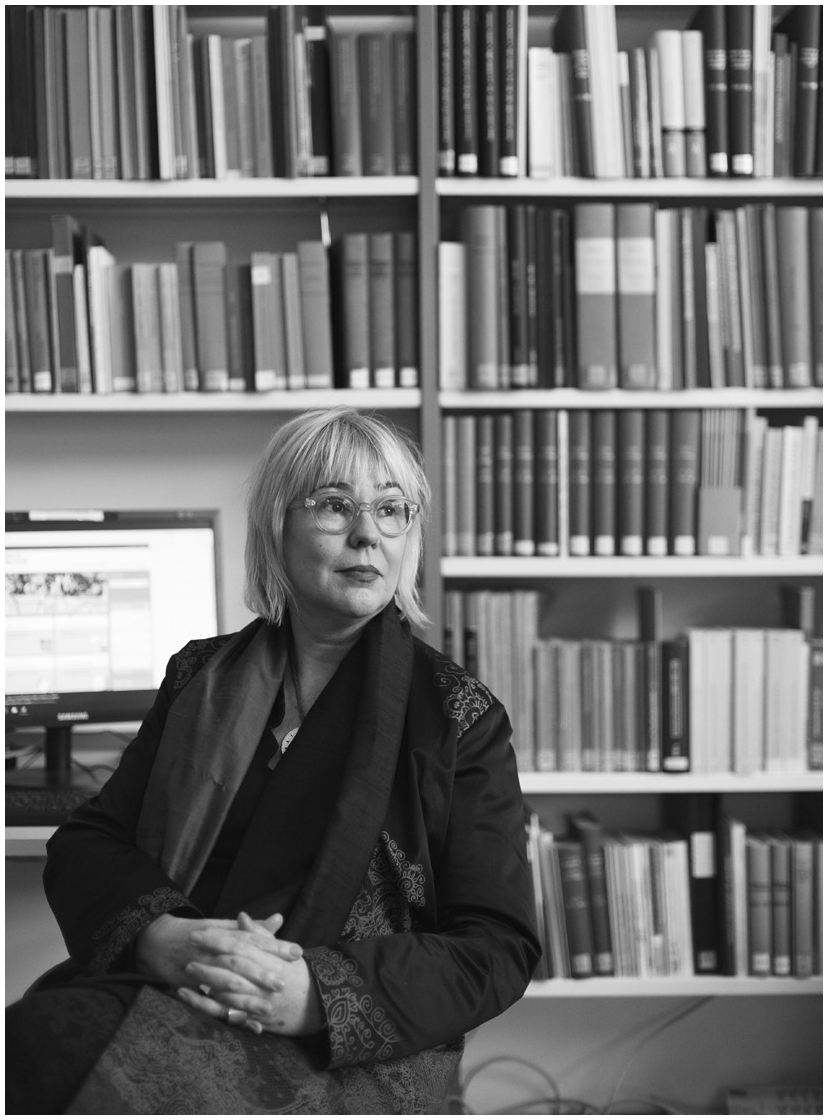
Andrea Pető, professor in the department of gender studies at Central European University, Hungary
CREDIT: Robert Haas
Academics are finding their programmes abolished, are coming under personal attack on social media, and are struggling for funding. Those not falling in line with these conservative ideas are often labelled as “unpatriotic” and “unscientific”, interested only in peddling what has been dubbed a leftist, or even Marxist, “gender ideology”. Linda Marie Rustad, the director of Kilden, a knowledge centre for gender perspectives and gender balance in research in Norway, told Index: “This is about an attack on academic freedom. These right-wing parliaments and governments disagree on a lot, but where there is consensus is on gender.” Rustad says that, in practical terms, research about gender and women is important and that if research is closed down, there will be less knowledge and data about women’s lives and what is happening to them in society.
CREDIT: Gary Waters/Ikon

She adds that the global attack on gender studies is part of a wider attack on women’s rights, including abortion and reproductive rights.
“What is so special about the gender field is that it’s related to the women’s rights movement,” she said. “And what we see today is that the pressure against women is increasing.”
Roman Kuhar, editor of the book Anti-Gender Campaigns in Europe, is a professor of sociology and dean of the arts faculty at the University of Ljubljana in Slovenia. He believes that populists and far-right parties tell voters that there is “a hidden plan behind the gender agenda to delete the difference between masculinity and femininity”. And the issue is complicated by the fact that in many countries there are not separate words for sex and gender.
He says the attack on what was termed “gender ideology” is, for leaders ranging from Bolsonaro to Hungarian Prime Minister Viktor Orbán, an easy way to unite disparate groups of people but ultimately meaningless.
It can be used to unite conservative or religious people, people who are worried about sex education in schools or who are against LGBTQ+ rights, including equal marriage, and women’s reproductive rights. “It can be filled in with different meanings, and that was the trick,” he told Index.
The anti “gender ideology” movement has been so successful that it is now being used in a “copy and paste” way around the world, he said.
In his inauguration speech on 1 January 2019, Bolsonaro was clear about his hatred of gender studies. He promised to “liberate” Brazil from “gender ideology”, “political correctness”, and “ideology that defends bandits”. He has also said he wants to limit the teaching of philosophy and sociology in favour of practical studies such as engineering and medicine.
In rhetoric similar to that in Brazil, the Hungarian deputy prime minister, Zsolt Semjen, was reported by international news agency AFP as saying gender studies “has no business in universities” because it is “an ideology, not a science”. And Orbán’s government has withdrawn accreditation and funding for the two gender studies masters programmes in the country.
One was taught at the state-run university, Eötvös Loránd University (ELTE), and the other at the Central European University, both of which are among the top universities in Hungary. The private CEU is now moving to Vienna after a long running-battle with the government.
Andrea Pető, a professor at the CEU, is one of the victims of this ban. Her works on gender, politics, the Holocaust and war have been translated into 19 languages. And in 2018 she was awarded the All European Academies Madame de Staël Prize for Cultural Values.
She told Index she had received an anonymous threatening email via the academic website academia.edu because of what she teaches. It was also anti-semitic, saying that it “foresaw the eradication of her breed”. The CEU offered to provide her with a bodyguard – an offer she turned down. Now she and other academics are fighting back.
Last November there were strikes at the major universities of Corvinus, ELTE and the CEU. And, says Pető, there is an open debate in the country about the issues.
“Previously, scholars of gender studies were working either in their offices, in the attic or in the cellar, but definitely marginalised,” she said. “Now, due to the campaign, Hungary – the country of 10 million – became the country of 10 million gender experts and everybody has an opinion about the reading list, learning outcome or the labour market position.”
And she adds that, in protest, many colleagues who were previously silent include the issue of gender on the courses they teach and quote female scholars. Gender has become “cool, a forbidden critical tool to understand our society”. She says that, as a result of the current debate, her book on sexual violence during World War II in Hungary moved on to the bestseller list there for weeks.
However, the pressure is building on academic freedom in Hungary. In July, the government passed legislation which would see Orbán’s government take control of the research institutes which are overseen by the Hungarian Academy of Sciences (Index 47.3, p46). Pető says that, so far, no pro-government academics have agreed to lead the process, but what happens will be a real test of academic freedom. She also says that one of the crucial factors will be whether foreign academics and research institutions will co-operate with, and legitimise, this new arrangement – one which, she points out, will be well-funded by the government.
In Poland, the squeeze on academic study of feminist and gender theory is more subtle than in Hungary and more linked to the Catholic church, according to academics. It has affected funding of academic studies, and the posts of researchers who have been accused of challenging the traditional role of the family, but it has not been put into law in quite the same way as in Hungary. For instance, the current minister of science and higher education, Jarosław Gowin, said that he wanted to withdraw funding for journals of lesbian and gay studies but has so far failed to follow through.
But female academics in the gender studies and feminist field are under pressure. In March this year the liberal arts faculty at the University of Warsaw did not renew the contract of a well-known gender studies academic and activist Ewa Majewska, who was an adjunct professor there. This sparked a protest and petition by students who called for her reinstatement.
Malgorzata Budzowska, assistant professor at the University of Lodz, in Poland, told Index that she believed Majewska had lost her job because of her area of expertise and because she had been seen as a “disloyal” researcher.
Announcing her departure on her Facebook page, Majewska wrote: “I believe that some day you will be able to be critical, [be] feminist and work calmly at the university without facing double standards, censorship, unconnected charges and ordinary exploitation.”
Budzowska told Index: “In Poland the devil’s name now is ‘gender’. Government, hand in hand with Catholic church, abuses the idea of gender to threaten society with a leftist ideology that is supposed to destroy a traditional family.”
She has also found it difficult to get funding. Her special subject is modern theatre and she publishes mostly about contemporary Polish theatre adaptations of ancient dramas. The radical theatre directors she is interested in include Maja Kleczewska, who puts on productions of classical plays and deals with issues such as abortion and women’s rights.
Budzowska has also been told by another academic that she might be unfit to teach because she is a single, divorced mother. And she worries that, were her university to elect a rector who is not as liberal and supportive as the current one, she might lose her job because of her marital status.
The attack on gender studies and related subjects is happening not just in eastern Europe and Latin America. In Germany, for instance, the far-right is taking up the agenda. As part of its manifesto, the far-right Afd party in Germany says that it would end research for gender studies, saying: “Existing university chairs for gender research should not be filled again, and ongoing gender research projects should not be prolonged.”
Academics such as Kuhar believe that even in countries where there are no direct attacks on gender studies programmes, such as his native Slovenia, government ministries are still worried about giving research grants to studies on gender because of the potential political backlash.
Rustad says there needs to be more co-ordinated action by universities around the world and is worried about research grants being refused. She says international programmes which fund research should consider whether they have an ethical responsibility when they co-operate with countries where academic freedom is under threat, and that organisations which defend academic freedom should be asking themselves if a gender action plan is needed.
Kuhar is even clearer: this needs to be recognised by academics as a global problem and as a co-ordinated attack on academic freedom.