




Abstract

Journalists in Italy are worried about losing their round-the-clock security.
Salvini, who started his career as a reporter, is still a member of the Journalists’ Guild. In May, Salvini said in a video: “A kiss to Saviano. I’m working on a revision of the criteria for the escorts that every day in Italy commit more than two thousand law enforcement workers.” Roberto Saviano received death threats from the Neapolitan Mafia for his non-fiction book Gomorrah, and has 24-hour security.
Other writers and journalists, who live with 24-hour security, worry that they now risk losing their guards too.
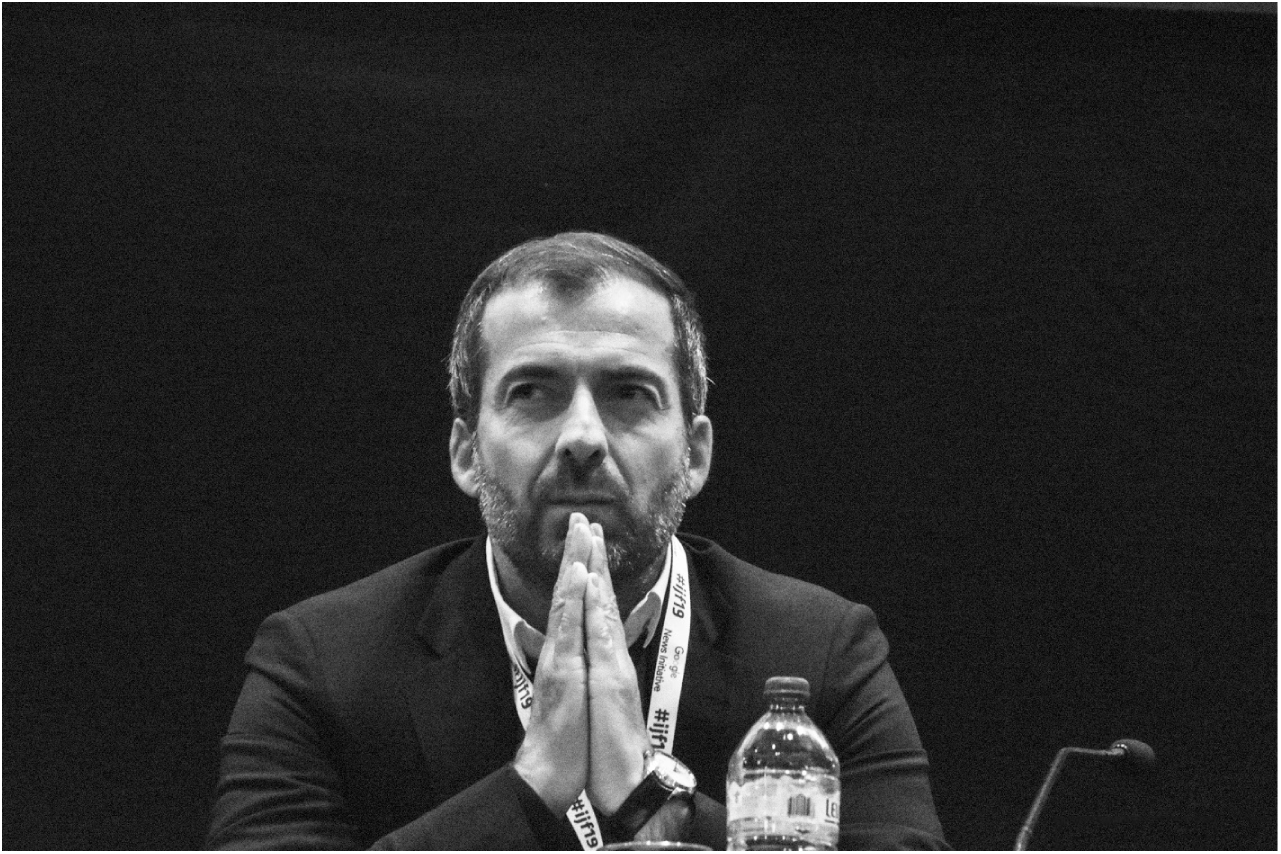
Journalist Paolo Berizzi who investigates the far-right has received an increasing number of threats since the current government took power
CREDIT: Luca Vanelli/International Journalism Festival, Perugia
“Those who have to be defended must be defended but police must not be drivers or personal assistants,” Salvini said in April, adding that Italy’s police escort system, la scorta, should be revised “to cut waste and unnecessary privileges”.
Since Salvini, who leads the far-right League party and is also interior minister, came into power on 1 June 2018 in a coalition with the anti-establishment Five Star Movement (M5S), at least another two journalists have been put under 24-hour police escort, while veteran Mafia journalist Sandro Ruotolo had his 24-hour escort briefly removed and then reinstated.
For Paolo Berizzi, a reporter for the newspaper La Repubblica, Salvini’s administration has had a direct impact on his security. Berizzi has been investigating Italy’s far-right movements for 20 years, but he says that the worst threats have come recently, and have intensified with Salvini’s escalation to power.
Since February, Berizzi’s life has changed radically. What he misses most about his previous life without la scorta is being able to go for a run. He also finds it hard to do his job, having to co-ordinate all his movements in advance. During an interview with Index at the International Journalism Festival in Perugia, a plain-clothes policeman sits in one corner of the room, by the main door. He does not speak but his presence is far from invisible. The journalist’s greatest worry is how this new level of security will affect his 13-year-old daughter.
“I can’t pick up my daughter from school any more. If I want to go eat a pizza with my family, I need to work around it,” Berizzi said, adding that for months his daughter had trouble sleeping. “When they put slogans in my building, my daughter was traumatised, because they violated our private space. She has access to the internet; she can read about the threats.
“It is a paradox that the ministry of the interior decided to put a reporter under police escort, when the same ministry is led by a political leader that has been in cahoots with these far-right groups. Salvini has gone hunting for their votes, has used their slogans and their clothes, and has made them feel part of the public life of this country. This was not the case up until a few years ago,” Berizzi said.
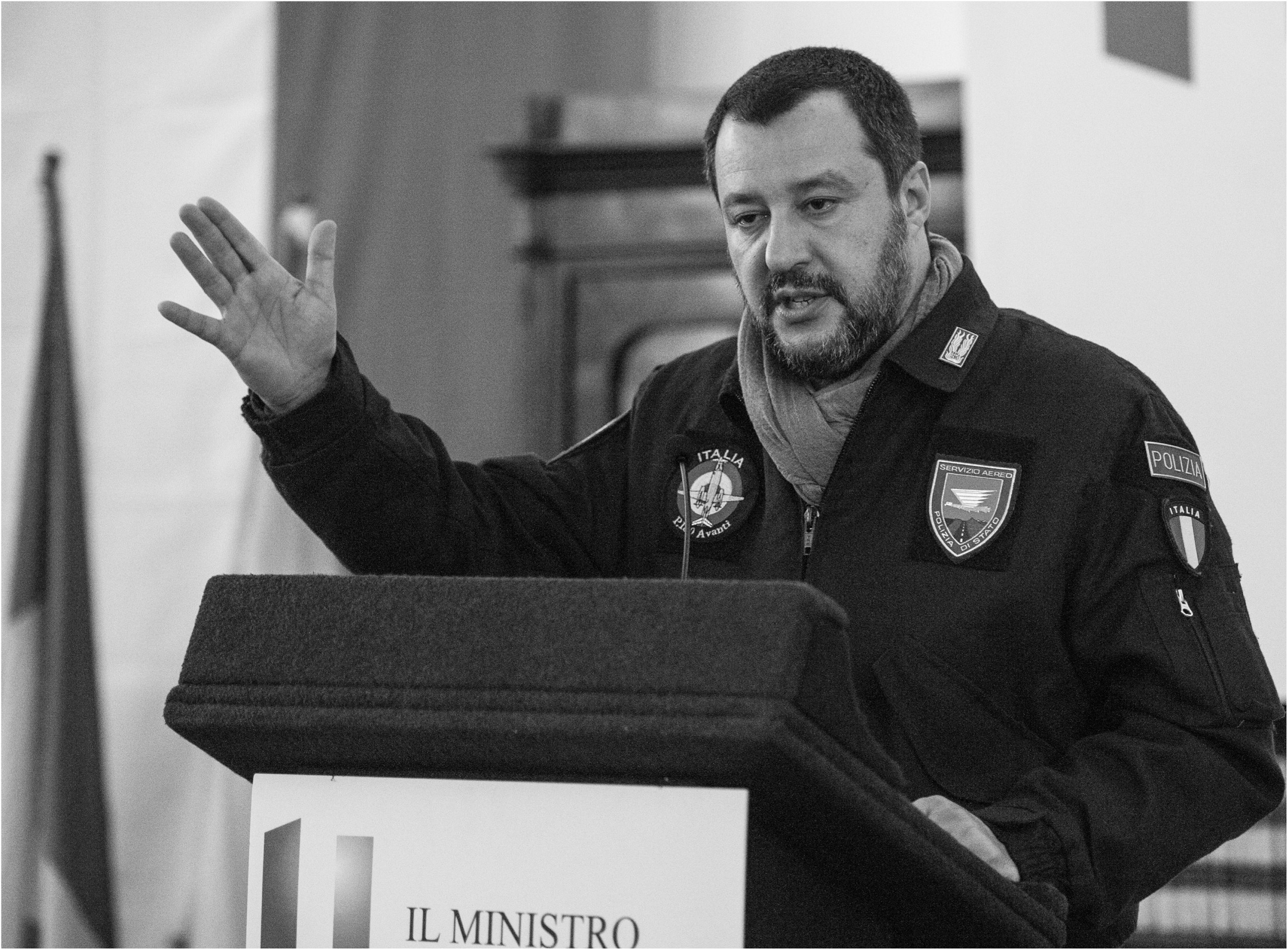
Deputy Prime Minister Matteo Salvini dressed in police uniform, talking in Afragola, Italy, after a series of attacks in the north of Naples
CREDIT: Ivan Romano/Getty
Floriana Bulfon, a freelance journalist who has written about Rome’s Casamonica crime clan, among other things, told Index: “I feel more vulnerable to the extent that we have a minister [Salvini] who worries about fighting with Saviano and another one [Luigi Di Maio] that threatens to close down newspapers.” Bulfon is under the first level of police protection, where she gets mobile police patrols checking on her house and police officers with her at meetings. In March, after previous threats and attacks, she found a bottle containing an inflammable liquid inside her car. She sees no direct connection between this episode and the current administration but says that, overall, things have worsened for journalists such as her. “I worry about the future of press freedom. It is something that you build over time, and you can [damage] it.”
Paolo Borrometi, a Sicilian journalist who has been attacked by the Mafia and who now lives under round-the-clock protection, told Index: “Something dramatic is happening in Italy: we are not outraged anymore when a journalist is threatened. It is unacceptable.” The changing political climate appears to have had a wide range of ramifications for journalists. Despite reporting on neo-fascist groups for a long time, it was not until 2017 that Berizzi received some police protection. This happened after he found a swastika and a crucifix scratched on his car, which was parked outside his house in the northern city of Bergamo. The threats continued. In Padua, a presentation of his book NazItalia was interrupted by fascist squads. In October 2018, he found a message painted in his block of flats saying: “Berizzi, traitor, you will pay”. Last February, his police surveillance was turned into a 24-hour police detail.
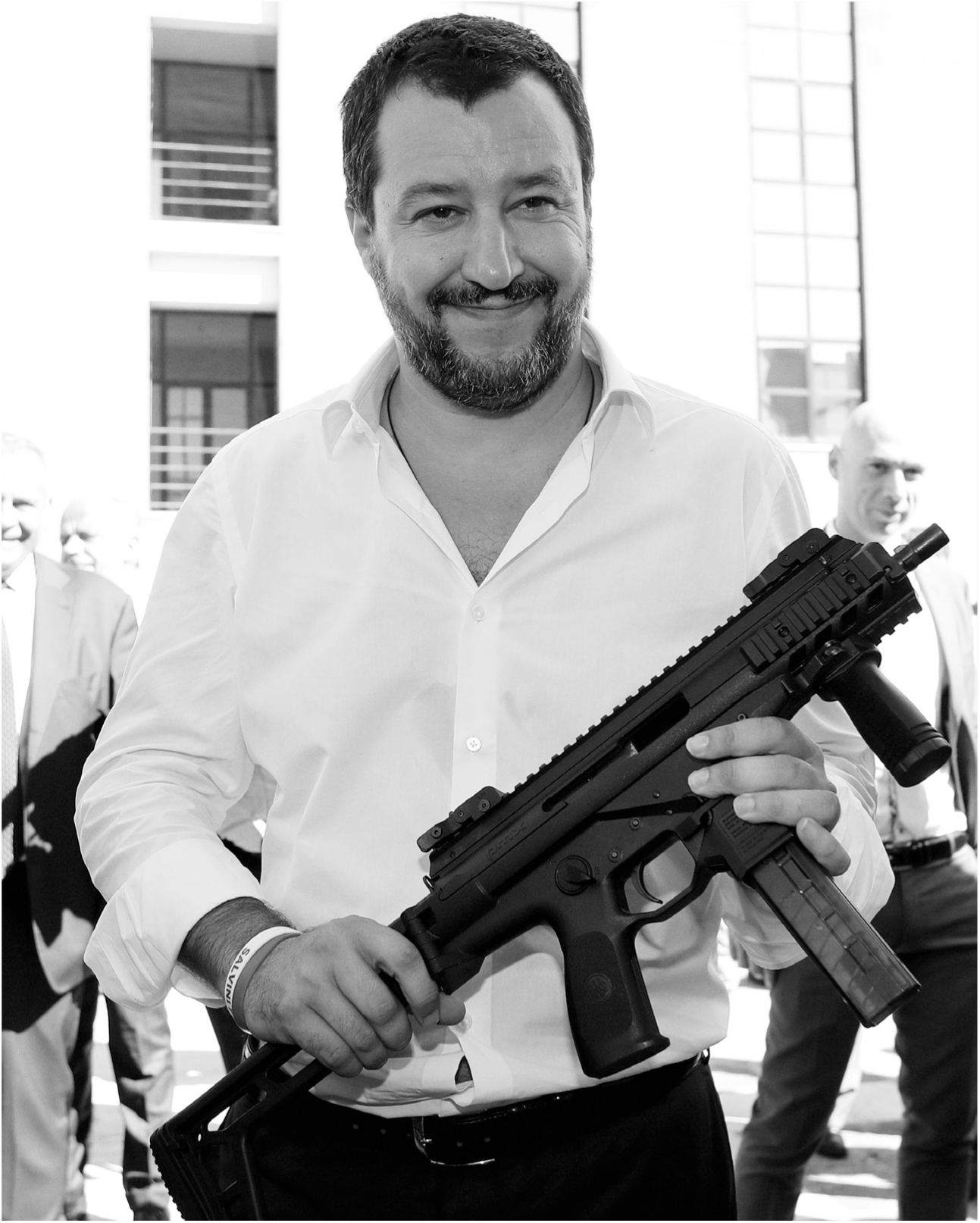
Italian Deputy Prime Minister Matteo Salvini poses with a machine gun in Rome in October 2018
CREDIT: Remo Casilli/Reuters
It is the Central Interagency Office for Personal Security (UCIS), an independent body of the ministry of the interior, that assigns la scorta following an analysis of threat levels. UCIS was set up in 2002 after a labour law professor, Marco Biagi, was killed by a group linked to Red Brigade terrorists shortly after his police escort was pulled. UCIS can assign low-level protection or a round-the-clock escort.
In December, Salvini was photographed shaking the hand of Luca Lucci, a notorious far-right AC Milan supporting football hooligan accused of bodily harm and sentenced to one-and-a-half years for drug-dealing. Salvini said he has his picture taken with hundreds of fans and had never seen Lucci before. He did, however, adopt the “Italians First” slogan from far-right activist group CasaPound, and has used several slogans from the fascist era.
On the July 2018 anniversary of Benito Mussolini’s birth, Salvini tweeted a newspaper piece about those who criticised him, and said: “So many enemies, so much honour.” The words echoed Mussolini’s infamous phrase of “Many Enemies, Much Honour”. In May, he came under fire for addressing his supporters in the central town of Forli from the same balcony where Mussolini witnessed his opponents’ executions.
Salvini has shrugged off accusations of wanting to emulate Mussolini, and has called fascists “idiots” on several occasions. Apologies for fascism are illegal in Italy if proven to be part of an attempt to recreate the defunct Fascist Party.
But Berizzi sees a clear connection between the current political landscape and the threats against him. “If in 2019, 100 years after the creation of the Italian Fasci of Combat, a journalist is forced to live and work under police escort because of political reasons, and not because of Mafia threats, this is a sign of what is happening in the country,” Berizzi said, referring to Mussolini’s 1919 set-up of the precursor of the National Fascist Party that brought him to power in 1921.
It is unclear how many journalists live under police protection in Italy at the moment. The latest official figures go back to February 2018, when the government said 176 journalists received protection while 19 were under 24-hour police escort. Since then, Berizzi and Marilu Mastrogiovanni, who is under threat from the Mafia in the southern region of Puglia, have been added to the list.
A worrying development took place in May 2019 when Stefano
Origone, a journalist for La Repubblica, was badly beaten by police during clashes between the neo-fascist CasaPound movement and anti-fascist protesters in Genoa. He had clearly identified himself as a reporter.
A recent report considered Italy’s situation to be “particularly worrying”. The Council of Europe’s Platform for the Protection of Journalism and Safety of Journalists, whose partner organisations include Index on Censorship, said Italy was the EU member state with the highest number of active threats in 2018, with violations having tripled compared to the previous year. The report added: “The majority of alerts recorded in 2018 have been submitted after the official installation of the new coalition government on 1 June. The government’s two deputy prime ministers, Luigi Di Maio and Matteo Salvini, regularly express through social media rhetoric particularly hostile to the media and journalists.” Di Maio, leader of the M5S, has called journalists “worthless jackals” and has said it is high time newspapers closed down.
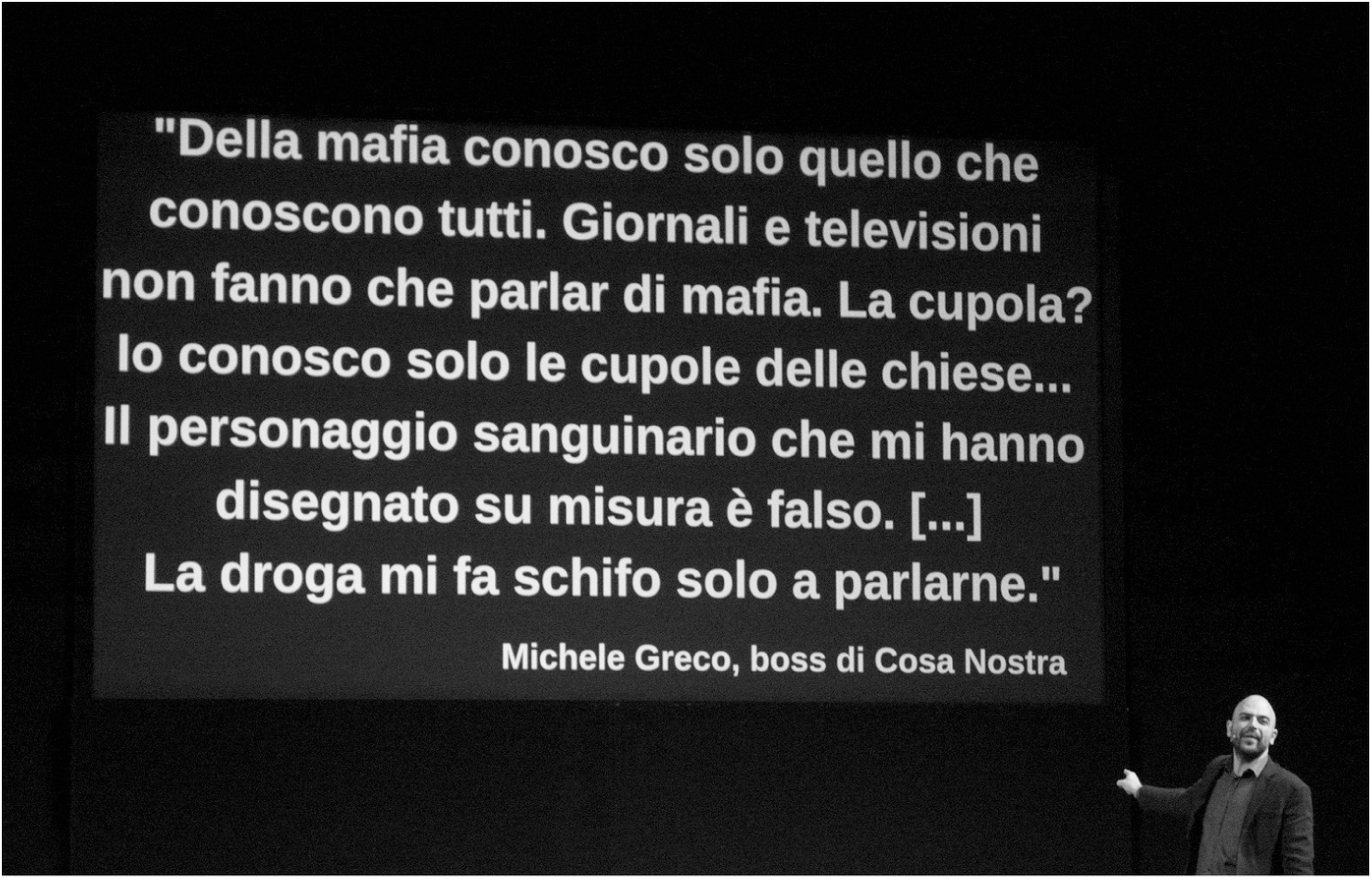
Writer Roberto Saviano who lives under 24-hour police protection. He is showing a quote from the notorious Cosa Nostra boss Michele Greco denying any knowledge of the Mafia
CREDIT: Andrea di Valvasone/International Journalism Festival, Perugia
“Living with la scorta is no privilege,” said Borrometi, who is also the president of Articolo 21, an association that promotes the constitutional principle of freedom of expression. “Thinking it is a privilege is distorting reality.” Borrometi has been beaten by two hooded men, who left his back injured. The door to his house was set on fire, and last year news emerged of a Mafia plan to murder him.
He says that while personal attacks have worsened under the current administration, things have been difficult for journalists for a long time. “There are no norms in Italy to guarantee freedom of the press,” he said. He points out that previous governments didn’t scrap a defamation law which serves as a de facto gag: the Italian penal code guarantees prison sentences of up to six years for the criminal defamation of a politician – a policy that has been heavily criticised by international rights groups. “The breakdown of trust comes from afar, and it culminates in this administration that has an unacceptable spirit of violence against journalists,” he said. “It is outrageous. These are not threats against single individuals. Our job is fundamental to inform citizens. Every citizen’s freedom is at stake.”