



Abstract

Politicians in South Africa threatened journalists in the run-up to the recent elections.
In the months leading up to the election, one of the most powerful figures in the governing African National Congress, deputy secretary-general Jessie Duarte, launched a blistering verbal attack on a journalist who’d asked a question about the party’s controversial election candidates list. The reporter in question was described by Duarte on television as “a bully”.
And it’s not just the ANC, which just won the South African elections again, whose leaders have become increasingly hostile towards journalists. The opposition Economic Freedom Fighters have taken often vitriolic aim at the media. In one case, which prompted the South African National Editors Forum to launch a court challenge, EFF leader Julius Malema tweeted a message which contained political journalist Karima Brown’s mobile phone number, claiming she was “sending moles” to a party event and supporting the ANC. Brown received death threats and rape threats on her phone after Malema’s tweet went viral. He has since deleted the tweet.
These and other incidents prompted South African editors to take action. In late March, with the elections just weeks away, SANEF unveiled an online tool designed to help journalists report instances of harassment, intimidation and violence – much of it expected to happen at the hands of political party leaders and supporters.
SANEF chairperson Mahlatse Mahlase, who is also an experienced political reporter and group editor-in-chief of Eyewitness News, told Index: “We wanted to start tracking cases and gathering numbers... what we have at the moment are mostly anecdotal reports [of journalists being targeted].”
William Bird is the director of Media Monitoring Africa, a watchdog and monitoring organisation that helped SANEF develop its harassment reporting tool. He told Index that the nature and degree of hostility directed at South African journalists in 2019 was “unprecedented in our democracy”.
“I guess one element that has encouraged this – and [is] also linked to when it started – has been the rise of social media. As media models started to fall apart, as more stories were done by fewer journalists, as the relationships between journalists and their audiences started to decay as a result of these other elements, trust was eroded,” he said. “At the same time, we suddenly saw an explosion of information: that anyone could now be a journalist was a potentially hugely democratising shift. But instead we have witnessed the potential of digital being subverted by those who seek to undermine media and democracy.
“At the same time, the pockets of excellence have exposed levels of corruption, malfeasance and greed last seen at these scales under apartheid and, as politicians the world over tend to, they shoot the messenger.” All these factors created what Bird calls “a perfect storm of declining trust, explosion of information, declining quality of reporting, breakdown of relationships and a society and nation going through hell, where just about everything needs some understanding and nuance”.
Mahlase says that election periods were particularly fraught because of the now discredited machinations of the British PR firm Bell Pottinger, which were at their height after local government polls in 2016. Their clients, among others, were the Gupta family. The businessmen, who were close to then-President Jacob Zuma, have been implicated in a web of “state capture” that crippled large swathes of South Africa’s government machinery and put the politics of patronage centre stage.
A key weapon in Bell Pottinger’s armoury was Twitterbots. These “sock puppet accounts”, as they were derisively called by many South Africans, targeted prominent journalists by accusing them of working for “white monopoly capital” – white businesspeople determined to undermine the black government – and being part of Stratcom, the former apartheid government’s propaganda wing.
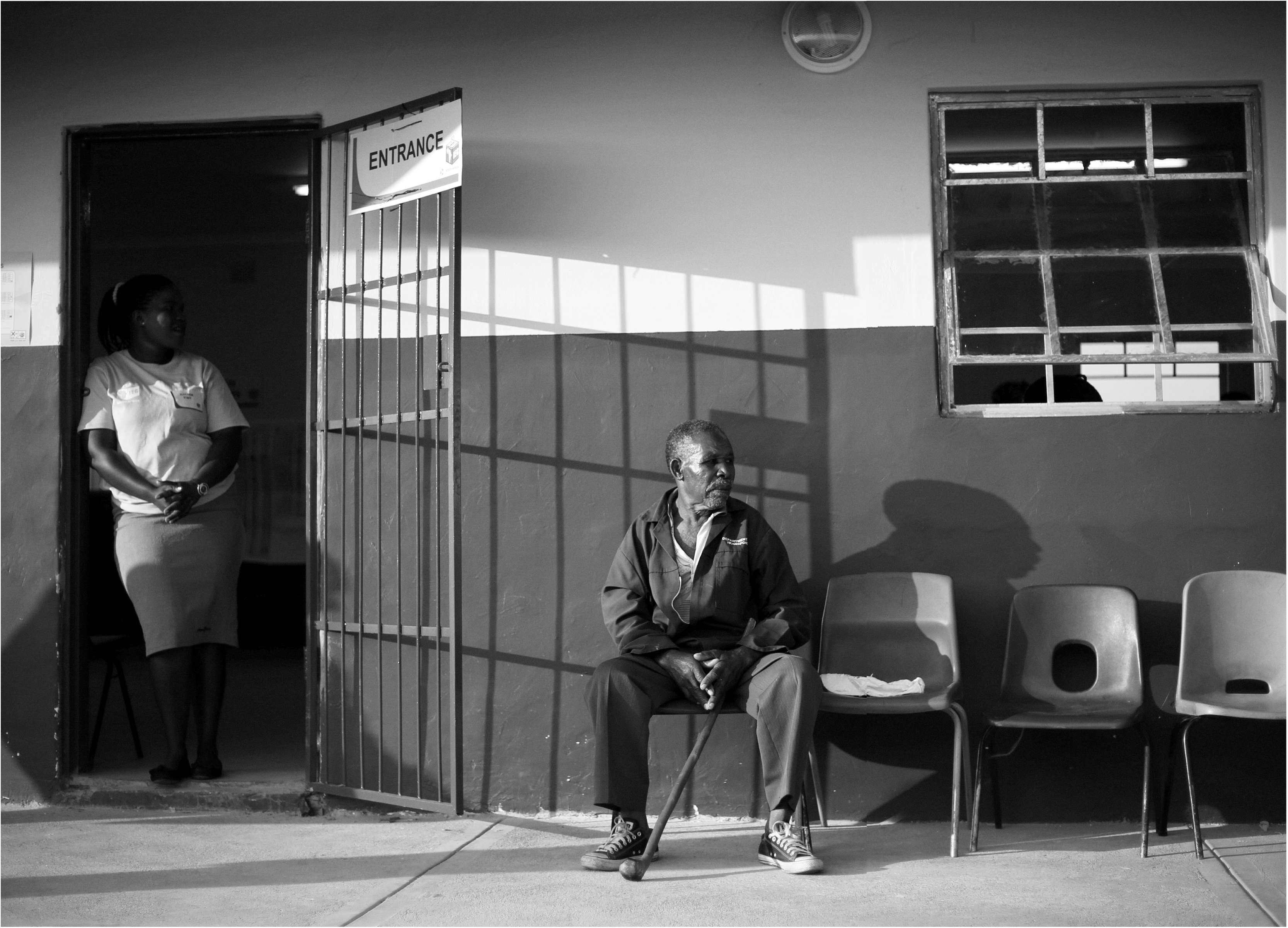
A voter in Nkandla, South Africa, waits to cast his ballot at a polling station during the country’s parliamentary and provincial elections which took place in May 2019
CREDIT: Rogan Ward/Reuters
“Bell Pottinger created a well-orchestrated, well-funded campaign that used certain lingo to talk about journalists,” said Mahlase. “We hadn’t heard the term ‘Stratcom’ in decades, but today it is used to target journalists who report critically.”
And this, she warns, has “a chilling effect”, especially on junior reporters. Given the abuse they see directed at others, “why would they pitch critical stories [of their own]?”.
Her concern is echoed by journalist Qaanitah Hunter, who works for the Tiso Blackstar group, which counts South Africa’s biggest-selling weekly newspaper, the Sunday Times, among its titles. She’s had plenty of first-hand experience of intimidation and malice. In 2018, she received a WhatsApp message from a senior member of the ANC Women’s League in response to questions she’d sent for an article. The message contained a single image: a gun etched with the phrase “stay classy”.
Hunter told Index she had seen young, inexperienced journalists become increasingly cautious about tackling stories that involved powerful, politically connected people. “The consequence of this hostility to the media is self-censorship – and I think that is the biggest problem facing young journalists,” she said.
“You don’t want to wake up to the bots and trolls and the politicians singling you out, or being banned from events... you don’t want to deal with that. So what do you do? You stay away from the big stories, or you hunt with the mob. If everyone is hunting there, you stick with them instead of doing things that others aren’t focusing on – the investigative work.” It’s not just individual journalists or media houses that suffer in this scenario. Hunter added: “Hostility to the media leads to indifference among [audiences] – and has a chilling effect on whistleblowers.”
Current South African president Cyril Ramaphosa facing the press in 2013
CREDIT: Khaya Ngwenya/Gallo Images/Getty

So how can South Africa adapt to these grim realities? Mahlase said: “We shouldn’t just accept this 25 years into our democracy. It’s being presented as a battle of ‘the media versus politicians’, but South Africans need to understand that this is an attack on their right, as the public, to know – on our constitution. Anybody who loves democracy must step in to defend journalists.” Bird concurs, and suggests that part of the solution lies in the very tools that have driven so much hostility toward the media. “Our digital reality offers huge potential to build rather than to undermine equality. But it will do so only if we make it do so,” he said. “We need to make sure we take on the structural elements in an ongoing and comprehensive manner.”
Bird, like Mahlase, says that solidarity beyond the media is key to turning the tide. “We should be asking our political leaders as a default where they stand on media freedom; we need to find a way of helping our media sector to stand together. If a party or group insults or attacks one journalist, it is an attack on all and we need to show solidarity with them. In the same way the thugs gang together to attack, we need to stand together to defend.”