




Abstract

The new trend in film propaganda is all about undermining the public’s belief in the truth.
This is the view of award-winning documentary maker Maxim Pozdorovkin, whose film Our New President followed the disinformation campaign in Russia during the 2016 US presidential election. It was shown this spring at the British Film Institute in London as part of a series marking 30 years of the internet called Born Digital: Raised by the Internet.
He told Index: “The tactic of modern-day propaganda... it’s disorientation... creating inconsistency is the point. It is creating the sort of situation where there is a sense of erosion in the ability even to figure out what is true.”
Pozdorovkin is of Russian-Armenian heritage. He was brought up in the Soviet Union in the 1980s and moved to the USA when he was 10 years old. He made his reputation with a documentary, Pussy Riot, A Punk Prayer, which followed the imprisonment and trial of the Russian punk band Pussy Riot.
“The way that Russia has won [the information war] is by undermining the institutional trust, which is a fundamentally different thing from making people believe that communism was better or that [President Vladimir] Putin is a great bringer of peace, or whatever it is,” he said.
He argues that, historically, propaganda has often focused on governments putting out strategic disinformation while pretending to be truthful, particularly during wartime: a government making a film about a battle advance or victory it has won.
Pozdorovkin describes how Nazi propagandist Joseph Goebbels spent a lot of money on making newsreels of real events. According to the US newsreel expert Raymond Fielding, for instance, Goebbels sent 300 cameramen to film the German invasion of Norway in 1939, while the British sent just one. The German newsreels, made in the style of the famous British Pathé News, were then manipulated with music and a voiceover to put out pro-Nazi messages.
Now, he argues, the objective of a government such as Russia’s is to provide and encourage so much information that it is increasingly impossible for the public to disentangle what is real from what is not.
“It’s more about turning the media or the internet space into a garbage dump. It’s little bit like carpet-bombing,” said Pozdorovkin.
Pozdorovkin’s film won the World Cinema Documentary Special Jury Award for Editing at the Sundance Festival last year. The documentary uses clips from the internet to make the hour-and-a-quarter-long documentary about the US presidential campaign. The boast of the film is that nothing in it is true.
His objective was to make a film “about Kremlin news about what we call the federal channels”.
He wanted the audience to experience propaganda and “fake news” rather than have it explained. The election itself was simply a backdrop which provided a story that everyone knew.
“Not a single one of those people had come from America. The only thing they knew about America was from television – you can make it this hermetically-sealed chamber of disinformation,” said Pozdorovkin.
The documentary is a collage of video footage. Some of it was taken from Russian television, especially Russia 1, Russia Today and NTV, and it features the Russian TV host and propagandist Dmitry Kiselev. Other footage is from YouTube videos which ordinary people have made – and include clips of people wearing masks of silver foil and someone sticking pins into a homemade doll of Hillary Clinton.
Poster for the documentary Our New President
CREDIT: Third Party Films
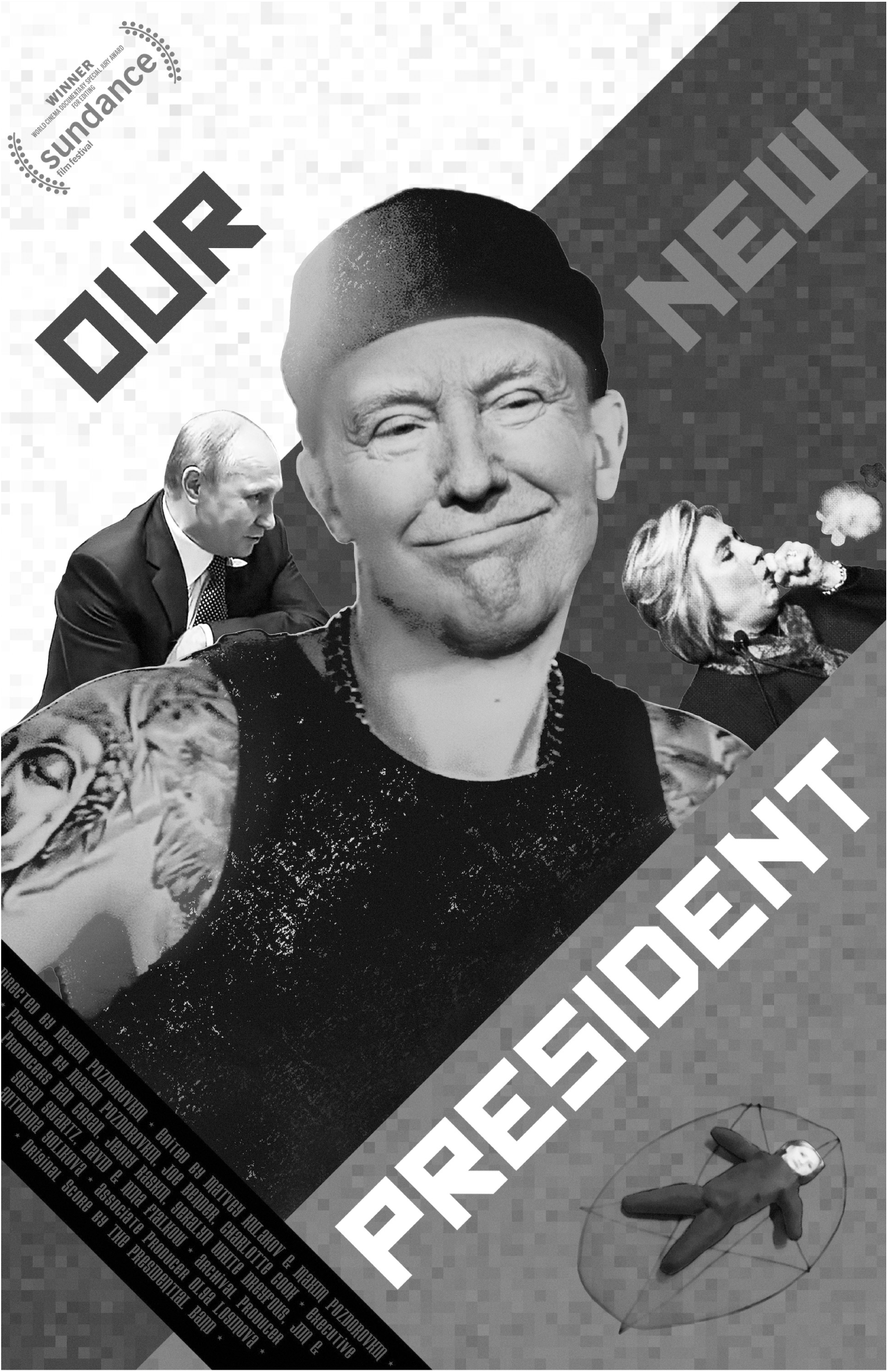
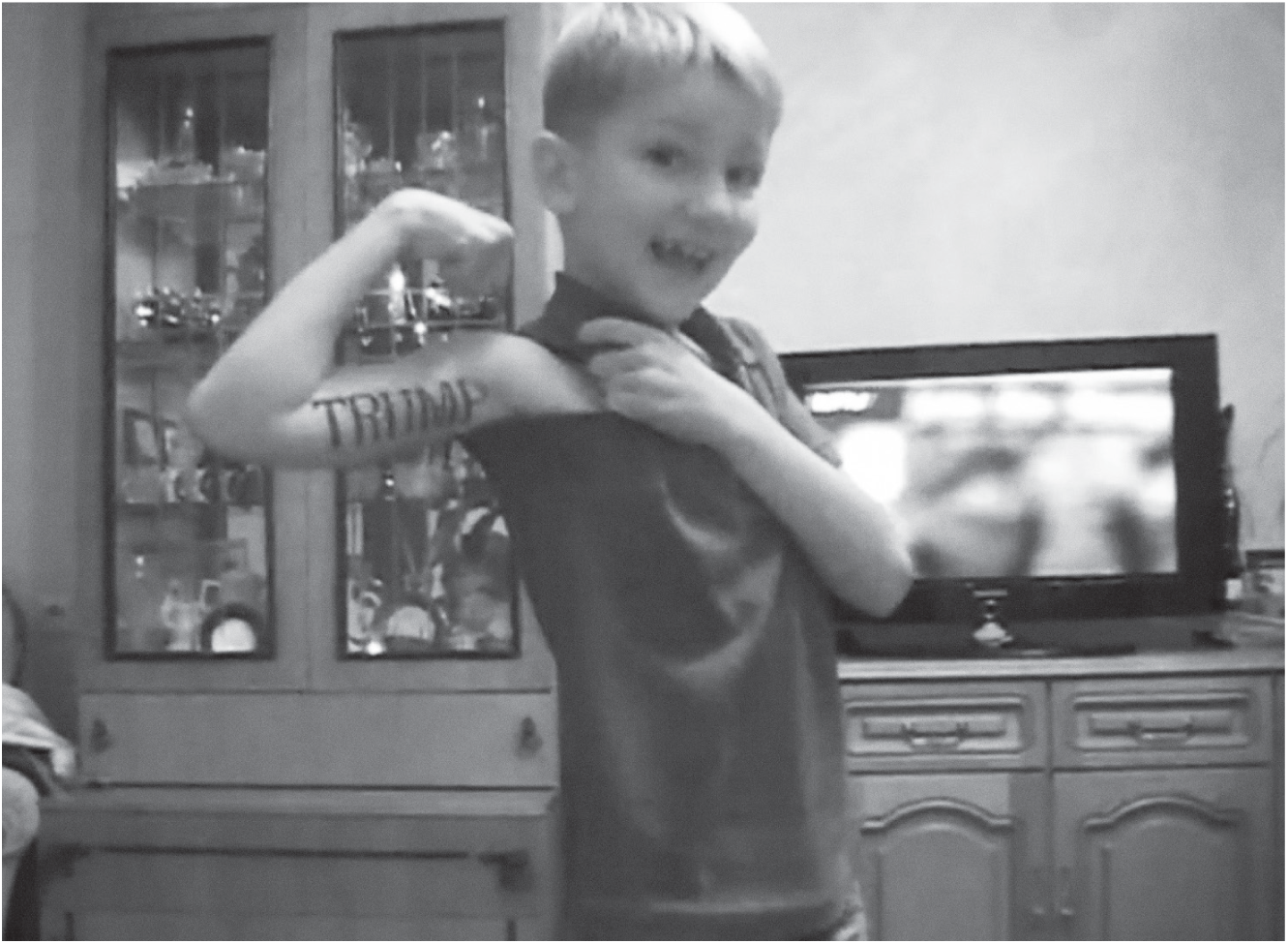
The film’s name comes from the amateur video of a little boy who watches Donald Trump being elected on television and believes that Trump is somehow Russia’s new president.
While this may seem daft, Robert Mueller, special counsel at the US Department of Justice, has spent millions of dollars investigating allegations that there was co-ordination between Trump’s presidential campaign and the Russian government.
And that, said Pozdorovkin, is what should make us suspicious – that, ultimately, liberals in America are promoting and hoping for the same narrative as the Kremlin, that Trump is working with the Russians.
It is, he says, important to emphasise the media hyperbole at work and he wanted to show with the video clips in his film what he calls the “role and logic” of spectacle and the corruption of the media. “That is the disease which has spread from Russia,” he said.
In a time when the debate is about what Facebook and other social media platforms should do about “fake news”, this insight shows that dealing with it is a lot more complicated than legislators would like us to believe.
In the UK, for instance, the government’s Online Harms White Paper seeks to tackle disinformation whether intentionally harmful or not.
What Pozdorovkin is suggesting is that the problem is the slew of information generated. There are a lot of ordinary people, including children, using a theatrical medium such as YouTube to disseminate information, and it is unclear whether even they believe what they are saying.
YouTube clip used in the documentary Our New President showing a Russian boy celebrating the election of Donald Trump
CREDIT: Third Party Films
The other insight Pozdorovkin offers is that pieces of information multiply themselves because of the algorithms on sites such as Google and Facebook.
He says that if you create a piece of content, for a few seconds it is competitive with entrenched sites such as The New York Times. If you create that content often enough, some of it will get through. It is the theory of troll factories, and he says “all internet revenue streams are based on that”.
Meanwhile, propaganda footage from RT is free to use on YouTube, unlike US and British broadcast material from CNN or the BBC, which is protected for commercial reasons and difficult to rip off. This means anyone can use RT clips to create cheap blogs and memes using footage which appears to be reliable because of the high production values applied.
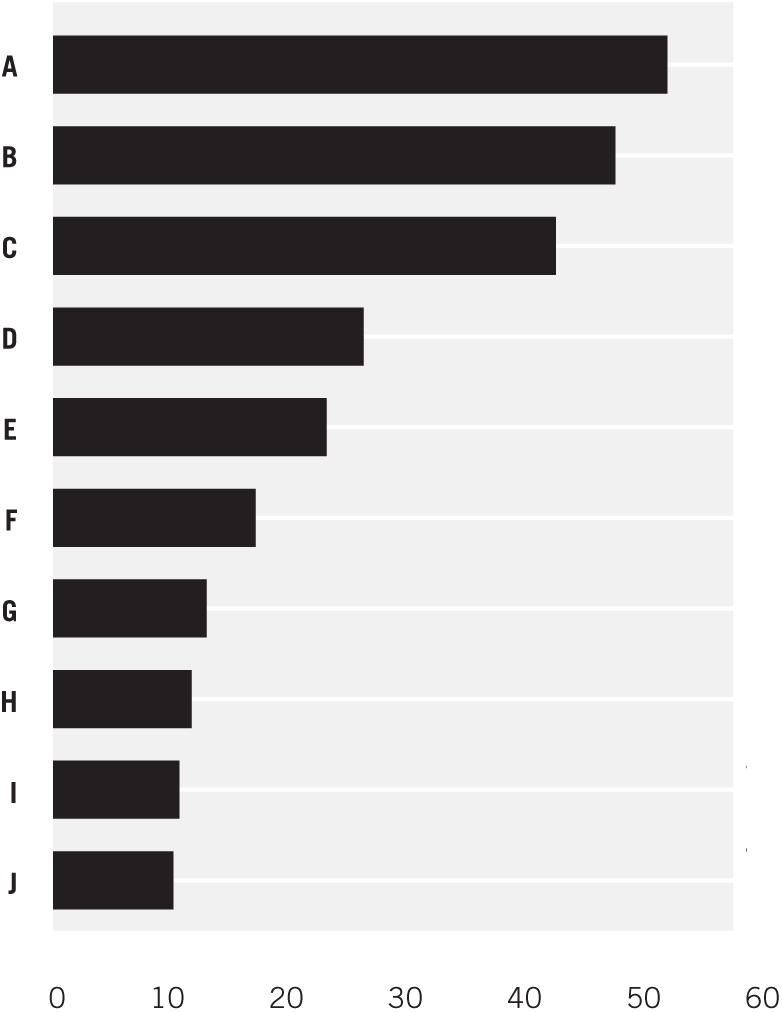
And add to all this the fact that the metric now used with news is whether something is liked or disliked or whether it gets a thumbs-up or a thumbs-down on social media. That means, says Pozdorovkin, that someone such as Trump becomes “the most popular leader in history by a landslide” because likes and follows is how success is judged in the world of information. Indeed, research carried out in May 2018 showed Trump’s personal account had 52 million Twitter followers – more than any other leader in the world. He has 60 million today compared to the Indian Prime Minister Narendra Modi’s 47 million.
Pozdorovkin is fascinated by this use of media. For his PhD, he studied early newsreels made by the famous Russian documentary maker Dziga Vertov after the October 1917 Russian revolution. Vertov later went on to make the classic silent documentary Man with a Movie Camera about Soviet urban life.
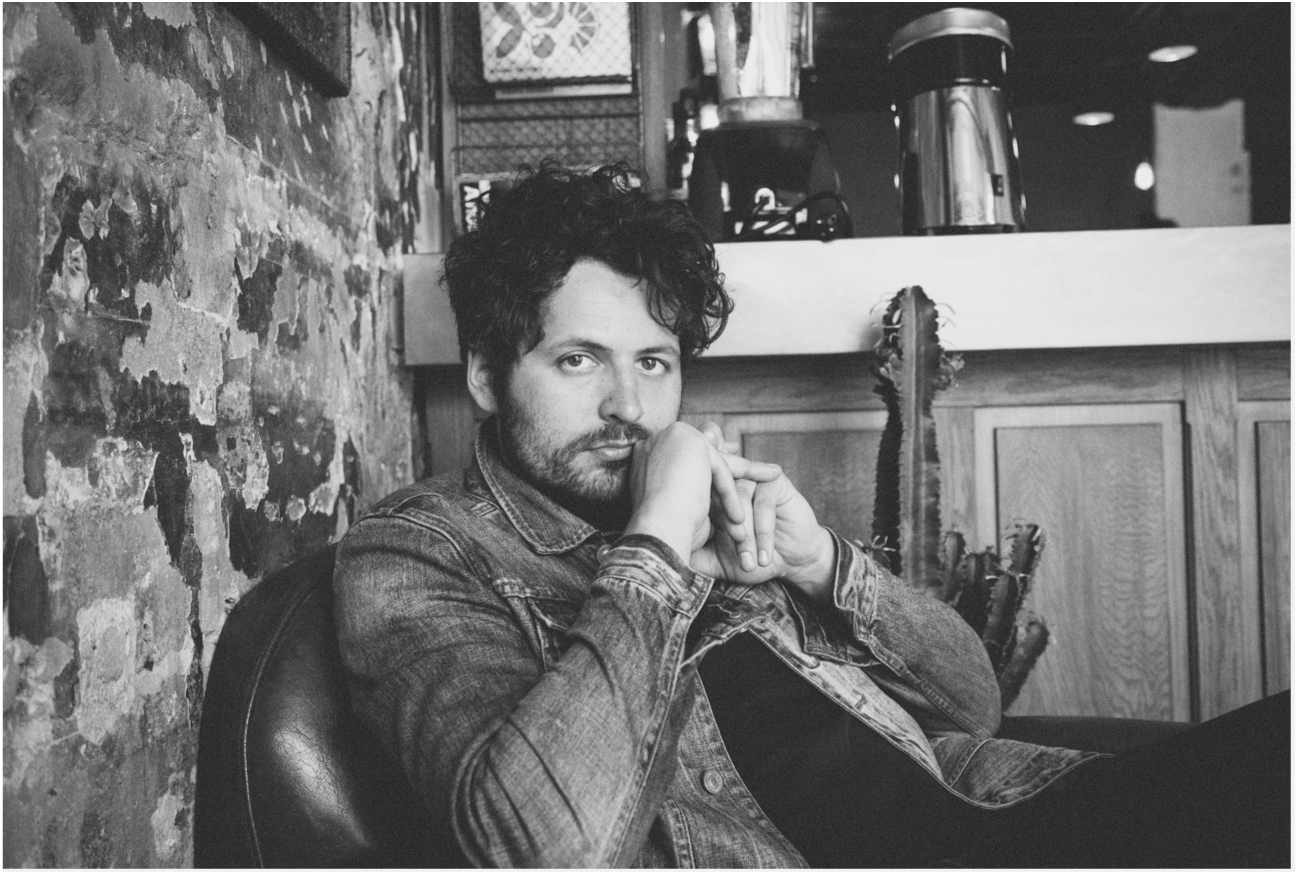
Documentary director Maxim Pozdorovkin
CREDIT: Ksenia Poulber
It’s perhaps not surprising that he believes film is a more powerful propaganda weapon than the printed page. And Russians, he maintains, are still more sceptical of what they read than of what they see.
“What I find is that while Russians are more sceptical of print-based media, at the visual level they are much more gullible,” he said, citing the footage in his documentary which appears to show an assassination attempt on Trump (which, again, is not true).
Pozdorovkin is gloomy about the future. The objective of those who coordinate this propaganda, he says, is to undermine the hegemony of the West. People such as Kiselev believe that anything that upsets the balance is a “net good”.
He thinks that the only way to combat this new form of propaganda is to make people more media-literate.
But he is worried about the social conclusions which young people draw from what they see, and, for him, a distressing element of the Hillary Clinton/Trump election story was the conclusion of the video of the boy he found on the YouTube who thinks Donald Trump is Donald Duck.
In the film, the Donald Duck boy says that what he has seen on television about Clinton proves that a woman can never be president of the USA.
Pozdorovkin said: “What this kid thinks about Hillary Clinton doesn’t matter. What this kid thinks about women will have direct consequences on the women around him. That’s the core of it all. He takes this thing he sees on TV, randomly, with some authority and then internalises it and broadens it out into this pseudo-intellectual position.”
World Leaders on Twitter
World leaders with the most Twitter followers as of May 2018
SOURCES: Twiplomacy; BCW
KEY
* Personal account. ** Institutional account.
Corrections
News loses, page 20
In this article we quoted The New York Times political reporter Kate Zernicki. The reporter we were referring to is Kate Zernike and an editing error later referred to her as “he”. We apologise for any confusion.