




Abstract

Index interviews best-selling novelist and former newspaper editor
But his jailing in 2016 and subsequent life sentence on spurious charges relating to a failed military coup have left him even more friendless. As commentator Rusen Cakir put it recently: “Few, other than his close friends and relatives, remember him [in jail] because the number of people who dislike Altan on both sides of the political polarisation in Turkey is tremendously high.”
“At the moment, thousands of people are jailed on illegal and illogical charges. Kurdish politicians, leftists and opposition religious people have all had their share of this lawlessness,” Altan told Index from prison.
“I came out against the unlawful practices of both the era of military tutelage and that of the AKP [the ruling Justice and Development Party]: I believe I am a target of their anger.”
Dissent is something of an Altan family tradition. Ahmet’s father, Çetin, was a parliamentarian on the far left who served two years in prison for his journalism, and had his writing featured in early issues of Index, while his brother, Mehmet, is now serving a life sentence alongside him on similar charges.
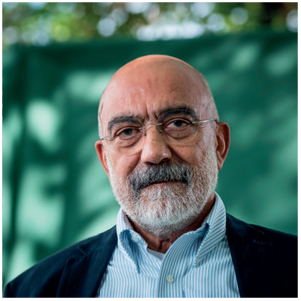
Turkish journalist and author Ahmet Altan at the Edinburgh Book Festival, Scotland, in August 2015
CREDIT: Gary Doak/Alamy
Ahmet Altan was given a suspended sentence of one year and eight months in 1995 for a column that parodied Turkish civic nationalism by imagining an alternate reality in which Mustafa Kemal Ataturk, the founder of the modern nation, had been born Kurdish and founded a country called Kurdey. Over the rest of his journalistic career he faced continual charges on grounds ranging from raising the Armenian genocide to insulting the president.
“In the era of military tutelage, my father coined the name ‘shell state’. There was the image of a state but it was empty,” Altan said.
“We wanted to fill the inside of that shell with democracy and law. The AKP came to power promising they would do this. But when they established themselves in government, they broke the shell to pieces. There is no longer even the image of a state and law.”
Taraf, a newspaper at which Altan was editor-in-chief from 2007-12, became known for its reporting of scandals involving military attempts to claw back power from the Islamist government. However, Altan said that some soldiers tried on coup charges back then were also mistreated by the legal system.
“They were tried in a legal order established on the belief that it would only try opposition figures,” he said. “Conditions change and the system you have established to try the opposition also does you an injustice. That is no good to anyone.”
Yasemin Çongar, a former colleague at Taraf who recently translated a book by Altan about his experiences in prison, told Index that he was “as full of life as ever, not only coping with utterly unjust treatment but also turning his time in prison into a life-affirming experience”.
Altan said he was using the time to put the finishing touches to another novel. “Tell readers that their existence gives thousands of people in prison like me the strength to go on,” he said. “Knowing that they are there, helps me keep smiling in my cell.”
Below, we print an extract from The Longest Night translated into English by Index for the first time. Altan’s novel tells the love story of an Istanbul couple torn apart when one joins an EU anthropological research group in the remote mountains of south-east Turkey, a Kurdish-majority area under military control.
The novel sold a million copies when it was published in 2005. In this chapter, two history researchers argue about whether to write a book about the Armenian genocide.
The Longest Night
Sometimes he would drink beer and argue about history with Mahmut, talking about how heavy the burden of knowing the truth was in a place where recent history was almost entirely a lie from top to bottom and asking how they could manage to stay honest in a profession that did not allow them to reveal what was true… They had a dream of writing a history book together that would lay out all the truths of what had happened in the first quarter of the 20th century.
“Where would we get this book published?” Mahmut asked.
“That’s not the real problem,” Selim replied. “The real problem is where we will live after the book is published. People are so drenched in lies that no one will believe the truths we tell. They’ll think we’re lying. We’ll be everyone’s enemy – they won’t let us live here.”
They would imagine what the table of contents would look like, which gave them a professional pleasure even greater than talking history.
“We’ll write this book in the end,” Selim said one day. “I can’t go any longer without telling people what I know about this. And I know you can’t either.”
“Will we leave here after that?”
“I don’t know… Let’s write the book first, then worry about that. Let’s begin slowly sorting through the documents.”
Mahmut laughed.
“You mean I’ll start sorting through the documents… I’ll get tired of you one day, I’ll have you know!”
“Your Highness Sultan Mahmut the Third, you are saddening the people with your threatening pronouncements… “
The idea of writing a book lit up Selim’s tranquil inner world, entertained his intellect and pushed his sadness over Yelda a little further back in his mind, although sometimes he was unexpectedly overcome by the tremors it caused.
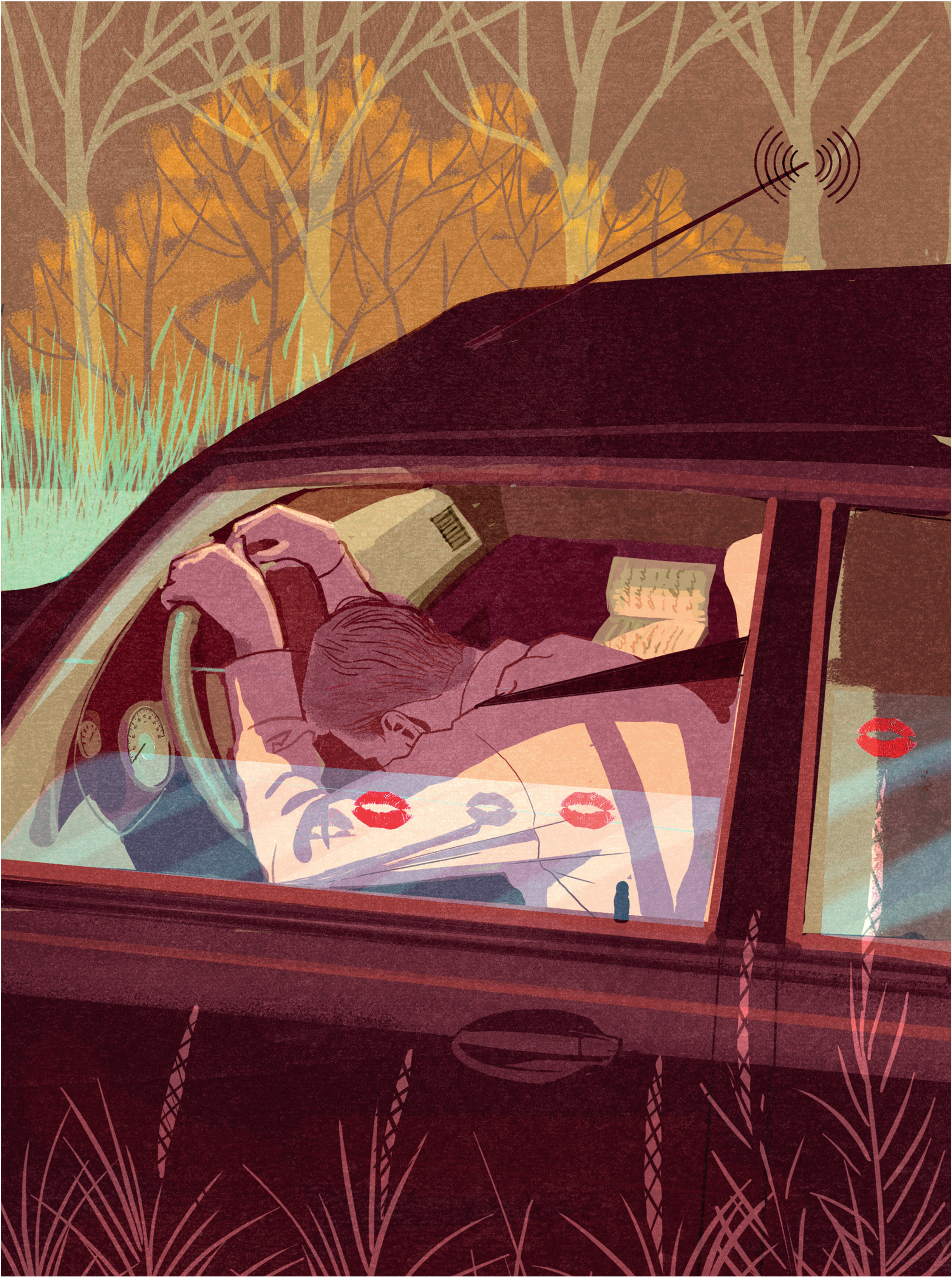
Once, while driving to school… It could have been a love song on the radio or maybe the long-repressed passion that had unconsciously become a part of him breaking out of the cocoon in which it had been trapped, but he had been struck by a sudden crisis of longing. This was no normal feeling of yearning – at that moment he so violently wanted to see Yelda’s face and hear her voice that his chest tightened and the steering wheel seemed to jump out of its position and push against his ribcage. He pulled the car to one side and stopped. He felt that his whole body had gone a pallid grey from this hopeless longing. For a second, he considered getting straight back onto the road and going to Yelda, but he became even more depressed by the thought that, even if he started out now, he would not be able to reach her in less than a day. His head resting on the steering wheel, he repeated to himself: “This will pass, this will pass”.
One or two hours later the longing had subsided, but then another sigh opened up a new pain.
When, in that short time, he became so strongly aware of the heartache that his longing and loneliness had fostered – and how it had enveloped his body, leaving him feeling like a prisoner in a cage of infeasibilities, how he had become bogged down in the wretchedness of never being able to see the person he wanted to see, and how hopeless he felt, the inadequacy of knowing that deciding to go and see someone would not be enough to be able to see her – he had remembered Yelda’s heartbroken voice saying:”I have missed you”. With the memory of that sound, he let out an involuntary wail as though somewhere was hurting.
“Does Yelda feel this every day?” he asked himself. “How does she live with the pain?”
He could not even stand the thought of Yelda suffering. He wanted to phone her right there and then and tell her: “Get ready. I am coming to get you. We will be together for the rest of our lives – I will make that fairy tale come true.” If he had known that he were able to reach her, maybe he would not have been able to stop himself and he would have called.
CREDIT: Alex Green
He knew they were in the worst situation in which two people who loved each other could be: their love was alive enough that it would never be lost, but the relationship between them had rotted and fallen through like an old bridge, leaving them on different banks of the same river. They could see but not reach one another, and when they shouted out to one another most of their words were drowned out by the wind.
Despite all that he felt, he believed that that bridge could never be rebuilt – indeed, he no longer had the strength to try: their relationship, and their souls, had been left terminally ill by those fights, jealousies, and unfading doubts.
He would not tell Yelda about that dreadful fit of passion in the car, how he had pulled over to the side of the road and how his breath was cut short by the violence of his longing, and Yelda would not know how much he missed her.
He had thought that Yelda going far away had hastened and eased the breaking up of their relationship, that this had been better for both of them, and had avoided the conversations that could have made this break-up harder by uncovering and nourishing the love between them.
Two souls that had loved one another, that had hurt one another, and whose passion for one another had been uncovered may have thought that they would be able simply to break that bond, but those who succumb to this lovesickness do not know how difficult it is to part.
On that dreadful morning, when he had left the house after reading Yelda’s emails, he had fallen into the same error. For days he had called her, frightened that something might have happened to her, sometimes 20 times in a row, but the phone was never answered. He had been afraid that she might have died or something terrible might have happened to her, but after finding out from a common friend that she was well he had decided that it was over, and even felt a little satisfaction as he ceased calling.
At that time, he had also gone through a period of calm – like the present.
One day, one month later, Yelda called him.
“I need to talk to you.”
Selim had paused with misgivings that the relationship would reignite, and then Yelda had spoken in that heartbroken voice.
“Come over… I would see it as a favour to me. You should as well.”
He was unable to resist her tone of surrender.
“I’m on my way now,” he said.