




Abstract
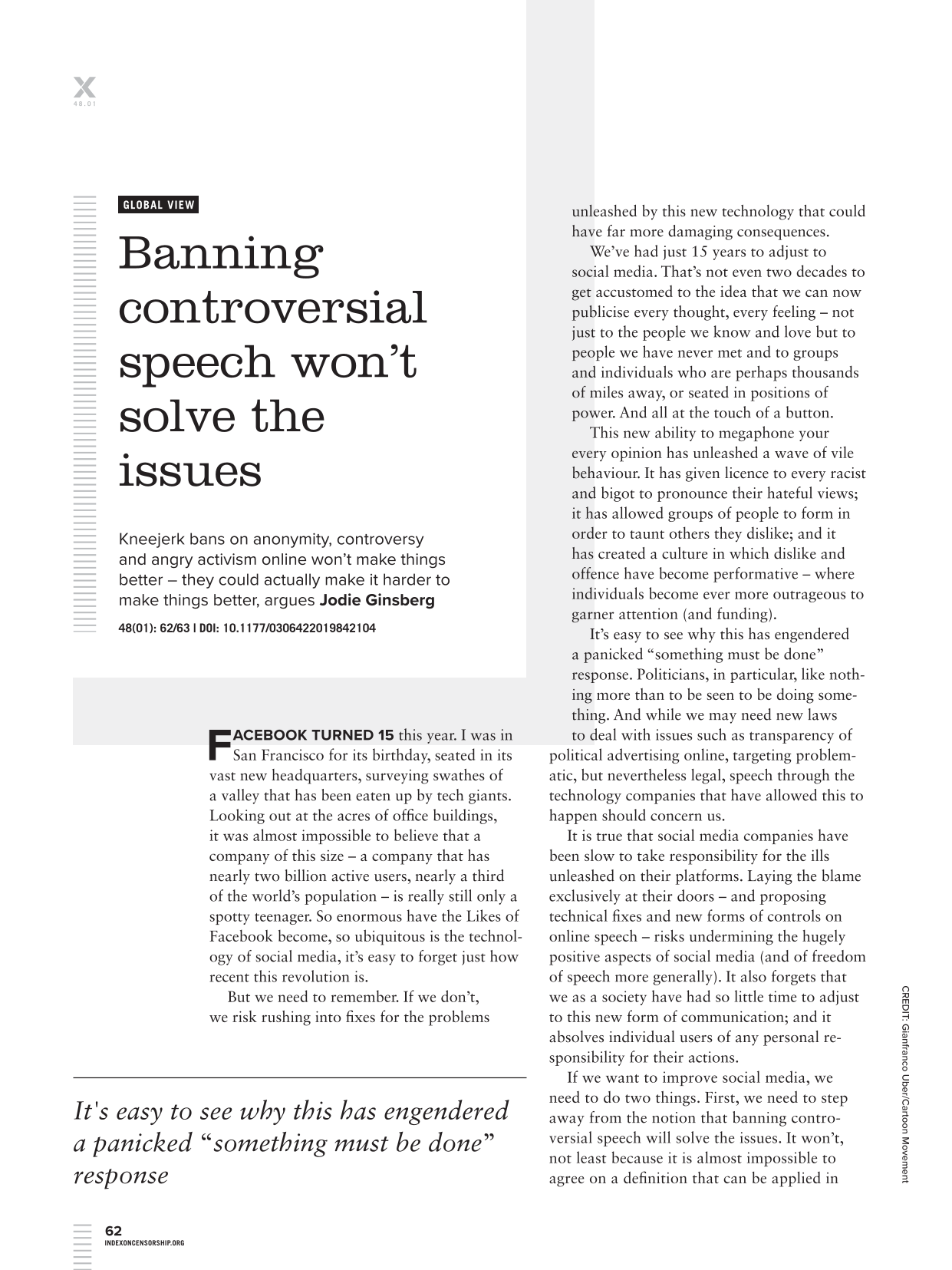
Kneejerk bans on anonymity, controversy and angry activism online won’t make things better – they could actually make it harder to make things better, argues
But we need to remember. If we don’t, we risk rushing into fixes for the problems unleashed by this new technology that could have far more damaging consequences.
We’ve had just 15 years to adjust to social media. That’s not even two decades to get accustomed to the idea that we can now publicise every thought, every feeling – not just to the people we know and love but to people we have never met and to groups and individuals who are perhaps thousands of miles away, or seated in positions of power. And all at the touch of a button.
This new ability to megaphone your every opinion has unleashed a wave of vile behaviour. It has given licence to every racist and bigot to pronounce their hateful views; it has allowed groups of people to form in order to taunt others they dislike; and it has created a culture in which dislike and offence have become performative – where individuals become ever more outrageous to garner attention (and funding).
It’s easy to see why this has engendered a panicked “something must be done” response. Politicians, in particular, like nothing more than to be seen to be doing something. And while we may need new laws to deal with issues such as transparency of political advertising online, targeting problematic, but nevertheless legal, speech through the technology companies that have allowed this to happen should concern us.
It is true that social media companies have been slow to take responsibility for the ills unleashed on their platforms. Laying the blame exclusively at their doors – and proposing technical fixes and new forms of controls on online speech – risks undermining the hugely positive aspects of social media (and of freedom of speech more generally). It also forgets that we as a society have had so little time to adjust to this new form of communication; and it absolves individual users of any personal responsibility for their actions.
If we want to improve social media, we need to do two things. First, we need to step away from the notion that banning controversial speech will solve the issues. It won’t, not least because it is almost impossible to agree on a definition that can be applied in such a way that only “bad speech” will be targeted.
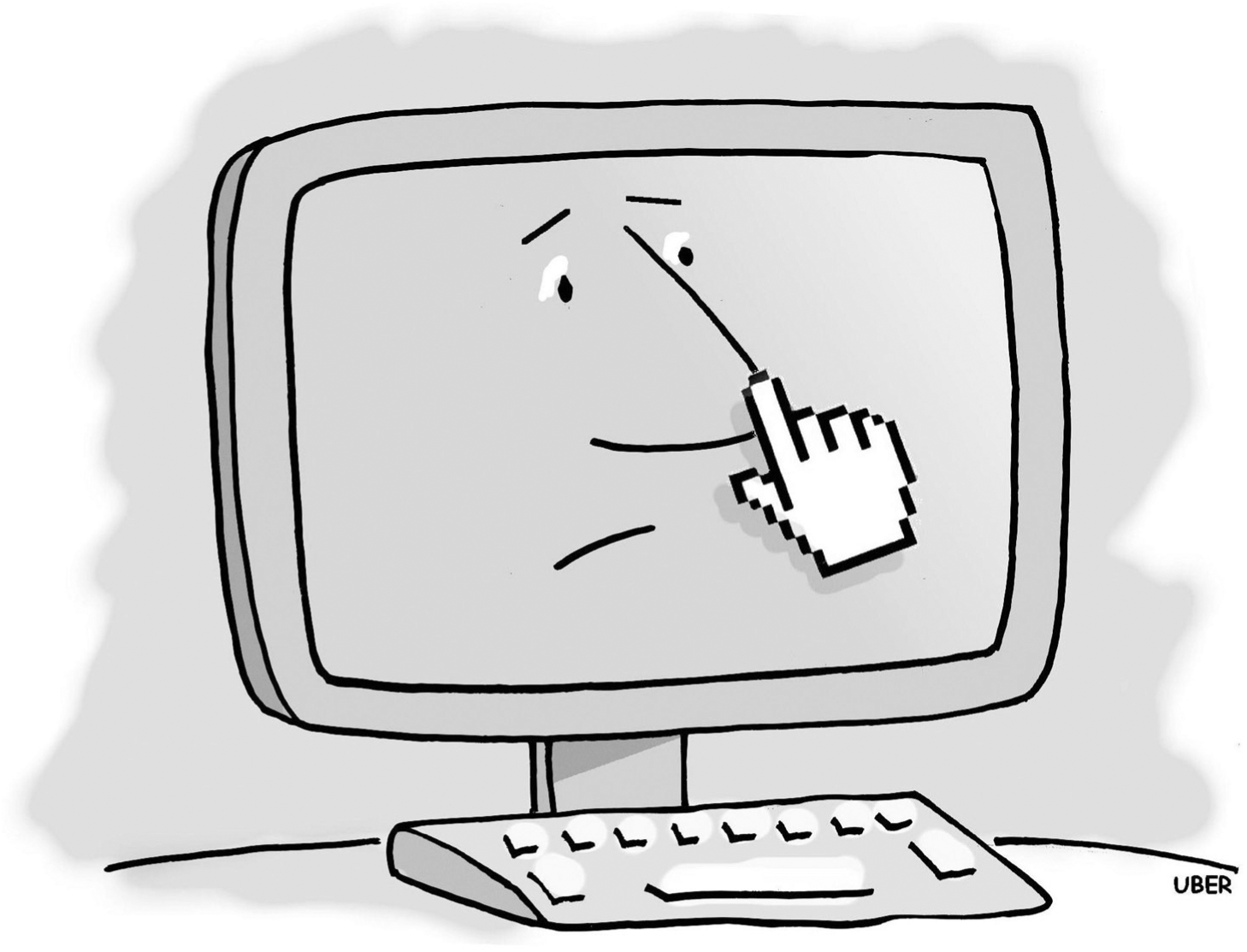
CREDIT: Gianfranco Uber/Cartoon Movement
Trans activists and radical feminists are discovering this as debates rage on social media about what constitutes hate speech in discussions about what we mean by the terms “man” and “woman”.
Anti-racism campaigners have discovered this when their accounts have been suspended for trying to share the vile abuse they receive as evidence, as have the activists whose Facebook accounts were suspended in Burma for documenting genocide.
A newspaper in Norway discovered this when it tried to post an award-winning photo documenting the horrors of the Vietnam war and was caught out by a ban that outlawed naked photos.
Billions of pieces of content are posted online every day. The idea that we might be able to come up with a technical solution – or even an army of moderators – to effectively weed out all bad speech is nonsensical.
This is why the second solution is the most important. If we want to improve the quality of discussions on social media, we need to look in the mirror. Social media giants might be enabling us to spout hateful invective, and law enforcement might be ill-equipped to deal with actual illegal behaviour online, but the people ultimately responsible for the tone of discourse on social media are us. And – good news – we can use it how we want.
That means we can harness its power to engage communities of like-minded people for good, as Twitter activists did when seeking to protect a Saudi teenager who sought asylum in Thailand, or as #MeToo campaigners do when calling out sexual abuse. The point is that doing both (mobilising for evil and mobilising for good) rely on the same technology and often use the same language and behaviour: a marshalling of supporters; the use of the language of anger, invective and challenge; the cloak of anonymity.
Instead of trying to tackle these characteristics as inherently negative, we need to see them as simultaneously necessary and problematic and learn to navigate these quirks rather than try to eliminate them.
After all, as is pointed out to Samuel Johnson in the TV comedy series Blackadder, all dictionaries since the first have been used to look up rude words. This isn’t a reason to ban them.
Those growing up in a digital world are far more aware of this than those of us whose early communication tools were pen and paper, a telephone, a few TV channels and a bunch of analogue radio stations. This generation sees and understands the power of the internet, its power for good and the way it can be used for ill. They will be the people who shape new technologies and help tackle the power of internet giants. More importantly, they will work out how their own behaviour forms part of this new norm.