Abstract

Index editor
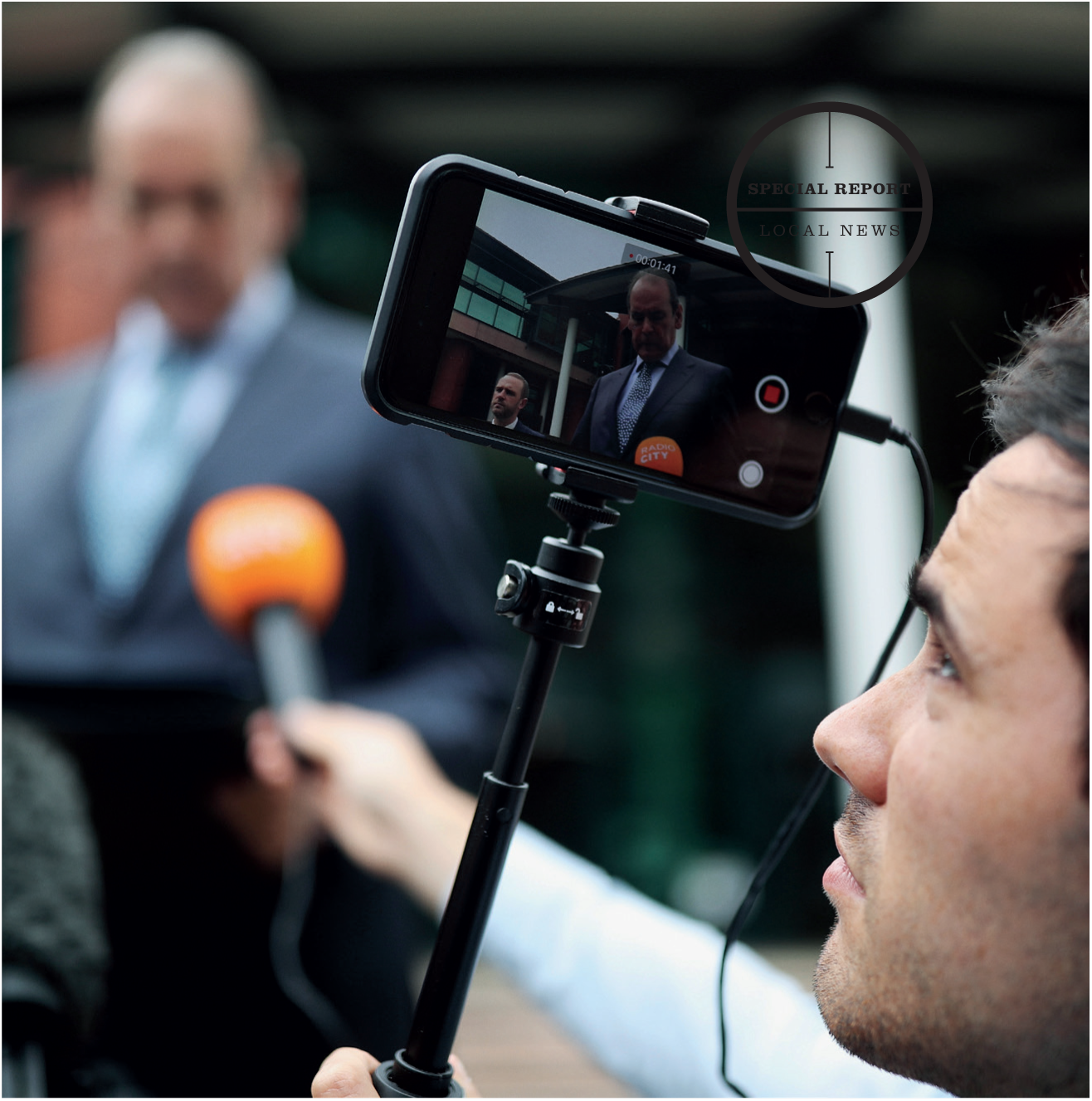
A journalist records video on a mobile phone as former Chief Inspector Sir Norman Bettison gives a statement outside Preston Crown Court, 2018
CREDIT: Christopher Furlong/Getty
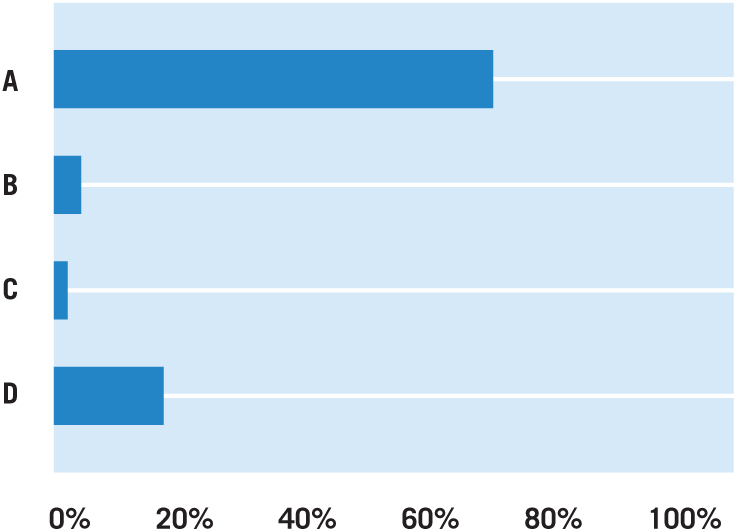
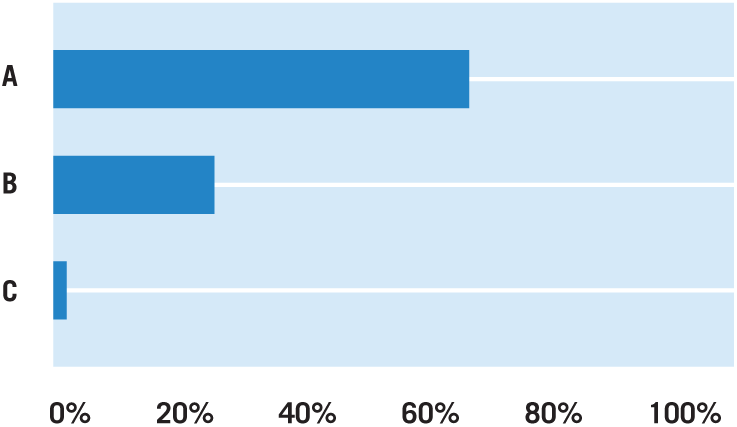
And 70% of those surveyed are very worried about this (see Question 3).
The survey, carried out earlier this year, asked for responses from senior journalists and current and former editors working in regional journalism. It was part of work carried out for this magazine to discover the biggest challenges ahead for local journalists.
It follows steady declines in regional newspaper sales and online audiences in recent years. Figures from the Audit Bureau of Circulation for 2018 showed many regional papers suffering steep declines in readership, including the Cambridge News (34% down year-on-year to only 7,124 copies), the Ipswich Star (37% down) and morning daily The Scotsman (17% down).
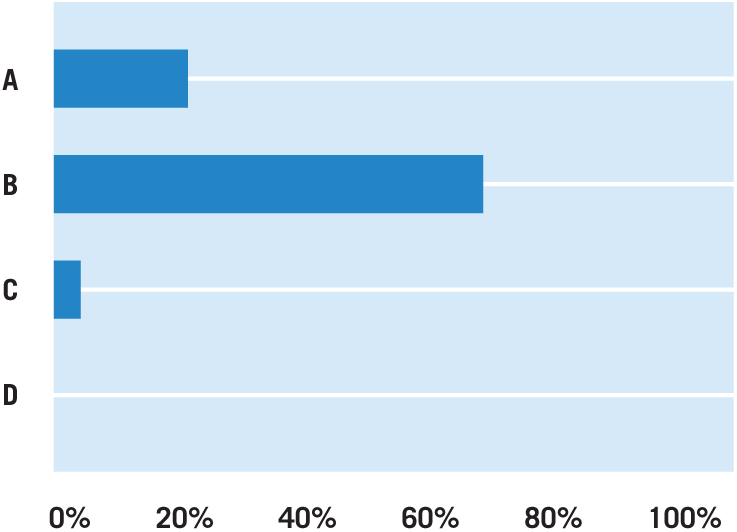
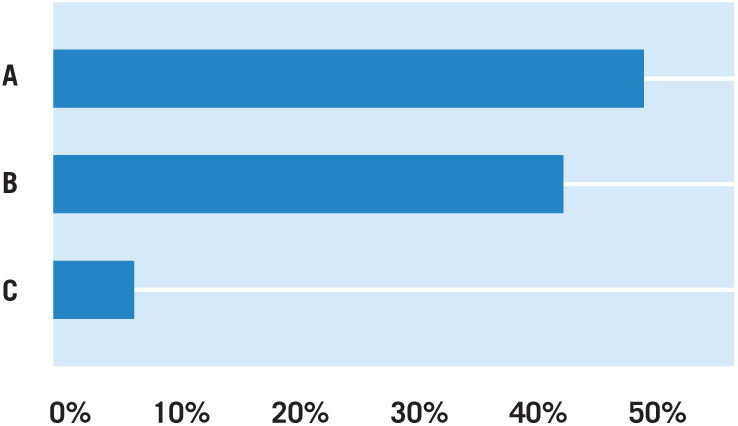
The survey found that 50% of editors and journalists are most worried that no one will be doing the difficult stories in future (see Q5), and 43% that the public’s right to know will disappear. A small number worry most that there will be too much emphasis on light, funny stories.
There are some specific issues that editors worry about, such as covering court cases and council meetings with limited resources. Michael Sassi, editor of the Nottingham Post and the Nottingham Live website, told Index: “There’s no doubt that local decision-makers aren’t subject to the level of scrutiny they once were. There are large numbers of councils right across the country – making big decisions involving millions of pounds of public money – who may never see a local reporter. Many local authorities will be operating in the knowledge that no one will ever ask them an awkward question. Which, obviously enough, does nothing to help build trust in local democracy.
“Just because it’s hard to persuade local audiences to read about what their elected representatives are doing in their name, local publishers haven’t given up. Most – including the Nottingham Post – still believe that it’s part of their job to take the issues that are important for local people (and for local democracy) and to find ways of making these issues interesting and readable.”
He added that there were now far fewer staff reporters writing about local councils than there were 15 years ago, but pointed to projects such as the BBC-backed local democracy reporters as one way of giving papers more resources.
“Certainly, Nottingham’s local democracy reporter Kit Sandeman – who is based in our newsroom – has been able to go to many of the council meetings that we’d previously had to drop,” he said. “He religiously works his way through agendas, builds old-style relationships with local politicians and turns up important stories that may never have come to light.”
Overall, editors seem far more concerned than the wider public that reducing local reporting could create increasing democratic unaccountability (see p39).
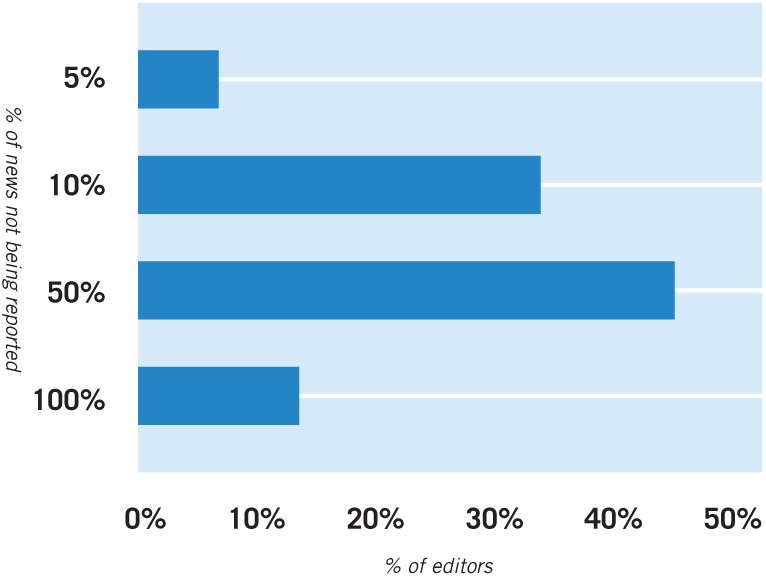
Twenty editors surveyed say that they feel only half as much local news is getting covered in their area compared with a decade earlier (see Q1), with 15 respondents saying that about 10% less news is getting covered. And 74% say their news outlet covers court cases once a week, and 18% say they hardly ever cover courts.
Around 70% (32 respondents) say in areas where the local newspaper has closed down the public know less about what was going on. Only two respondents feel alternative news sources have sprung up.
The survey went out to members of the Society of Editors. Their membership includes former and current editors, deputy editors and managing editors of local newspapers around the UK. Forty five responses to the survey were received.
Commenting on the survey, Ian Murray, director of the Society of Editors, said: “There’s real danger of local communities almost sleepwalking into this situation where you would have a cabal of people running the politics in town. That’s a real step backwards to where, [as] in the past, somewhere is run by the local aristocracy.”
He added that in many places, losing their local newspaper or radio station was going to “damage the local community’s soul”. Murray, who was previously the editor of the Southern Daily Echo, said he felt that many people were disengaged from their local communities and would worry only when something affected them.
Communities who had lost their local news media were left dependent on magazines funded by local authorities, which covered only a certain amount of information, and on “the Twitterati”. Local democracy was vitally important, with “decisions being made in your name”. If fewer people were watching what was going on, there would be fewer people making decisions on local budgets, he said.
But not everyone is gloomy about the future. One senior journalist added: “While it’s right to be concerned about the future provision of local news and capacity to hold the powerful to account, tackle challenging stories and maintain the public’s right to know, we shouldn’t succumb to the belief that this vital sector is doomed. Plenty of bright, young, well-trained journalists are still entering the industry at this grassroots level and new initiatives, like those backed by the BBC and Facebook, are breathing in new life.”
Meanwhile, one local editor told the survey that more relevant news was being covered now than a decade ago, but added: “I fear that opinion is prized more than fact, and comfortable narratives are more acceptable than openended, campaigning journalism.”
Question One
Question Two
Question Three
Question Four
Question Five
By the Numbers
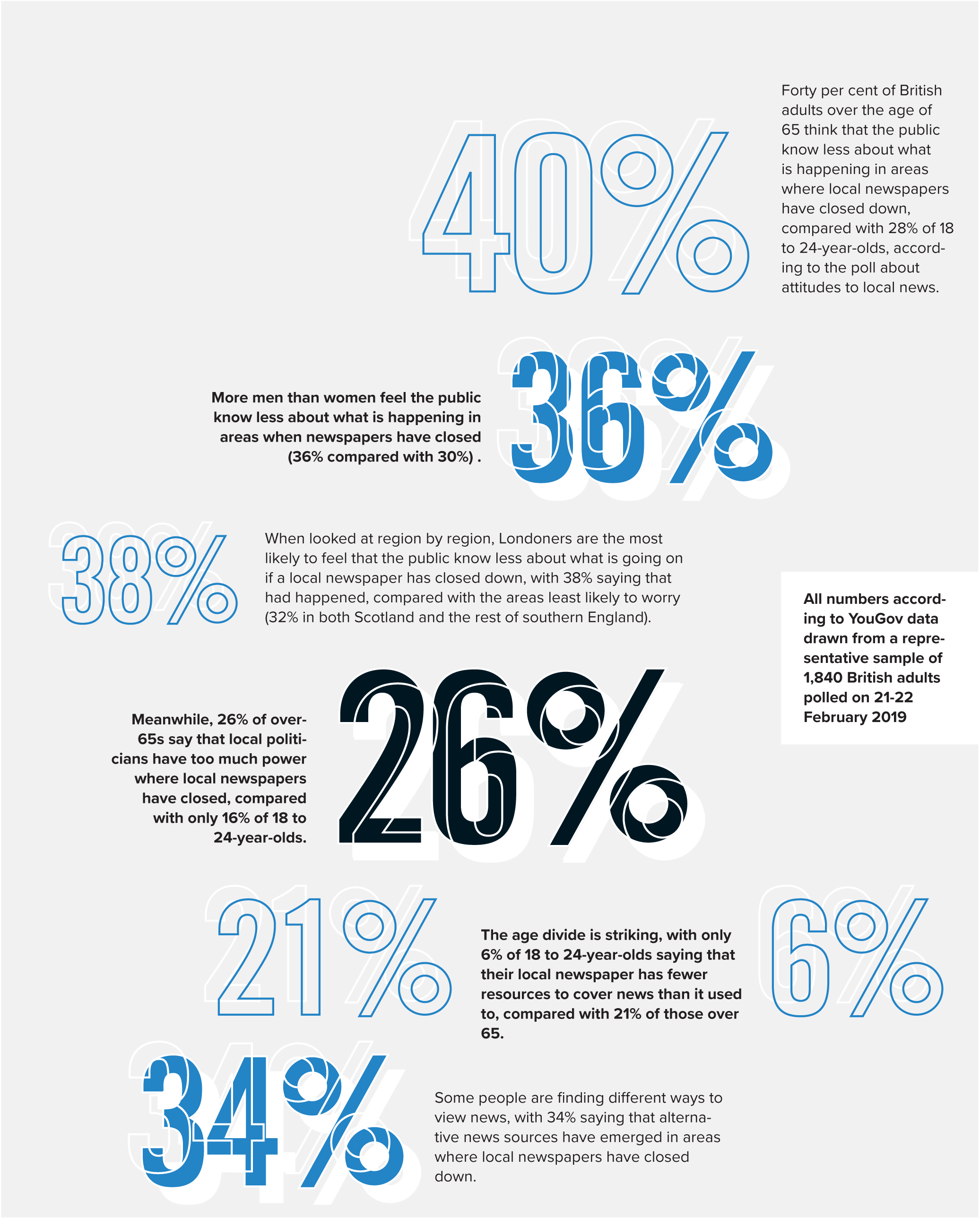
However, an exclusive poll carried out by YouGov for Index on Censorship this year, shows some public disquiet – mainly among older people.