




Abstract

After the murder of its mayor,
His body lay in state for 24 hours at the European Solidarity Centre (ECS), before being transported to St Mary’s Basilica, and an estimated 50,000 people queued for hours in the bitter cold to pay their respects.
It was no coincidence that Adamowicz’s body was first laid out at ECS, one of his flagship projects. Officially launched in 2007, the centre opened in 2014 on the grounds of the former Lenin Shipyards – the birthplace of the Solidarity movement.
ECS is a museum, an archive, an open space for local citizens, and an office space for the former Polish president and leader of Solidarity, Lech Wałęsa. It is a symbol of the city’s history of protest and openness.
It is not surprising either that the government wanted to cut large amounts of funding from the centre and then get the city to sack of some of its key staff.
Mourners pay respects to murdered mayor of Gdańsk Paweł Adamowicz, who was assassinated during a charity event in 2019
CREDIT: Omar Marques/SOPA Images/LightRocket via Getty
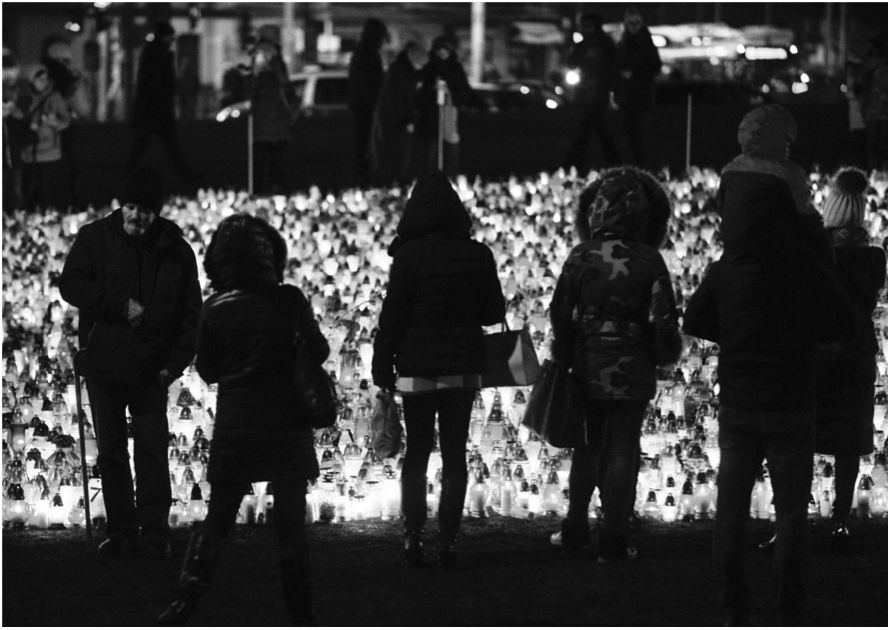
After the killing Gdańsk, led by acting mayor Aleksandra Dulkiewicz, responded by launching a civic movement to raise the money through a crowdfunding campaign on Facebook and donations.
In 48 hours the campaign brought in the equivalent of $1.7 million – more than twice the amount of the missing funding. The city of Gdańsk had once again drawn on its protest spirit and became a centre of Polish defiance against the government.
Adamowicz’s murder, on 14 January 2019, sent shockwaves which were felt across Poland and beyond. Such a brutal act, carried out during the finale of a charitable event and in front of crowds of hundreds of people, illustrates just how toxic the political environment is in Poland today.
On many occasions he embodied that spirit, standing in opposition to national trends and policies. Gdańsk agreed to accept refugees to the city despite the national government’s refusal to participate in the EU’s relocation programme. And the city later developed the first refugee integration programme of its kind, which became a model for other Polish cities willing to follow its bold lead.
Adamowicz was a frequent target of attacks in government-supported media, largely because he was a strong opponent of the populist policies of the ruling Law and Justice party. There is little doubt as to the political motivations of the murderer, an ex-convict who rushed the stage wielding a military-grade knife and who announced after the attack that Adamowicz was paying the price for his imprisonment, which had taken place under the previous Civic Platform government.
The mayor had cultivated the idea of Gdańsk being a “free city” – a reference back to the Free City of Danzig, as the city and surrounding area was known from 1920 to 1939.
Gdańsk is also particularly sensitive to meddling from the current government in its interpretation of history. A scandal erupted regarding the newly opened Museum of the Second World War. The original narrative of the museum had focused on the war from a global perspective, presenting it with the understanding that it broke out, at the peninsula in the city, Westerplatte, but had much wider consequences, affecting the lives of millions around the world.
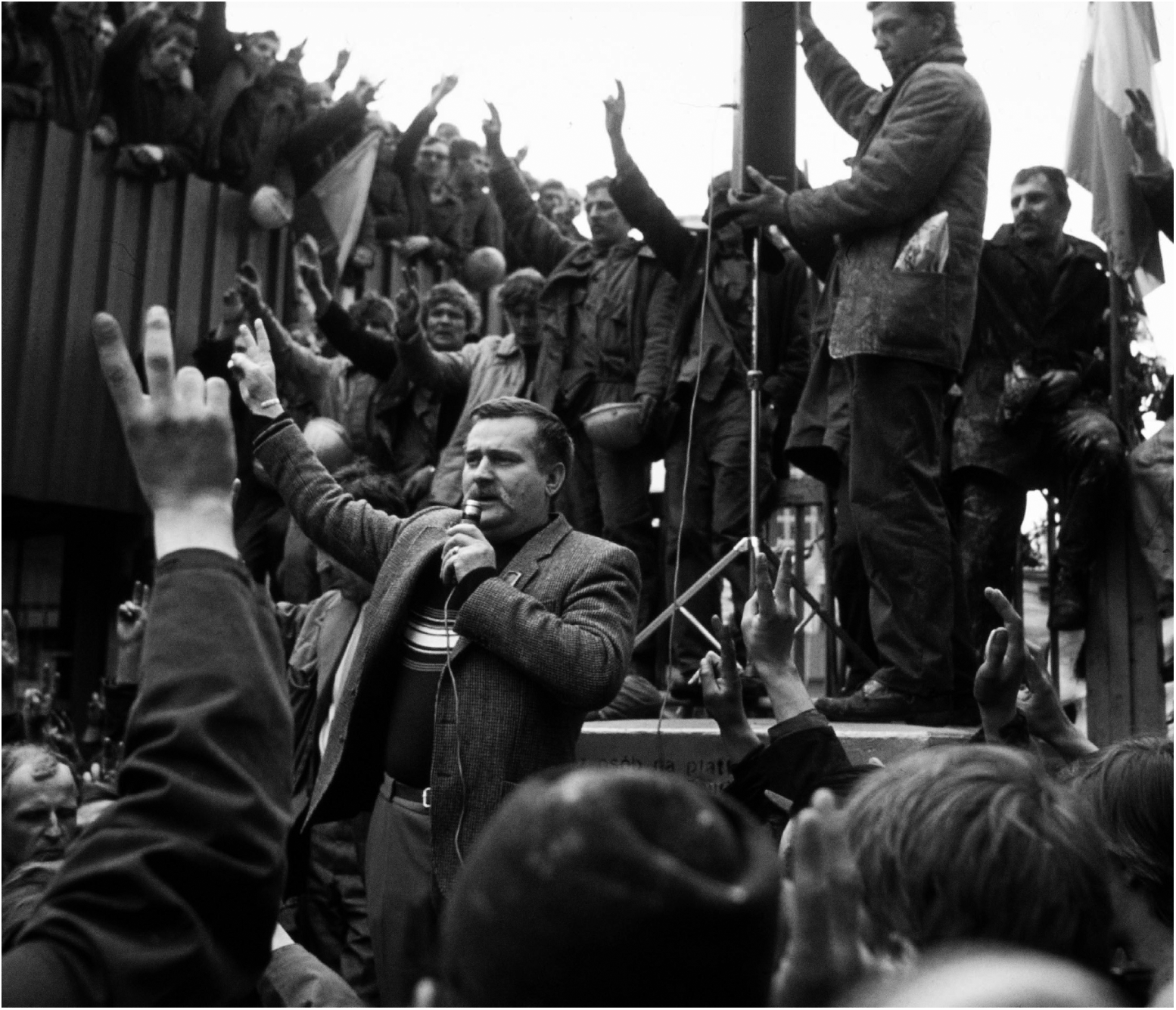
In 1980 Polish Solidarity leader Lech Wałęsa addressed striking workers at Lenin shipyard in Gdańsk
CREDIT: Chris Niedenthal/The LIFE Images Collection/Getty
The new government did not approve of this approach, arguing that it should be first and foremost focused on Polish victimhood. The government sacked the director and began to delicately reconfigure the museum’s exhibition.
The ECS project also clashed with the official historical narrative of the Law and Justice party. The government interprets the roundtable talks of 1989 – negotiations between the Solidarity opposition movement and the communist government which led to the transition to democracy and the fall of the Berlin Wall – as a lost opportunity for Poland and one which it seeks to repair today.
It argues that many of the leading characters highlighted at the ECS main exhibition, such as Wałęsa, Tadeusz Mazowiecki, Bronisław Geremek and Andrzej Wajda, are the ones responsible for abandoning Poland’s conservative national values and that the exhibit’s narrative is blatantly one-sided.
Gdańsk is not a city to quietly obey diktats from Warsaw. Its heritage of protest and standing up to the authorities is in its DNA and spans generations. The famous shipyard strikes of the 1970s and 1980s, which led to the birth of the Solidarity movement, were the first cracks which eventually led to the downfall of the communist system in Poland.
Even though the Solidarity movement was quashed with the imposition of martial law in 1981, Gdańsk remained a hotbed of pro-democracy opposition, publishing and distributing underground press to workers and intellectuals alike. As a result, communism finally collapsed in 1989. This year there will be celebrations to mark the 30th anniversary of those events.
This autumn will surely be a major test for Polish democracy when parliamentary elections will take place. From today’s perspective, it seems that the ruling party faces an uphill battle. The opposition has shown signs that it is starting to gain some strength in the polls while the emergence of a new centre-left force called Wiosna (Spring) has raised the eyebrows of many Poles looking for something new.
The question remains whether the rest of the country will follow the example of Gdańsk and stand up against the government’s populistic, interventionist tendencies.