




Abstract
The conflict on the Mexican/US border is the setting for
“I am in a privileged place in terms of my work, a university, and I am equally privileged in that sense when I am in Mexico, because I have certain visibility and I work closely with certain institutions,” he told Index.
Born in Actopan, Mexico, and having studied in both Mexico and the USA, Herrera is one of the most highly regarded authors to come out of Latin America today. His novel, Kingdom Cons, won the 2003 Premio Binacional de Novela/Border of Words. Then Signs Preceding the End of the World became an instant global hit and was translated widely. Herrera is famous for using neologisms, invented words which often combine meanings. For instance, in the short story below the word “interrufficated” expresses both the idea of interrupting and of suffocating.
Having lived in two countries, and having spent time in the border areas of El Paso and Ciudad Juárez, Herrera’s writing centres predominantly on the experience of those living along the border between Mexico and the United States.
“Geopolitical borders have been part of the models I use in order to develop my stories, but I also try to speak about what I call “the border condition”, which defines spaces in which, even though they might be far away from the geopolitical borders, you find different communities exchanging values, habits, goods, sometimes clashing, but that function as a laboratory for new identities, political practices, linguistic forms.
“Now, in these spaces, we have also seen a replication of the worst part of the border spaces: institutions and individuals persecuting undocumented workers, harassing people just because they look or sound different,” he said.
Today, Herrera teaches at the University of Tulane in New Orleans. While his current home might not provide quite the censored environment of Mexico, a nation sliding down free speech indexes at breakneck speed, Herrera is keen to point out that this does not make it immune.
Award-winning Mexican writer Yuri Herrera
CREDIT: (portrait) Tori Bush; (illustration) Sam Darlow

“There are different ways of censorship, not only government censorship or the threats from organised crime (that is, when it is a different thing, because very often they are one and the same, in either country), but also there is the censorship practised by the big corporations that own newspapers and publishing houses. That happens quite frequently in the United States, even though it is not discussed openly very often.”
The short story below was originally published in Talud, a Spanish volume of short stories, and has been translated into English for the first time for Index. It considers how the those in power intimidate others and shut them down.
“It is about the supposed rationality of the powerful, how we are duped by their aura of knowledge when, in fact, many times they make decisions based on their personal ambitions and how they justify themselves with certain superstitions (sometimes disguised as economic theories, for example),” said Herrera.
Omens
The addressee, who’d been in the process of enumerating for his boss the benefits that the experts had laid out for him of selling the refineries to the Chinese and not the gringos, interrufficated himself as if to say, Wha…?
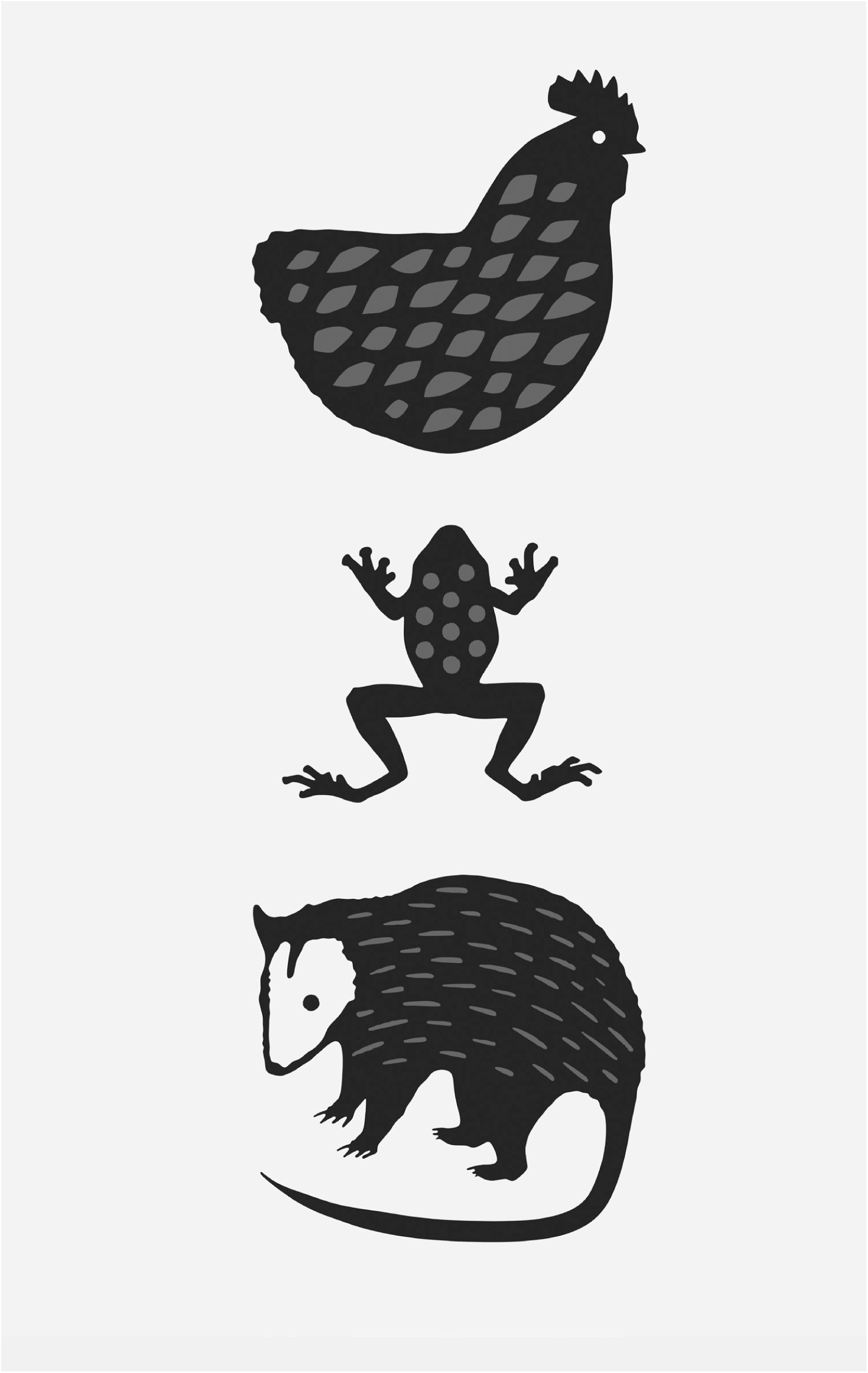
“A chicken – alive,” the president confirmed, “and a frog, and a tlacuache. We’ll settle this here and now.”
He stared fixedly at the co-ordinator of advisers, who realised the order was, in fact, serious and set off in search of the animals.
Why had he asked for a tlacuache? the president wondered. He didn’t even really know what a tlacuache looked like – essentially an opossum, he thought. He’d seen a documentary at one point but couldn’t recall the animal’s appearance. Regardless, its name had a resonance that would serve to better illustrate his point. He ordered the smaller swimming pool to be emptied and the co-ordinator of advisers to meet him there with the animals. On arriving, he saw that the hen was fat and white, that the frog was wet and had bumpy skin – so much so that he wondered if it were, perhaps, a toad but didn’t dare to ask – and that the tlacuache resembled a sort of ill-tempered beaver. He nodded in approval.
“Set them loose, and observe,” the president ordered. The co-ordinator of advisers opened the little cages in which he was carrying the animals.
There was a moment of bewildered tranquility in the pool, as though the animals were attempting to make sense of the extraordinary confluence of circumstances that had them now contemplating one another, these different species; then the chicken pounced on the frog, which hopped up toward the edge of the pool without completely clearing it. The amphibian then rolled dramatically to the bottom of the pool and would have been pecked to death were it not for the tlacuache, which at that moment lunged ferociously at the hen, attacking with claws and teeth. The frog made another unfruitful attempt to depart from the pool and then remained very still as the chicken flapped ceaselessly against the tlacuache’s onslaught. This persecution lasted a good three minutes, until the frog committed the tactical error of seeking a safer refuge and had just taken one discreet little hop when the tlacuache, enflamed by battle, landed on the amphibian, eviscerating it in a matter of seconds. The hen continued flailing in the air a bit longer and then stopped, though prey to great agitation. Her clucking and the mammal’s soft chewing were all that could be heard for a time; then the tlacuache turned and attacked the bird once more.
“Enough,” said the head of state. “Separate them.”
The co-ordinator of advisers was forced to climb down into the pool and kick the marsupial in order to save the bird.
“So,” the president said. “How do we interpret this?”
The co-ordinator of advisers glanced at him in a mix of panic and despair. Suddenly aware of what he must look like, he let go of the over-excited hen so that it could run free, and searched for words.
“Well, well, well,” he turned to look at the tlacuache in the pool, possibly attempting to determine whether it had been the triumphant animal. “The…the lesson is…that the best prey is not the juiciest, but the safest bet…and…and…that he who puts up the most fight must be shown who’s really in charge…all the time.”
The co-ordinator of advisers closed his mouth and anxiously awaited his Lord’s reply.
“So that’s the lesson, is it?” the president asked derisively. “No, amigo, the lesson is that I must choose as my right hand someone who thinks for himself, not someone who falls for anything. Be off. And set that animal free.”
That night he thought maybe he should send the co-ordinator of advisers to the Vatican as an attaché. Let the man callus his fingers on rosary beads. But just before going to sleep he was given a memorandum: the Chinese had made an offer matching the conditions set by the gringos, who – having found out about the deal who knows how – made it known that they had faith in the government’s word and were prepared to add some individual compensation, provided they were the beneficiaries of the deal. Mmm. Suddenly he had both delegations where he wanted them. The president couldn’t help but think of the calm way the frog had placed itself within reach of the tlacuache while the latter pounced on the bigger prey. There had been a touch of resignation, the president noted; he thought the frog’s final hop had signified an acceptance of its fate. In truth, the battle with the bird had only left the frog in a more vulnerable position. Like with the gringos.
Son of a bitch, thought the president, now he really did have to fire the imbecile co-ordinator of advisers. He put on a flannel robe and went to his office to reflect. Through the picture window he watched a cat inch patiently closer to a rat that was devouring scraps in the residence gardens. Just as the cat was about to trap it, the rodent escaped. The president hadn’t known that there were either cats or rats in the gardens, he’d have to inquire about this.
“Jesus,” he sighed, “governing is so damn hard.”
Footnotes
Translated by