




Abstract

It is 70 years since the Prohibition of Mixed Marriages Act, but in post-apartheid South Africa, author
My relationship with my English wife began years after the removal from our statutes of this law (repealed in 1985) and the two other laws that made interracial intimate relationships a criminal act: the Immorality Amendment Act, 1957 (repealed in 1985) and the Group Areas Act, 1950 (repealed in 1990). However, in spite of a favourable legal framework, an intimate interracial relationship in a socially stratified society such as South Africa isn’t always champagne and roses. I have come face to face with racial prejudice and racial discrimination. In our 17 years of courtship and marriage, our relationship continues to cause a stir – and this isn’t likely to change for years to come.
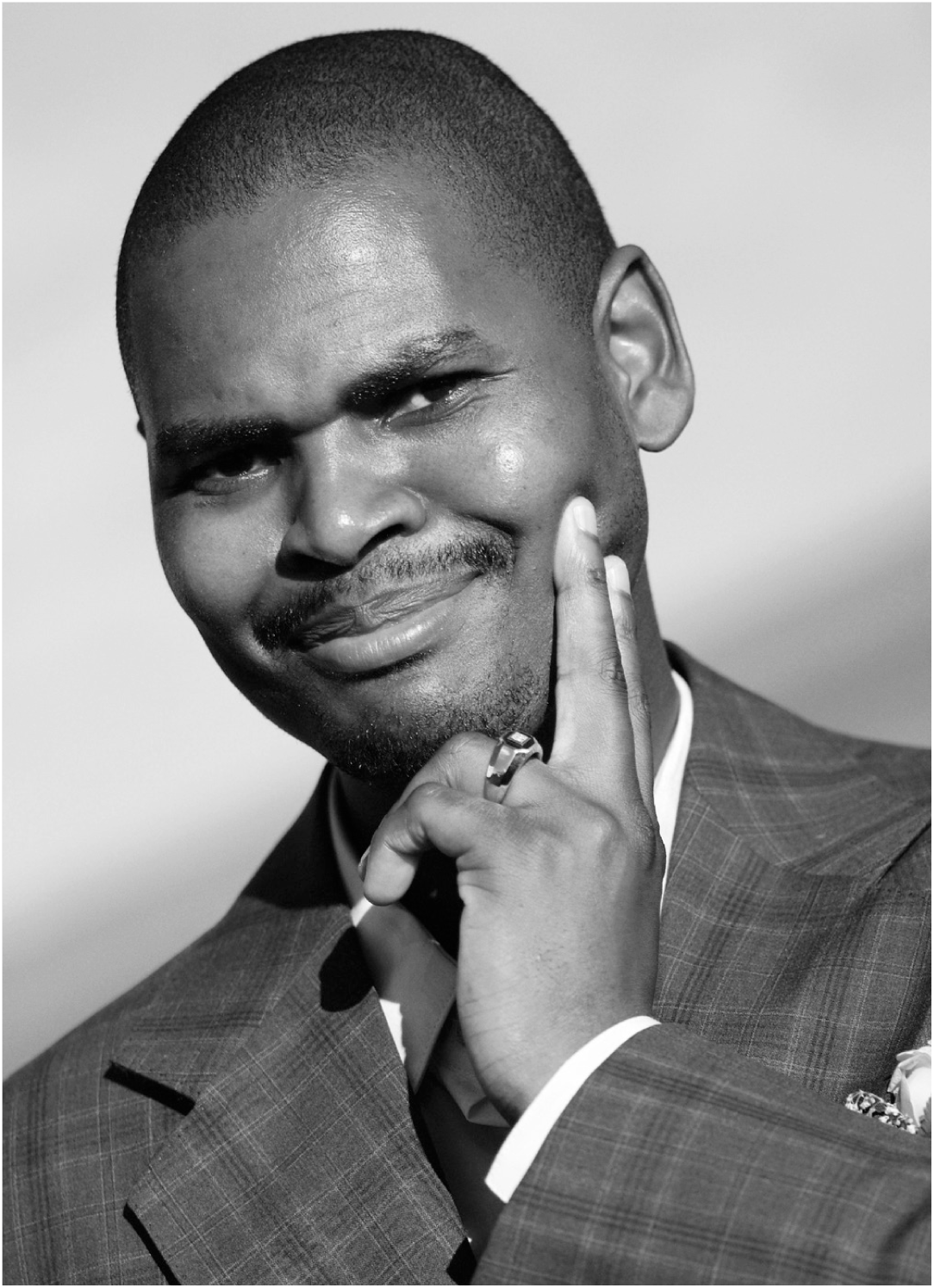
Author Bhekisisa Mncube whose marriage to a white woman caused a stir in his family
CREDIT: wildpixel/iStock
At first, one of my wife’s long-time friend’s called our union “the biggest mistake”. Being referred to in this way still hurts today, as it did then. Unsurprisingly, she wasn’t a lone wolf – my own people (read: blacks) had a mouthful to say. I am a traitor; I will increase, through birth, another race, different from mine – coloureds, so the line went.
The hurtful word “coloured” pierces my heart every day. Strangely, it comes from friends, foes and strangers alike. Most of these comments about breeding another race came from black people. In their racial thinking, I have committed the ultimate crime – a crime of passion across the colour line. I am effectively sleeping with the enemy. It is a pedantic detail that our relationship occurred deep into post-apartheid South Africa.
It is argued that opposition to interracial intimate relationships may indicate what Professor Kapano Ratele, of the Institute for Social and Health Sciences at the University of South Africa, has named “subtle racism”. At its core, this new form of racism is no less racist or offensive than “old-fashioned” racism; it is just disguised in a more sophisticated and socially accepted argument – that of opposition to intimate relationships between people classified as belonging to different racial groups. Justifications for this opposition are based on supposedly non-racist reasons, such as concern for the welfare of the children produced by such relationships.
I even lost a close friend who, unbeknown to me, was entangled in a fantasy love affair with me. She didn’t hold back, saying: “I can’t be friends with you now that you’re dating a white woman. I simply can’t go on and be with you while you’re dating whites.”
I was stunned. I had no idea that, firstly, she was a racist and, secondly, she was emotionally invested in our friendship. Over the years, I have lost more friends than I care to count.
Sadly, not even Durban – where we lived then – was ready for an interracial couple walking the streets, chatting, kissing and holding hands with gay abandon.
Many a time, we got hostile stares and suffered outright prejudice. I recall walking into a restaurant once, holding hands, and sitting ourselves down. Seconds, then minutes, passed. Nobody brought us menus. Nobody took our our drinks order. Nobody bothered to tell us we were not welcome. We had to figure out that we had touched a raw nerve of whiteness and its bedfellows, prejudice and naked racism. We never set foot in that establishment again. I am thankful that restaurant didn’t last long.
However, intimate interracial relationships are inherently intricate. In my case, the issue of cultural differences runs too deep. I am Zulu by birth; she is English. I am a carnivore; she is a vegetarian. I believe in sorceresses and ancestors; she doesn’t. She is a non-practising Catholic; I am non-practising believer in uMvelinqangi, the African god of creation. These differences have far-reaching consequences. For instance, to appease my parents after our wedding, I suggested a traditional wedding at which we would slaughter a cow to introduce the new bride to the ancestors. My wife does not believe in animal slaughter on principle. Obviously, she doesn’t want to be associated with the willy-nilly slaughter of animals in her name. She refused. The stalemate continues: my parents continue to push for the traditional wedding, in vain. I have decided to choose my wife over my parents.
Despite this traditional wedding hiatus, my family has long accepted my white wife. Two years ago, my father relented and introduced my English wife to our Zulu ancestors without the compulsory slaughter of any domestic animal. My mother speaks only words of kindness about her. She is regarded as an important member of the Mncube family. I am also fortunate in that my English wife’s family has accepted me and my Zuluness. In an interview for my book, my mother-in-law said: ‘So much joy from watching the two of you grow and mature together. It needed a strong love bond to make a success of a mixed-race marriage, and you can be proud.”
There is a light at the end of the tunnel, as new research on intimate interracial relationships shows that racial polarisation is narrowing. A 2011 study conducted by Acheampong Yaw Amoateng, a research professor of sociology and family studies at North-West University in Mafikeng, on interracial marriages provided good news. Researchers examined the likelihood of South Africans marrying outside their race, as well as the factors influencing interracial marriages. The study showed that, in 1996, the chance of someone marrying outside his or her race was 303:1. In 2011, the chance had increased to 95:1. While marrying within one’s race is still the norm in South Africa, studies show that this is slowly starting to change. And groups who have previously been found least likely to marry outside their race – Asians, Indians and whites – are increasingly choosing partners of another race. A recorded 5% of coloureds, Asians and Indians chose interracial marriage, while whites were the least likely among all races to do so. The most common interracial marriage is between blacks and coloureds. Black men are the most likely to marry outside their race while black women are least likely.
Fourteen years ago, we were blessed with a beautiful daughter named Miss N. Three years ago, she told me she had resolved the issue of her racial identity, saying: “Dad, I am a suburban Zulu girl.”
She will have nothing to do with the apartheid-inspired political identity of mixed-race South Africans being coloureds. It is therefore my contention that we need to reimagine the tired concepts of apartheid-fuelled race identity and racial profiling. While intimate interracial relationships aren’t a piece of cake in a racially polarised society, it is a journey that we have found liberating and life-affirming. After all, we are human beings before the socially constructed notion of race. Let us love and let us live. ®