




Abstract

The strict Presbytarian churches on the Scottish Isle of Lewis are losing their power, and, as
“If there was any negativity we were blissfully unaware. As for getting married in a big church? I would say we would have preferred to have got married in a church but seeing as we don’t attend regularly that would just be cheek.”
Although both women felt unable to come out when they were younger, by the time they got married they felt that the gossip had stopped and they were simply accepted. Around the time of their wedding there was only one hint of negativity. “When we went to get all the paperwork done, we were told that the registrar only worked part-time so we’d need to see the registrar based in Harris,” said Amanda.
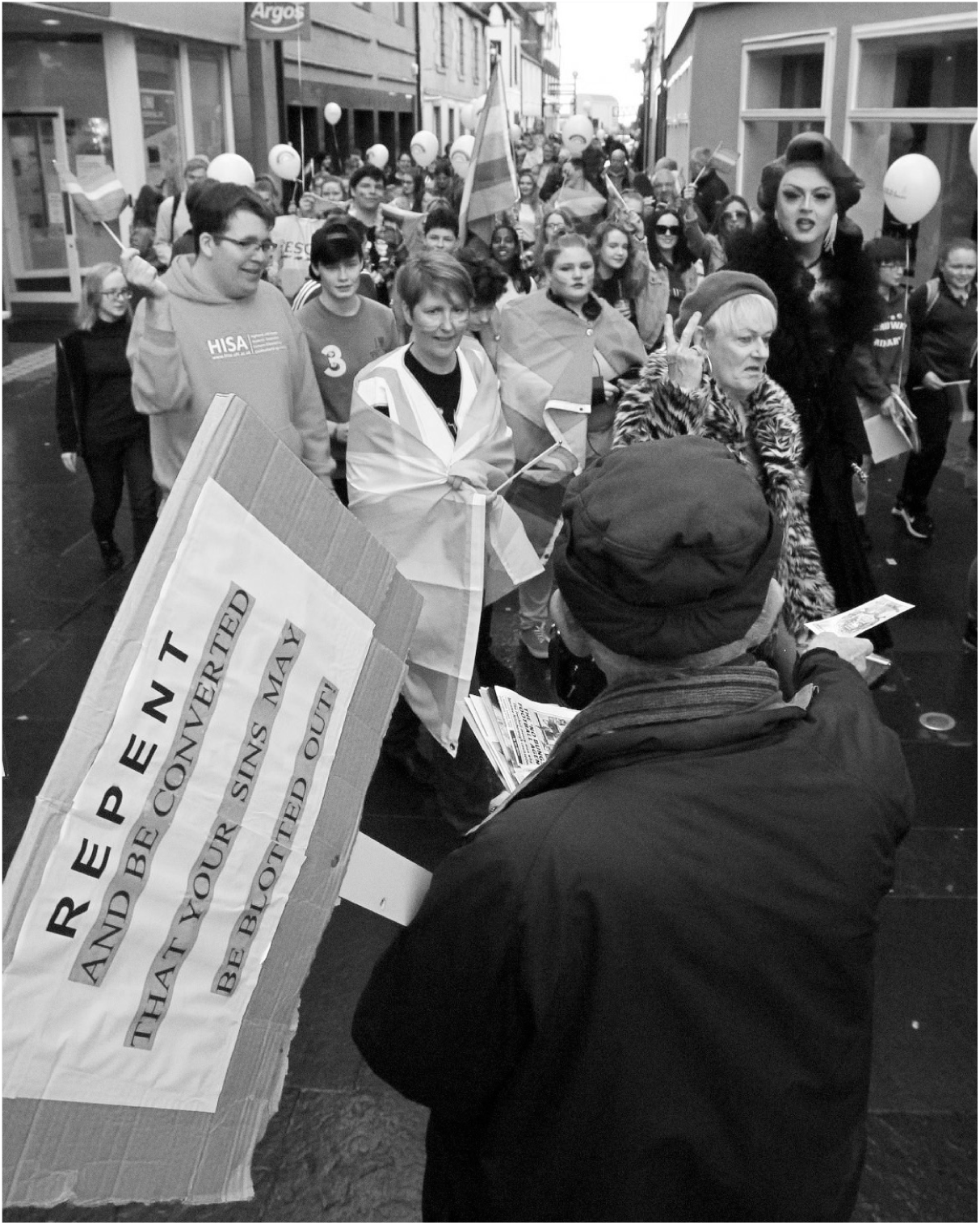
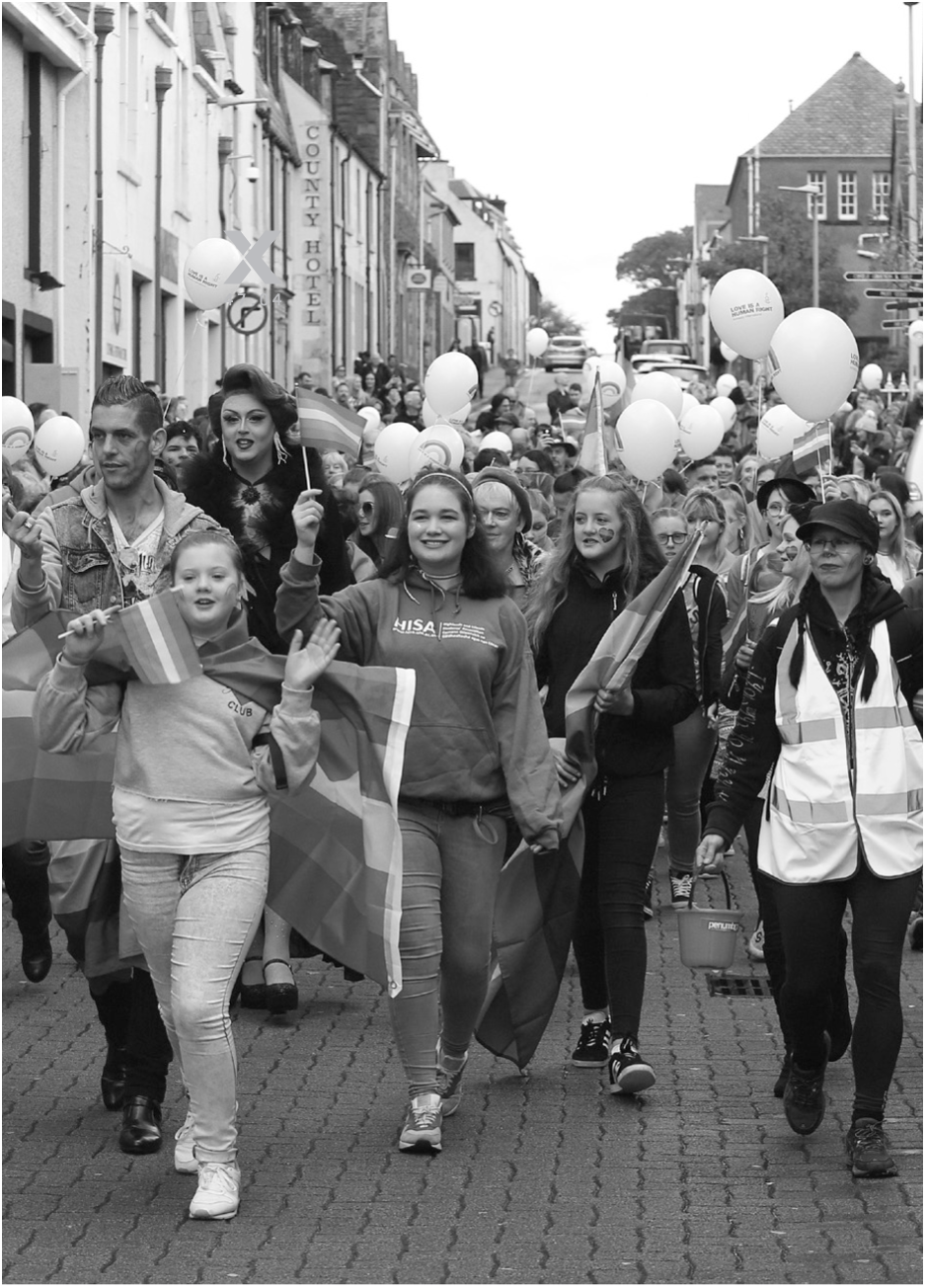
The Maclennans spoke to Index about attitudes to gay marriage after the Isle of Lewis held its first Pride march in October 2018, with around 500 people taking to the narrow streets. The Pride event was an open challenge to the strict Presbyterianism which has been dominant on the island for generations. Religious protestors were vocal intheir opposition.
In the past, regardless of their religion or lack of it, the majority of islanders adhered to certain traditions as a way of life. This was most apparent on a Sunday, when washing would never be hung out, shops, restaurants, the golf club and sports centre were closed and the ferries and other transport stopped for the day. Over the past 20 years there have been considerable changes, including ferry sailings and shops opening, with locals making it clear that for the majority that the churches no longer hold all the power.
Last June, the Scottish Episcopal Church took the decision to allow same-sex couples to be married in church. This historic move made it the first branch of the Anglican church in the UK to allow same-sex marriage.
In May of this year, the Church of Scotland voted to draft new laws that would allow ministers to conduct same-sex marriages and the legal questions committee now has two years before it has to report back, with a final poll expected in 2021.
These other churches could be a million miles away from Lewis, where Presbyterianism dominates. There are nearly 50 churches serving a population of 20,500, of which a mere six are not Presbyterian. The churches ruling on same-sex marriage and Lewis Pride indicate that there is now much greater acceptance of gay Christians in Scotland, but in reality, although many have said it’s now much easier to be gay in Lewis it’s still not easy if you also profess to be a Christian.
There is no discussion in the Presbyterian churches about legalising gay marriage and it’s unlikely to happen any time soon, especially since these churches regard being gay as a sin.
Unless you’ve grown up in the Highlands and Islands, it’s almost impossible to understand the implacable opposition to the concept of gay Christians and gay marriage.
Among the Presbyterians only essential work like caring for people or animals is done on the Sabbath and shopping, television, sport and going for a walk are all banned, with the day spent going to church, eating and reading religious books or the Bible. Preparation for Sunday starts on Saturday evening, which means any sober socialising finishing well before midnight. Sin by association is still very real. Playing sport in itself may not be sinful, but if your team competes on a Sunday then you probably shouldn’t be part of it.
Against such a catalogue of potential sins, Lewis Pride didn’t stand a chance of being accepted by religious leaders and their congregations. Interestingly, there was no animosity on either side of the debate, but neither was there any possibility of them meeting in the middle.
Greg MacDonald, a minister of the Free Church of Scotland (Continuing), was among religious figures who lined the route with placards carrying a biblical message. “We weren’t there for confrontation but to carry the message of God,” he said. “We had a prayer meeting the night before for all denominations opposed to the march and we believe that it is sending the wrong message to young people.”
He added: “What they are doing is unbiblical and unpleasing to God and if anyone came to me saying they were gay I would treat them as I would anyone else struggling with wrong sexual urges and counsel them to turn to God. Anyone can stop their behaviour with help from God.”
Pride marchers confronted by religious protesters on the streets of Stornoway on Lewis in October 2018
CREDIT: Colin Mearns/Herald and Times Group
Tabie MacDonald, who helped organise Lewis Pride, also grew up on Lewis, returning three years ago. “I started experimenting then and realised I was gay but I don’t think I’d have done that if I hadn’t moved away from Lewis.”
“Pride opened up everyone’s eyes and it helped people come to terms with their sexuality,” he said. “I’m really enjoying life now and I think I’m back in Lewis to stay, but I’m glad I left when I did. If I hadn’t, I think I’d probably be married with kids now and living a lie.”
Lewis Pride marchers. The 2018 event was the first Pride march on Lewis
CREDIT: Colin Mearns/Herald and Times Group
Lewis Pride would have been unthinkable even ten years ago, so there is hope of things changing. Tabie’s mum and siblings have been totally supportive of him coming out, with his mum saying to be what you want to be and be happy. “Pride opened up everyone’s eyes and it helped people come to terms with their sexuality,” he said. “I’m really enjoying life now and I think I’m back in Lewis to stay but I’m glad I left when I did. If I hadn’t, I think I’d probably be married with kids now and living a lie.”
Even Greg MacDonald admits times are changing, in part because of the diminishing power of the church in Lewis over the last 20 years. Now ferries run on Sundays, shops are open and locals have made it clear that, for the majority, the churches no longer hold sway.
“I’m in my 40s, and when I grew up in Lewis, the churches were packed,” he said. “I’m in Ness, where there are four different churches serving 1,500 people, yet on the Sabbath now there will probably be a total of 300 in church. I think that’s very sad.”
He believes that plenty of gay people in Lewis didn’t want to parade their sexuality through Pride. “They just want to get on and live with their neighbours in peace,” he said. “I think this is more a secular push than a gay push and you can see that with who’s involved – the same ones who want ferries on the Sabbath.”
Lewis Pride may have been a big step forward, but the Hebrides is still a long way from Edinburgh or Glasgow – and not just geographically.
Scottish Attitudes to Same-Sex Couples
The first same-sex marriages in Scotland took place on 31 December 2014
Same-sex couples were allowed to adopt children on 28 September 2009
Section 28, introduced in 1988, banned the “promotion of homosexuality”. It was repealed in Scotland, England and Wales in 2000
The Scottish National Party’s 2016 manifesto supported LGBT sex education classes, including “equality training” for teachers
LGBT-inclusive education was embedded in the Scottish school curriculum in November 2018
A study by Time for Inclusive Education found nine in 10 LGBT Scots experienced homophobia at school, whilst 27% had reported suicide attempts after being bullied
Scotland decriminalised homosexuality in 1980, which was 13 years later than in England and Wales
Men who have sex with men must wait three months after having sex to donate blood
Commercial surrogacy for gay male couples is yet to be legalised
Lewis held its first Pride march in October 2018
Polls conducted as part of the Scottish Social Attitudes survey found that acceptance for same-sex relationships had increased from 29% in 2000 to 59% in 2015