



Abstract

Bestselling Chinese writer
“Originally written as a nightmare, it is based on events that are happening in reality and have affected me,” Sheng told Index.
“Metaphor disease is defined as the excessive use of metaphors. The fear of uncontrolled speech and knowledge dissemination prompted the ruling class to create a new centre for ‘healing patients’, which is actually used for controlling people. Creators of metaphors, and metaphors themselves, are imprisoned.”
With her raw, often humorous writing that takes on the bitter truths of modern China, Sheng has emerged as one of the most interesting and daring writers today. Her background reads like a modern fairytale. She came from nothing – a poor, rural village in the southern province Hunan – and turned her fortunes around. Her first novel, Northern Girls (2012), was published globally, won several literary prizes and was longlisted for the Man Asia Literary Prize. But unlike many in China who might be willing to toe the party line in exchange for the good life, Sheng was not. In the author’s notes for her second novel published in English, Death Fugue, which considers the aftermath of the Tiananmen Square protests through a fictional town dealing with its own suppression of protest, she wrote: “A novel must have the power to offend.” And offend it did – publishers in China refused to touch it.
Sheng borrows from a great Chinese tradition of using word play to challenge authority.
Award-winning writer Sheng Keyi, several of whose books are banned in China
CREDIT: Dirk Shiba

“Throughout history, writers have found techniques to criticise indirectly,” she said. “This includes writing fantasy works, employing metaphors or using the Chunqiu technique of making subtle hints using omission and ambiguity.”
But she’s acutely aware of the limitations of writing in a hostile environment.
“Censorship is fatal to writing,” Sheng said. “The writer’s expressiveness and free will are severely restricted. They are frozen over. It is not easy to survive, the writers collectively hibernate, or are forced to write works that conform to the policy guidelines or actively flatter these guidelines. Looking at the history of writing, the censorship system that is full of loopholes can lead to some fantastic ideas from writers, but the meticulous censorship system is winter for writers. Nothing grows.
“When writing is overly cautious, the mind stops working – talent becomes strangled and even the metaphor disappears.”
For now, perhaps, China offers just enough freedom for Sheng’s creativity and she continues to draw inspiration from the country’s myriad contradictions and challenges. “The next novel I will write will be about a 20-year-old country girl who was executed for murder. It is a true story,” she said.
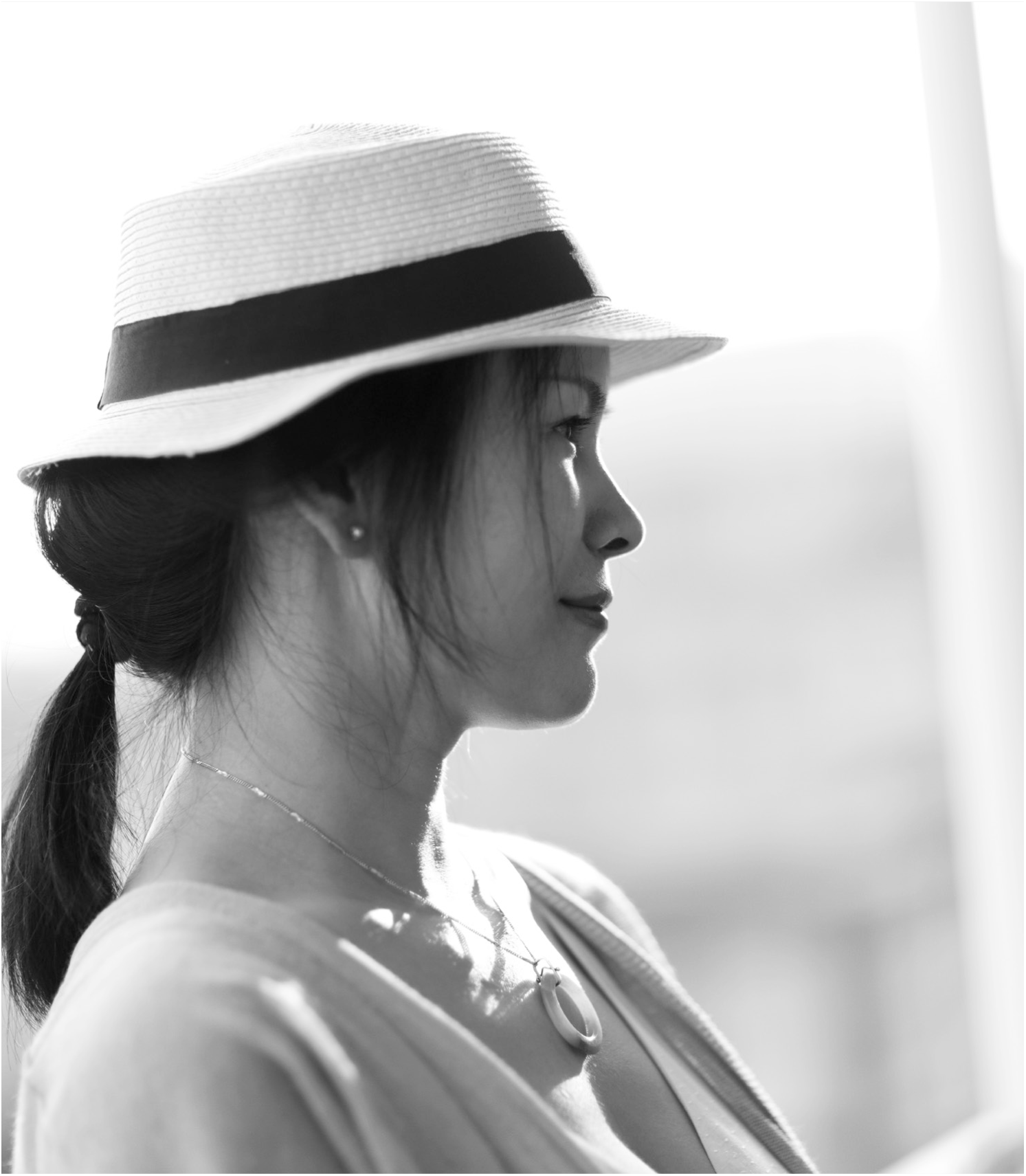
Sheng Keyi, who writes often on Chinese women, sees rural women in particular as the most voiceless in the country
CREDIT: Xu Dan
“I was shocked by all the misery that had been heaped on her, what she had endured, and that her anger had only really flared up when her son was strangled by her husband.” Herein lies Sheng’s other central interest – the plight of women in China. For her, the people with the least voice in the country are rural women.
“They lack opportunities to acquire knowledge. They have an unclear understanding of their rights, yet they are responsible for work, childbearing and day-to-day chores. Sometimes rural women suffer domestic violence and all kinds of unfair treatment. They are put down and it seems that they are a kind of rural commodity.”
The battleground of female reproductive rights forms the backdrop to three of her upcoming books, which she describes as “a trilogy of the uterus”. Like many women in China, Sheng has been directly affected by the country’s Draconian birth policies and recounts the time she witnessed a “relative being dragged back from hospital in a cart because she had been forced to undergo sterilisation”.
Is the new change in family planning policy a cause for celebration? Not at all.
“The abolition of the system does not reflect increased human rights, but rather a response to the population crisis of China’s labour force and its relation to economic growth. Women are not free to give birth. The government is exploiting the womb again.” She cautions that access to abortions and contraception may become more difficult.
“In the novel The Metaphor Detox Centre, I imagine in a surreal way how the government develops its population. They make a deal with the god of death and rent the uteruses of female ghosts to repopulate the town,” she said.
It’s not exactly a plot the Chinese government is going to like, but Sheng isn’t in the business of pleasing them. Readers should be grateful for that.
The Metaphor Detox Centre
She met a lawyer one afternoon while she was out on the grass. She saw his silhouette, framed by a bright light. He was staring into space, right in the spot where she liked to stare into space, and stood in a position that she normally adopted. She watched him as he watched the sunset, intrigued. He turned around, and she noticed his glasses, his curly hair and the bluish part of his face where his beard had been shaven off, all framed by a halo of sunlight. He was a large man – she could have slipped right into his chest pocket like a baby kangaroo.
To the west of the centre was a hill. Wild flowers and trees grew freely there – no one bothered to interfere with them. Small birds hopped and chirped, while butterflies fluttered softly. The reporter and the lawyer went into the copse of trees, growing into one another. Leaves fell soundlessly to the ground. Later, on a sunlight-tinged evening, an almighty force grabbed the golden rays and scattered them among the trees, making the whole place more beautiful. The staff of the centre watched from the other side of the hill, lying in the grass like an old lion missing patches of fur. First the two pecked at each other like birds. Soon they were licking each other like dogs. They removed their clothes like two ravenous people peeling off the firm flesh of the bamboo shoot and exposing the delicious flesh underneath. Next they pressed close to each other, like two mushrooms. Their breathing mimicked the wind rushing through the trees. The two birds locked their beaks. The sun shuddered. In their own world, they folded into each other, and she curled up in his arms with her head on his chest. Finally their limbs intertwined like snakes.
Neither she nor he could have guessed that the Metaphor Detox Centre was experimentally using “love” as part of their therapy. When, peering at the monitors, the researchers saw her expression soften as she looked at him, they were inspired to conduct a “love experiment”. This was the first ambitious experiment carried out by the centre, which aimed to use love to numb the brain and kill off the metaphor-developing abilities. The patients would automatically lose interest in metaphors and those stubbornly held beliefs would gradually fade away as the patients achieved bliss. They began to test their theory. The meeting was short – only half an hour. Everyone rubbed their hands eagerly, filled with the excitement of going to battle. (Perhaps some of them were looking forward to a legitimate excuse to become peeping Toms.) If successful, the experiment would not only represent a medical advancement, it would also lead to accolades, pay rises, promotions and other benefits. Yes, this experiment was worthy. Their plan was to mount dozens of hidden cameras in the trees and conduct a clinical observation of the two patients. As she and he became different plants and animals, many pairs of eyes watched pruriently from their screens. The researchers recorded, analysed and discussed the thoughts and behaviour of the mating humans, gleaning the percentage of love they possessed from their body language and expressions.
When the man decided to do it doggy-style, the researchers split into two groups. One group argued that the new couple was being far too provocative and therefore was not in love. The other group believed that there were strong signs of love in the expressions of the man and the woman. Even though the man was not young, he blushed like a virgin; when she turned her head to receive his kisses, her eyes were moist with tears of joy. Her lips parted slightly – she might have been faking it – but rather than take a breath, her lips formed the words “I love you”.
The second group of researchers concluded that she really was in love. The two groups started to argue as they watched their screens, and before long they launched personal attacks and started throwing punches. The collateral damage included the main screen, the flowers and plants on the hill, and one member of the couple.
Someone on the outside had an informant at the Metaphor Detox Centre. He quickly grasped the nature of the experiment and exposed the unethical monitoring methods of the centre with the help of a foreign media agency. This aroused suspicion about the true purpose of the centre. In China, not many people knew how to circumvent the censors, so the news did not have any effect. The Metaphor Detox Centre maintained that the clinical observations were both ethical and medically valuable. At the same time, they removed the cameras in the trees. Using the pretext that developing countries needed to use special treatments to combat special diseases, they quoted the introductory materials of the centre and included a series of statistical findings and charts to support their argument. As a result of the incident, the world started to call into question the necessity of the centre. Light-haired, blue-eyed reporters surrounded the building, peering through binoculars and trying to get an interview with staff members as they entered and exited the building. The centre had no choice but to set up a police line and a wire fence. Soon they even hired security guards to conduct 24-hour surveillance. Large red signs were erected:
CREDIT: Alex Green

CREDIT: Yenpitsu Nemoto/Ikon

“Danger! You are entering a contaminated area!”
Newspapers and television channels went on the offensive, discussing the causes, dangers and prevention tactics of Metaphor Disease. Information leaflets were distributed in every street, local government office, bus station, park and bookstore. It worked: everyone in China knew that Metaphor Disease was a highly contagious disease that also had a genetic component. The best prevention methods were avoiding people with a medical history of the disease and not coming into contact with enlightening printed materials from developed countries (as they were hazardous). Those who had accidentally come in contact with printed materials of this nature were expected to wash their hands, get their brains washed and get an injection from a medical professional to prevent the disease from attacking the system. People who had read the works of philosophers from the Enlightenment were the most common carriers of the disease. As with Aids, the incubation period was very long and some people seemed perfectly normal until the moment they went crazy. The best way to deal with these people was to not look at them, listen to them or believe anything they said. The leaflets recommended “reporting anyone suspected of having the disease to the relevant department in order to eliminate danger in society and foster a harmonious environment”.
At dinner, the person who served the reporter a meal also slipped her a piece of paper. It was from Gu Xiang, the one she met at the Metaphor Detox Centre; he had been secretly moved to another location. “What I want now is not just to save you but to work with the people to take the centre down... Metaphors are free, all words are free.” At the end of the short letter, he explained that the injections they had received contained hormones that increased sexual desire. He was not sure if she really loved him but he knew that he truly loved her.
She looked like a statue. Tears rolled down her face.
“Something’s wrong with that woman over there,” the town butcher said, putting his arm around his wife’s shoulder and pulling her in close. “She is having an out-of-body experience or something. Next time, don’t speak to her. We’re from Pleasant Sound and we protect our village from threats, no matter what.”
His wife did not reply.
“You idiot, you keep forgetting that only those who understand the times are wise! You didn’t understand the situation back then, either,” he finished.
At this, the butcher and his wife started groping each other in public, emitting pleasurable moans.
“Excuse me,” the female reporter asked, her eyes darting away as she spoke. “Do you know someone named Gu Xiang?”
Footnotes
Translated by