




Abstract

Nobel prize-winning writer
A lot of people think censorship is something that only takes place on paper. And yes, of course, you can perform censorship in black and white through modifications or deletions in a text. But a sheet of paper only ever carries the stark result of the process.
A censored sentence doesn’t tell you what the author has gone through. Censorship is a huge closed circle which starts long before the censored text and has consequences far beyond it – since it is only necessary to censor texts because it is necessary to censor the life of the author. The state that orders censorship fears the author just as much as their text.
You are in the watchdog’s sights as an individual long before your text is censored, and censorship of the text does not clear you of suspicion – on the contrary, it is confirmed and, therefore, amplified.
Censorship is imposed on everything that is feared by the regime. The censor has a list of forbidden words, so-called provocative words.
Many “provocative words” are always on the list. Others come and go, depending on specific individual events taking place in the relevant country. Sometimes you couldn’t explain why some passages had been censored, because you couldn’t explain what the anxieties of the regime were. There was never a constant logic behind it; ultimately the whole system was suffering from anxiety.
In Ceausescu’s Romania, the word “suitcase” was a provocative word, because the people shared a collective dream of leaving the country and the mere word “suitcase” already suggested this desire and “provoked” the regime. “Border” was also a provocative word. As was any vocabulary that could in any way be construed to suggest a criticism of the state. When I wrote about my mother’s deportation to a Soviet work camp in an earlier text, the word “Russia”was replaced with “a foreign country”.
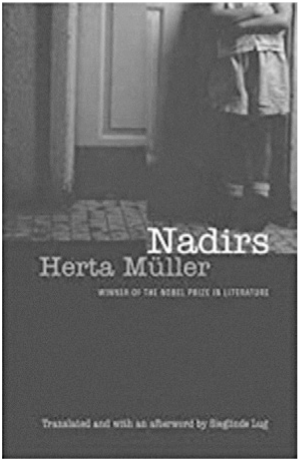
As well as provocative words, there were also “provocative themes”. These allowed a censor to act completely arbitrarily. He could make his mark as a good watchdog and maim whichever texts he chose. What can still be permitted in literature if “pessimism” and “decadence” are forbidden? And when everything erotic is categorised as forbidden pornography? Dictatorships are always prudish. Censorship at the publishing house was one thing, but even worse was the fact that every manuscript was also sent to the secret services. And that the censors – they were dubbed “lectors”, of course – would provide the secret services with “textual interpretations”. They had to prove their loyalty to the state through their work on the text. Thus every [piece of] censorship affecting the publishing house had a prelude and a sequel at the secret services – in the form of an interrogation.
Dictatorships are not just prudish, they are also cowardly and, above all, perfidious. If the interrogation raised the issue of “pornography” in my texts, I was immediately also personally accused of prostitution. I was meant not only to feel that I was writing something forbidden, but also to know that I could be imprisoned at any time – the legal punishment for prostitution was imprisonment.
The interrogator informed me that I was having sexual relations with eight Arab students who were studying in Romania. But I didn’t know a single Arab student. When I said this, the interrogator started laughing and told me: “If that’s what we want, you know 20 Arabs. You’ll see, it’ll be an interesting trial.”
Yes, it would have become a completely invented, perfectly staged trial. During the next interrogation he came up with something different – for example, I was involved in trading Western goods on the black market. Or I was an agent of the German intelligence service. Each one of these inventions was punishable by a prison sentence. And this was what scared me the most: that the state would never admit to be persecuting me because of my literary work, that I would be imprisoned on trumped-up charges.
I was meant to take the fact that, following hours of threats, I wasn’t imprisoned after all, as an act of protection and generosity on the part of the secret services. The state was already criminalising people for invented crimes back then – just as happens today in Russia or China.
Even if you’re not sent to prison, you are still left with only a delicate, fragile freedom. A kind of parole that can be revoked at any time. You are forced into this feeling, and it generates a constant fear. A long-lasting fear, which robs you of any sense of certainty.
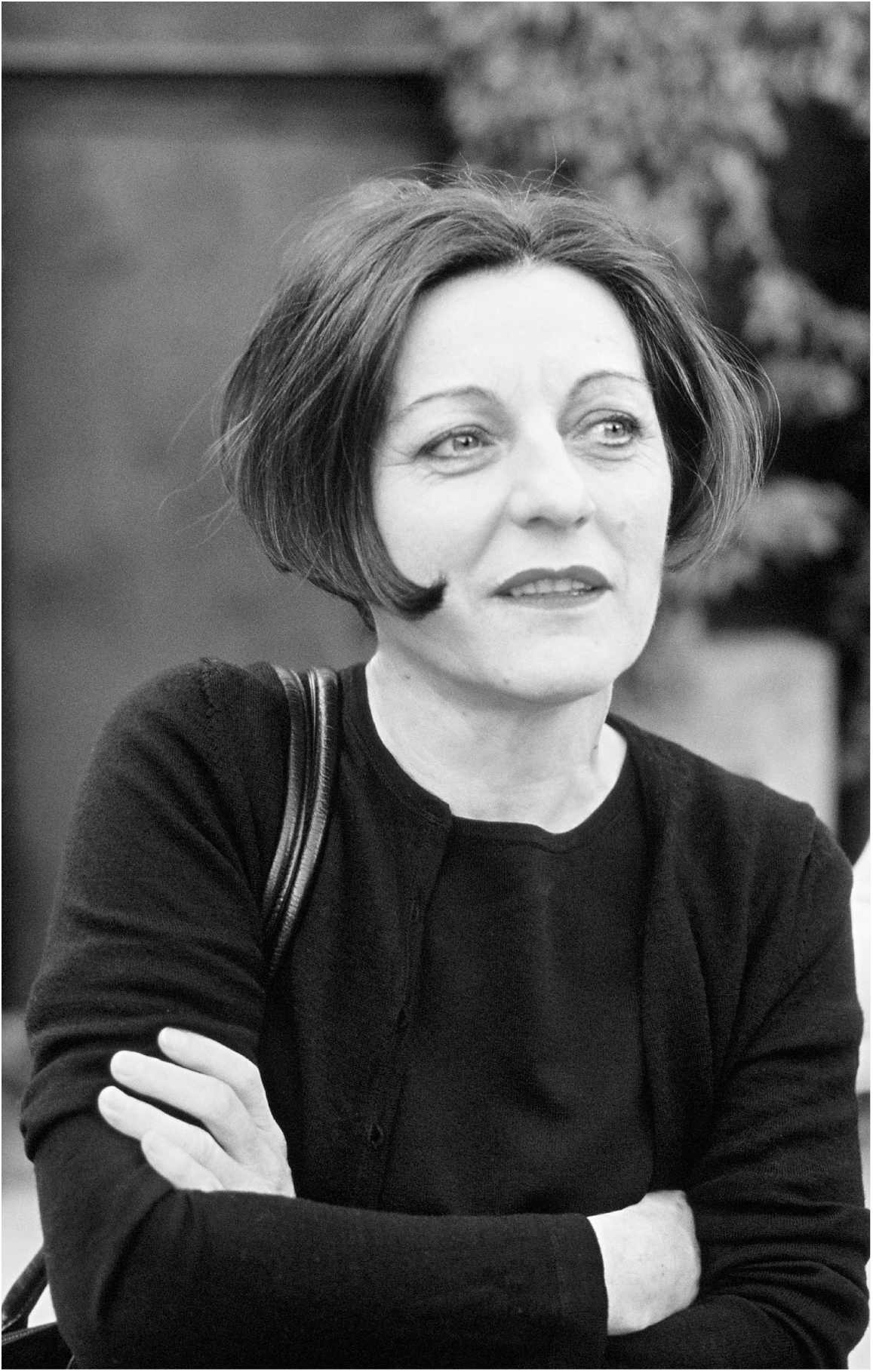
The Nobel prize-winning author Herta Müller
CREDIT: Isolde Ohlbaum
On top of this intensification of censorship through secret service interrogations, you were also subjected to surveillance on the street and home searches. You weren’t just called in for interrogation, you were also picked up, completely unprepared, on the street and dragged along to the secret services or, even worse, to some back room in a block of flats somewhere in the city.
The interrogation only occasionally dealt with literature. Most of the time – for seven, eight hours – you had to listen to invented “crimes” and threats and sentences such as “traffic accidents can happen” or “he whose clothes are clean can’t arrive dirty in heaven”. I’ll never forget these maliciously formulated death threats.
But censorship did not just affect art. It was just as present in our everyday lives as state-planned poverty. Basic foodstuffs such as bread, milk, sugar, flour, oil and butter were only available via ration cards. Anyone who bought anything had to show an ID card and was registered. People stood for days in queues for food. In this system, anyone could keep an eye on anyone else, and the state could keep an eye on everybody. This was how the state broke people in. The days were full of public waiting and being quiet – there was no time left for anything private.
I’ve always seen the censorship of texts and the situation in the country as being part of the same whole. Censoring texts and harassing individuals were both equally important to the state. One was just as important as the other for guaranteeing the security of the dictatorship.
Anyone who talks only about the censorship of literature, newspapers, radio and television, or now of the internet, is missing something about the reality we live in.
The people who come from current dictatorships in China, Russia, Cuba or Iran know this. Dictatorships are always multifaceted monsters.
Anywhere texts are censored, you are also dealing with a delicate, fragile freedom and chronic fear. The censorship of the word does not end on paper, but on the skin of human beings. It often even ends in prison or death and prison, as was the case with Liu Xiaobo, whose books and [pro-democracy manifesto] Charter 08 are forbidden in China and would have such a vital contribution to make to a humane China.
Footnotes
Translated by