




Abstract

Three major authors,
From Harper Lee’s classic exploration of racism in To Kill a Mockingbird, to Angie Thomas’s young adult novel, The Hate U Give, inspired by Black Lives Matter, attempts to ban books in the USA are on the rise.
The American Library Association reported earlier this year a “sharp increase” in challenges to library books, up from 323 attempts in 2016 to 354 last year in what it called “direct attacks on the freedom to read”. In the USA, the attempts at censorship are generally from parents and community members. Elsewhere, the screws are being tightened by governments.
In Hong Kong, a campaign by an anti-gayrights group resulted in the removal of children’s books with LGBTI themes from library shelves in June – a move which was rapidly followed by the classification of Haruki Murakami’s new novel as “indecent” by Hong Kong’s Obscene Articles Tribunal. This has meant that the acclaimed Japanese writer’s work must be stocked with “a warning notice [on] both the front and back covers of the item and seal[ed] in a completely opaque wrapper”, according to Hong Kong’s Leisure and Cultural Services Department.
Russia is wrapping texts which it feels contravene its ban on “propaganda of non-traditional sexual relations” in plastic, and giving them 18-plus ratings, while Ukraine is banning books – including work by authors such as Antony Beevor and Boris Akunin – if the authorities feel they contain “anti-Ukrainian” content.
Here, three major international authors discuss books that have been censored in their own countries.
Roberto Saviano
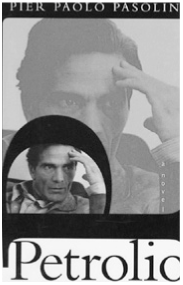
About a left-wing Italian Catholic working for a state-controlled oil company who sets out to satisfy his insatiable sexual passions, Petrolio is also seen as an insight into the scandal surrounding the death of Enrico Mattei, head of the ENI energy giant, in a plane crash in 1962.
Published posthumously and incomplete in 1992, Saviano believes Petrolio was “deliberately misrepresented by the critics, who gave it a personal and indecent meaning rather than underlining its documental importance”.
Set in an Italy “in which finance had the right of precedence over everything”, Saviano believes that the publication of Petrolio “should have told Italy and the world the truth about the murder of Mattei and of the journalist Mauro De Mauro”.
But “censorship often intervenes, in cases like this, to prevent a story from generating awareness”, according to Saviano, whose own first novel, The Piranhas, is out in English in September.
“Petrolio is important in itself, for what it tells and for what that story should have led to,” said Saviano. “But it is also important because it tells us how easy it is to discredit a writer and his work. A murmur, a detail of personal life, perhaps false but having the appearance of truth, whispered accusations: all this generates detachment, suspicion, mistrust. It is with gossip that the story of what happens is often blocked.”
Gossip, said the author, “takes little to become viral; unveiling its falsity, however, today as 40 years ago, involves investing time – too much time and too much attention”.
Olga Tokarczuk
“One of these ways is to meddle with the lists of reading compulsory in schools, removing texts that are questioning, somehow dangerous, thought-provoking,” she said.
According to Tokarczuk, the Polish government has “drastically decreased” or removed the presence of “inconvenient” authors such as Ryszard Kapuściński, Bruno Schulz, Stanisław Lem and Witold Gombrowicz in the last couple of years.
Olga Tokarczuk at London Book Fair, March 2017
CREDIT: Facundo Arrizabalaga/Rex
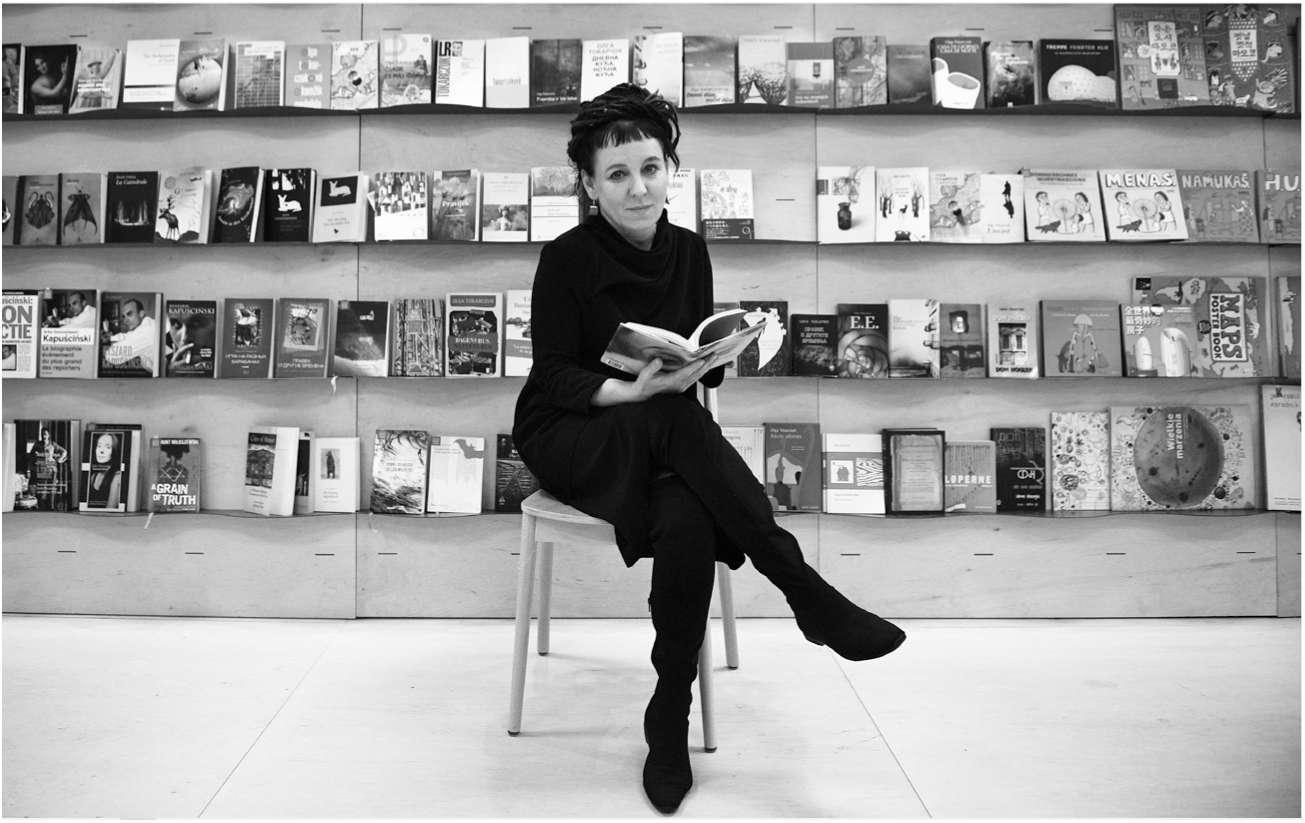
Tokarczuk, whose novel Drive Your Plow Over the Bones of the Dead is out in September in English, pointed in particular to Gombrowicz’s Diary, a book she said was being winnowed out of school reading lists because its author was “considered by current youth education clerks as persona non grata, strongly incompatible with the new, nationalistically orientated cultural policy”.
Written between 1953 and 1969, Diary ranges from critical essay and anecdotes from the author’s own life, and the lives of others, to philosophical discussions, and is exceptional, according to Tokarczuk, “not only because of the splendid way in which it develops the genre itself, but mostly because of the brilliant and ironic, but always deep and inspiring, way it discusses and challenges various motives of European culture and Polish tradition and at the same time tells the life story of the author with a splendid sense of humour with vivid and volatile language”.
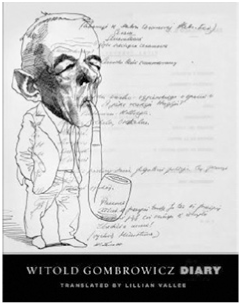
She added: “For Gombrowicz, sometimes called The Great Pretender, there are no sanctities, no taboos. He is an example of a limitlessly free spirit – he says and does what he wants, not bending before any authorities.”
Banned in communist Poland, Gombrowicz’s works have latterly become a staple in Polish schools, and Diary in particular is “commonly considered as a masterpiece”. Tokarczuk said his writing was removed from reading lists during the first Law and Justice party (PiS) government (2005-07), but protests from teachers and students, and the subsequent change in government, saw them reinstated. With the PiS back in power, Tokarczuk fears Gombrowicz is “destined for oblivion again”.
She says Diary is “particularly uncomfortable for a dead-serious government, basking in its own anachronism, trying to build the ‘only rightful’ nationalistic and Catholic worldview,” and Poland’s incumbent government “cannot bear the free-thinking, the irony and the sacrilegious tone, especially considering the fact that Gombrowicz was not heteronormative, conscious about avoiding to categorise himself in just one sexual orientation”.
But the Polish people are fighting back. “Several months ago, in various places in Poland, spontaneous initiatives of public reading of such ‘forbidden’ books were born. I visited one of them and it heartened me very much,” said Tokarczuk. “Hundreds of people attended and it was a jubilant event of civil disobedience.”
Kamila Shamsie
“What was really interesting about it, and part of the reason why people should not ban books because it can backfire on them, is it led to the gathering of left-wing writers from India, who founded the Progressive Writers’ Movement directly in response to the ban,” said Shamsie. “They were saying ‘we’re going to have a manifesto that we will write stories that will break these taboos. We’ll write against communal thinking, we’ll write against racial antagonism, we’ll be interested in sexual liberation, the equality of human beings, all of that’.”
The stories themselves are a mixed bag, according to Shamsie. She didn’t choose the collection for its literary merit, despite one of the authors, Mahmud-uz-Zafar, being her grandmother’s cousin. But it “spawned something that was much bigger than the book itself”.
“The Progressive Writers’ Movement was, in the 1930s and 1940s, a really significant movement, particularly in Urdu literature, and in the early days of both India and Pakistan you carried on seeing the most significant writers being a part of this,” she said. “They were so angry and there was this need to organise around this, and, basically, this wonderful thing happened where writers said, ‘OK, you banned one book, we’re going to write 100 more... are you going to ban all of us?’.”