




Abstract
People are ducking an argument because thoughtful disagreement has become more difficult to have, writes
While I fully respect the decisions of individual artists to eschew any connection with the arms trade, I was a little uncomfortable with what seemed to me to be the simplistic assumption everyone was making that the arms trade is clearly and obviously beyond the pale. Unless you are a complete pacifist, you believe it is sometimes necessary to fight, and you can’t fight without weapons. What you’d want is not no arms trade but a more ethical one, something that too many dismiss as a ridiculous oxymoron.
But I said nothing. Partly it was because we wouldn’t have had time to discuss the issue properly and partly because I didn’t want my brief encounter with the artists to turn into a challenge. But I suspect it was partly also because disagreeing and arguing face-to-face has become much more problematic.
Unpacking this reluctance with hindsight, I think there are at least three factors at play. The first is that the echo chambers of the internet appear to have hardened opinions. The so-called “filter bubble” means that we tend to read more and more of what we agree with and are exposed to little of what we disagree with. My Facebook feed, for example, is full of cries against the insanity of Brexit and the stupidity of Donald Trump. In such an information ecosystem, it appears that every sensible person agrees with us, which means those who disagree can be dismissed as idiots, bigots, fascists, reactionaries, whatever.
This effect is further exacerbated by the contemporary cult of individuality and authenticity. We are encouraged to be ourselves, express what we think without apology. “Passion” is an unalloyed good, not a worrying sign of fanaticism or zealotry.
So faced with a group of people who in their own minds don’t just believe but know that the arms trade is evil, pure and simple, to even question it feels like standing up at a Ku Klux Klan meeting and suggesting perhaps those darker skinned folk aren’t so bad after all.
A second reason to be wary of starting an argument is that the online world has created new norms of incivility that I fear are carrying over to the offline world. Anyone who has written anything online knows that abuse is almost sure to follow. People leave comments “below the line” that they would never dream of saying to you face to face. Or perhaps, would never have dreamed of saying. There is still a gap between levels of vitriol on and offline but it seems to me to be closing.
A final worry is that the ubiquity of the web means that nothing we say can be assumed to be private any more. In the arms trade boycott case, I don’t have a fully thought out position, only questions I want to explore more. But in the back of my mind there’s the knowledge that anything I say could be reported, or more likely misreported, in someone’s Twitter feed or Facebook timeline. I could be labelled a friend of the people dropping bombs on civilians in Syria or the enemy of pacifist artists, a label that could spread like wildfire and stick like superglue.
CREDIT: Gary Waters/Ikon
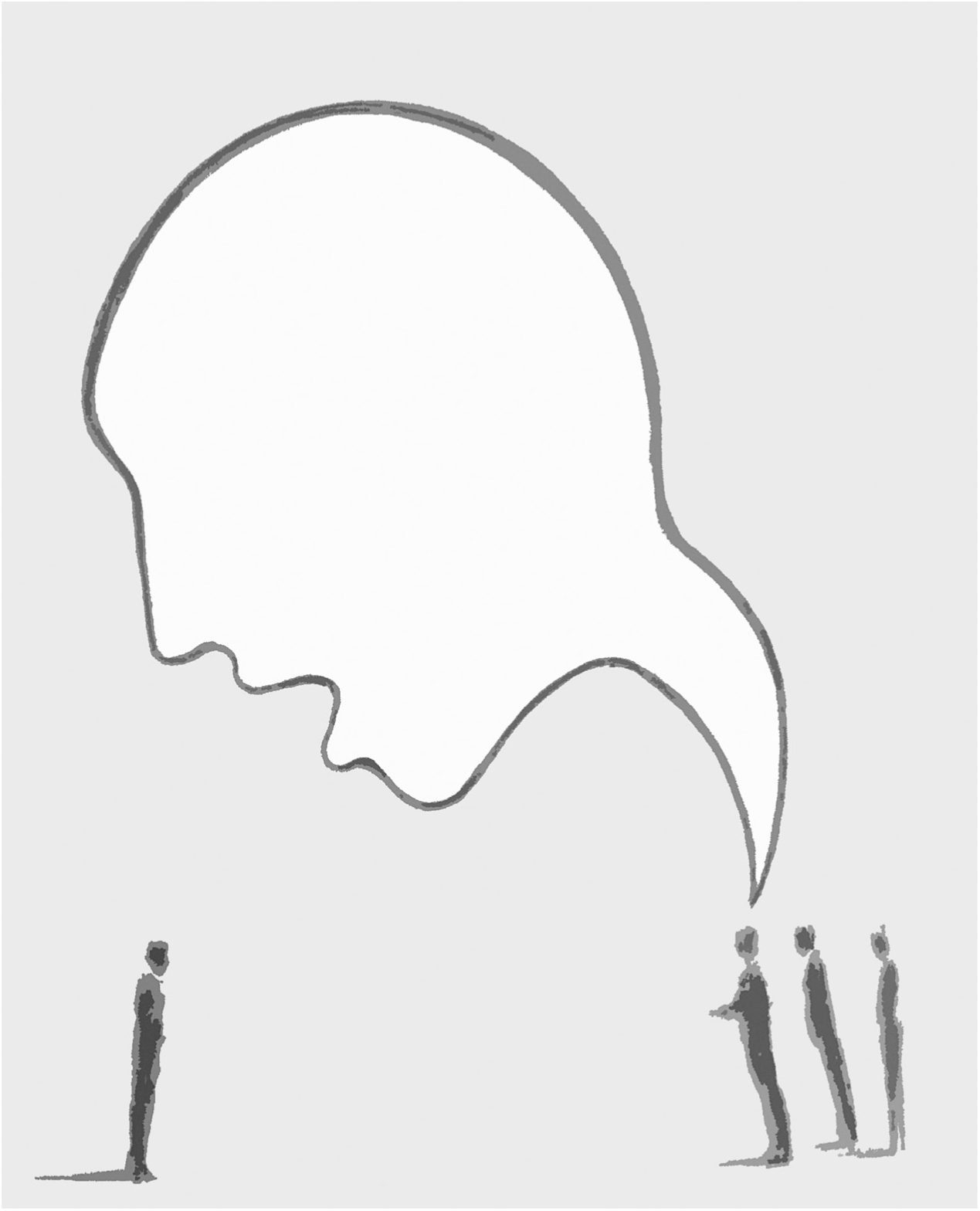
Collectively, these three factors add up to an atmosphere of intimidation. Disagree with someone and you risk provoking anger, being ostracised or even attacked by the mob. Although this is still much more true online than it is of in the flesh encounters, norms on the streets are shifting in the direction of those on screen.
It would be hopelessly nostalgic to pretend people always knew how to disagree with civility and mutual respect. Rather than hark back to a mythical lost golden age, if we want to check this worrying trend we would do better to look forward and build in some of the better values that have driven online life. In particular we must uphold the right of people to express their own views, insist that the terms of debate should not be dictated by elites of any kind, and to give marginalised and heterodox opinions a fair hearing.
However, we need also to stress two responsibilities that come along with these freedoms and rights, one towards others and one towards ourselves. First, we must genuinely give others the respect we insist they give us. It seems odd that so few notice how they feel completely entitled to disagree violently with others yet offended when others disagree with them. The right to an opinion is not the right to have it unchallenged. If we want to share our opinions we ought to be prepared to share the grounds for holding them, and to have these interrogated.
Second, we have a responsibility to ourselves to ensure that our right to our opinions does not in practice become an assertion of our right to be mistaken, ill-informed or dogmatic. The only views worth having are those that are well-grounded. The fact that a belief is mine makes it no more true than it being someone else’s. We need to remember that in an age when everyone has the courage of their convictions, what’s truly brave is to question them.