




Abstract
The wellness industry has monetised the idea that, when it comes to health, science doesn’t really matter. And it’s not just in the kitchens of Los Angeles – it’s big in Nigeria too, writes
Jokes aside, I asked her why she decided to jump on this bandwagon when she knew that fad diets were just that – fads. She told me she read that it was approved by Britain’s National Health Service (something I have not been able to verify) to treat people struggling with obesity, and if it was good enough for her majesty’s subjects, who was she to ask questions?
When a new juice company in Lagos started touting detox programmes in a bid to move their products, another friend embraced it. I vividly recall her telling me how tired and exhausted she felt throughout. Apparently living solely off watermelon and orange juice with slices of ginger for five days didn’t deliver the renewed energy it promised.
I am often accosted by a sales pitch for a new supplement promising to transform my health and wellbeing from my beautician while dealing with the distressing sensation of hot wax on my skin ripping off my pubic hair. Even my own mother now sprinkles moringa powder, a supposed “superfood”, onto most meals. When I ask why, she responds: “They say it is good for you and it cures many things.” It’s a line she most likely found on a WhatsApp video doing the rounds, much like the ones about apple cider vinegar.
Wellness has long been big in many parts of the world, and Nigeria has not been left out. Perhaps this is because it’s a country where many still cannot afford proper healthcare and where a general distrust of medical institutions and poor medical infrastructure prevails. Doctors are poorly paid, they strike often and thousands of stories of misdiagnosis and of extortion by hospitals circulate. Wellness offers an alluring substitute, often supported by anecdotal evidence and word-of-mouth. It has created an opportunity for many to take their healthcare into their own hands.
Then there are the pyramid schemes. Due to the combination of poverty and poor education, pyramid schemes thrive here, with wellness companies being one of the big sells. There’s always somebody somewhere trying to sway you to buy something that promises that perfect fix.
And of course in Nigeria, traditional medicine and healers still operate side-by-side with science and Western medicine. It isn’t rare to see a bottle filled with roots and tree bark next to cough medicine in the kitchen cabinet. For many people wellness remedies are basically gentrified native medicine.
What is happening in Nigeria mirrors a trend happening elsewhere. Helping the wellness industry to thrive are social media influencers. We have a comedian called Lepacious Bose, who lost a lot of weight and is Nigeria’s brand ambassador for a brand of slimming pills. And then there are Nollywood celebrities such as Rita Dominic, who promotes a health brand infused with ingredients including moringa, of course.
CREDIT: Huan Tran/Ikon
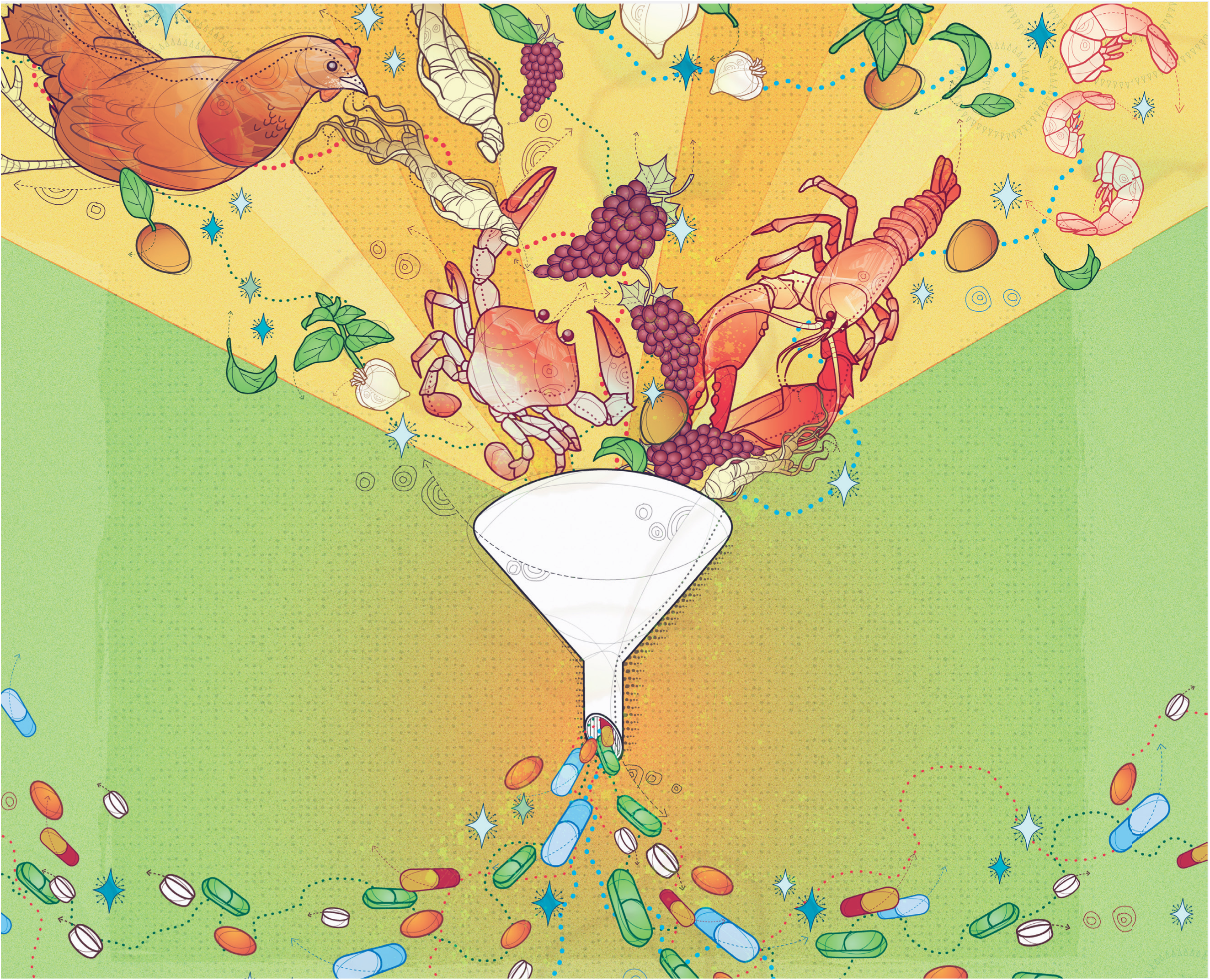
Whether products advise you to start deep conditioning your hair in onion juice because its sulphur content is said to stimulate growth, or to squeeze a capsule of vitamin E oil into your soaps and creams, or to guzzle detox teas, or tell you that going plant-based can reverse your polycystic ovarian syndrome, their popularity has aided the cause. No one warns you how easy it is to fall into the black hole of wellness YouTubers, and before you know it you have turned your kitchen into a mini laboratory, cooking up your own spells.
In The New York Times article Worshipping the False Idols of Wellness, author Jen Gunter writes that “medicine and religion have long been deeply intertwined, and it’s only relatively recently that they have separated. The wellness-industrial complex seeks to resurrect that connection”. Perhaps that religious connection and cult-like appeal has facilitated everyone’s disregard for facts.
Gunter’s article also talks about how dietary supplements, the backbone of the wellness industry, make up a $30-billion-a-year business, despite research showing almost no long-term value. Worse still, Gunter highlights the dangers of the industry – not just in undercutting facts and science but in actively harming health. She writes: “The placebo effect or “trying something natural” can lead people with serious illnesses to postpone effective medical care. Every doctor I know has more than one story about a patient who died because they chose to try to alkalinize their blood or gambled on intravenous vitamins instead of getting cancer care.”
A few years ago, I got involved in a campaign called 1k4cancer to help raise funds for a young woman called Veronica’s cancer treatment. When Veronica first discovered a lump in her breast, she told a local nurse. Rather than refer her to a doctor, she was sent over to a centre in Lagos, which uses techniques based on Chinese medicine. Veronica spent all her money there, but her lump grew. She needed chemotherapy and didn’t have the funds to pay for it. Luckily, we raised enough money to cover her treatment costs.
Wellness coaches are also on the rise, and Lagos certainly has its fair share who offer seminars, retreats and health plans, all at a fee. In fact, most personal trainers now come as three for the price of one – gym instructor, nutrition expert and wellness coach.
When I posted Gunter’s article on Facebook, a close friend, Fiona Hecksher, commented: “Wellness is a booming trend and it’s so gimmicky. However, I don’t think it’s all rubbish. Not everyone is trying to lose weight, as much as the marketing would have us believe. There are many people trying to bridge the gap between traditional medicine and natural alternatives. The creams prescribed for my niece’s eczema worked like magic, but it’s also chock full of steroids that are terrible for more than a few days use on a tiny person who is absorbing much more than an adult through her skin. Not everything can be solved ‘alternatively’ and not everything should be solved medicinally.”
My wellness scepticism aside, it seems that there is a lack of accessible and understandable information regarding our bodies and ourselves from the medical community. There needs to be better work done when it comes to medical education. A year ago, for example, I produced a radio programme for a fertility clinic to help demystify reproductive health issues. Translating medical and health jargon into something digestible would be a start.
Wellness has found a way to appeal to our emotions, and even our vanity, and maybe the medical community could learn something from it. But while marketing gurus make pseudoscience readily available and appealing, people like Chee and Veronica risk their lives for choosing one option over another.