




Abstract

Dubbed Vietnam’s Lady Gaga,
“
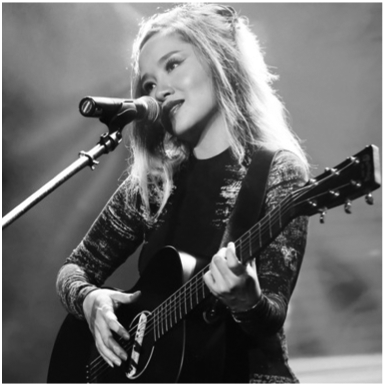
The singer Mai Khoi, who uses her music and platform to call for more democracy in Vietnam
CREDIT: Dai Ngo
Over WhatsApp instant messenger (we try to speak but, mysteriously, our phones won’t connect), Khoi outlines the abuse she has suffered at its hands. She says she has been blocked from Facebook and evicted from her house, and her shows have been raided. In March, she was detained at the airport in Hanoi for eight hours following her album tour of Europe.
“They asked so many questions which were very private, and they took all of my CDs and books that my friends gave me,” she said. Today, she is scared.
“They have secret police everywhere to know where I go, what I do … I always look around before I go out of my place.”
Vietnam is at a crossroads. The Communist Party of Vietnam, which has been fully in power since 1976, presides over an increasingly wealthy, young and tech-savvy nation, which hankers for greater rights.
At the same time, the government is hell-bent on more control, even following China’s lead in certain areas. “The [draft] Vietnamese Cyber Security law, which will restrict freedom of speech, was almost copied from the Chinese cyber security law,” Khoi said.
And she is not willing to look the other way.
“People in my country really need freedom of expression,” she said.
“As an artist, I don’t feel free to create under the censorship system and that’s why I want to protect and promote freedom of expression. I don’t agree with the unequal and dictatorial ideas.
“People have been in jail if they sang love songs in the past. Now, no one goes to jail because of singing love songs anymore, but if we sing about politics and human rights we will be in trouble.
“What is freedom of expression? People in my country, even many activists, don’t understand what’s freedom of expression. When I protested [against Donald] Trump, many activists were saying that what I did was not freedom of expression.”
CREDIT: Bennett Murray
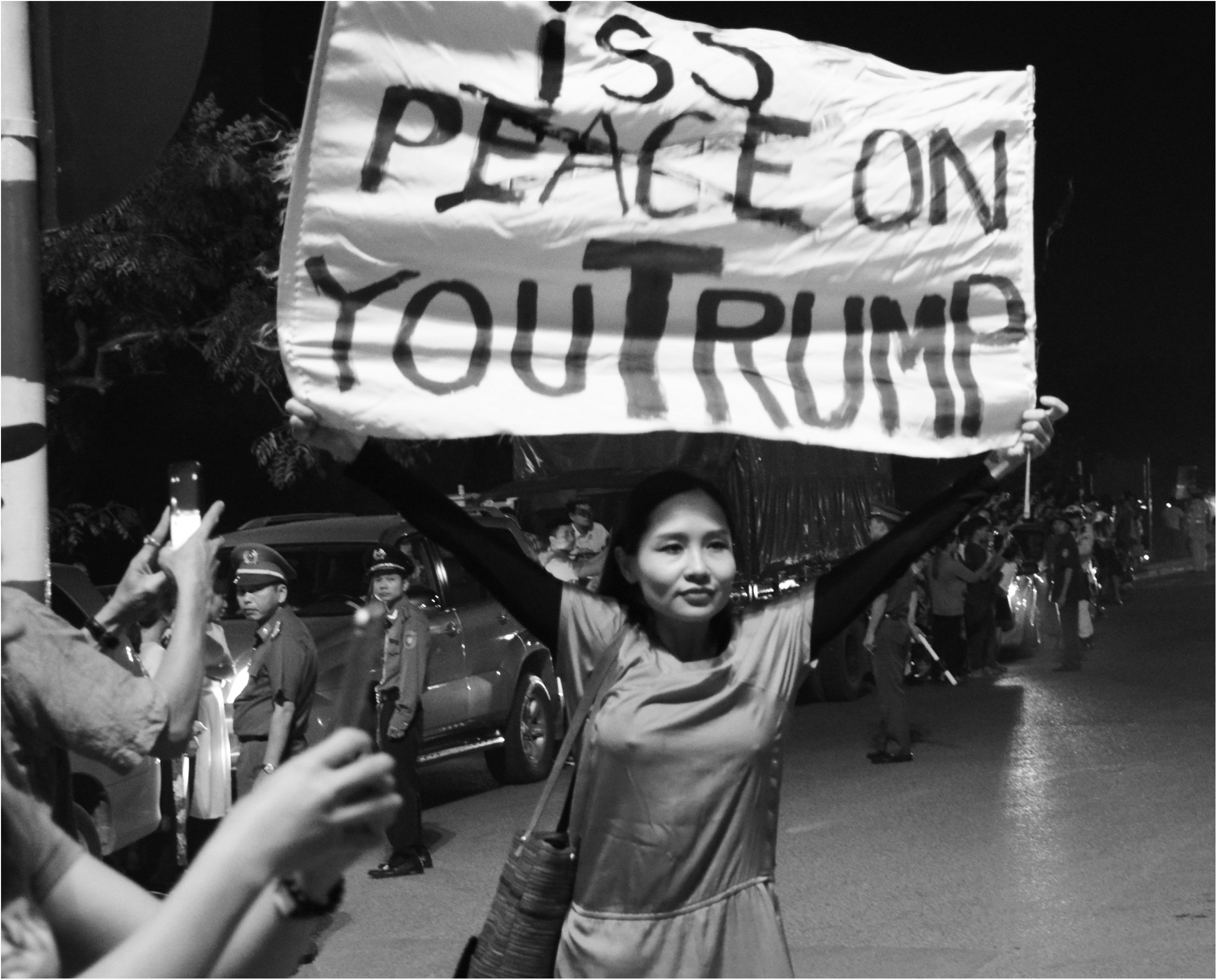
Khoi refers to last November, when the US president visited her country. She walked through the streets with a banner reading “Piss on you Trump”.
“Trump has demonstrated that he doesn’t care about human rights and does not recognise civil society in Vietnam,” she said. “He also wants to send refugees back to Vietnam. This would be terrible for those people and against the Geneva Convention. However, the human rights situation in Vietnam was getting worse before Trump was elected and we can’t blame him for all of our problems. But, for sure, he is not helping.”
Khoi shot to fame in 2010 when she won the Vietnam Television Song and Album of the Year Award, the biggest accolade for songwriting in the country. She revealed her rebellious streak early on: almost immediately after her win, she shaved off half her hair and inscribed the letters VN, for Vietnam, on one side of her head, a move that was harshly criticised by the country’s conservative media. Since then she’s constantly spoken out about sexuality, LGBT rights and violence against women.
In 2016, she became the first Vietnamese celebrity to nominate herself for the National Assembly, Vietnam’s legislative body, on a pro-democracy platform. (She also met then US President Barack Obama and the two discussed human rights in the country.)
Since running for parliament, she has effectively been banned from singing in Vietnam, so her concerts are all private performances. Despite this, Khoi remains upbeat. She tells me she’s “happy and very proud” to be the first Vietnamese musician to release an album with an international record label.
Mai Khoi protesting against Trump’s visit to Vietnam in November 2017
Khoi is frequently likened to strong, female singers including Lady Gaga, Madonna and Pussy Riot, but it feels almost reductive to make comparisons. Her work is, instead, a unique product of Vietnam. She describes the style of the new album with her band Mai Khoi Chem Gio as “ethnic meets free jazz” and explains how it “has captured all of the emotions and challenges” that her band have faced in recent years, including one show that was raided by 40 police.
The song published above, translated into English for the first time, comes from the band’s new album, Dissent. Entitled Please Sir, it’s “about how we have to ask for permission to sing, exhibit art and exercise many other basic rights”.
When it comes to her country’s future, Khoi has tempered optimism. “I always think in an optimistic way. Thinking positively makes me have more energy to create. I will see how my country’s situation will change in the next election,” she said.
“Many people in Vietnam understand politics as something that politicians do. They say they don’t care about politics because they don’t see how everything around them is political. But now people are more engaged because they have access to more information now than before and they can think more critically. Social media also means that people can interact and organise in ways they could not before.”
Please, sir
Please, sir,
Let us give you money so you’d allow us to work,
Please, sir,
Let us be treacherous like you, so you’d allow us to be as stupid as you,
Please, sir,
Will you let us sing?
Let us put up the paintings to admire them,
Will you let us love?
Let us bend down, begging you for savagery and cruelty,
Please, sir,
Let us publish books, Let us move freely,
Let us protect the nation, Please, sir,
Let us share information,
Allow us to do charitable work, Give us our constitutional rights, Our constitutional rights,
Our constitutional rights.