




Abstract
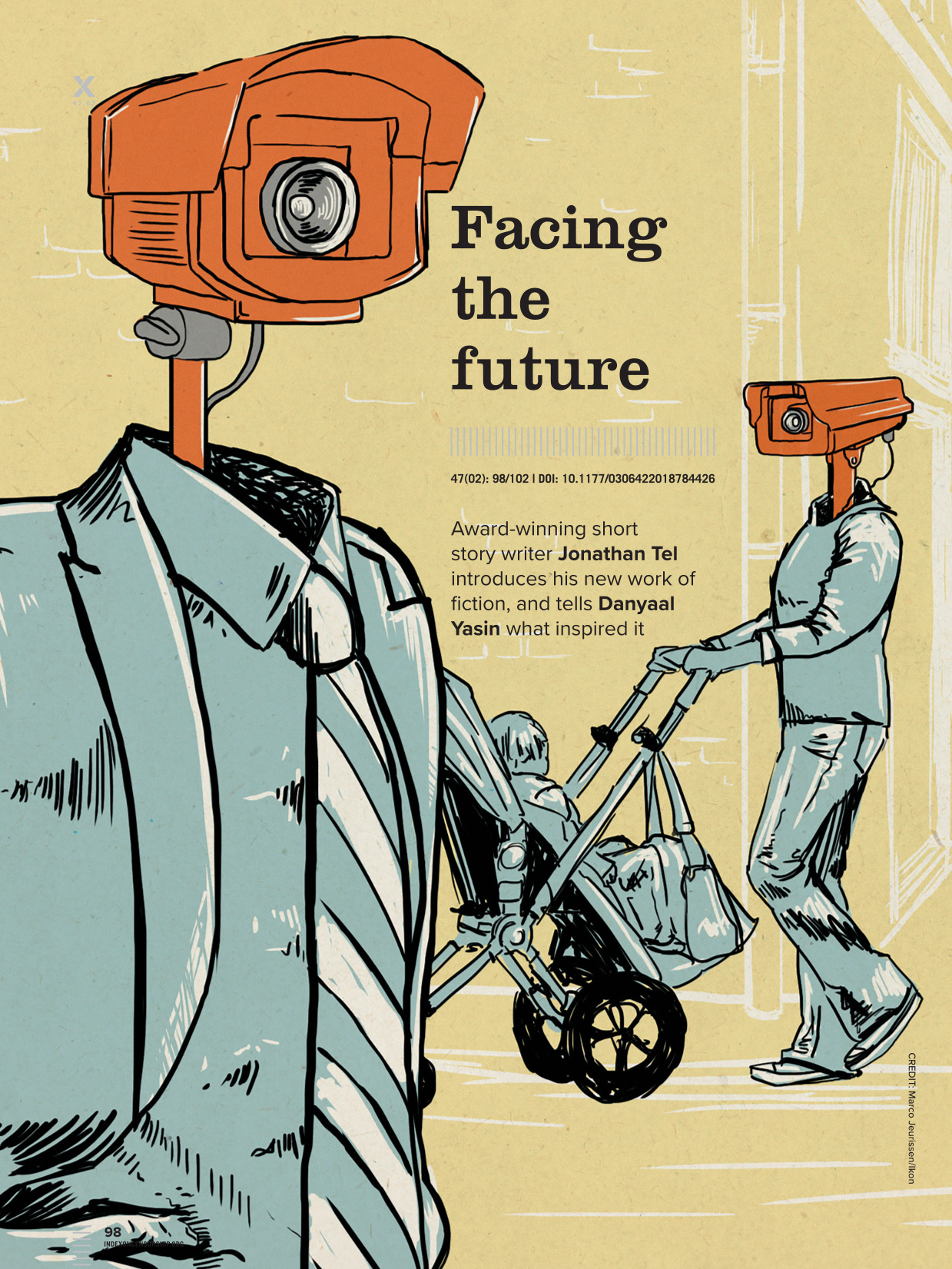
Award-winning short story writer
CREDIT: Marco Jeurissen/Ikon
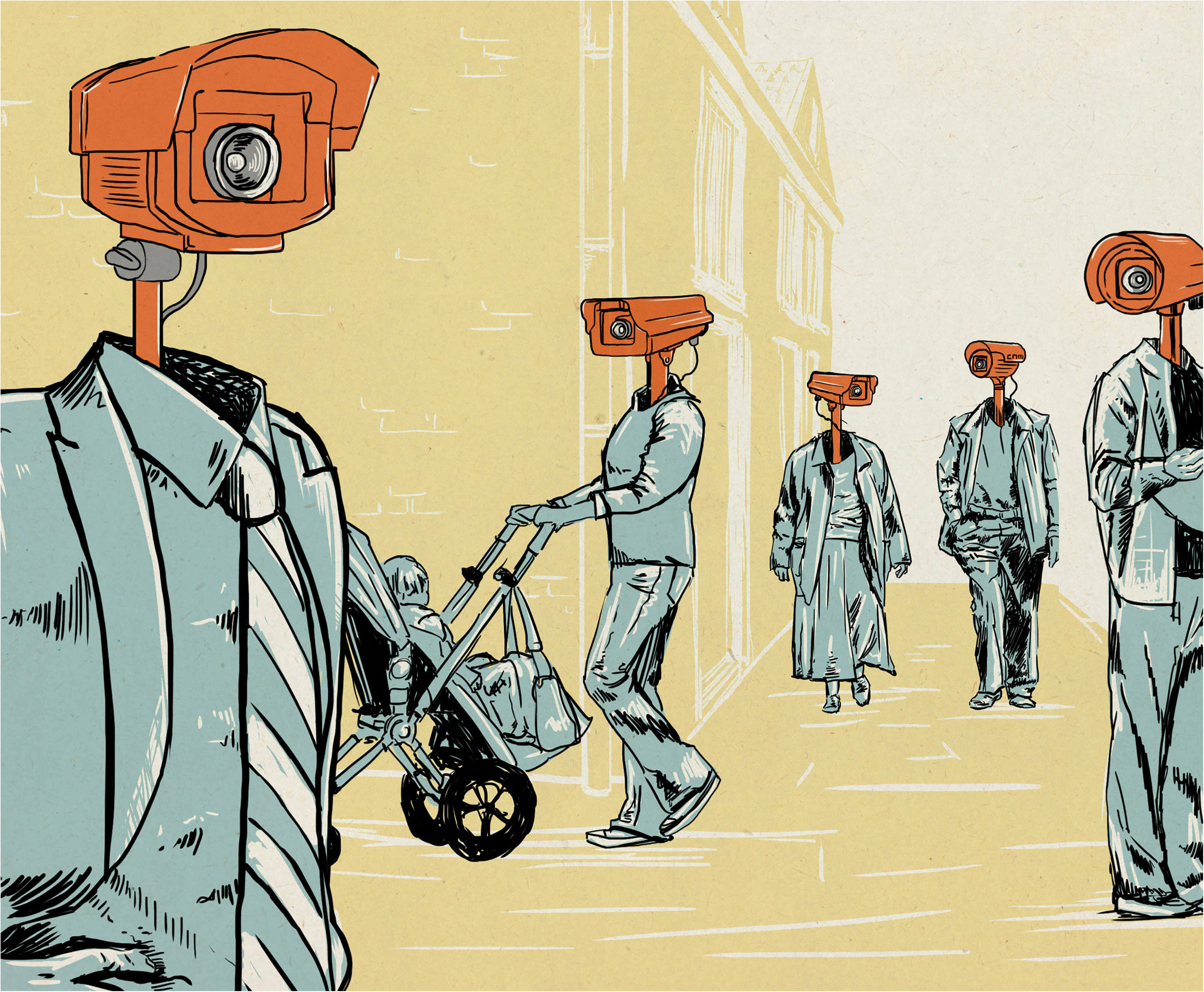
The technology has been in the international news lately – Facebook is currently seeking consent to use recognition software in Europe, which is already in use in other parts of the world – and Tel, the winner of the Sunday Times 2016 short story prize, has explored this issue as a jumping-off point for his new piece of fiction, published exclusively in this issue.
His story creates a society where appearance dictates everything, including the type of food you eat and how much toilet roll you receive, something already implemented in China, where one public toilet in Beijing dispenses paper using facial recognition software.
However, the Chinese state has less control than some people might think, Tel said. “China is actually a more chaotic society than perhaps the government wishes it were. They certainly tend to project this idea that it’s a unified society, but it’s chaotic and the government doesn’t control things that much.
“What I’m not trying to do with the story is specifically criticise what’s going on now. I would rather deal with what the dangers might be in the future. The danger could be that it could lead to some sort of Orwelliantype situation in which people are controlled too much.
“When Orwell wrote 1984, he didn’t seriously think Britain was going to become like 1984, but he thought it might move in that direction and it’s a way of talking about the things that citizens were concerned about. Same with my story. I don’t know which way it’s going because I don’t know the future, but it’s there as a sort of parable.”
Exploring the dark turns that could exist in a potentially government-controlled future, Tel uses the real-life scenarios occurring in countries such as China to create a seemingly unified society. The dystopia created by Tel takes a dark turn when the protagonist runs into an attractive woman, one he will do anything to impress. Tel said: “I describe a society in which the government is trying to achieve authoritarian control. That indeed is to be feared, as Orwell pointed out. But in my story, the government partially fails, and the attempt results in a society riddled with corruption and injustice and petty revenge, which is also to be feared.”
2084
Whereas Pine is tired, the version of himself on his phone is alert and energetic. He stares wistfully at this new and improved model.
The man emerges from his windowless room in the housing complex in the exurb of a third-tier city. It is not yet dawn. He is funnelled through to a commuter bus. The System recognises his face and greets him by name, assigning him a seat.
Three hours later, he arrives in an office tower by the fourth ring road. The System identifies him; doors slide open and an elevator takes him to the correct level. Illuminated arrows direct him to the cubicle where he is to work today. The government has installed an automated nationwide System which recognises everyone and keeps track of their behaviour, in theory. What matters is that the government gives the illusion of being in control, whether or not it actually is. In practice, the algorithm often fails, and has to be supplemented by the input of humans, such as him. His job is to recognise faces. He compares a photo from a security camera with one in an ID. The same person: yes or no? Swipe right or swipe left? The task is gamified. He wins virtual prizes and rises to higher levels as he works. It’s like playing a rather boring computer game.
The System decides when it is time for his lunch break. He accompanies two co-workers – Plum, who is on the fat side, and Bamboo, who is skinny. The System sends them to a fast-food chicken restaurant. On entry, the System scans their appearance and decides what they would surely like to order. Pine gets a bowl of rice porridge with preserved egg; Plum a double-order of thighs and fries; and Bamboo a single drumstick. Plum grumbles how the System is expanding his waistline. The three men go to the toilet. The toilet paper dispenser issues three sheets per person. When Bamboo presses the button for more, a message flashes up that he’s already received his allowance; he contorts his face, sucking in his cheeks and dilating his nostrils, so he passes for a different person, and is granted three more sheets. All around the room, men in need of extra toilet paper are puffing up their cheeks, sticking out their tongues, making duck lips, winking and blinking, rolling their eyes, squinting and gurning and metamorphosing their faces in every conceivable manner – successfully or not.
Just as the co-workers are exiting the restaurant, a man is trying to enter. He is dishevelled, stubbled, with panda eyes, and is mumbling something about how he’s a victim of mistaken identity and seeks justice. He looks oddly familiar. The transparent doors slam shut, blocking the malcontent. Pine sees urban security personnel wearing their informational sunglasses striding forward. A woman stands in the entryway, keeping the doors open, allowing the man to pass by her and elude the Sunglasses. He disappears among the diners. Her behaviour is ambiguous: it’s not clear whether or not she is helping the malcontent intentionally, though Pine suspects the worst. There’s something queerly attractive about her soft-heartedness, and he’s drawn to her appearance, too… Pine decides he’s fallen in love.
Back at the office he consults the database. Might the System please tell him the name of the woman? It will, on condition he supplies information on an anti-social act. He confirms that Plum vociferously objected to his meal. And might the System also tell him the woman’s tastes, habits and how he might meet her? Pine learns all this, in return for revealing Bamboo’s theft of toilet paper.
The following day, Plum and Bamboo are not at work. Pine reckons they’ve been Re-education for a stretch. For their own good, surely: Plum will lose weight and Bamboo will learn to follow the rules. It’s not as if his betrayal could cause them serious harm – they won’t be put in a room full of rats, or anything. As the proverb goes: In calamity lies fortune, in fortune lies calamity.
After work, he hurries to be standing at a particular intersection at a particular time.
He is carrying a stack of papers. A female commuter can’t help knocking into him. He d ops his papers. She apologises. “Not at all,” he says. This is the woman, though it’s funny how she looks different in the open air. They introduce themselves. “My friends call me Pine, he says. She says: “And mine, Jujube.” He invites her to join him for a bowl of fermented mung bean soup and a snack of grilled pork tongue – dishes she is particularly fond of, according to the System.
He slurps the sour murky soup, while she hardly sips hers. “We have so much in common!” he assures her. The grilled tongue is brought out. She comments: “That pig must have said something bad in a previous life.” He tells her his favourite colour is blue – just as hers is, or so the System informed him. Normally he is shy with women, but now he is confident. He examines his own idyllic image on his phone. Congratulations! You are in the 99th percentile of handsomeness! Jujube agrees to meet him the following week.
They date regularly, and become lovers. For their first anniversary, he suggests a dinner at the chicken restaurant where he’d first seen her. She remarks she’s never been there before. “But surely…” he says. “And besides, you do like mung bean soup and pork tongue, don’t you, and blue is your favourite colour?” She tells him she doesn’t care for the soup or the meat, and prefers yellow. He realises the System misinformed him: she wasn’t the woman who helped the malcontent. No matter, Jujube will do as a girlfriend. Any lover is better than none at all, and he guesses she feels the same way about him. He sneezes. She says: “A sneeze means people are talking about you behind your back.” They agree to meet at the restaurant the following day for lunch.
That morning before work, he goes to the toilet where he encounters Bamboo, who is washing his hands with the precise allocated amount of soap. He’s just been released from the Re-education facility. In the corridor he runs into Plum, thinner than before, who blurts unprompted: “I love the System.”
“And the System loves you,” says Pine. The worst possible government he can conceive of is chaos, and the System promises, at least, freedom from that.
Pine is not feeling well. He has a cough and earache, his eyes are sore and rheumy. He rushes, but gets to the restaurant a little late. As he approaches, he waves to Jujube who is waiting for him just inside. But when he approaches the entrance, the doors slide shut, blocking him. A warning light goes off. He sees the Sunglasses zeroing in on him. Jujube turns her back and walks away; she has her own life to get on with. No one else interferes; his fate is of little concern to others. The Sunglasses confiscate his ID, claiming it to be fake, and insist that, according to the information projected on their info-lenses, he is in fact a certain peasant with no right of residence in the city. “We’ve caught up with you, at last.”
His denial is met with scorn. “You’re what we call a Three-No. No ID. No residency permit. And… we forget what the third No refers to, but whatever it is you’re supposed to have, you haven’t got it.”
Pine realises that Plum and Bamboo figured out he betrayed them, and are getting their revenge. He looks at the diners in the restaurant, all of them pretending they’re unaware what’s going on. What terrible actors they are! How grotesque they appear: the postures they arrange themselves in, the gestures they make, the faces they pull as they eat and chatter in a parody of normality. Desperately Pine grabs his phone. Sorry! You are in the bottom of handsomeness! He views a version of himself – uglier than ever, blotched, w rinkled, hunched, and muttering how the System has confused him with someone altogether different – being led away.