




Abstract

After 59 years of rule by the Castro family, Cuba is getting ready for a presidential transition. Can an online project accurately portray the country’s rebellious history, asks
CREDIT: Paco Baca/Cartoon Movement
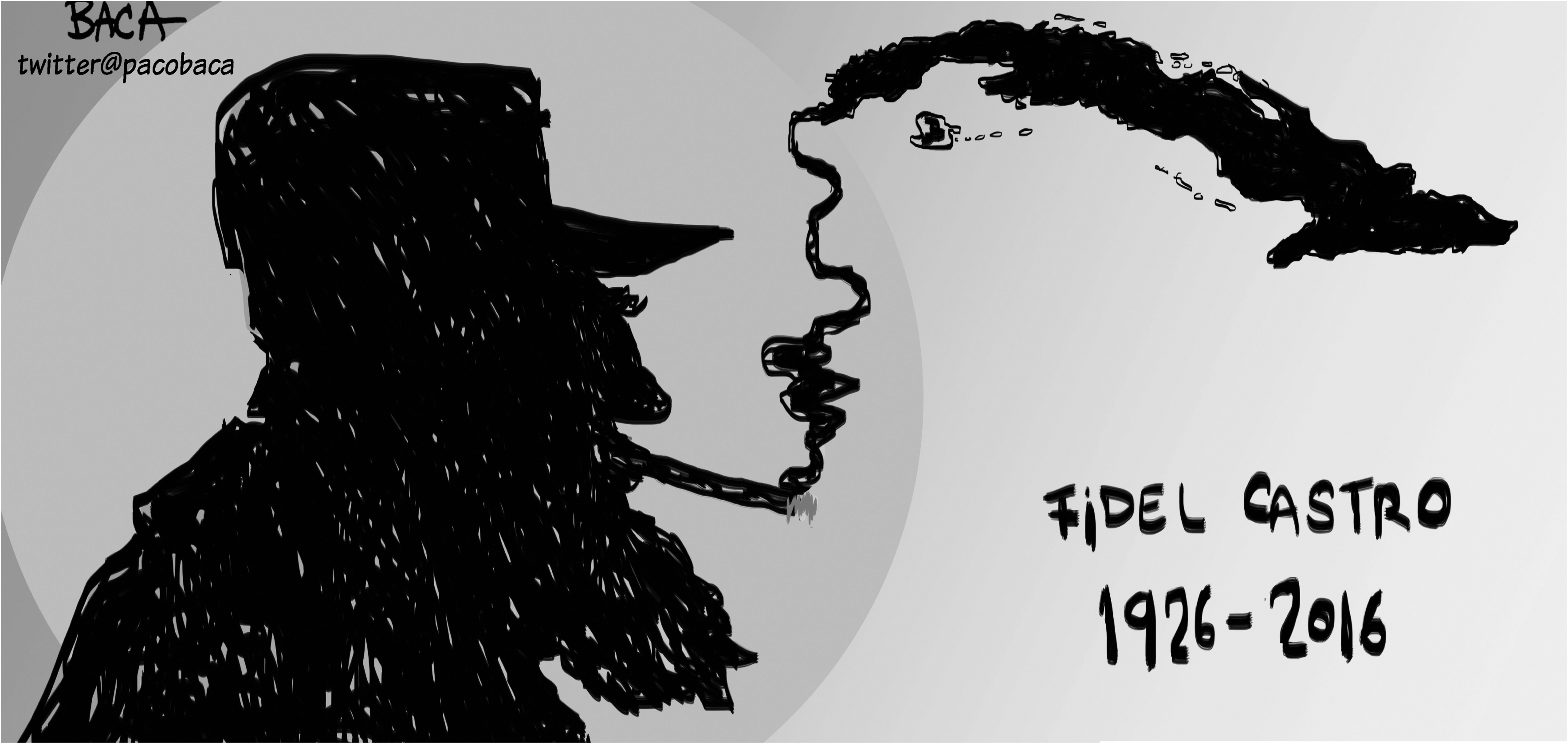
As Raúl Castro gets ready to step down as Cuba’s president on 19 April, after nearly six decades of Castro rule, two artists based in Havana are keen to highlight Cuba’s history, and particularly its untold tales.
“All the heroes of Cuba’s history, even Hatuey [an indigenous chief], were dissidents at one point in time,” Cuban artist Luis Manuel Otero Alcántara told Index.
“But here in Cuba it is stigmatised. It is paired with negative words such as gusano (worm) or mercenary. It is a simple word, but if you use it, or if the government attributes it to you, people will distance themselves because they are afraid they will also be deemed dissidents.”
Otero and his partner, art curator Yanelys Nuñez Leyva, operate the Cuban Museum of Dissidence, a website that lists all those who stood up against the government during the history of the Caribbean island. The online art project challenges the negative connotations of the word, taking Cuba’s history as proof of its positive contributions.
The website’s banner features images of late president Fidel Castro; Oswaldo Payá, a Catholic political activist who opposed the regime for more than two decades; 19th century national hero José Martí; and Hatuey, an indigenous Taíno chief who fled from the island of Hispaniola to warn the people of Cuba about the Spanish invaders in 1511. They remind visitors that Fidel Castro, together with his brother Raúl and Argentine revolutionary Ernesto “Che” Guevara, led an armed revolt against the US-backed regime of Fulgencio Batista, which culminated in Batista’s escape in 1959 and the establishment of a socialist regime.
“We tell the government: ‘You were once dissidents, you should allow dissidence’,” said Otero. “And we tell dissidents: ‘Careful, because one day you may end up in power and you may clamp down on dissidents, too’.”
But this message, and their work, has not been well-received by everyone. When the project was launched in 2016, it quickly caused the couple trouble. Nuñez worked as a staff writer at Revolución y Cultura, a magazine published by Cuba’s Ministry of Culture. She believes she was fired because of her involvement with the museum. Index contacted magazine editor Luisa Campuzano to confirm whether or not this was true, but received no response.
Otero said the museum website was now blocked in Cuba and they relied on Facebook and other social networks to post information related to the project. The museum is not the couple’s only provocative work – this January, they created an installation featuring a fictional version of Fidel Castro’s last will after Otero said the late president came to him in a dream, asking the people for forgiveness – but it is the one that has caused them the most trouble. Otero relates how he was detained twice in 2017 and has been followed and threatened on several occasions. He stresses that he and Nuñez are not aligned with any opposition groups. On the contrary, they try to present historical information without judgment. This is quite a challenge in Cuba, where resources on contemporary history are not always reliable.
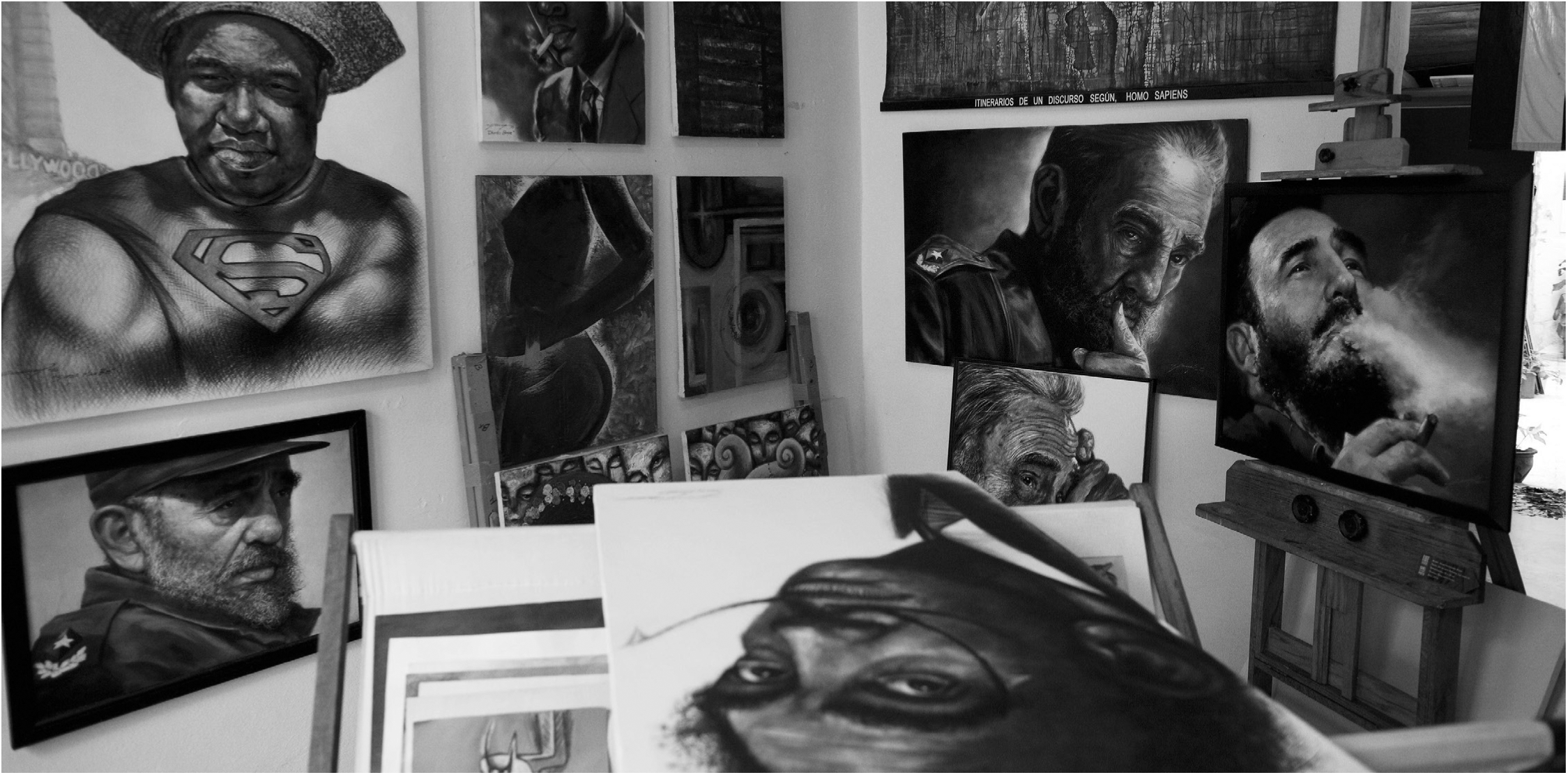
The different faces of Fidel Castro on display in an art gallery, Cuba
CREDIT: Rodrigo Abd/Rex
“Information regarding the history of contemporary dissidence in Cuba exists, but it’s scattered,” said Nuñez.
For example, Cuba’s government-curated version of Wikipedia, EcuRed, gives negative opinions of contemporary critics.
Blogger Yoani Sánchez, who is renowned worldwide for her critical view of the government, is described as a “cyber mercenary” in the EcuRed entry, while Oswaldo Payá, the late political activist, is said to have been a “Cuban counter-revolutionary linked to the United States”.
To build the museum, its creators got together with friends and historians to gather as much information as possible, including using Wikipedia as a source of information for many of the profiles they put together. While they are keen to stress that they are not historians, they aim to create a thought-provoking project that challenges the idea of how history is constructed.
Describing how the subject is taught in Cuban schools, Nuñez said: “It is a chronological recounting of deeds and dates.” But Otero went further: “Education is not free in Cuba,” he said. “What is free is indoctrination. You can never question history in school, because if you ask questions you get kicked out.”
With the presidential transition coming up, will dissidents have a say in Cuba’s new political phase, one deemed to be of greater openness? Judging from the 2017 municipal elections, the chances are low.
A platform known as Otro18 (“Another 18”, a reference to the electoral year) said it had tried to register about 170 opposition candidates for the 2017 elections, but none got on the ballot.
And in an apparently leaked video, First Vice President Miguel Díaz Canel, the man widely expected to be the next president, indicated that he was in favour of shutting down the Miami-based OnCuba website – which fosters communication between Cuba and the USA – calling it “very aggressive against the revolution”.
“Let the scandal ensue. Let them say we censure, it’s fine. Everyone censors,” he said in the Miami Herald.
Otero believes that, despite the changes to come, there will still be a need for resistance.
“Right now I am afraid that all this change is going to be a sham. Social networks, websites, everything is monitored,” he said. “Dissidence is necessary.”