




Abstract

From becoming the first international member of Banned Books Week to live-broadcasting our magazine launch, the end of the year has been busy for Index.
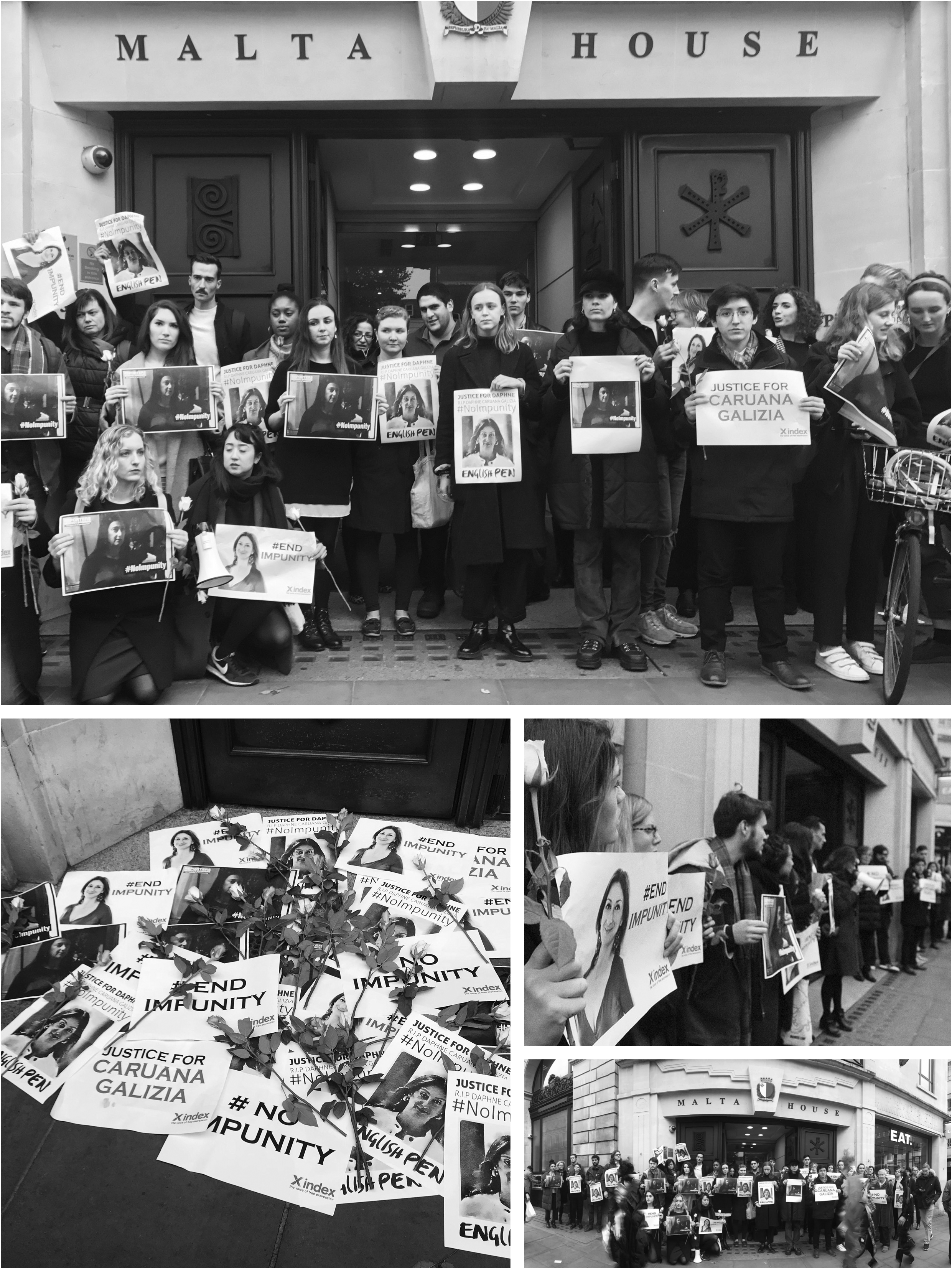
Index staff at the London vigil for murdered Maltese journalist Daphne Caruana Galizia, 2 November
CREDIT: Danyaal Yasin/Cecily Donovan/Index on Censorship
“If the spoken or written word, if per formance, if the image were not important, if they did not have power, then dictators wouldn’t spend half so much time worry ing about them,” she said at the event on 19 October.
In recent months, the rights of artists have been a constant focus of work at Index. Experts from around the world came together in Germany in August to discuss defending artistic freedom for the Arts Rights Justice Forum. The week-long workshop was held at the University of Hildesheim and focused on international support for artists as human rights defenders.
“It was a very good place for Index to be. The participants from all over the world were extraordinary,” said Associate Arts Producer Julia Farrington, who was a pan ellist at the workshop. “We talked about how do you better support artists who don’t have to or don’t want to leave their countries, but need a lot of support, and who otherwise might feel they can’t continue their work in their country because their situation is so difficult.”
The workshop culminated with a panel discussion in Berlin on the role artists play in fighting for human rights.
Farrington said: “Artists don’t necessarily identify themselves as human rights defenders, but actually, if they are taking on social issues, they are fighting for social justice, then they are also defending human rights.
“It’s encouraging artists to see themselves as contributing to those efforts, which they do, but because they do and because they put themselves out there they are targets.”
This year, Index became the first international member of the US-led alliance Banned Books Week. Launched in 1982, Banned Books Week puts a spotlight on materials that have been banned or challenged. Index was part of events in the UK and Ireland this September relating to 2017’s theme, Our Right to Read.
Ginsberg spoke at St Mary’s Cathedral, Limerick, about how censorship stifled debate and undermined the tenets of free and democratic societies. As part of the Limerick Civic Trust autumn lecture series, her speech focused on Index’s role in the history of censored literature and the new sources of censorship.
“It is vital to understand the value inherent in free expression to understand why some of the current tensions surrounding free speech exist,” said Ginsberg at the event.
“It is also crucial for understanding ways to tackle the dangerous trade-offs that are increasingly being made in which free expression is seen as a right that must be pitted against safety, security and privacy.”
Further focusing on literature, a library of censored materials was collated as part of the exhibition Mouth Shut, Loud Shouts, which predominantly featured magazines from Index’s archives. Launched in Marabouparken, Sweden, on 15 September and lasting until 3 December, 33 of our magazines were on display for the group exhibition, focusing on issues surrounding censorship since 1895.
Marking the International Day to End Impunity for Crimes Against Journalists, Index staff joined activists and other free-speech organisations to honour murdered Maltese journalist Daphne Caruana Galizia outside Malta House, London, on 2 November.
The vigil called on the Maltese government and the European Union to investigate Galizia’s murder, as well as corruption within the country. In a statement released following her murder, Index strongly condemned the attack.
“We urge the Maltese authorities to swiftly and thoroughly investigate the circumstances to bring the perpetrators to justice,” said Hannah Machlin, project manager of Mapping Media Freedom.
Galizia was one of the best-known journalists in Malta, with her news site frequently exposing corruption across Malta and often attracting more readers than official media outlets. At the time of her death on 16 October, Galizia had more than 40 libel suits pending against her.
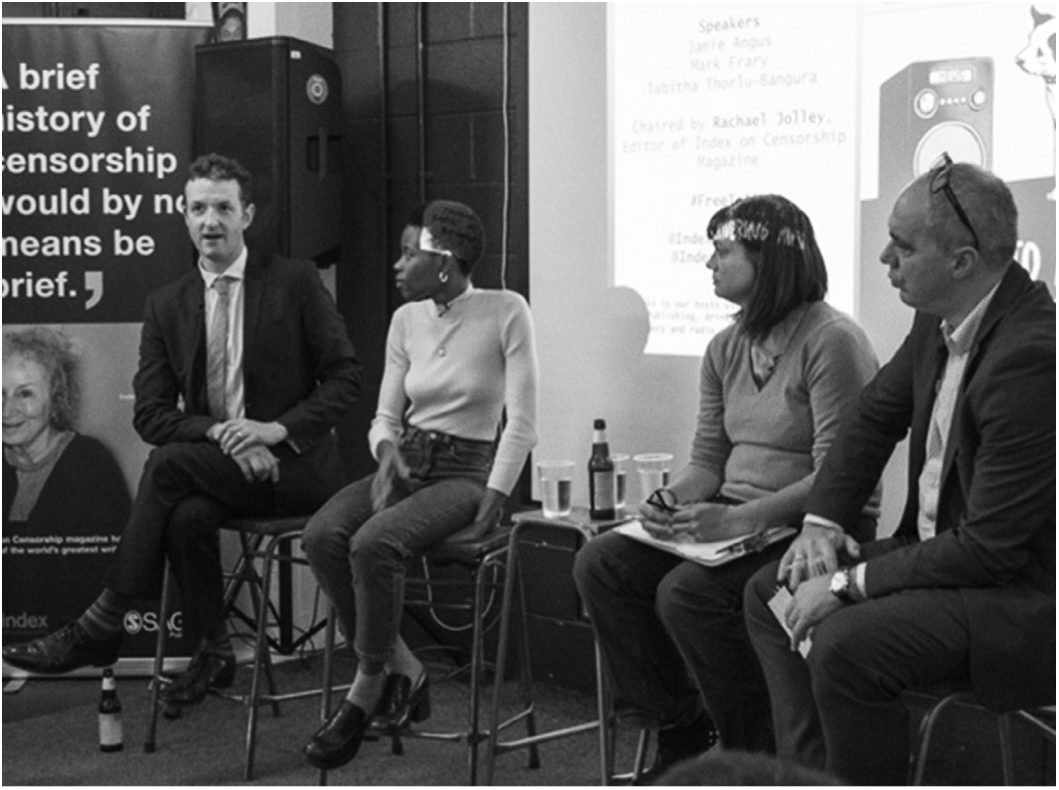
Jamie Angus (far left) from BBC World Service, DJ Tabitha Thorlu-Bangura (left), Index editor Rachael Jolley (right) and author Mark Frary (far right) speak at the Index autumn magazine launch
CREDIT: Sean Gallagher/Index on Censorship
Index protested outside the Bahrain embassy in London in November for the release of human rights defender Nabeel Rajab, who was given a two-year prison sentence in July for undermining Bahrain’s government. Rajab’s sentence has been upheld following an appeal on 22 November. Another hearing is scheduled for a separate charge on 31 December.
The autumn issue of the magazine was launched at an event hosted by Index magazine editor Rachael Jolley and held at the home of digital product studio Ustwo in the iconic Tea Building in Shoreditch, London.
Looking at the power of radio, the launch featured a panel discussion with deputy director of the BBC World Service Group Jamie Angus, NTS Live DJ Tabitha Thorlu-Bangura and broadcaster and writer Mark Frary, who also ran a short DIY podcasting workshop before the discussion. Aired by Resonance FM, the lively panel explored topics such as the challenges of reporting in a war and the rise of DJs creating from their bedrooms.
Looking towards the new year, Index has begun the initial stages of the judging process for the 2018 Freedom of Expression Awards. With the shortlist to be announced early in the year and the awards to be held on 19 April, support for previous winners and nominees continues.