




Abstract

Ahead of the five-year anniversary
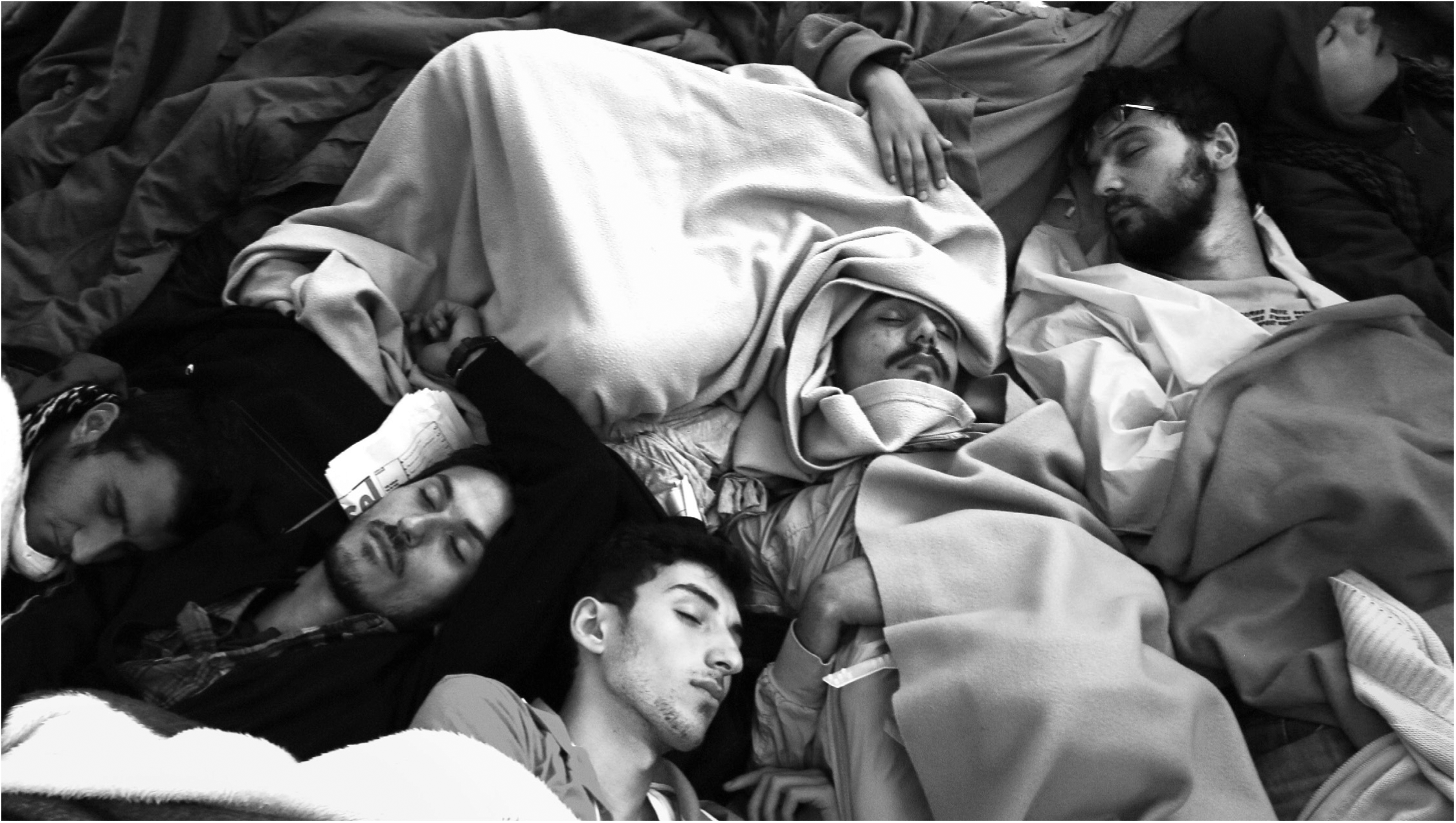
Protesters nap in Gezi Park, June 2013
CREDIT: Yannis Behrakis/Reuters
Despite its abrupt end, some felt Gezi had changed Turkey beyond the point of no return. The genie was out of the bottle and the country would never be the same. But as 27 May 2018, approaches – the day that marks the fifth anniversary of the uprising – there are questions about whether the Gezi events helped strengthen Turkey’s tradition of public protests, or, in fact, weakened it.
In 2013, Ezgi Başaran was editor of the website of Radikal, a now defunct liberal newspaper. She supported the uprising and the paper’s coverage of Gezi enlivened the pages, and the sales figures.
“The uprising was, perhaps, a manifestation of young people reclaiming their personal dignity,” she told Index. “Unfortunately, the human capital that became visible during the Gezi uprising never translated into a meaningful political alternative.”
Başaran believes there are several reasons why Gezi’s goals never became reality.
“Firstly, the majority of Gezi protesters were acting independently as members of generation Y. They did not know, or embrace, the usual political organisational tools. Secondly, the protests had erupted spontaneously without a long-term goal, plan or leader. Thirdly, the state’s response was so brutal that it managed to destroy the unanimity of the protest. As a result, people who were reclaiming their voice fell into silence and they went into seclusion.”
Protests concerning the suppression of Gezi continued throughout 2014. During that time, conservative newspapers successfully portrayed protesters as rabble-rousers and troublemakers. Violent clashes between security forces and activists were represented as scenes from a horror film in the pages of the mainstream press. Their journalists called it “a plan of chaos” whose ultimate aim was to make Turkey an unsafe place. Plans to return to order conceived by then Prime Minister Recep Tayyip Erdogan (now president) were announced, with perfect timing. Many Turks felt the public sphere had become safer because protests were crushed and Gezi was no longer occupied.
Photos from Gezi had served to strengthen the image of conservatives as defenders of the public realm, and party strategists used the perceived threats on public safety cunningly. They offered Turks stability, order and the comfort of the private space over the unknowability of the public sphere. But, in a sense, Turks made that decision out of desperation.
Restrictions on the freedom of assembly in Turkey in the past five years have increased substantially. In 2015, Turkey became the target of a string of Isis attacks; in July 2016, a coup attempt – claimed by the government to have been organised by an exiled Islamic preacher – killed hundreds of civilians. After the coup was suppressed, a state of emergency was declared and, in the past two years, almost all public protests have been banned in Turkey.
In the absence of access to public spaces, such as Gezi Park, Turks reverted to social media. But as Facebook and Twitter feeds were filled with angst-ridden messages protesting against the government, the prospect of real change in Turkish politics diminished. The government cut access to Twitter. Users fought back, access to the platform was regained and there was a sense of triumph among users. It was as if Turks reclaimed a public space for protest. But it was an illusion.
Technology companies prospered thanks to “clicktivism” in Turkey and elsewhere. The more Turks reverted to the private sphere, the more activists lost interest in the old-fashioned tools of representative democracy. Representations of anger replaced the struggle to reclaim the public sphere. Even when accessible, social media sites such as Twitter have had to comply with various requests from courts to remove content. The state of emergency on Turkish streets, therefore, finds its echo online, with the once unrestrained digital agoras of public debate serving increasingly as aggressively policed spaces.
Başaran explained: “Even though [the] Gezi spirit had an impact on public debate in terms of challenging the government narrative with satire, it lost its rhythm along the way due to the enormous crackdown from the government following the botched coup.”
Others, such as Sarphan Uzunoğlu, share her hopelessness. In 2013, Uzunoğlu worked for Sırrı Süreyya Önder, the socialist activist and parliamentarian whose name became linked with Gezi.
Önder was the first popular figure to stand up against the demolition machines. When he was wounded by a gas canister, people flocked to the park in protest.
“Gezi, as a public sphere, has been left less damaged than the original plans, so we may consider its outcome a partial victory,” he told Index.
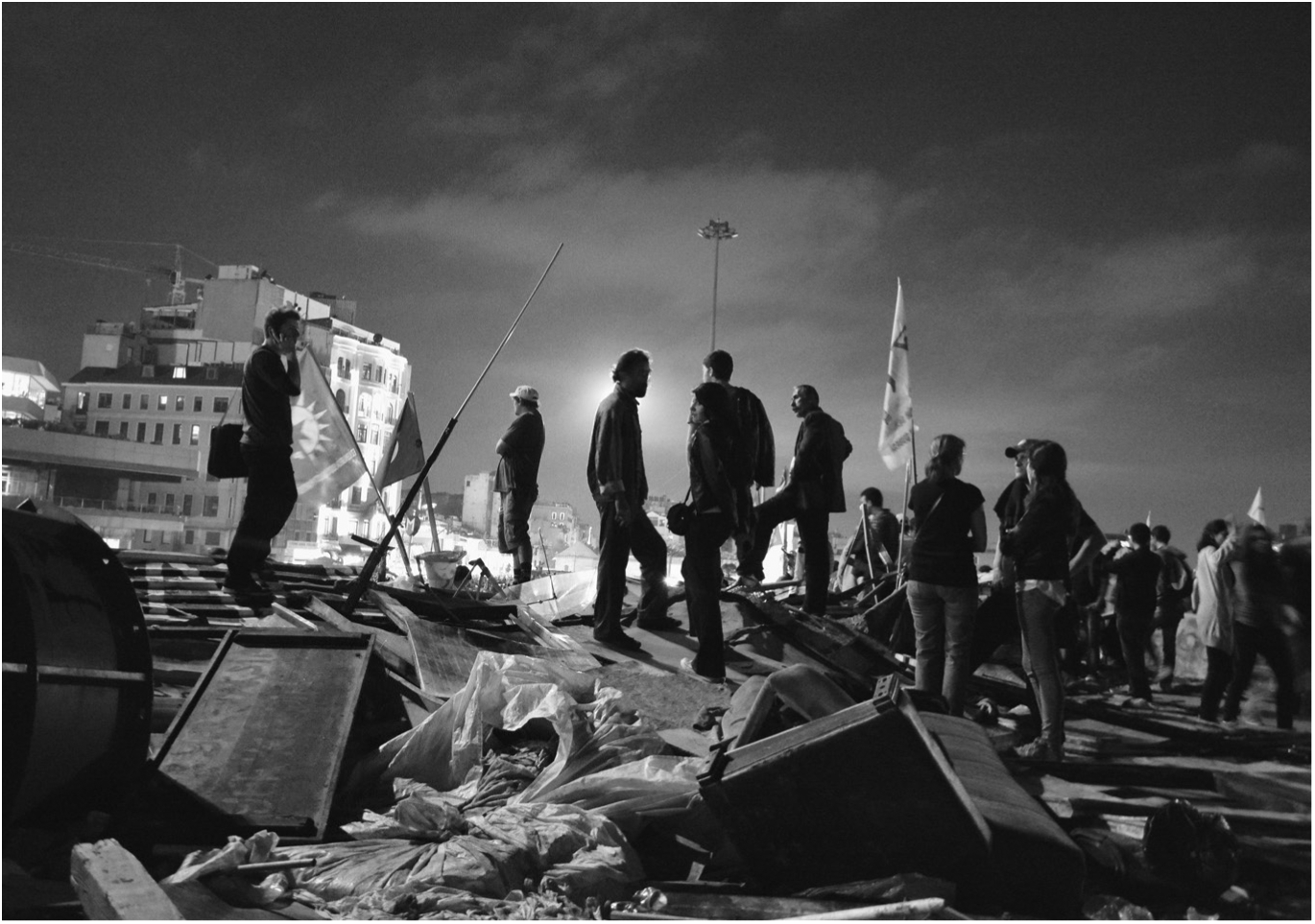
Protesters observe the damage caused in Gezi Park during the demonstrations, June 2013
CREDIT: Meg Rutherford/Flickr
“But the plan to reclaim one public sphere and democracy for the interests of regular people in all squares of Turkey failed.”
According to Uzunoğlu, Turks turned into fearful citizens. “We are anxious about everything. We lost our confidence to change things. Most people in my generation consider leaving Turkey. I do. The young ‘precariat’ of the Gezi generation have little option.”
Özge Ersoy, a young Turkish curator, said that Gezi had challenged her way of thinking. She was running a gallery, Collectorspace, 100 metres from Gezi with a clear view of the park, and watched the events from there.
“Gezi protests helped many people, including myself, to rethink what we understand from public space,” Ersoy told Index. “We realised that public was not an antonym of private. Rather, it meant collective participation, and it was something more than collective ownership.”
For Ersoy, Gezi will always be associated with a question she has been pondering these past five years: What makes a museum, an institution, any place, public?
“Is it when they are given public funds?” she said. “Or when they are publicly accessible? When they try to be transparent about their decisions?… I don’t believe ‘publicness’ is a fixed state or status. It is rather a culmination of moments, just like how we would define happiness. These are moments of belonging to a community around a library, a collection, an archive or a park, based on a collective imagination or aspiration.
“This is precisely the biggest impact of [the] Gezi events,” she continued. “To be able to articulate these questions and to attend to the shifting meaning of public.”
While intellectuals have pondered the notion of public, conservatives have gone on to win elections and significantly expand their voter base. Support for Erdogan’s party almost doubled in the mayoral elections of 2014. In the second of two general elections in 2015, his AK Party got 49.5% of the popular vote, its highest in history. Erdogan’s victory in a constitutional referendum in April 2017 means he has even more powers.
When I visited Gezi Park recently, it was filled with tourists and locals enjoying the autumn sun. Rarely has the park seemed more peaceful. A young girl read a book on a bank and a family of Syrian refugees were watching passers-by.
Uzunoğlu does not go to Taksim, let alone Gezi Park, any more.
“It has become this place occupied by touristic enterprises, rather than traditional restaurants or coffeehouses,” he said. “Artisans of the neighbourhood perished. Whenever I go near the park, all I see is a battle won by no one. Gezi, as a public space, is but a memory of those days when we imagined we would get our rights.”
Başaran has a similar take, saying: “When I visit the park today, a feeling of loss sinks in my heart. The snapshots of friendship, standing up and avenues of freedom float into my head, and then hopelessness prevails.”