




Abstract

Al Murray headlining Stand up for Satire at the Union Chapel in London’s Islington
CREDIT: Elina Kansikas
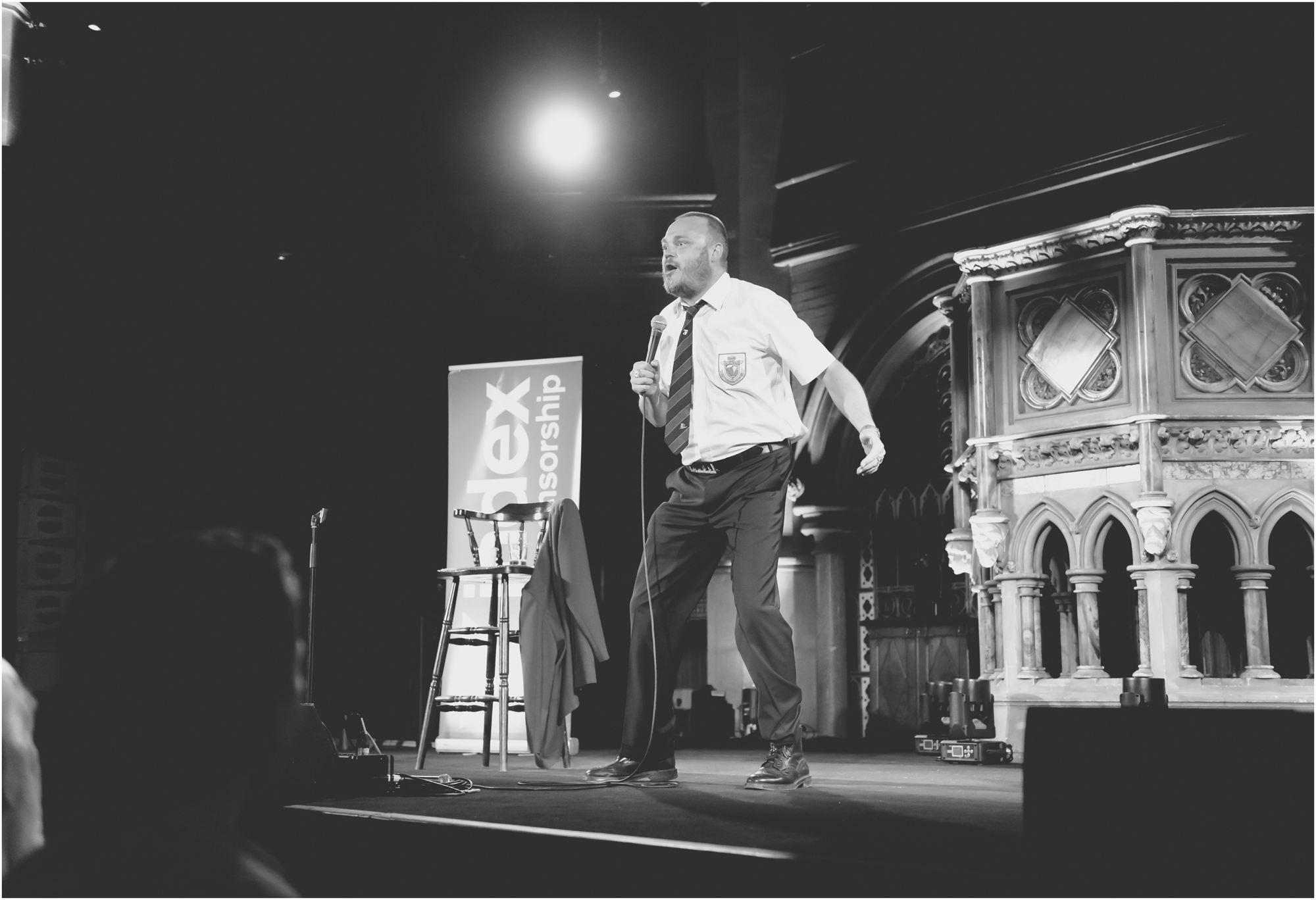
Murray was speaking after performing at Index’s biennial fundraiser Stand Up for Satire on 4 July. Hosted by Australian comic Brendon Burns and featuring performances by Tim Key, Felicity Ward, Dane Baptiste, Kerry Godliman, Deborah Frances-White and Robin Ince, as well as Murray, it was a night full of acerbic and irreverent comedy, touching on topics across the political and social spectrums.
Asked about the unique power of comedy to overcome censorship and oppression, Burns told Index of his experiences performing secret comedy shows in countries such as Malaysia and Indonesia, where police monitor the content of all officially-sanctioned entertainment.
“People get bored of old stereotypes, but when you make genuine observations about a culture, the release in the laughter is so immense,” he said. “Can you imagine, when people are told every day what they can hear and laugh at, when you all of a sudden turn up there and don’t pull your punches, and it’s this sort of prohibition-era comedy? The burst in the laughs is the most rewarding you’ll ever experience.”
Ince added that, among the arts, stand-up was an especially great method of self-expression because of its uniquely oral, improvised nature.
“I think [saying it out loud is] a really good way of working out what you believe,” he said. “In a lot of other situations, when something’s in print or on social media, the speed at which people fall on top of you often makes people more rigorous in their beliefs – sometimes wrongly. But with stand-up, it has this malleable nature because you’re making things up as you’re standing there, and it’s a great way of debating with yourself.”
You can listen to a podcast featuring Murray, Burns, Ince and Baptiste by visiting Index on Censorship’s Soundcloud page (soundcloud.com/indexcensorship).
June saw Index take part in protests against policies in Saudi Arabia and Bahrain. On 13 June, Index stood outside the Bahraini embassy in London to mark the first anniversary of the arrest of Nabeel Rajab, a human rights activist who won an Index award in 2012. At the time, Rajab had been held for a year without trial, and on 10 July, he was sentenced to two years in prison for speaking to journalists. At the time of writing, he was due to face a separate trial on 11 September for sending tweets critical of Bahrain’s role in the war in Yemen, and he also faces up to 15 years in prison on numerous other charges related to his activism.
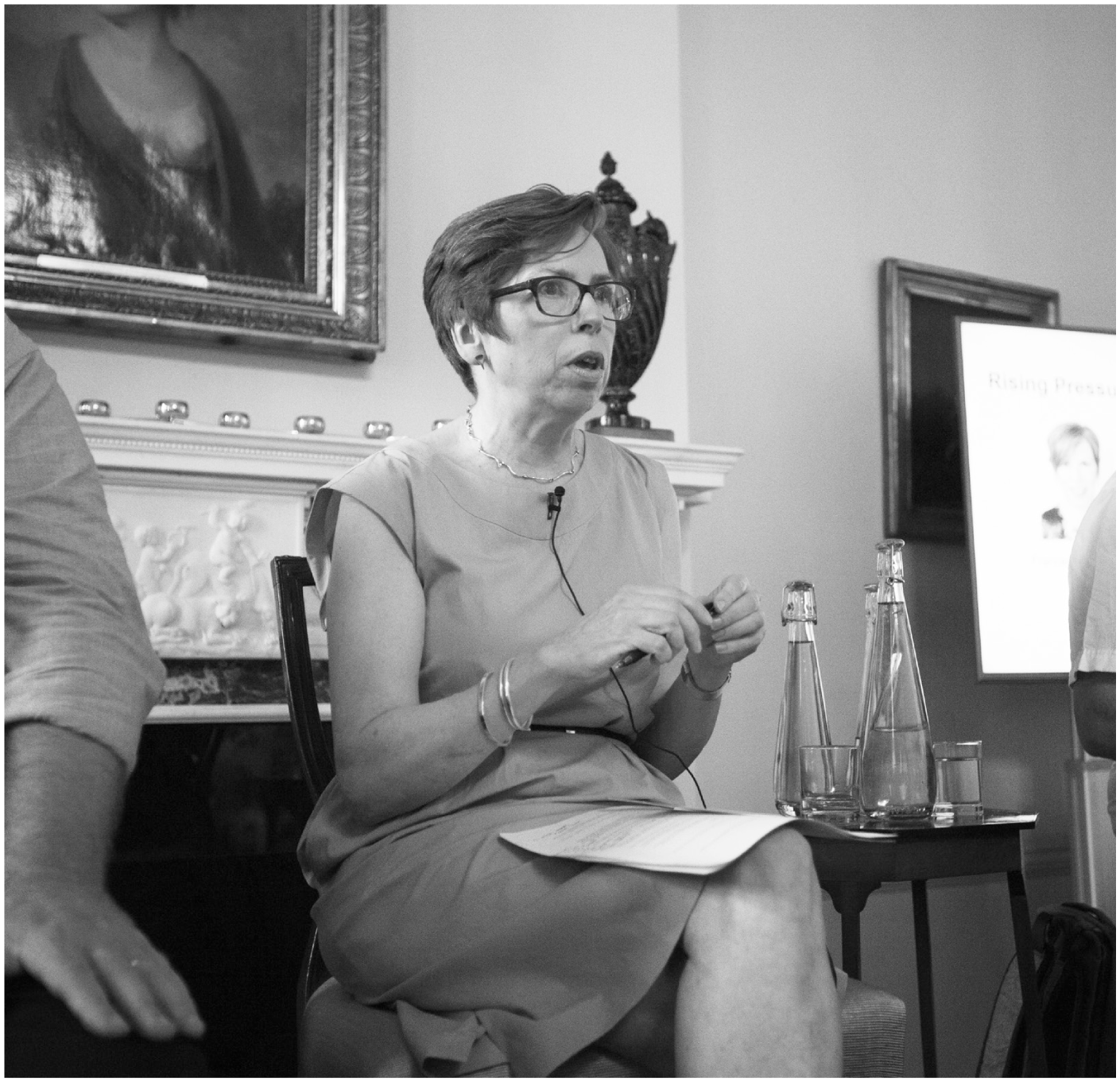
BBC World Service Group director Francesca Unsworth at an Index event at the Swedish Embassy, London, in June
CREDIT: Sean Gallagher
On 16 June, Index joined English Pen, Reporters Without Borders and the Peter Tatchell Foundation to mark the fifth anniversary of the arrest of Saudi blogger Raif Badawi with a vigil outside the kingdom’s embassy in London. Badawi is serving a 10-year sentence, which includes 1,000 lashes.
“What we should really be hoping for is that enough of what we call common people understand that their freedom is the freedom of the press, their freedom is freedom of expression, and we have to guard this together.” So said Ola Larsmo, a Swedish journalist and the former director of Swedish Pen, at an event to officially launch Index’s Mapping Media Freedom platform in June.
MMF has been operating for more than three years, logging violations to media freedom around Europe, and was officially launched at the residence of the Swedish ambassador in London. The evening featured a panel discussion between Larsmo, BBC World Service Group director Francesca Unsworth and Index chairman and Times columnist David Aaronovitch. The panellists all expressed concerns about the direction of media freedom, with Aaronovitch lamenting a crisis of authority in the modern media landscape where “both everybody and nobody can be believed”.
MMF has grown since its beginnings in May 2014 to become a crucial monitoring tool for advocates of freedom of expression. As Index’s head of advocacy Melody Patry pointed out it has logged numerous incidents and exposed trends that few would have known were taking place. Unsworth told Index that a multi-faceted response to this knowledge would still be necessary, saying: “The way that media freedom is exercised or not exercised differs all over the world. I think that one solution is not going to apply, and I think that if the audience could take away one thing from this evening, it would be that.”
Finally, Index had a presence at Afropunk and Wilderness, two UK festivals, to raise awareness of the power of free speech. Helen Galliano, Index’s head of strategic events, said: “It’s a chance for us to develop our audiences and bring new people on board who may not have a huge knowledge of freedom of expression. In particular, Afropunk for us is about showing that freedom of expression is a tool for minority voices.”