




Abstract

A new film about the last tsar attracted outrage from Russian religious groups this summer.
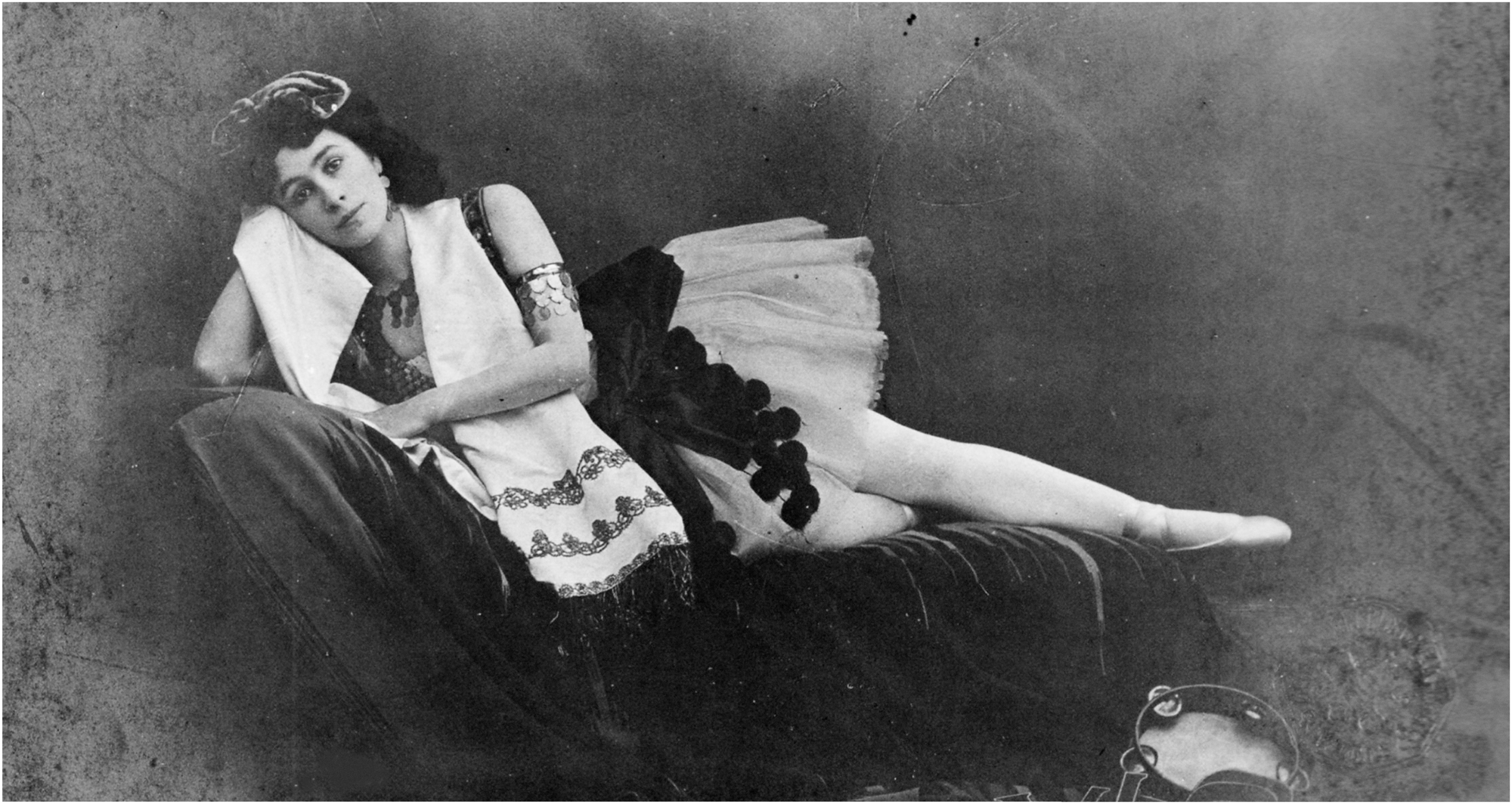
Matilda Kshesinskaya in the title role of the ballet La Esmeralda, from the collection of the State Museum of Theatre and Music, St Petersburg
CREDIT: Fine Art Images/Heritage Images/Getty Images
Barely a month seems to go by without another clampdown on freedom of expression in Russia, whether in the arts, online or in the press. In late June, an overwhelming majority of Russian MPs voted in favour of banning privacy protection tools on the internet, such as virtual private networks and anonymous messenger systems. Earlier that same month, a prominent Moscow librarian was handed a four-year suspended prison sentence in what she compared to the show-trials of the Stalin era. Her crime? Looking after thousands of decades-old Ukrainian books now considered anti-Russian propaganda.
Given this atmosphere, perhaps it is unsurprising that a high budget, beautifully made costume drama about the country’s last tsar has become embroiled in controversy.
The film, Matilda, centres on Nicholas II’s romance with ballerina Matilda Kshesins-kaya. It was directed by Russian heavyweight Aleksei Uchitel, and is one of the biggest domestic releases of the year, set, according to its producers, to open to the Russian public on 26 October 2017 on 2,200 screens.
In the trailer, Russia’s last monarch is entranced as he watches Matilda perform in St Petersburg; the pair are shown sharing passionate kisses and frolicking on a bed. Both were unmarried at the time. Uchitel was sure the film would appeal to Russians, not infuriate them. “I hoped Russians would like our film,” he told Index in a written exchange.
Members of the powerful Russian Orthodox Church say the film portrays the tsar - who was canonised in 2000 - as a sinner, and is therefore blasphemous.
The elite of Russia’s silver screen are outraged. “No film should be banned, ever,” said director Ivan Bolotnikov, whose film last year on Russian writer Daniil Kharms won high praise. “In our society, today, there is room for everything,” he told Index.
Earlier this year, 40 of Russia’s top film directors wrote an open letter to the country’s film union in support of Matilda, saying its treatment was reminiscent of the crippling cultural restrictions of the Soviet era. “We want to live in a secular, democratic country… where censorship is prohibited,” they wrote.
But that did little to stop the vociferous efforts to try to ban the film, which are being spearheaded by Natalia Poklonskaya, a devout member of Russia’s parliament, the Duma, together with a religious group that goes by the name The Tsar’s Cross. According to their social media account on VKontakte, the Russian equivalent of Face-book, the group has thousands of members.
It spent July collecting signatures in support of the ban, using the Russian hashtag #Stop-Matilda, and the group have even created a prayer advocating against the film. Part of it reads, “God forbid the release of this blasphemous film Matilda, which desecrates the memory of the Holy Regal Martyrs.” In July, high-ranking priest Vsevolod Chaplin put out a video on his YouTube channel warning that if Matilda is released, “Russia will die” from watching the “ritual genocide” of a nation.
If this seems like a mere morality spat between the church and the arts, it isn’t. Despite the official separation of religion and state, an ever stronger alliance exists between the church and President Vladimir Putin. Religion has flourished in Russia since the collapse of the atheist Soviet Union. According to a major new study by the Pew Research Center, which looks at religion and public life, more than 70% of Russians identify as Orthodox Christians, up from just over a third in 1991. But the church is beginning to infringe on people’s personal freedoms. Russian youths are still reeling from the recent arrest of a 22-year-old man for playing Poke-mon Go in a Russian Orthodox church in his native Yekaterinburg, central Russia. He was found guilty of inciting religious hatred, but managed to escape jail, for now.
“Unfortunately, the state often backs Russian nationalist groups and Russian Orthodox activists who, under the pretext of defending ‘traditional values,’ have resorted to forcibly imposing their views on others,” Yulia Gorbunova, researcher for Russia at Human Rights Watch, told Index.
The uproar over Matilda is the latest in a string of church-connected curtailments on culture in Russia. Last year the rock opera Jesus Christ Superstar was cancelled in the Siberian city of Omsk after a self-proclaimed patriotic group called it blasphemous. An exhibition in Moscow by US photographer Jock Sturges, which included portraits of nude children, was shut down last September after a conservative MP said the photos amounted to “paedophilia”. And in July, the famed Bolshoi Theatre was forced to postpone a much-anticipated ballet chronicling the life of Russian-turned-emigre ballet dancer Rudolf Nureyev. Ostensibly, the Bolshoi delayed the production, which discusses homosexuality, due to what it said was unpreparedness. But it now looks as if Russia’s culture ministry intervened, irritated by the gay scenes.
“Such developments, to me, really spark questions about the future of artistic freedom in Russia,” Gorbunova told Index.
The question of whether Matilda should be banned was recently put to Putin during his annual marathon, a carefully staged question and answer session which is televised to the nation. With a look of alarm on his face, the well-known Russian stage and film actor Sergey Bezrukov, sitting next to the director Uchitel, asked the Russian leader’s opinion on the controversy. Putin denied there had been calls for a ban, adding that it was healthy for a society to have debate.
Even though the culture ministry has now approved Matilda’s release in Russia, the outrage and attention bestowed on the film by the church, government and Russia’s filmmaking community have set a dangerous precedent for upcoming cultural endeavours.
Ironically, Nicholas II is the monarch whose demise - he was shot by a Bolshevik firing squad with his family in 1918 - paved the way for the Soviet Union’s communist rule that imposed institutional censorship on practically every aspect of life. Today, the role of the oppressive Soviets to control society is being slowly replaced by a government who increasingly bows to the church.