




Abstract
Jamaican radio talk shows often receive thousands of text messages and attract a massive following. Sometimes they can even change the political agenda, writes
“Most of my calls are from the lower socio-economic group,” said Shields, who has been hosting RJR’s Hotline since April 2015 and has hosted other radio and television talk shows for the past 20 years. “Radio gets the view of the neglected social classes.”
Hylton Dennis, a publisher, calls in to radio talk shows fairly often. For him, radio is a very powerful medium. “I believe that, of all the media, radio facilitates greater participation in governance. Radio is very personal and intimate,” Dennis told Index. “You don’t have to be literate to participate in radio and you don’t have to be sighted, either.”
Radio made its debut in Jamaica in 1939 when the first broadcast was transmitted via a shortwave ham radio receiver, which offered wartime news and information for 30 minutes each week. Over the next two decades, radio evolved hugely, taking on a much wider range of topics and shows. During the late 1960s, talk radio emerged, with many fondly remembering the late-night show of a rabbi named Bernard Hooker.
It really grew in importance during the 1970s when fearless and controversial journalist John Maxwell began hosting Public Eye, the first daytime radio talk show, on Jamaica Broadcasting Corporation’s radio service. Public Eye was one of the early platforms where the common man could call in and have his say on the political discourse of the day.
Maxwell, a socialist, gave a voice to Jamaica’s masses at the time of Prime Minister Michael Manley’s democratic-socialist experiment. The influence of talk radio was demonstrated by Maxwell’s role in the introduction of the minimum wage in the 1970s. It’s widely acknowledged among people who lived in that era that the law was enacted partly because of his strident advocacy on Public Eye.
Claude Robinson, a veteran journalist on the Caribbean island who served as press secretary to Manley in the 1970s and was later director-general of the JBC, believes radio - specifically talk radio - opened up political discourse in Jamaica, which was previously confined to bars, churches and political meetings. “It was major by any stretch of the imagination,” he told Index.
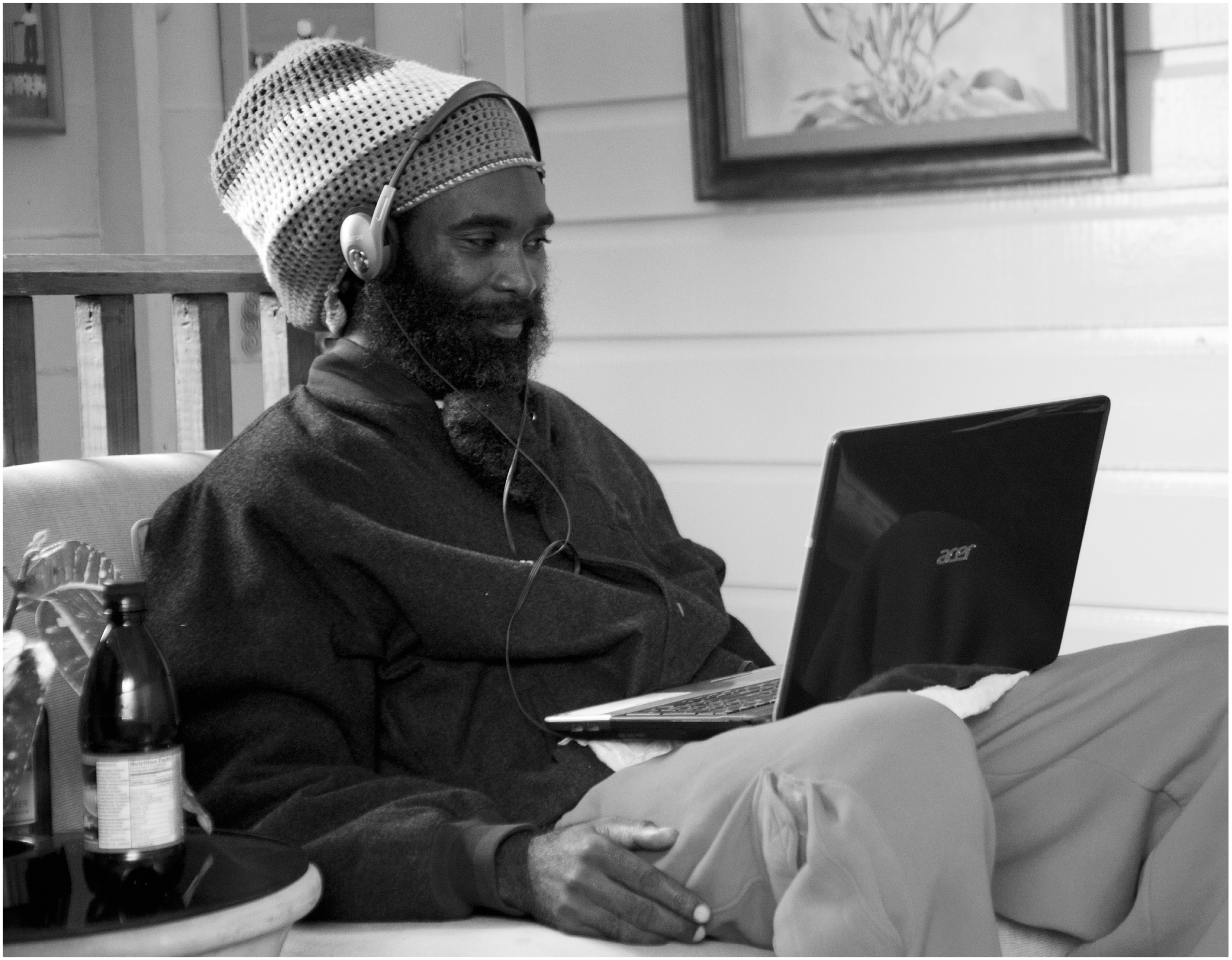
A man listens on a computer in a rural Rastafarian community. Radio phone-ins are a vital platform for political discussion on the island
CREDIT: Phil Clarke Hill/Getty
Former Press Association of Jamaica journalist of the year Dionne Jackson Miller argues that radio gave - and continues to give - a voice to people who wouldn’t otherwise be able to access these national conversations, especially through call-in programmes.
“For instance when those started, many of us still remember the late, great John Maxwell with Public Eye, which was so revolutionary at the time because somebody from rural Jamaica could call in, be on air expressing their views about some of those issues, which would never have been possible in an earlier era because traditionally the airways have been reserved for, you know, people who have access to power, people who are in certain positions of influence.
“I think radio has helped to democratise that process by opening up the conversations,” said Miller, who hosts current affairs show Beyond the Headlines on RJR 94 FM, and All Angles, a current affairs programme on Television Jamaica.
Mark Laird, a salesman who calls in to at least one radio talk show most days, also believes the working class wouldn’t have a voice without radio. “When you listen to talk radio, the voices you hear, it’s poor people, mostly rural people,” said Laird, who goes by the moniker “Comrade” when he calls in.
The All Media Survey of 2017, which measures audience and readership for television, radio and newspapers in Jamaica, says there are close to two million radio sets in the country. Radios far outnumber television sets, despite the latter’s growing popularity. Nearly 80 years after radio broadcasting was first introduced in Jamaica, the medium remains very important in the largest English-speaking Caribbean country. The market is fiercely competitive, with about 30 stations on the island of 2.7 million people. Most of these stations include a fair amount of interactivity even if they do not have overtly political programmes.
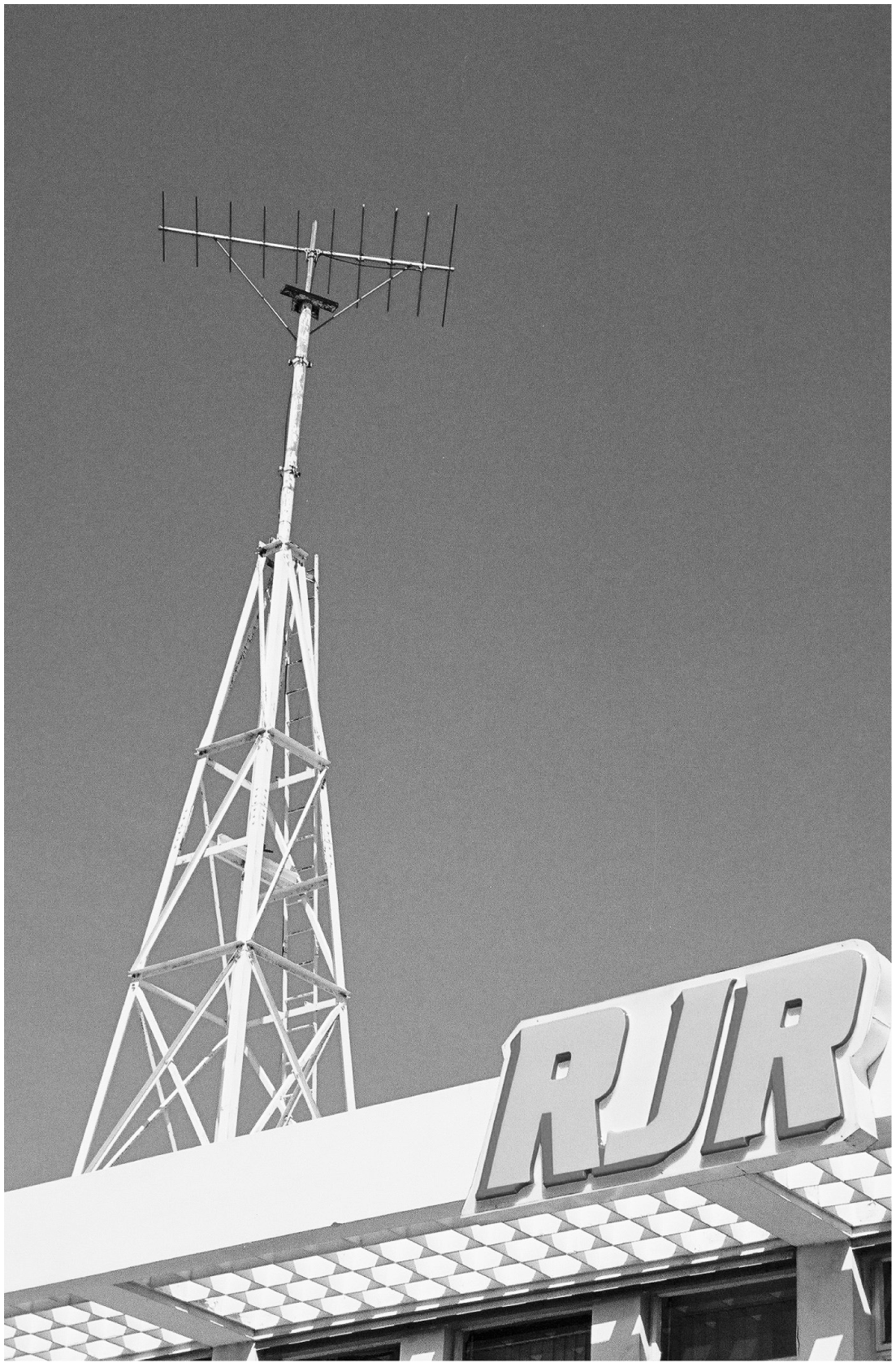
The broadcasting tower at RJR, Jamaica’s oldest radio station
CREDIT: Tom Oldham/REX/Shutterstock
Technology has further aided the reach of radio. Many stations, especially those that have talk shows, have introduced text message lines and use social media. Cliff Hughes, a pre-eminent journalist who owns Nationwide News Network, believes radio is a big facilitator in the nation’s political discourse and says he cannot rely on callers alone.
“We, as traditional broadcasters, are becoming increasingly sensitive to social media and texting as a means of facilitating broader participation in political discourse,” he said. He explains that there is a significant group of people who won’t pick up a phone and call him but who would text or use WhatsApp. He allocates a special block in his show to them.
Texting is increasingly important for a large portion of the population who survive on meagre incomes and don’t have large call allowances on their phones. “I remember the first time we started using texts - my eyes were opened. I was so happy,” Miller said. “Because all of a sudden you started getting input from people all over Jamaica in a way that even the call-in programmes I thought hadn’t done. When I opened up the text line, I started to get comments from a wide variety of people I’ve never heard from before.”
For Miller, by far the largest input for her programmes comes via text messages. “When you have a really, really, very controversial issue, for instance, you might get 200 responses on a particular social media platform and you can easily get 2,000, 3,000, 4,000 texts coming in,” she said, although she thinks that might change as incomes rise and mobile-internet use increases.
Shields said listeners wanted her not only to read their texts but also to comment on them. “They want to be deemed an active participant. It’s a matter of respect.”