




Abstract
North Korea art expert
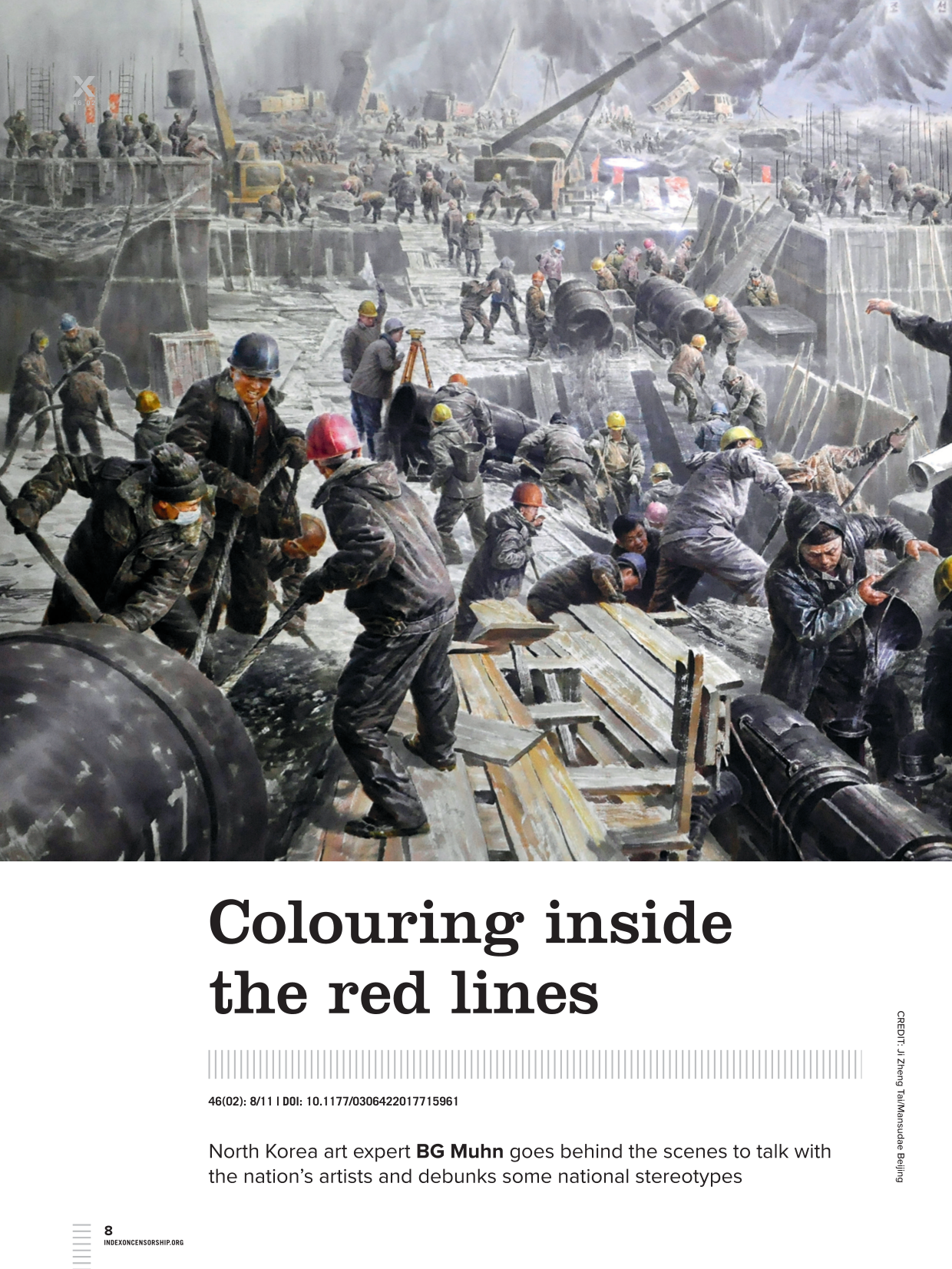
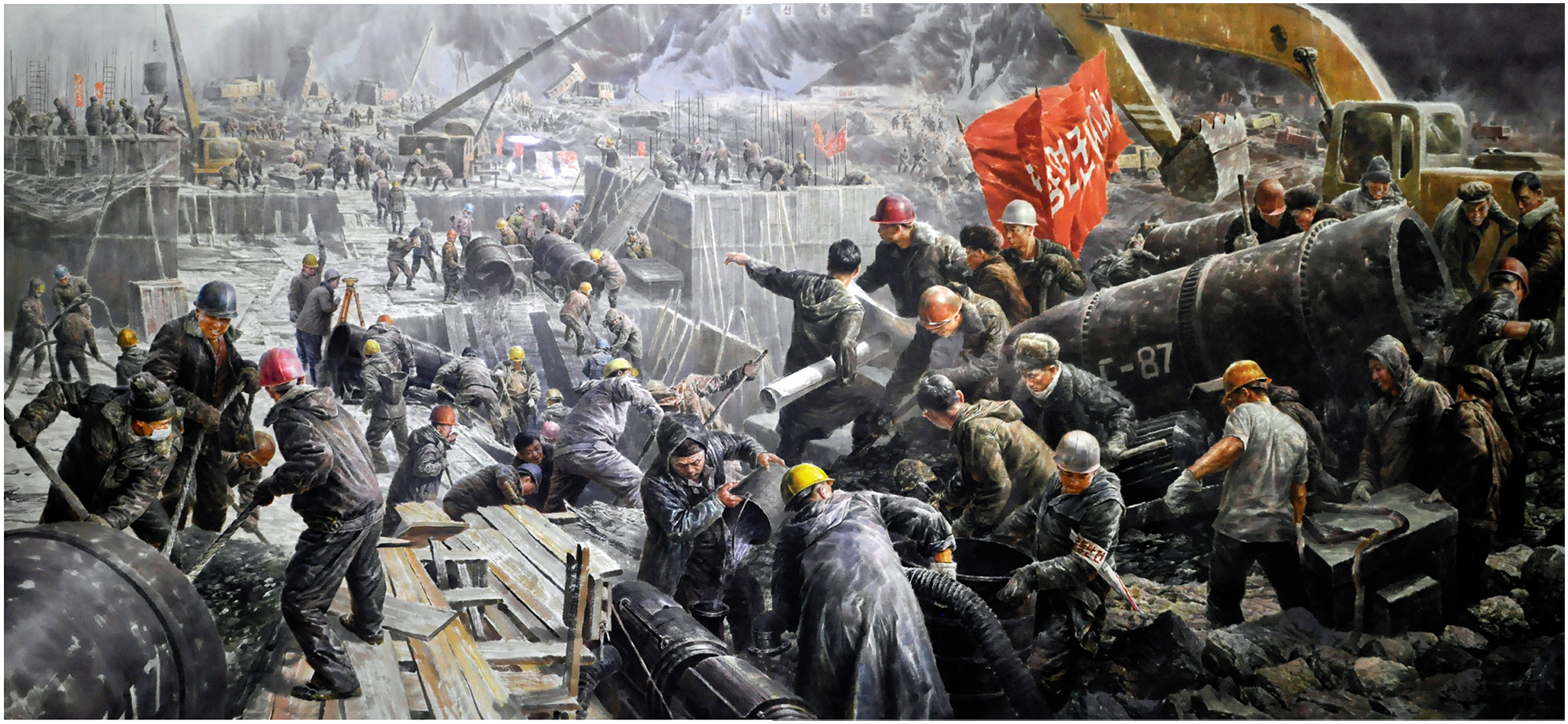
Six artists lived and worked alongside construction workers for a month before painting The Miracle of Chongchon River
CREDIT: Ji Zheng Tai/Mansudae Beijing
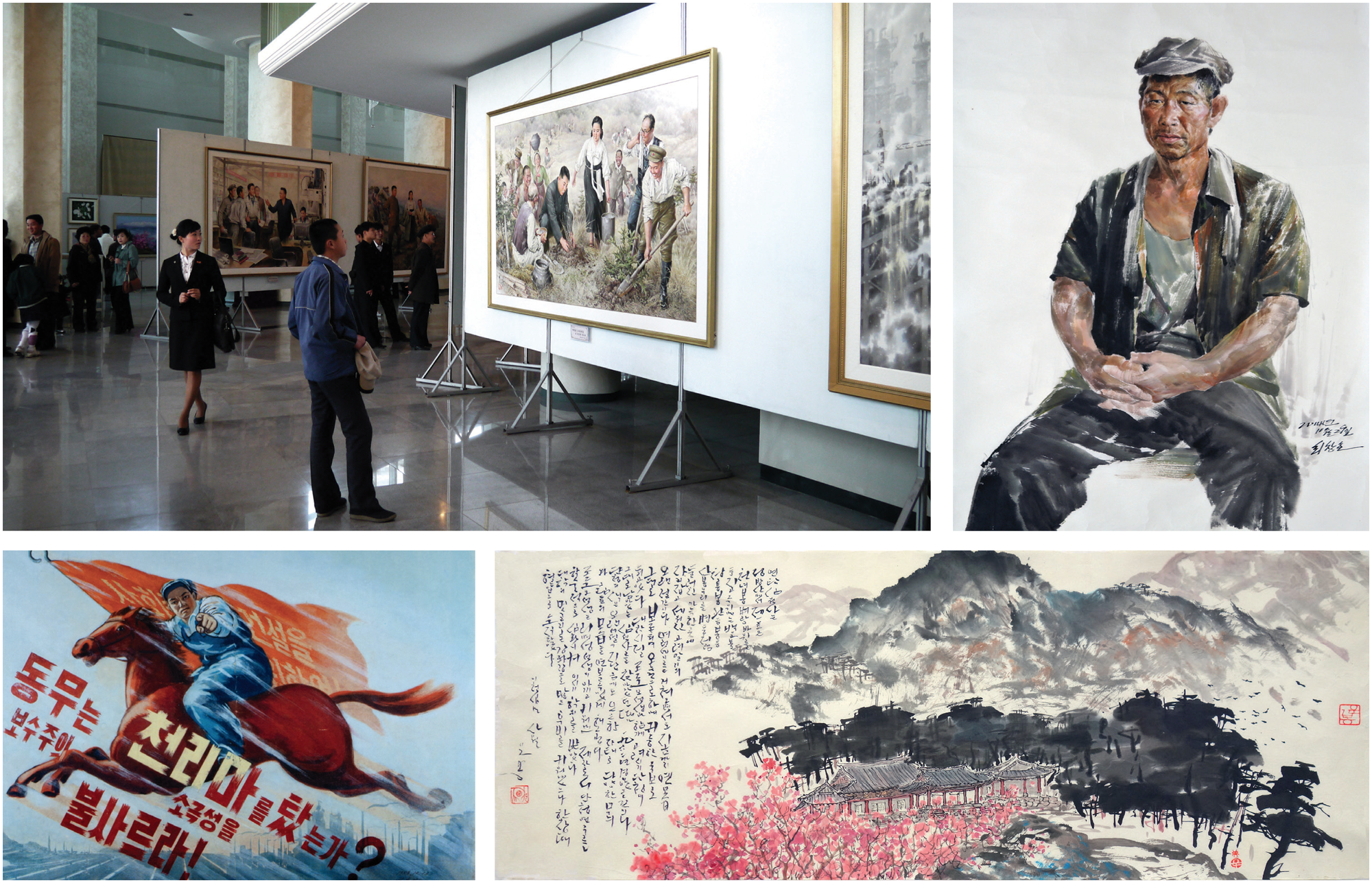
When I first went to North Korea to research the country’s art I was totally stunned both by how art functions in the country and how good some of the work is. This was back in 2011. Now, nine trips later, I am still just as fascinated. Art is huge in North Korea. The biggest art exhibition, the National Art Exhibition, takes place in April every year in Pyongyang and attracts large crowds, though exact numbers are hard to come by. Many other government-sponsored exhibitions occur throughout the country. Some are for amateur artists and some are for professional artists.
Art is not just confined to exhibitions. It’s on the streets, from the huge bronze statues of the “Great Leaders” and the ubiquitous murals with slogans on them to propaganda posters pasted on buildings and billboard-like structures. And it’s in people’s homes. Some of this art is simply for aesthetics, but most serves a purpose, to reinforce citizens’ ideas of patriotism and motivate them to do their best for the country.
Clockwise from top left: North Koreans view paintings at the National Art Exhibition; a portrait of a worker; Yontan Shimwon Temple, an example of the little-known tradition of ‘literary art’; a propaganda poster depicting Chollima, a mythical flying horse common in Korean culture
CREDIT: BG Muhn, Choe Chang-ho, Un Bong, Choson National Museum
As masters of the nation’s ideology, artists are revered. They receive a decent salary and are often bestowed titles in recognition of good work. As a result, they face intense competition and years of training in order to be selected in a state-run studio, such as Mansudae Art Studio, the world’s largest art studio with nearly 4,000 staff members.
North Korean art has its roots in Socialist Realism, the official Soviet art form institutionalised by Stalin. It veers away from the abstract. Kim Il Sung, first leader of North Korea, often said: “Art that people don’t understand is not art.” During my travels to Pyongyang, I spoke with a number of artists, including two highly respected artists, Choe Chang Ho and Kim In Sok. I asked Kim whether he knew about abstract art. He replied: “We know about that, but it doesn’t fit with our society because people don’t understand it.” When I interviewed Choe about hyperrealism, a genre of painting or sculpture resembling a photo, his reply was similar to Kim’s. “That kind of expression is unnatural and unpoetic, and therefore people will not be able to relate to it,” he said.
In North Korea, few artists consider themselves propaganda tools. Propaganda art (sonjonhwa) comes under the umbrella of what is known as reproduction art (chulpanhwa). On top of this, paintings in oil, acrylic and traditional ink wash (chosonhwa) are categorised as fine art (hwoihwa).
Art has always occupied a central role in North Korea. After the Korean peninsula was divided into North and South in 1945, North Korea came under the influence of the Soviet Union. North Korean art was then significantly influenced by the Soviet Union. For example, in 1953 a Korean descendent in the Soviet Union, Varlen Pen, who was an artist and art professor at Repin Academy, was dispatched to Pyongyang and appointed dean of the Pyongyang Fine Arts University. He was tasked with educating art students and faculty. Pen’s influence was enormous. He instigated the tradition of “field sketching” or “direct rendering of objects”, which has become part of art education in North Korea.
At the same time Kim Il Sung was consolidating his power against internal rivals and he started to distance North Korea from the Soviet Union. The concept of the Juche ideology was born. Juche ideology, which is commonly translated as “self-reliance”, is central to North Korea. It blends the idea of the individual as the master of their own fate with the idea of the group as masters of the revolution. As part of the Juche ideology campaign, after Varlen Pen left in 1954, all the statues from the Soviet Union he used were destroyed and replaced with images of Koreans.
Since the mid-1950s, North Korean art has been saturated by the ideology of Juche. It means art is used as a vehicle to educate and motivate the people in line with the governmental policy, persuading them that the country’s interests and their individual interests are one and the same.
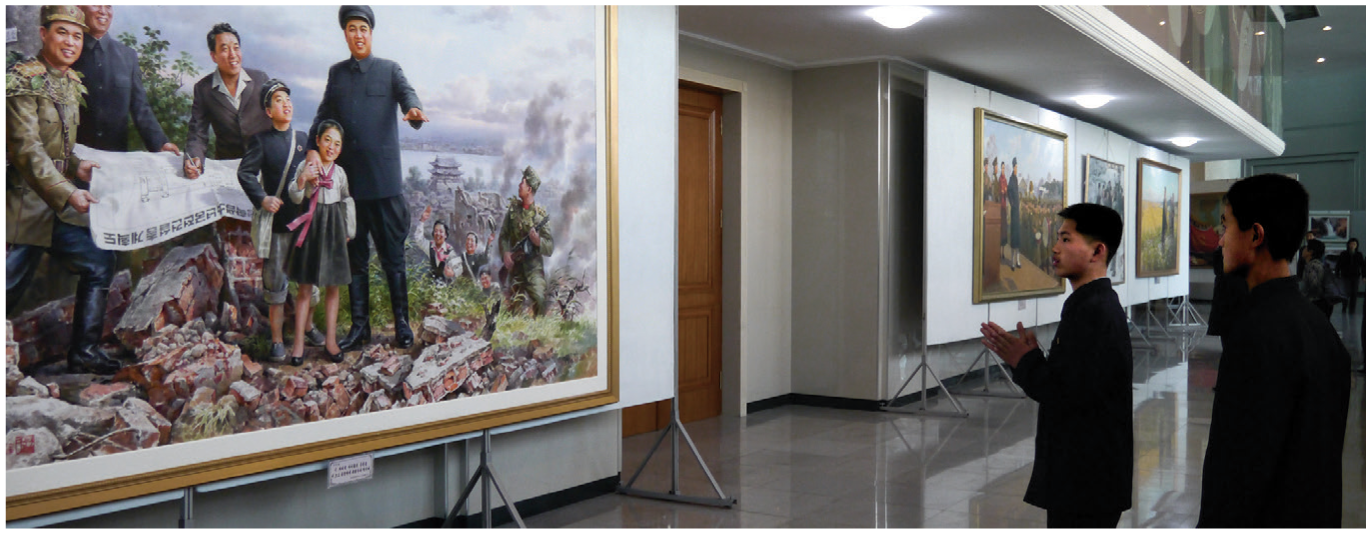
Individual artists who are members of an art studio have a quota of paintings they must produce each month. Once they have submitted those works, they can spend time on their own art. Nevertheless, they stay within certain boundaries. Otherwise they face being ostracised from the art community, or worse. In the 1960s a well-established oil painter made the mistake of expressing the leader’s image in a way that was deemed inappropriate and was forced to labour in a remote factory for 14 years. For many artists though, they wouldn’t even consider painting the Kims in a negative light. They are seen as deities by most and people bow reverently at the statues and paintings of the leaders.
In addition to individual works, North Korean artists work collaboratively on huge paintings. When an event of import occurs, such as building a dam, a group of artists will go out to the area and will help with the project manually, all the while beginning to sketch images of the project, which will then form part of a wider collaborative work.
Two North Korean men look at a painting at the National Art Exhibition in Pyongyang
CREDIT: BG Muhn
There is, surprisingly, some room for creativity. Over multiple visits to Pyongyang, I built working relationships with North Korean museum staff, state-run art studio officials, artists, as well as faculty members and students. As I scrutinised the art, particularly traditional ink wash painting on rice paper (chosonhwa), I found evidence, within circumscribed themes, of a high degree of creativity and skill. Looking at artworks at Mansudae Art Studio and Choson Art Museum, the mastery of brushstrokes and innovative solutions to artistic problems are evident. Within boundaries, I witnessed artists’ passion to be creative, individual and to excel. In that sense, North Korean artists are not so different from artists anywhere else in the world.
The online version of this article was amended on July 7th 2017 in order to remove a factual error from the text. The original version stated that the Korean peninsula was divided into North and South in the 1950s. This has now been corrected to 1945.
Footnotes
Born in South Korea,