




Abstract

French writer and documentary maker
CREDIT: Sam Darlow
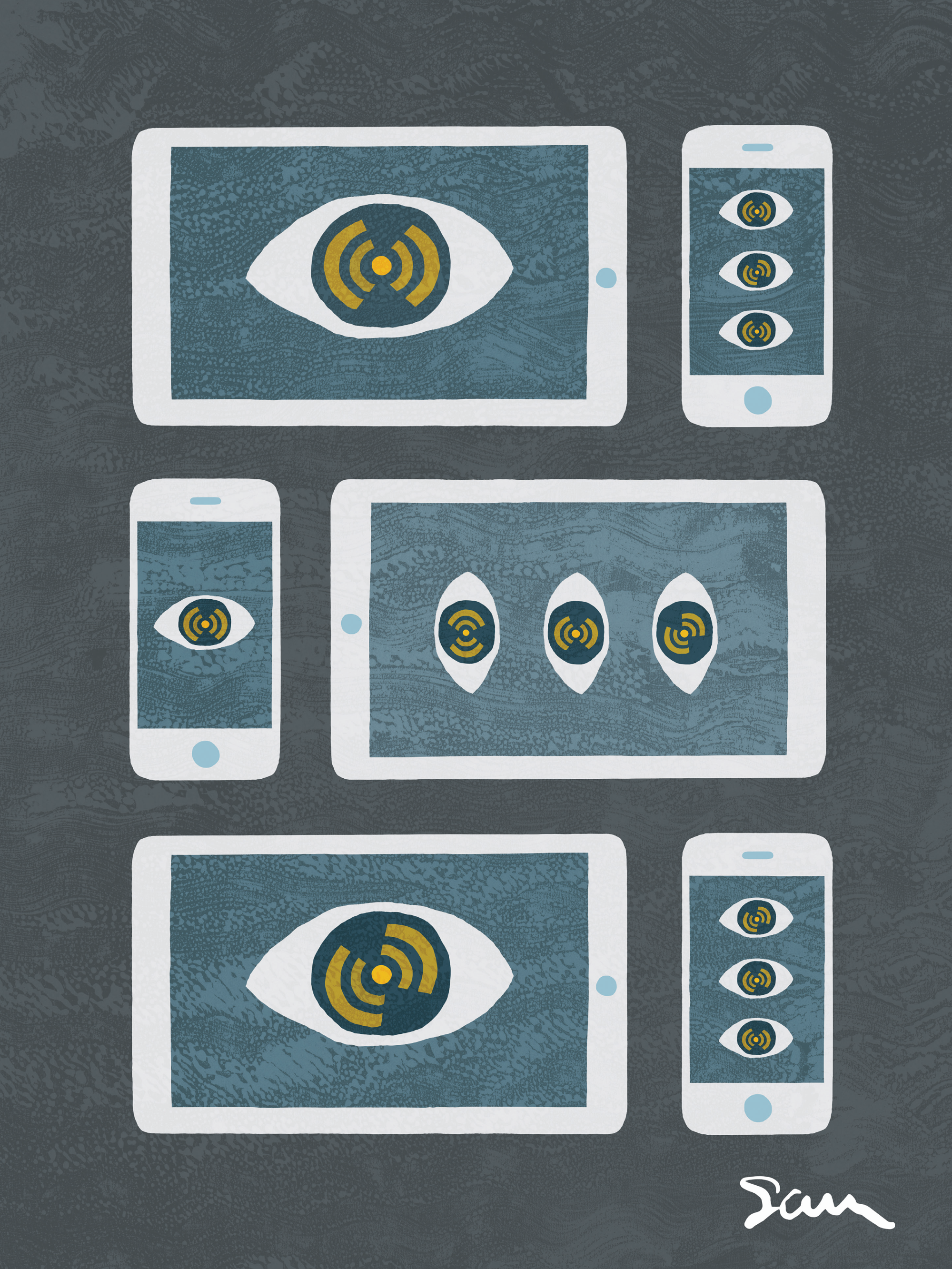
Author Karim Miské has been interested in totalitarian regimes since he was a child. In his short story he imagines a dark future in which several organisations group together to govern all technology
CREDIT: Antoine Rozès
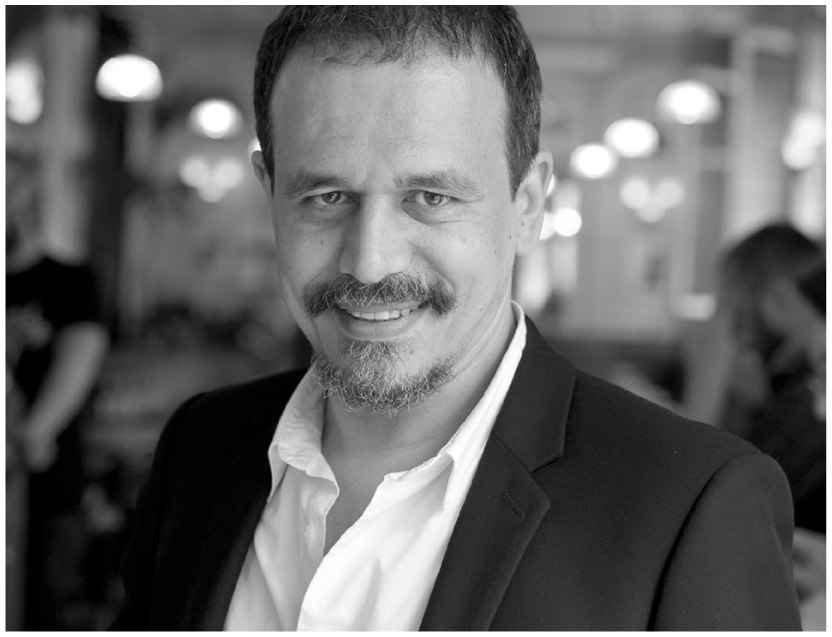
The most astonishing aspect of Arab Jazz, set in Paris’s multicultural 19th arrondissement, is that the world of Salafist Muslims and orthodox Jews which inspired Miské was the one that produced Chérif and Saïd Kouachi, who carried out the terror killings in the Charlie Hebdo offices after the novel was first published.
As a documentary maker interested in fundamentalism, closed worlds and identity, perhaps Miské should not have been surprised that fiction and reality became mixed. Indeed, as he admits, he had wilfully blended the two. It still spooked him that real life terrorists ended up walking the streets of his novel. It made him decide eventually not to do as he originally intended and write a sequel to Arab Jazz, but to start on a completely different novel.
“Basically I’m a documentary film maker. I made documentaries for 25 years and then I decide to write fiction and again reality intrudes,” he said. “I finally understood last summer it was impossible for me to keep on writing about this story because the reality was too powerful. I could not go back to this, so I had to write a new one. I think it is not going to be a crime novel… It is going to be set in the 11th arrondissement of Paris quite close to where I live and in places I used to go and it will be the story of two millennials, two young Parisian professionals. It’s set in Paris post attacks, but it is not talking about terrorism. It’s just about the mood of the city.”
Brought up in Paris, Miské, 52, is the son of a Mauritanian diplomat and a French mother. It was his leftist mother’s admiration for Enver Hoxha, the brutal Albanian dictator who died in 1985, which first aroused his interest in totalitarianism and crime.
She took him to visit Tirana when he was eight years old as part of her research for a book on the liberation of Albanian women. Miské said he was uncomfortable at what he saw and understood there was a gap between what his mother told him (and believed) and the reality. But he did not understand the full murderous horror of the dictatorship. It is, he said, the big lie and the crime at the heart of totalitarian regimes which fascinate him.
“It was the contradiction, between the people we were seeing in Paris, the activists, the leftists who were free, but were supporting this strange country where there was no freedom,” he said. “I kind of felt all this. I developed a special sensibility towards crime at that time. Because they were criminals. The people who were running the country [Albania] were criminals – that was the hidden secret. It’s something I understood afterwards when I read Ismail Kadare, the Albanian writer. I understood it had been a very hard political system. Ten percent of the population were in prison or in a labour camp. Religion was forbidden, and if priests baptised children they were killed.”
The short story printed below is a dystopian tale of a world taken over by criminals and governed by intrusive technology. Salvation comes in the form of a woman called Vera and her secret personal project. The story was first written in 2013 for the Maison de la Radio, home of France’s public service broadcaster France Radio. Miské has updated it exclusively for Index on Censorship magazine and it has been translated into English for the first time.
Paris Calling
Picture her, sat there behind her vintage mixing desk, on the morning of the last ever RFI live show from Maison de la Radio. She’s swigging a gin and tonic, even though it’s 6am UT. That morning everyone was drinking. How else could they numb the pain of being uprooted from a place that meant so much to them all? There was a feverish, electric atmosphere. Devastating, in fact. Her colleagues resorted to base destruction; anything for a chance to rise again from the ashes. A curious pillaging spree set in. Nothing was spared as journalists, assistants, interns and technicians made off with bits of carpet, warning signs, microphone cables. Grounded, well-brought-up people, who under normal circumstances wouldn’t even swipe a box of matches from the supermarket, began ransacking their workplace, seconds after they had been cast out despite two, ten or twenty years’ loyal service. Not shown the door. No, I mean cast out, in the truest sense, from the place they had called home for so long. By forcing them to leave, the powers-that-be were taking away a part of them. Hence the frenzied need to remove, to reappropriate these objects and souvenirs. Véra helped herself to a clock with red LED digits and, soothed by the balm of the alcohol, simply sat and watched the chaos unfold around her. It was a mix of excitement and disarray, driven by a primal need to commit these illegal acts together.
As she told me some 45 years later, it was at that precise moment that the vision began to form. A relentless haze of images and words swirled round her head, fueled by gin and the febrile mood in the building. The Matrix, Terminator, De Gaulle, the impermanence of things, immanence, resistance… Leaving the radio station that had been her whole life set off a stream of consciousness that was beyond her control. A mission was taking shape in her mind. Something to do with destiny or karma. Something big, unclear and inexplicable. She felt like Noah before he built his ark, just without any gods whispering in her ear. Her path was mapped out and nothing would get in her way.
Using her pass and her intricate knowledge of the premises, she slipped back and forth like a little mouse, discreetly clearing out the bulk of what she would need. But you all know the story; it’s been told a thousand times and distorted ten times more. It was never Véra’s intention to spawn a legend laced with endless miraculous events, far from it. If I’m here to tell you anything, it is this simple truth. The story of a young, bright, free woman in her thirties, who suddenly decided to follow her intuition. She saw, she sensed, she knew that the worst was yet to come. Her vision pounced on her with the same precision and ferocity of a lion tackling a gazelle. Humanity’s future appeared before her as an irrepressible surge to the dark side. The feeling overwhelmed her completely, but she was unable to put it into words. Even if she could, who would she have told? She would have been written off as a nutjob. Realising it was better to preach in the wilderness than to wallow in the loony bin, she did what she knew was necessary. She stayed silent, at least until the moment she would have to pass on her crazy plan to the next man or woman in line. Véra was a believer. But she did not place her faith in God. She placed it in radio and in humanity; one and the same thing, as far as she was concerned.
This all happened in 2013. My father was aged one, and my grandfather, Véra’s ➔➔brother, was living at the family home in Longjumeau. She moved out of her tiny studio flat in Belleville and did up the property’s disused outbuildings. In this hideaway she slowly started making her dream a reality, all the while working for 20 more years with RFI, first at Issy-les-Moulineaux, then further afield, each building more modern and less soulful than the last. Véra loved life. She smiled a lot. Despite being fully committed to her plan – or perhaps because of it – she was light-hearted and happy. That said, her life did become a lot more cloistered, and she never settled down with a partner or had children.
In 2035, the invention of the hypernet was the death knell for all other broadcast media. Less than five years later, there was no more FM and no more digital TV. It was impossible to broadcast anything without going through the Unified Global Network. The sinister UGN had just come under the control of the Great Global Conglomerate, itself established following the purchase (there’s no other word for it) of the United Nations by a consortium made up of Google, Facebook, Amazon, Apple, the FSB, the 14K and Sun Yee On Triads, the Sinaloa Cartel, the Sicilian-Nigerian mafia and ISIS. Totalitarianism on an unprecedented scale. A world alliance of criminals, oligarchs and tech giants set against a backdrop of bankrupt nation states. But what’s the point in making you relive these things you’ve lived through first-hand. Who among us – the survivors of the radio revolution – hasn’t seen a video of a family member being decapitated, playing on loop over the hypernet? Who hasn’t suffered in both body and soul at the hands of this ghastly digital regime?
With her customary stealth and dexterity, Véra managed to evade the surveillance apparatus of a system that arrogantly presumed to have co-opted every last remnant of reality in the world. In those days, there were still a few activists left – heirs of the Arab Spring, Wikileaks and Anonymous – who thought they could infiltrate the UGN. It took a while for them to realise that the internet, that great bastion of liberty, had become the most colossal prison in history, fronted by a bunch of criminals who seized power at the very moment the hypernet came into being. Véra alone understood, as she had for 20 years, that salvation would come from outside. She alone understood that, just as the internet had succeeded in toppling the old world order, so we would need to extricate ourselves from this web, to free ourselves from the monstrous, super-controlled society that it had brought about. Slipping under every radar, my great aunt managed, peacefully, to complete her task. All she had to do now was keep it alive, then hand it on.
I was born in 2045. In the blink of an eye, she knew, I was to be her Luke Skywalker, her Neo, her John Connor. The year she retired saw RFI fold, like all the other radio stations before it. Once and for all, the masters of the hypernet had eliminated every last media outlet that they had not created themselves. She spent the 50s picking through junk shops for old long-, medium- and short-wave transistor radios. As soon as I was old enough, I went along with her. Then, when I turned 13, she let me in on her secret and made me her successor. I was to continue the revolt. I cannot put into words the strange feeling that came over me the day she cranked open the iron shutter that kept her studio sealed from the world. The moment she switched on the lights, I realised my destiny. Four years later, when she died, I knew all there was to know about radio. It happened gradually, airing first to the area south of Paris before stretching further and further to the outer reaches of Europe and the Maghreb. I distributed radio sets, doggedly established a network and installed transmitters in the more remote regions. The rest was child’s play. I just had to borrow some old insurrectionist techniques from the Paris banlieues of 2005 and the Arab Spring, then adopt the spirit of Radio Londres, the radio platform used by General de Gaulle in London a century before my birth to appeal to the French resistance with the rallying cry: “This is London Calling! The French speaking to the French!”
In 2065, on my twentieth birthday, I made my first broadcast. Sitting alone in the late Véra’s studio, smiling like I had the first time I set foot in there, I uttered the words that would change everything: “This is Paris calling! The humans speaking to the humans!”
The rest you all know. The thugs of the GGC were only equipped to spy on the hypernet. No one had foreseen such a low-tech revolution, and they certainly hadn’t expected it to bring down their psychopathic regime. Twenty years had gone by since the last broadcast and they no longer had the technology to locate radio transmitters. Before they knew it, they had lost ground across most of the globe. The war was awful. We lost a lot of people, but in the end we overthrew that wicked system. For this generation at least.
In recreating the studio where Véra worked in 2013, and in bringing you all here today, I am asking you never to forget where the uprising began. The spark was ignited here, before the enemy even existed. Never forget that it started under the red light of this deliciously vintage digital clock, under the mournful, slightly booze-addled eye of my great aunt, the woman who would become the architect of our newly won freedom.
