




Abstract

Cartoonist Bill Leak felt Australia’s Racial Discrimination Act was limiting free speech.
Cartoonist Bill Leak, whose work had seen him being threatened with court and forced to move house
CREDIT: Stephen Baccon/Sydney Morning Herald/Fairfax Syndication
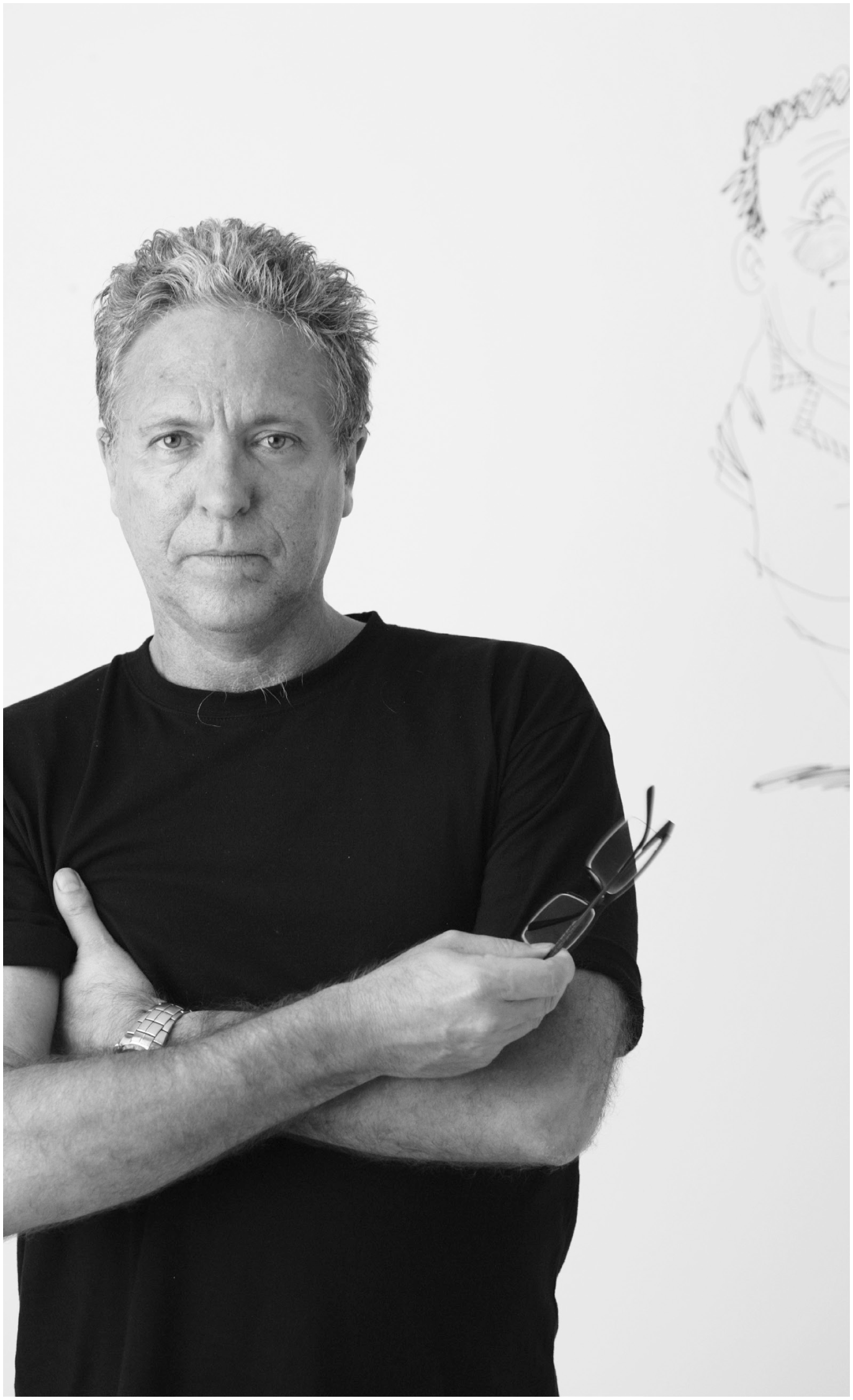
Both on and off the page, the cartoonist with The Australian newspaper had positioned himself as a leading critic of a contested clause of the 1975 Racial Discrimination Act, Section 18C, which makes it unlawful to “offend, insult, humiliate or intimidate” a person because of their race or ethnicity.
Opposition to the law, primarily from the political right, has grown ever since 2011, when one of Australia’s most prominent conservative commentators, Andrew Bolt, was found to have contravened the act. The federal court ruled Bolt had breached Section 18C in a series of columns where he implied that a group of light-skinned aboriginals had played up their heritage for personal gain.
The debate is now firmly on the public agenda following several high profile and contentious cases involving Section 18C last year. Under the current government, pressure from MPs led to Prime Minister Malcolm Turnbull going ahead with a parliamentary inquiry into amending Section 18C. A report issued in February as part of the inquiry said no changes were necessary. But Turnbull is suggesting he will take action.
“We’ve got people emerging who, when you talk to them about freedom of speech, they think that it’s the legal right to abuse people on the bus,” Leak told Index on Censorship magazine, describing what he believed was a dangerous and prevalent ignorance enshrined in the legal code. “They don’t actually understand that it’s thanks to freedom of speech that we live in a free democracy.”
One of the most controversial recent cases, which sparked the inquiry, involved a lawsuit brought under Section 18C against three university students who complained about being denied entry into a computer room reserved for indigenous students. The lawsuit was thrown out by the federal court.
But the case that most animated Leak involved the cartoonist himself. His critique of parental neglect in remote aboriginal communities put him in Section 18C’s crosshairs when it was published last August.
The cartoon depicts a policeman telling a seemingly drunk aboriginal man to talk to his son about responsibility. The father replies that he does not remember the boy’s name. The cartoon became the subject of an investigation by the Australian Human Rights Commission after several members of the public lodged complaints.
In Leak’s case, the main complainant withdrew, saying the cartoonist did not have interest in AHRC-facilitated conciliation and his newspaper The Australian wanted the case to go to court. She said she would have a slim hope of success in court because of exceptions in the law for expression, made “reasonably and in good faith”, which is artistic or in the public interest.
Usually, the AHRC negotiates a solution between parties, which can include a monetary settlement or formal apology. But if mediation fails, the matter goes to court. Leak and other critics of Section 18C argued that even if vindicated in court, the process was its own punishment. Beyond a significant emotional toll, the legal fees could be exorbitant.
“It has been used as an instrument with which to punish someone, like me, for having defied the unwritten rules of political correctness,” said Leak.
“What frightens me about this is it reeks of authoritarianism.”
In a 2017 report Amnesty International defends Section 18C and argues that the courts have struck “the balance well by protecting our freedom of expression as well as protecting people from racial hatred.”
Many ethnic and religious lobby groups, such as the Ethnic Communities Council of Victoria and the Executive Council of Australian Jewry, are opposed to changing the law, as are MPs from the Labour Party and Australian Greens, the main opposition parties. Then there are those opposing changes in the media, including prominent journalist Richard Ackland, who has questioned what it is critics of the law want to say so badly.
But the Media, Entertainment & Arts Alliance, the main union representing journalists, has taken a more middle-of-the-road stance. In its submission to the parliamentary inquiry, the union suggested replacing the terms “insult” and “offend” with “vilify”.
Leak was born in Adelaide in 1956 and has had his work published in Australian newspapers for decades. His recent cartoon was not the first time he’d come under fire.
In 2015, he had to move house after authorities warned him that his ode to the slain staff at Charlie Hebdo featuring Jesus and Mohammed made him a target of Islamists.
“Everything is open to criticism, everything is open to ridicule, your silly fucking prophet included,” Leak said. “Jesus Christ cops a hell of a hiding and everyone just laughs. And I just thought, well it would be wonderful if everyone just sort of does a cartoon, Mohammed’s in it, and then it becomes a non-issue.”
Leak thought he’d be joined by his fellow cartoonists in defending free expression, but instead he said he encountered an attitude of “Leak brought that on himself”.
“When it comes to expressing themselves, they haven’t even paused and thought: ‘Wait a minute, without the freedom to express my own ideas and to say what I want to say, I haven’t got a job,’” said Leak. Robert Russell of Cartoonists Rights Network International told Index: “Cartoonists are the canary in the coal mine when it comes to free speech. They are among the first journalists to be singled out for criticism and held up as examples of free speech excesses, often by conservative elements that are disturbed by the disturbing fringes of free speech.”
For years, Leak had upset sensibilities by aiming his pencil at subjects including feminism, the lesbian, gay, bisexual and transgender lobby and environmental activists.
Though drawn to left-wing politics as a young man, Leak felt that the left had moved far from ideals it once championed.
“People who regard themselves as left wing these days are censorious, they are the people who are most in favour of limiting freedom of speech,” Leak said.
Leak believed that too few people understood the value of pushing the boundaries of discourse. He argued that critics who labelled him racist for his cartoon about aboriginal fathers, for instance, missed the point, and were avoiding discussion of a real problem affecting some indigenous children.
“What about their human rights? They don’t count,” Leak said. “The human right not to be offended is the one that counts, and there is no such thing.”
While detractors would paint him as “Australia’s leading racist,” Leak was adamant he treated everyone as an individual regardless of race.
Leak was unconvinced Section 18C would be repealed, but he was convinced the fight should go on.
