




Abstract
As a new law presses New York’s police to make public their rules on surveillance and encryption services come under fire,
While Zimbardo’s research showed how anonymity makes us more aggressive (see social media any day of the week), the anonymity of the crowd also offers a cloak of invisibility to the weak and oppressed: the whistleblowers and political activists who risk their livelihoods and their lives to express opinions or facts that are inconvenient to those in power.
The importance of being able to remain anonymous online cannot be understated. In the early days of the Syrian revolution, President Bashar al-Assad was accused of using teams to monitor the online videos of antigovernment protests in order to identify and arrest those who had taken part. As a result, YouTube has now introduced a custom blurring tool.
And in just the last few weeks legislation has been introduced that would make public the rules and techniques the New York City Police Department use for surveillance. The New York Civil Liberties Union said of the new measure: “For too long the NYPD has been using technology that spies on cell phones, sees through buildings and follows your car under a shroud of secrecy, and the bill is a significant step out of the dark ages.”
With operational measures like these and with the British Home Secretary calling for access to encrypted Whatsapp messages, the anonymity the internet affords its 3.5 billion users is under serious threat. Anonymity is being squeezed by two factors that threaten not just to lift the cloak of invisibility but to tear it off completely. All individuals, and not just journalists, activists and freedom fighters, are now at risk of having all their interactions with phone networks and the internet captured and analysed.
The problem is that laws are being enacted that legitimise mass surveillance, while at the same time the speed of technological advance has made the possibility of analysing every single communication for its content a reality.
On 30 December 2016, the UK’s Investigatory Powers Act came into force. The act explicitly authorises bulk interception and retention of both metadata and the content of electronic communications within the UK and overseas.
Edward Snowden’s revelations about the UK Government Communications Headquarters’ activities may have been embarrassing for the government, but far from scaling back these activities, the IPA embeds them into British law.
Ian Walden, professor of information and communications law at Queen Mary, University of London, says that existing legislation was already being used to justify mass surveillance and the IPA has just made it explicit.
“The Intelligence Services Act 1994 has provision for property interference. What we didn’t realise was that property interference extended all the way to hacking into systems,” Walden told Index.
When the Snowden revelations were made public, the UK government was “between a rock and a hard place”, he said. “They had to avow these practices and then had to redesign the legal framework to make sure it was resistant to legal challenge.
“Yet this may have unintended consequences elsewhere in the world. That avowal has the potential to legitimise everybody else to do it.”
However, because of safeguards built into the act, Walden believes that the legislation, as a model for other countries, may be no bad thing.
“In many Commonwealth countries, the rule of law is much less robust and the practices of intelligence and law enforcement services are much less desirable [than in the UK]. If those countries take the oversight and the judicial review mechanisms from IPA then that is a good thing,” he said.
The other big pressure on freedom of expression is advanced technology, specifically the ability to store and crunch large volumes of data, including the large amounts of data that pass through communications networks around the world.
Moore’s Law – Intel founder Gordon Moore’s projection in 1965 that computing power doubles every two years – has often been challenged, but it has held more or less consistently since he first stated it. And as computing power has grown, the cost of storage has also tumbled.
It is this that has enabled intelligence agencies around the world to start analysing signals intelligence on a massive scale through systems such as Prism and Tempora.
According to Snowden’s leaked documents, Tempora “uses over 1,000 machines to process and make available to analysts more than 40 billion pieces of content a day”. The system works by physically intercepting traffic on fibre-optic cables entering the UK. Tempora stores intercepted data for three days. It stores metadata, which is essentially the category labels that describe the underlying data, for 30 days.
Although the scale of Tempora is breathtaking, no surveillance system currently known about can intercept and analyse all traffic on the internet and through telephone networks.
The crucial point, though, is that GCHQ and other intelligence agencies do not need to look at everything. Streamed video like Netflix, for instance, which represents a large and growing portion of internet traffic is removed by Tempora and other systems from its analyses.
Advances in artificial intelligence also promise to help crunch data more effectively and GCHQ is actively courting start-ups through its GCHQ Cyber Accelerator programme, in partnership with the UK government and telecoms giant Telefonica. One of the first to win funding is StatusToday, a company that has developed an artificial intelligence-powered insights platform to analyse metadata.
In its 2016 report The Global Surveillance Industry, Privacy International said, “The ability to monitor the communications of entire groups and nations on a mass scale is now a technical reality, posing new and substantially more grave human rights issues.”
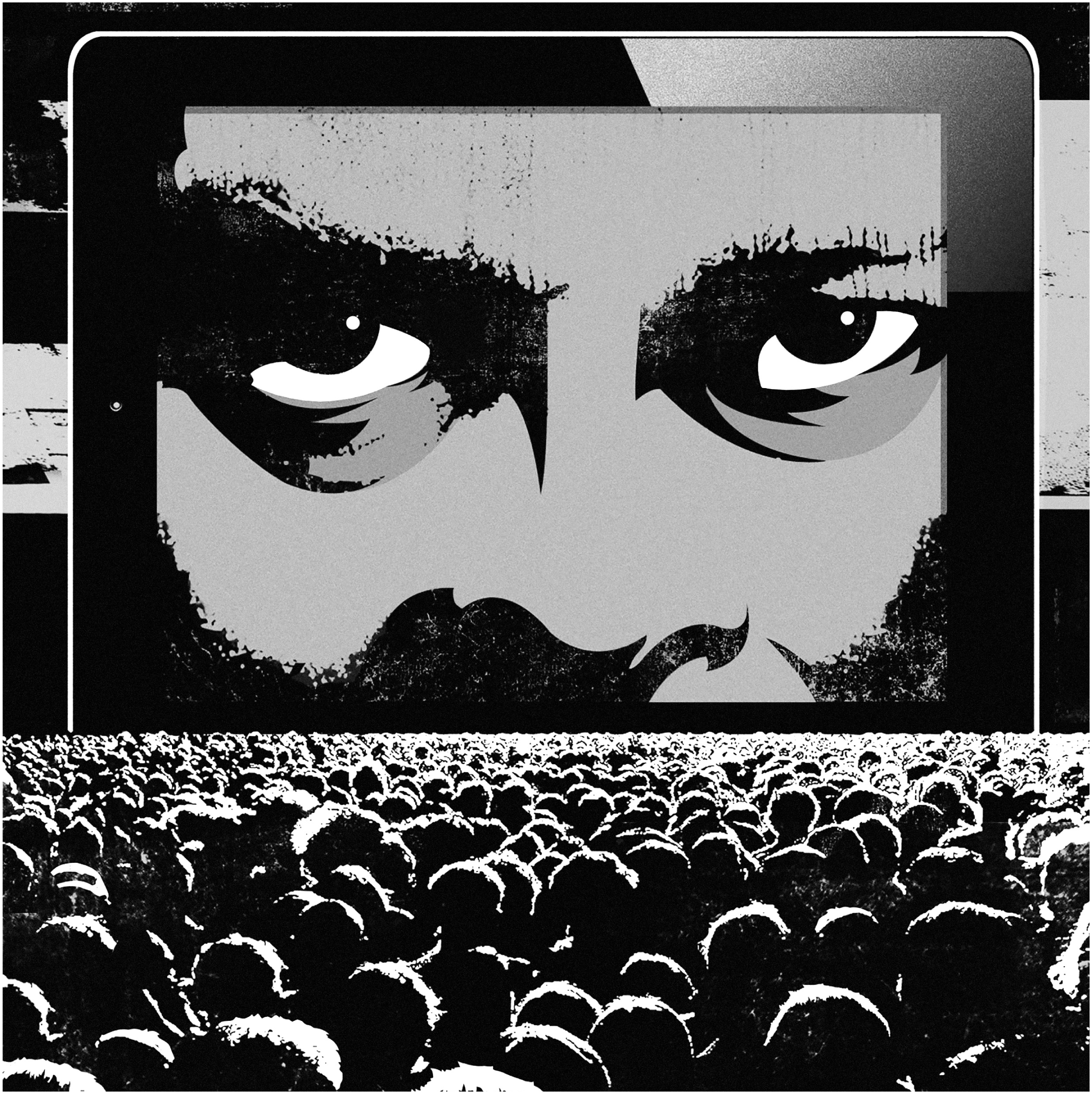
CREDIT: Taylor Callery/Ikon Images
This surveillance is being carried out by agencies such as the NSA and GCHQ, but the involvement of the private sector cannot be ignored. A Bloomberg report estimated 70% of the 2013 US intelligence budget was spent with private companies. The Privacy International report investigated 528 of these surveillance technology providers and found that the USA and UK are the leading countries where such technologies are developed.
While a degree of anonymity still exists in the UK and USA, among others, it is not certain how long this will remain the case. Elsewhere in the world, states act with impunity and it is technology companies from those two countries that enable them. The anonymity of the crowd may well be dead.