




Abstract
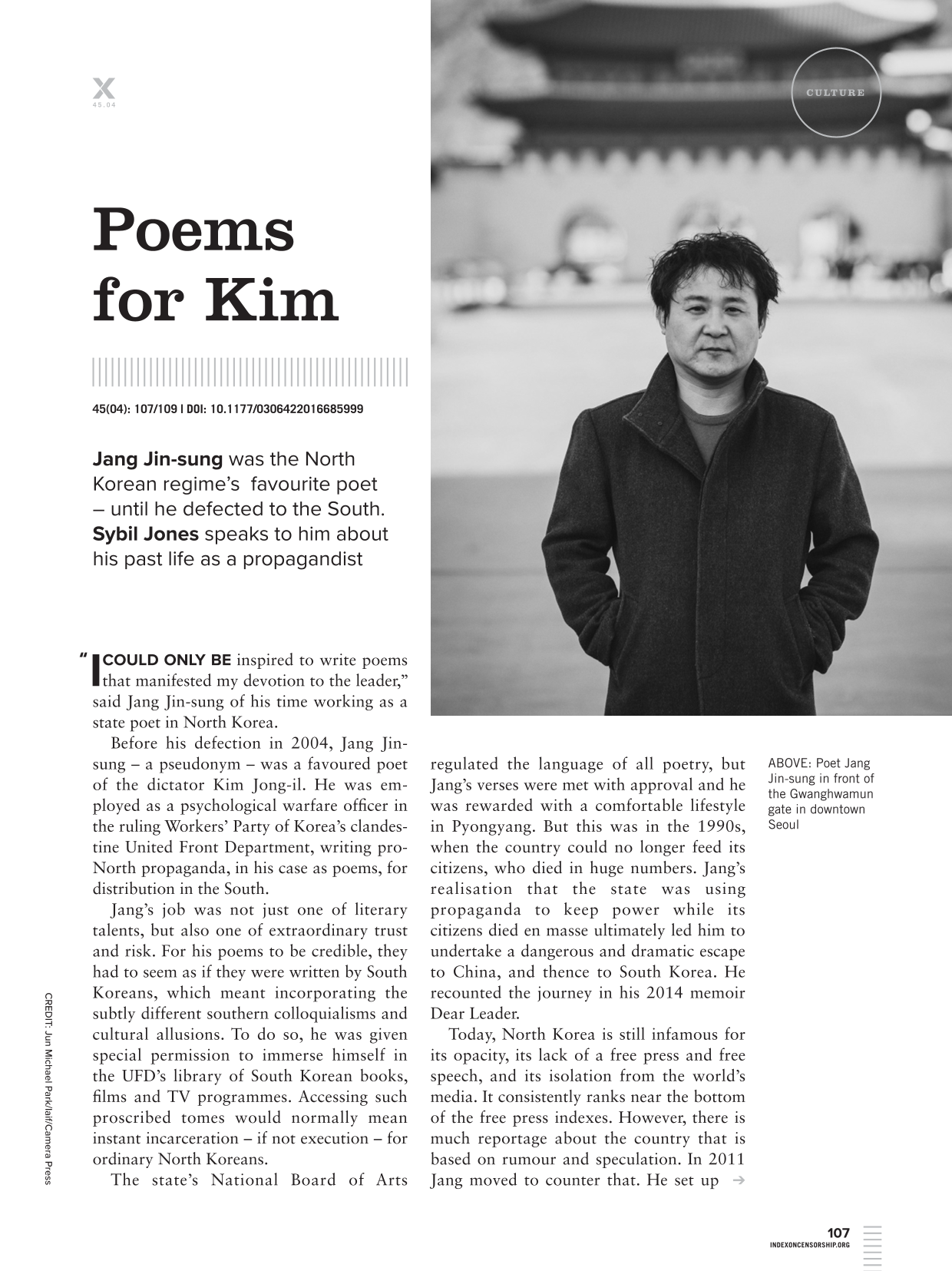
Before his defection in 2004, Jang Jin-sung – a pseudonym – was a favoured poet of the dictator Kim Jong-il. He was employed as a psychological warfare officer in the ruling Workers’ Party of Korea’s clandestine United Front Department, writing pro-North propaganda, in his case as poems, for distribution in the South.
Jang’s job was not just one of literary talents, but also one of extraordinary trust and risk. For his poems to be credible, they had to seem as if they were written by South Koreans, which meant incorporating the subtly different southern colloquialisms and cultural allusions. To do so, he was given special permission to immerse himself in the UFD’s library of South Korean books, films and TV programmes. Accessing such proscribed tomes would normally mean instant incarceration – if not execution – for ordinary North Koreans.
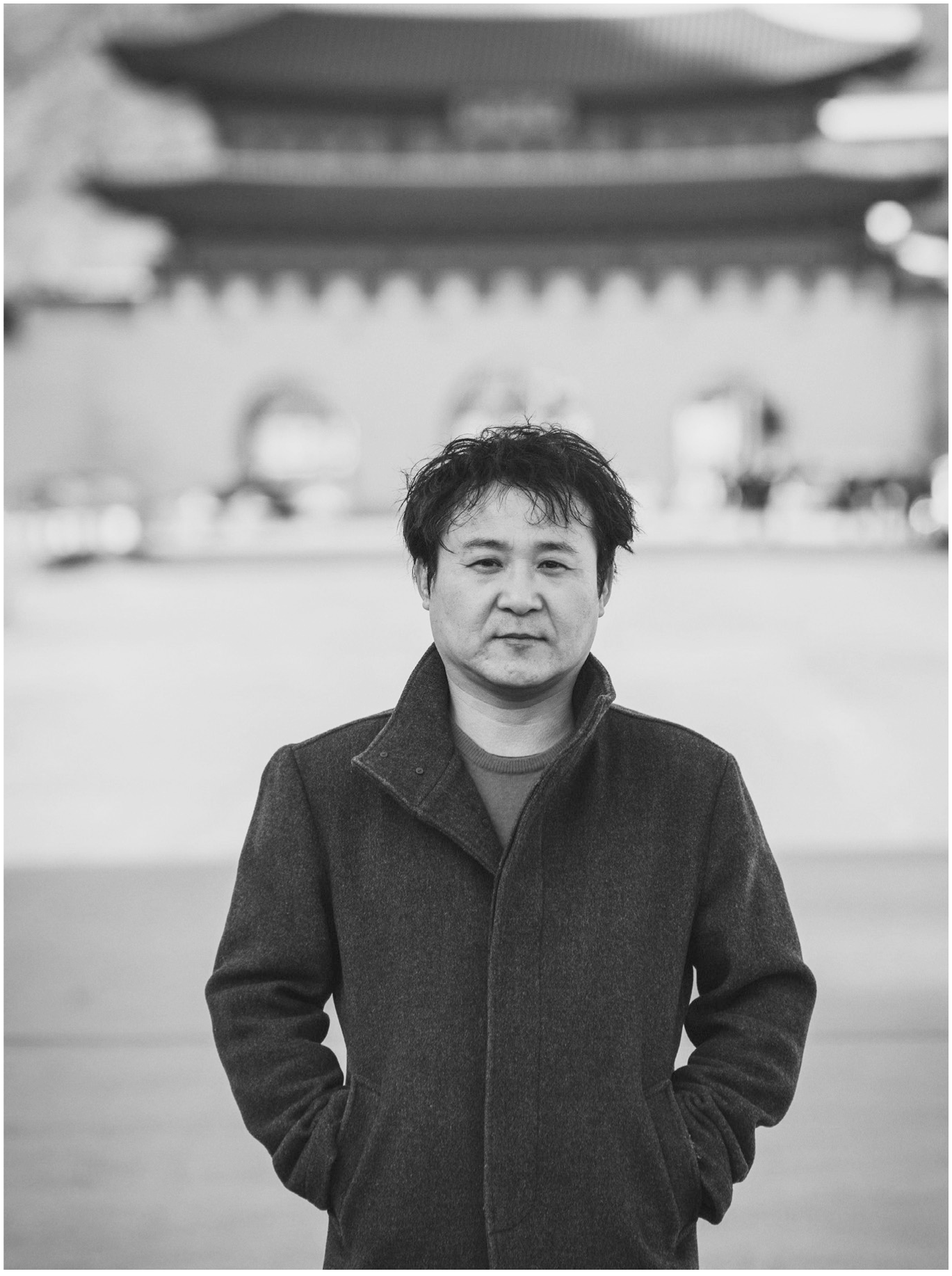
Poet Jang Jin-sung in front of the Gwanghwamun gate in downtown Seoul
CREDIT: Jun Michael Park/laif/Camera Press
The state’s National Board of Arts regulated the language of all poetry, but Jang’s verses were met with approval and he was rewarded with a comfortable lifestyle in Pyongyang. But this was in the 1990s, when the country could no longer feed its citizens, who died in huge numbers. Jang’s realisation that the state was using propaganda to keep power while its citizens died en masse ultimately led him to undertake a dangerous and dramatic escape to China, and thence to South Korea. He recounted the journey in his 2014 memoir Dear Leader.
Today, North Korea is still infamous for its opacity, its lack of a free press and free speech, and its isolation from the world’s media. It consistently ranks near the bottom of the free press indexes. However, there is much reportage about the country that is based on rumour and speculation. In 2011 Jang moved to counter that. He set up New Focus International, a news website that publishes analyses, first-hand insights and almost real-time news from networks of North Koreans both in and out of the country, while organising conferences and advising governments on North Korea.
He told Index: “Restrictions on nationalisms, inspiration, and language do not exist in the free world I live in now.” But he lamented: “I keep telling myself inwardly: ‘I mustn’t be happy.’ I feel guilty that I live a better life than the people I left behind in North Korea. That must explain why the main subjects, and who I wrote for in my poetry, are North Korea and its people.” The first three new poems, below, about life in North Korea, were written exclusively for Index by Jang. The fourth poem, Ode to the Smiling Sun, was written by Jang when he was still working in North Korea. Smiling Sun was the name given to former Supreme Leader Kim Il-sung after his death in 1994.
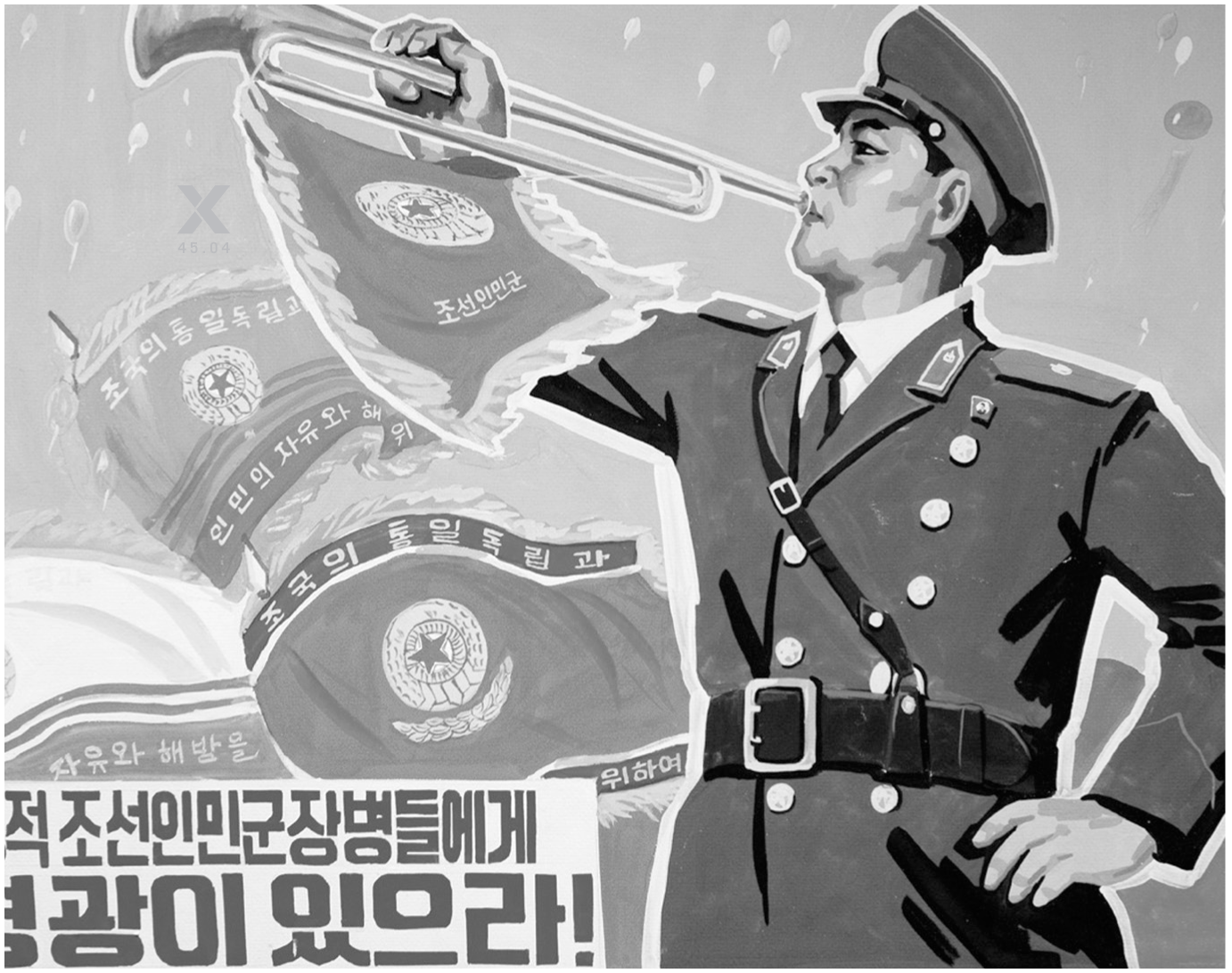
A North Korean propaganda poster from 2009 glorifying the country’s armed forces
Credit: akg-images / Pictures From History
It drew controversy for associating “tears” and sadness with Kim Il-sung. Jang justified this as a new tactic to show the leader’s sacrifice for his people; how he had suppressed his own tears and continually smiled for the good of the nation. In Dear Leader Jang recalled how a colleague had reminded Jang that a former state poet had once employed the word “dew” to refer euphemistically to the leader’s tears and was “banished to the countryside for 10 years”. ®
Spoons
Perhaps it was because there was no rice, That no spoons could be found in the house. Even the spoons had been sold To put food on the table of ancestral rites. Just as all wish for happiness, Drinking watery rice gruel The family of five, in that house Had a single wish That if ever so slightly the burden of poverty could be eased The family jewels could one day amount to Not one spoon, but daresay f i v e
If it were rice
The child, who only knew grass-green gruel Given white rice on their birthday, Cried out and kicked in protest Clinging to my heart, pleading, for rice.
Cold rice
How or where he had managed, A dollop of cold rice Was pushed back towards his wife As the husband’s kind voice reassured her - I ate on the way. Working in the fields all day, Her in-laws returned from the mountains A dollop of cold rice Was pushed towards them, whilst feigning satiety – This leftover rice is all we could offer. Pregnant newcomer Depriving her seemed like a sin incapable of atonement That made the elderly couple’s soul shrivel They clasped their hands around it, like treasure – This will last us till morning. Even after that day That cold rice went untouched.
Ode to the Smiling Sun
All the tears that were to have been shed by his people, our Supreme Leader took on himself alone to shed. What smiles he had, he gave them all so that his people might smile. When the Supreme Leader gave the people his gift of smiling, it manifested as his Love; when he sowed his gift on our lands, it manifested as rays of the Sun; and as he left his gift for history, it manifested as Immortal Life.