




Abstract

Four decades after
Author Haroldo Conti who vanished after he was taken into police custody
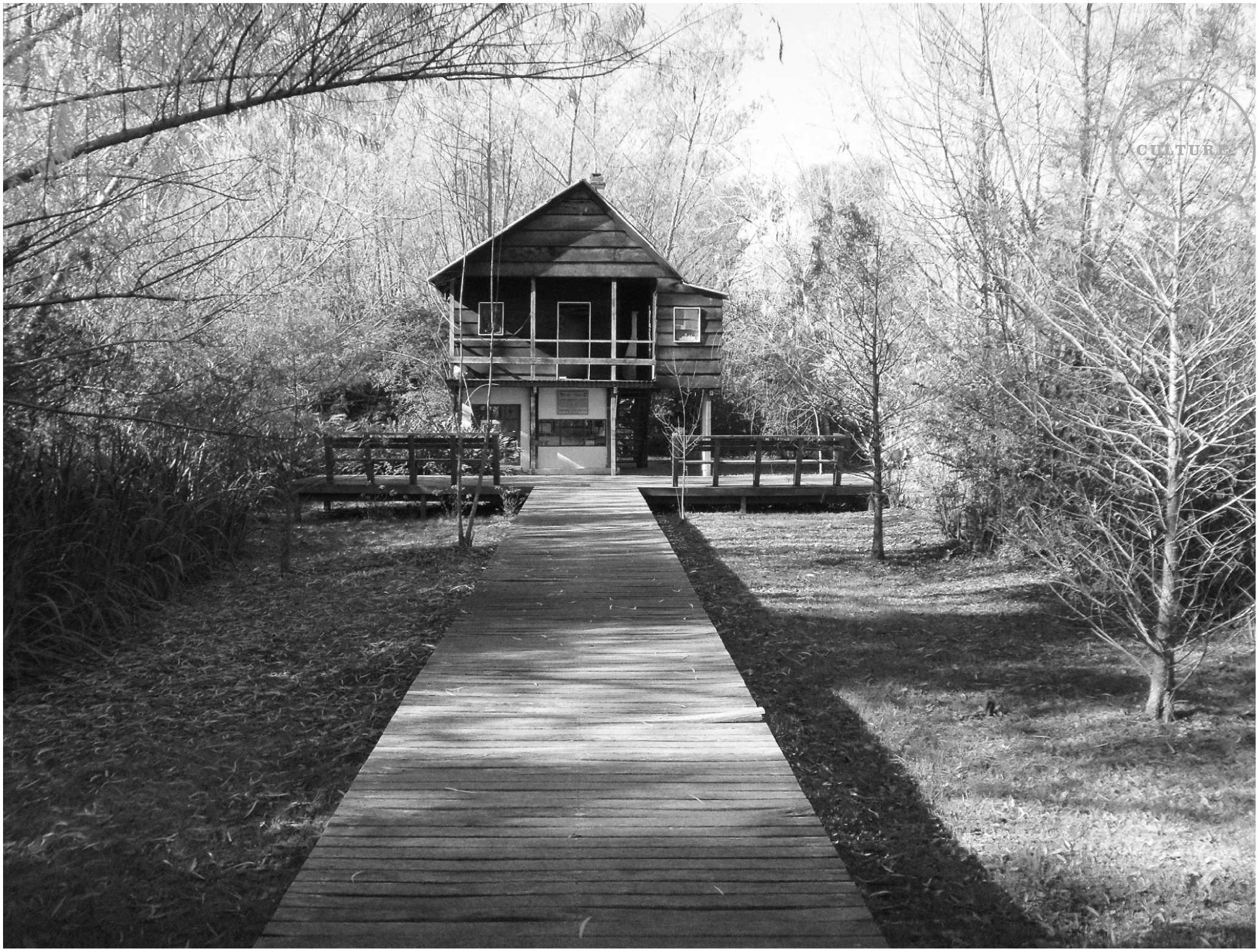
CREDIT: (left) Conti family archive; (right) Museo de la Reconquista
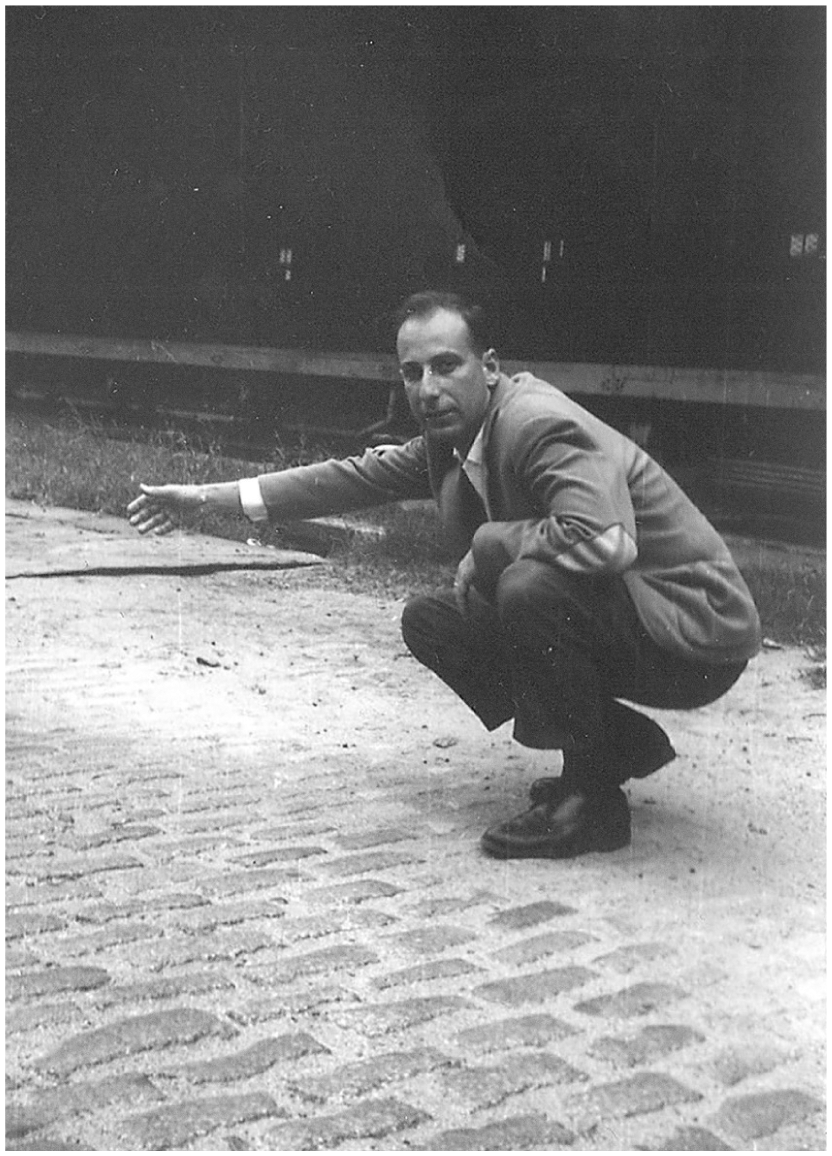
Conti decided against exile, but in the early hours of 5 May 1976, he was arrested at his apartment. Later a witness described him under detention in a police barracks, in a pitiful condition, incontinent and unable to talk or eat, having been severely tortured.
Conti’s novels and stories cannot be called political if this is taken to mean that their principal subject matter is a depiction of political activity, nor in the sense of arguing for writing as a militant act, but there are later stories which quietly reflect the effect of the author’s two visits to Cuba in the early 1970s to sit on the jury of the literary prize he later won.
The participation of ordinary folk in the formal institutions of Cuban society much impressed Conti, and he publicly announced himself a politically committed writer after his second visit to the island. He decided in his next major work to take on a grander theme: America – stretching in the Hispanic mind from Alaska to Tierra del Fuego. This became the subject matter of Mascaró.
The Haroldo Conti Museum on the Tigre delta. The little wooden house where Conti would go to write is as he left it, with a desk beside the river. Many visitors still come to see where the author worked
His final novel avoided direct political references in its description of a travelling circus, but Conti’s prologue might be taken to indicate an allegorical relationship with events in his homeland, referring as it does to “this land of struggle and hope called America”.
Certainly the censors took exception to Mascaró after its publication: despite acknowledging the absence in it of any directly declared political position, the censors’ report draws the conclusion that Conti’s novel “fosters the diffusion of ideologies, doctrines or political, economic or social systems that are Marxist, intending to abolish the principles held by our National Constitution”.
But Conti’s political instinct was principally an expression of his interest in ordinary folk: in men as individuals, not man in the abstract. In an interview with writer Rodolfo Benasso in 1969, Conti argued against “the pretension of a novel that embraces and exhausts once and for all some supposed national reality”.
In the story Muerte de un hermano, published for the first time in English, overleaf, as A Brother’s Death, we meet one of the many solitary men who wander through Conti’s work, characters enriched by the author’s own experience of countless hours spent in the company of ordinary men.
“Between literature and life,” he said to Benasso, “I choose life”; and here Conti breathes the richness of a human life even into the story of a death. ®
A Brother’s Death
To my mother
He didn’t even feel the blow. The old chap only felt a tender numbness climbing from his feet. Several voices rose towards the middle of the street, and after that they gently moved away.
The man came close, emerging from the mist that was around him, and bent his body over him.
“Juan …”
The man sent out a smile.
“Juan!”
“How are you, brother?”
“Where did you come from, Juan?”
He pointed down towards him with the smile still on his face.
“Didn’t I tell you I’d be back one day?”
“Yes … That’s what you said … Of course!”
The mist began to fluctuate behind the figure’s shoulder. There were stick-like shadows coming close, but when he tried to make out who they were they compressed, before drawing into a hem that formed a circle all around him.
“Juan, my little brother …”
He moved his head from side to side.
“So much time has passed … You’ve no idea how long it’s been …”
“I know.”
“No, no you don’t! … Because for you the time is something else. I’m talking about my time, lad … I waited for you, sure I did … I said to all these people,” and he tried to raise his hand to them, “these people …”
His eyes drew narrow and he looked at him determinedly. No doubt that it was him. It was the same face, hard and honest.
“I had my doubts as well, you know,” he nodded, speaking low.
And his voice broke in his throat.
“Well, it’s understandable.”
“I suppose it is at that …”
“Deep down you knew I’d come, though. Isn’t that the truth, my brother?”
He pointed at him once again; an old flame rose inside him.
“Of course! Yes of course!”
He tried to raise his body and to hug the little brother who had finally returned, but found his legs would not allow him to. He couldn’t even feel them, now. He let his body go on to the surface of the road, with just his hands to hold him up, to keep that lovely face in view.
“And how did you get on there, lad?” he asked him with a smile.
He tried to seem quite natural. In truth he felt much better than he had done in a long time, the old body wasn’t heavy now, it didn’t weigh a thing.
“Fine … Fine.”
“Honestly! This Juan! … Is that all you’ve got to say?”
“I never was a chatterbox.”
“No, you never were … Barely said more than the old man … Only two or three words more.”
He smiled then at the memory of their father and of Juan, that old Juan quite like this one. Perhaps the same completely.
“Your singing was spot on, though. Do you still keep up that lovely voice?”
“Yes, I think I do.”
“And do you sing as well?”
“Still. A man who goes alone like me, he’s always singing something.”
“Many people are alone here too, if this is what you’re saying, but they hardly ever sing.” At this he paused because a feeling of great weariness came over him.
“I thought of you at times and sang. In truth it was the only way I found I could remember.” He lowered his head towards the road and added in a murmur:
“Nobody looks kindly on an old man who just sings because … I did my best to tell them … tried … but you know how these people are. They come and go all day … I think the corporal understood me once. He smiled at me at least, and said: Go on, old chap. Sing it again.”
He lifted up his head once more.
“Juan, my little brother, I have also walked a long way.”
And a thick tear rolled right down his cheek.
Juan reached his hand out silently and patted him softly, though the hand was broad and powerful.
“I didn’t think you’d come, now. That’s the truth of it. Forgive me, but it’s what I came to think.”
“What does it matter now? I’ve come, and now I’m going to take you.”
“That’s exactly what I said, Juan! Say it again now, Juan, I want the world to hear you say it!”
“That’s right …”
“He’ll come, I always said, one day my big brother Juan will come, and then we’ll be together … What is it, Juan? Juan!”
“I’m here, lad. Don’t you worry.”
“I thought you’d gone.”
“No need to worry.”
He reached and put his hand back on his shoulder once again.
This was how Juan was. You didn’t have to spell things out for him. He understood and took it in. Everything. At once. The big hand on his shoulder sent a current through him somehow. He was something like a tree that has its roots firm in the ground and all the sounds of earth within it, and it holds the birds and skies as well.
Many years ago and with this same hand on his shoulder, he had said almost these very words. “Don’t worry. I’ll come back for you. One day I’ll come back.” They had been walking on the dirt road where the countryside begins; it was the morning of an autumn day. Juan had wanted no one else but him to go along. They’d walked in silence through the country and he hadn’t looked back even once. And then they’d come out on the road – the morning had now dawned – and when the car came into view he’d put his hand on to his shoulder and he’d said that line of words. And then he’d disappeared around a bend.
He’d asked himself, and more than once, where the thought had come from. He was a man who worked the land, just like their father did before him. Perhaps it was the road close by, that stripe of greyish-brown that came and went at the horizon and on which from time to time a sleepy car would roll along, or else the smaller, slower figure of some wanderer who raised his hand to send a nod towards them before he vanished in the bend with all the road for him alone, from one end to the other, and the road you couldn’t see as well: the world, in other words.
There was in him, in any case, something not in others. In that hard and trusting face there was some mark or sign that lit up when he looked along the road, or when he simply used to mention it. And then one day Juan started out.
Some time after that, the road had taken off their mother in a carriage made for sorrows.
And then there came the difficult years. The land turned hard and sullen and their father became curt and gruff. He went off in the same hearse as the one that took their mother in the winter of ‘37.
Until one August morning he had gone out on the road as well, and waited for the car and gone. The house had vanished round the bend and disappeared, for ever.
Most of life came after this, but made up of a line of years which hadn’t left him memories, and scarcely any year that was more wretched than another. Ten years poor and miserable. Poverty and hard times and the oldness of the city.
Perhaps in truth he’d been a little pleased to feel this poverty, once he had accepted it. No one understands this. But he was happy at the end of things, or almost, in his way. The only thing to worry about was being at the hostel door at six o’clock each evening to make sure no tramp would pinch the bed that stood beside the window. The white, enormous buildings seen from here and at this hour appeared to float there in the kindly light. And then they slowly darkened. Then the lights would roam the night at heights that left one feeling puzzled, and the city disappeared somehow, and he thought about the distant house, the country, young and ample.
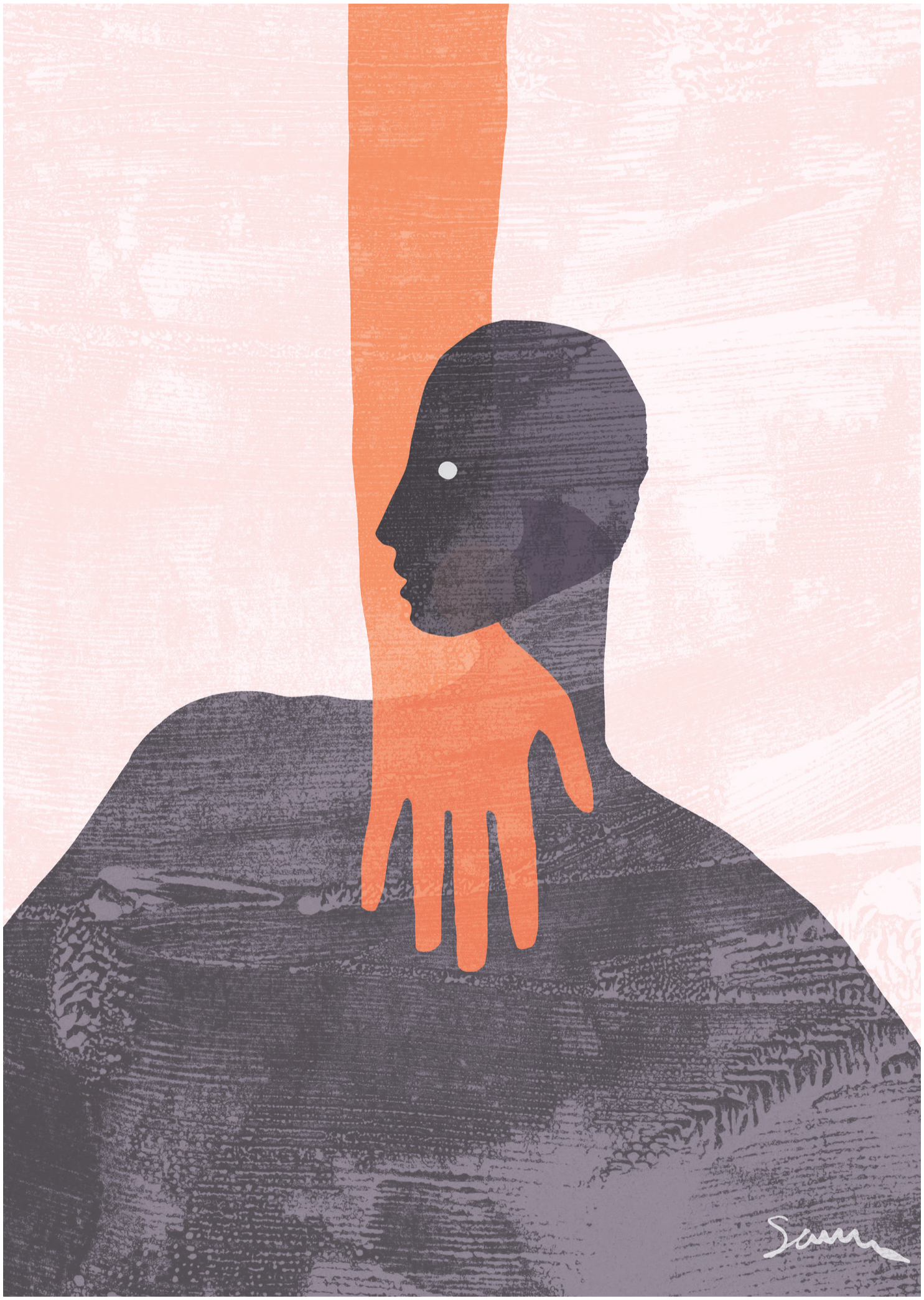
CREDIT: Sam Darlow
Then he saw the road again and heard the words Juan said to him. He didn’t always manage to remember Juan completely as for this he needed help from things belonging more to those days, like the songs and gleaming signals. His brother had grown inside him, though, was something more alive than him regardless of his absence. There was a time and place, precisely when the old folk and the vagrants came to gather at the hostel where they waited for the doors to open. Then, and who knows why it was, but Juan was wholly there, or he was very nearly whole and in the midst of this misfortune. And this at least propelled him to the bed next to the window.
Except the image had grown paler lately, even not appeared some days. And if he got the bed then this was not due to his brother but because there wasn’t anyone now who wanted to compete for it.
In truth, it was some time now since the matter had stopped interesting him. No more nor less than that. The years had brought him down at last. Inside he was dried up and now consented to be blown round like an old, discarded shell.
He looked at Juan and tried to smile.
“Things blow you back and forward like an old, discarded shell. Just that …”
“What is it you’re telling me?”
“I’m wondering how it happened, all this.”
“Why is that important, lad?”
“It isn’t, of course, at all. I’m only saying that things happened without any help from me.” His voice was tamed and hurting.
“Yes, but that’s the way things are.”
“Not for you, not you my lad … You leaped onto life and then you tamed it like you’d tame a colt. Isn’t that the truth, Juan?”
“No, it wasn’t like that. Well, I can’t say how it really was. The thing is that I never stop to ask myself these questions … I take things as they come to me.”
“That’s it, lad. That’s right. You closed your hand into a fist and shoved it deep into your pocket! Juan, are you still there, Juan?”
The figure seemed to drift and sway.
“I’m here.”
“Please could you take my hand?”
“Of course!”
His face had almost gone, now. But he felt the hard and roughened hand.
He didn’t know what time it was, but even so this silence in a city street seemed strange. “What’s happened to all the people?”
He had asked himself the question without really being curious, as he fought to hold his head up when it seemed to be escaping him.
“It must be very late.”
The figure swayed towards him now, and with his final thread of voice he said, still:
“Are we going, Juan?”
The voice he heard was very close to him.
“When you want, my lad.”
“Then, now …”
From the archive
Taken and Killed
Haroldo Conti’s disappearance was first reported in the September 1976 edition of Index on Censorship magazine which recounted how military police forced their way into his home, beat him up and dragged him into a waiting car. Index described his abduction as an attempt by the Argentine military government to create an “atmosphere of terror.” In 1981, celebrated Colombian author Gabriel Garcia Marquez confirmed in an article for Index journalists had been told of Conti’s death. He recalled how his friend had been reluctant to leave his home country despite receiving many threats. Marquez described Conti as one of Argentina’s greatest writers, and as a man who was “never ashamed of his great love for life”.
Both articles can be found in the Index archive: ioc.sagepub.com