




Abstract
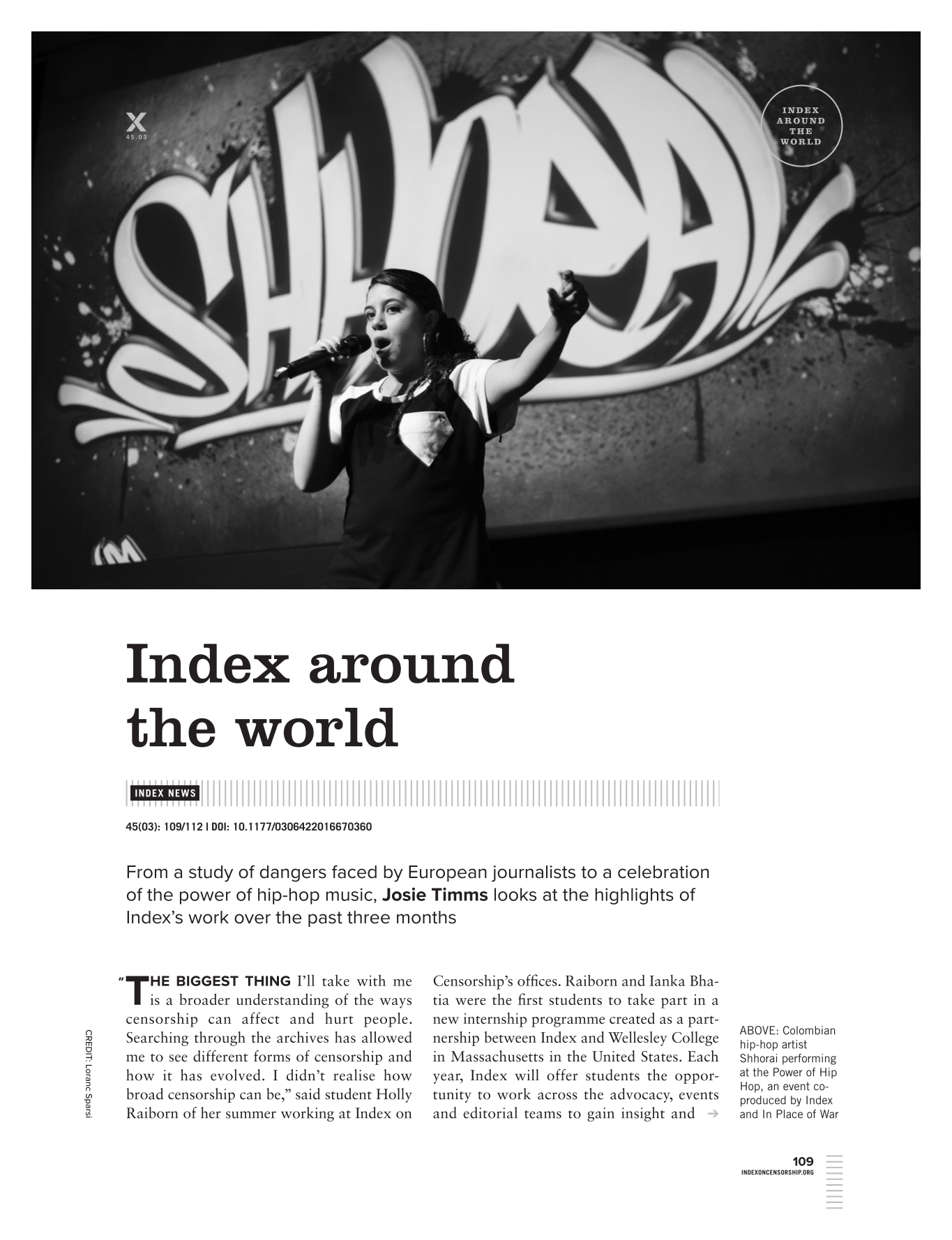
Colombian hip-hop artist Shhorai performing at the Power of Hip Hop, an event co-produced by Index and In Place of War
CREDIT: Loranc Sparsi
From a study of dangers faced by European journalists to a celebration of the power of hip-hop music,
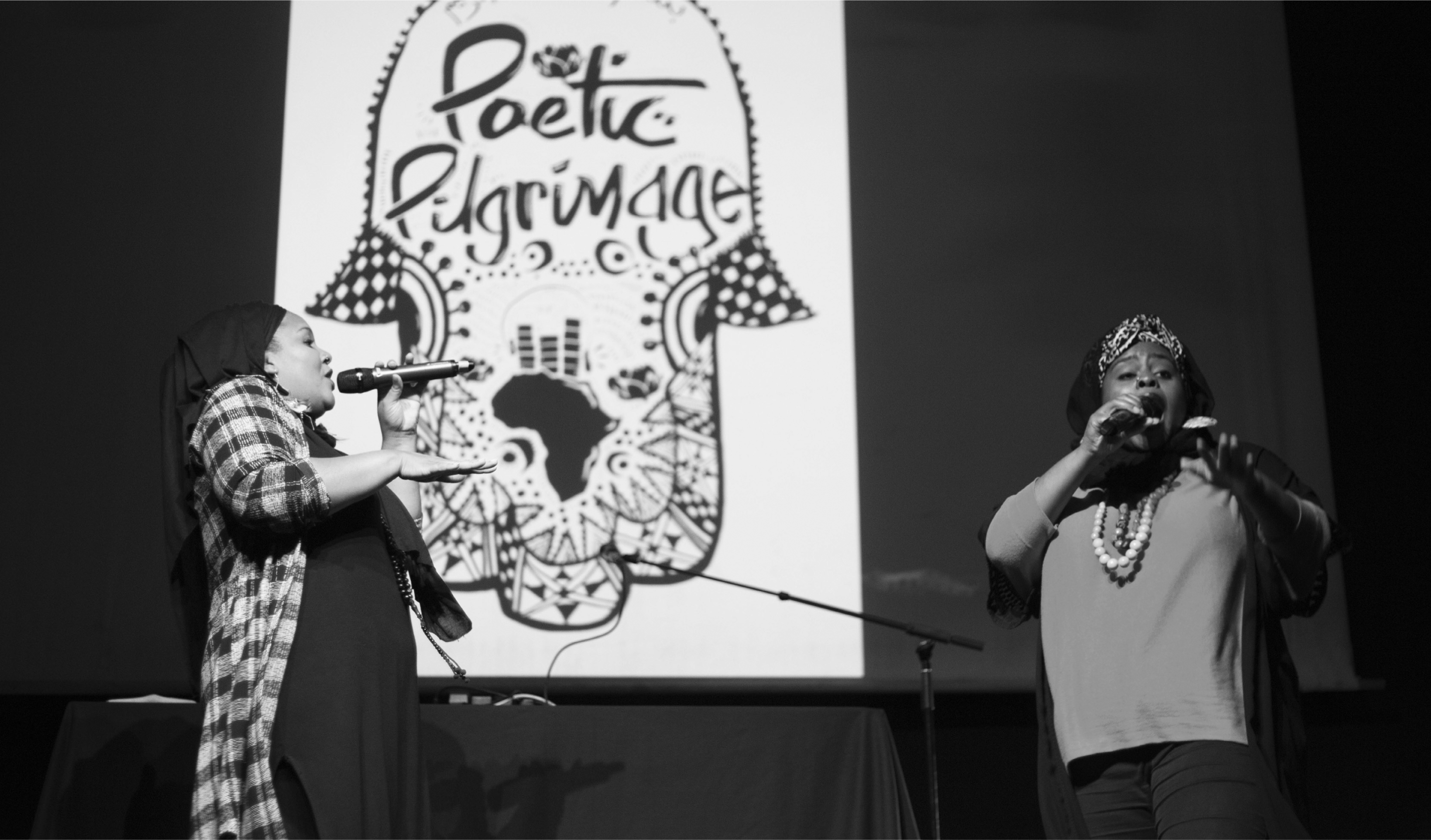
The Power of Hip Hop staged performances and talks from a number of hip hop artists, including Poetic Pilgrimage
CREDIT: Loranc Sparsi
As part of their internships Bhatia and Raiborn completed various tasks, including working on the Mapping Media Freedom project, writing and editing reports, and producing articles for the website. Raiborn collated a special reading list of articles published in Index on Censorship magazine during the South African apartheid years; while Bhatia researched rising censorship in Turkey in the wake of the recently attempted coup.
The two students also both worked closely with the events team to help organise one of the big occasions of the summer: the launch of the 250th issue of Index on Censorship magazine. In July, supporters and friends of Index celebrated 44 years of the magazine with a party at Magculture, a specialist magazine shop in London. Highlights included performances by actor and theatre director Simon Callow, Norwegian musician Moddi and poet Jemima Foxtrot. Louis Blom-Cooper QC, one of Index’s earliest supporters, spoke about censorship today.
On their return home to the US, both students will continue their positions on the student advisory board on the Wellesley College Freedom Project, which is dedicated to exploring and debating the idea of freedom.
Index has also continued to work on its UK youth project, What a Liberty! Members presented their Magna Carta 2.0, a modern-day charter covering issues relevant to young people today, at The Collection Museum in Lincoln in July. During the project the group haveattended workshops for media training and film-making. The charter was presented to pupils from a Lincoln primary school, sixth-form students and leaders from arts, heritage and education organisations from across the city.
Speaking to school pupils in Lincoln was a highlight for What a Liberty! member Darshan Leslie, who told Index: “It was clear that after showing them the video we produced, they immediately grasped the key messages that we were hoping to share; That it doesn’t matter what your age or race or gender is, we are all equal and that this needs to be reinforced much more rigorously.”
It is not only young people the project hopes to spread their message to, they have a much wider audience in mind. Leslie told Index: “We also aim to reach out beyond the younger generation through our use of social media and we hope that within a year we will have expanded our membership and will have the support of prominent figures. So this is very much an evolving project which has much more to deliver.”
The Magna Carta 2.0 film will be featured at the Parallax Film Festival in Lincoln during November. They have also been invited to present their project at two schools in London and have been featured in the Lincolnshire Echo. To find out more about future screenings, visit whataliberty.co.uk.
Also in July, Index teamed up with In Place of War, a programme that supports artists living in areas affected by war and conflict, to co-produce The Power of Hip Hop. The two-day event, held at London’s Rich Mix arts centre, explored hip hop’s influence in today’s society.
Sophia Smith-Galer, a member of the Index on Censorship youth advisory board, was among the attendees. “I was a fly on the wall, documenting The Power of Hip Hop as a whole and even getting a chance to interview some of the performers,” she said. “I really liked the mix of academia and performance; it gave a genre often regarded as ‘guns and girls’, as Rodney P [UK hip-hop artist] said in his talk, the intellectual clout that it deserves.”
Hearing Colombian rapper Shhoraiperform was a particular highlight for Smith-Galer, who said The Power of Hip Hop showed how the genre has a worldwide reach, and often gives a voice to marginalised groups.
She told Index: “What was really unique about The Power of Hip Hop was the showcasing of British artists alongside international ones. For me, that is the sort of initiative we need more of to bust the stereotypes around music that comes from regions we might not be so familiar with in the UK and understanding that all hip-hop artists follow a similar, provocative narrative.
“Bringing them all together in one space showed that hip hop isn’t just some disparate set of unconnected or unknown artists; there is a whole army of them, in a global hip hop community, and they want to be heard.”
Smith-Galer produced a podcast of the event for the Index website, featuring a number of artists who performed, including Poetic Pilgrimage (UK) and Zambezi News (Zimbabwe).
Along with Smith-Galer, seven other young people formed the new intake of the Index on Censorship youth advisory board, serving from July to December. The members of the board, from countries including Hungary, Spain, Germany and the USA, will meet once a month for an online meeting and have the opportunity to write for the website and attend Index events.
Index also took to the stage at Wilderness, a UK festival, in August to explore what you can and can’t say in today’s society with a taboo-filled game show. Index’s events manager David Heinemann and deputy magazine editor Vicky Baker were joined by cartoonist Martin Rowson, comedian Athena Kugblenu, director Nadia Latif and journalist Ian Dunt to debate what were the biggest taboos today.
Using its specially made taboo-o-meter, Index measured the audience’s boos to determine which of the topics discussed, including religion, death and the prime minister cavorting with a pig’s head, they considered to be taboo. Discussing your own salary did not appear to be so, with nearly all of the audience getting to their feet when asked to shout out their yearly wage.
In July, the third Council of Europe meeting – Journalists at Risk: Part of the Job? – was attended by Index’s senior advocacy officer, Melody Patry. Participants discussed a survey that had been circulated to journalists across Council of Europe member states to gather data about unwarranted interference, fear and self-censorship in journalism. The full findings of the survey will be released in a report in April 2017.
Patry said: “Once we have analysed all the data and gained a full picture of the threats, the next step will be to look at the environment in which journalists are working and see what we can do to improve their situation.”
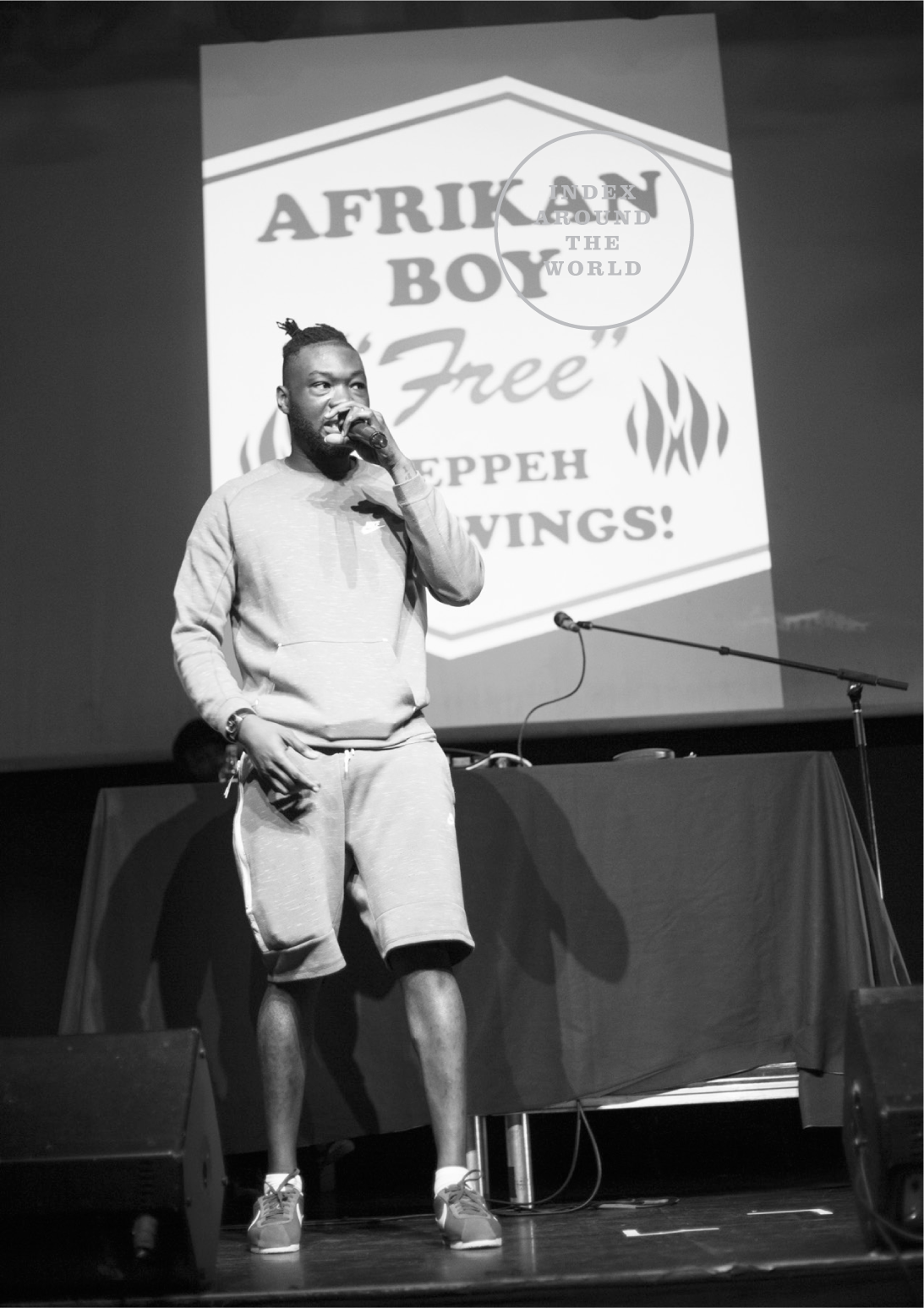
UK grime artist Afrikan Boy also performed at the Power of Hip Hop
CREDIT: Loranc Sparsi
The latest quarterly report of Index’s Mapping Media Freedom project, which collects and verifies attacks on journalists, has revealed that across Europe media workers have recently faced an increase in physical assaults. Two murders, 60 incidents of physical assault, 41 incidents of media professionals being detained, 45 criminal charges and civil lawsuits, and 80 verified reports of intimidation were recorded between the months of April and June.
Hannah Machlin, MMF projectofficer, said: “Violence against journalists has increased overall, but particularly in France during recent protests against new labour laws. Police and demonstrators have been physically harassing journalists, and preventing them from reporting, which is extremely worrying.”