




Abstract

You might not expect an 87-year-old – the winner of multiple awards and a worldwide avant-garde hero for his 1970s cult hits El Topo and The Holy Mountain – to be publically “begging”, as he called it. But for Jodorowsky it was preferable to the alternative: complying to the demands of money-hungry commercial studios. In the video he posted online, he promised to keep Poesía Sin Fin true to its roots as an unrestrained art project, “without talking guns, kicks in the head, collapsing buildings, killer robots or super men who have come to show us this is the country that will save the world.”
The impassioned plea paid off. The September 2015 campaign was backed by 10,000 donors, raising US$328,102 and covering the previously prohibitive post-production costs.
The film, released this year, is the second part of his autobiographical series. The first was 2013’s La Danza de la Realidad (The Dance of Reality), which told of his childhood living with a Stalinist father who fantasised about assassinating Chilean dictator General Carlos Ibáñez del Campo. This latest instalment follows Jodorowsky’s teenage years in Santiago. Typical Jodorowsky touches include an actress playing his mother (Pamela Flores) who sings every line as an opera and, in a Freudian twist, later reappears playing his girlfriend, the poet Stella Díaz Varín.
The film focuses on Jodorowsky’s first forays into writing poetry. He was 17 when he discovered a typewriter and started to write during the Second World War. Despite being born to Jewish-Ukrainian parents, he felt far from danger, protected by the Andes on one side and the Pacific Ocean on the other. It tells how this era brought friendships with poets such as Gabriela Mistral and Pablo Neruda, who both later won Nobel prizes for literature. “Drunks formed choruses and recited Neruda. Poetry was respected,” Jodorowsky told Vice.com. “In Chile, to be a poet was to have a profession: you were a poet. You didn’t need to do anything else.”
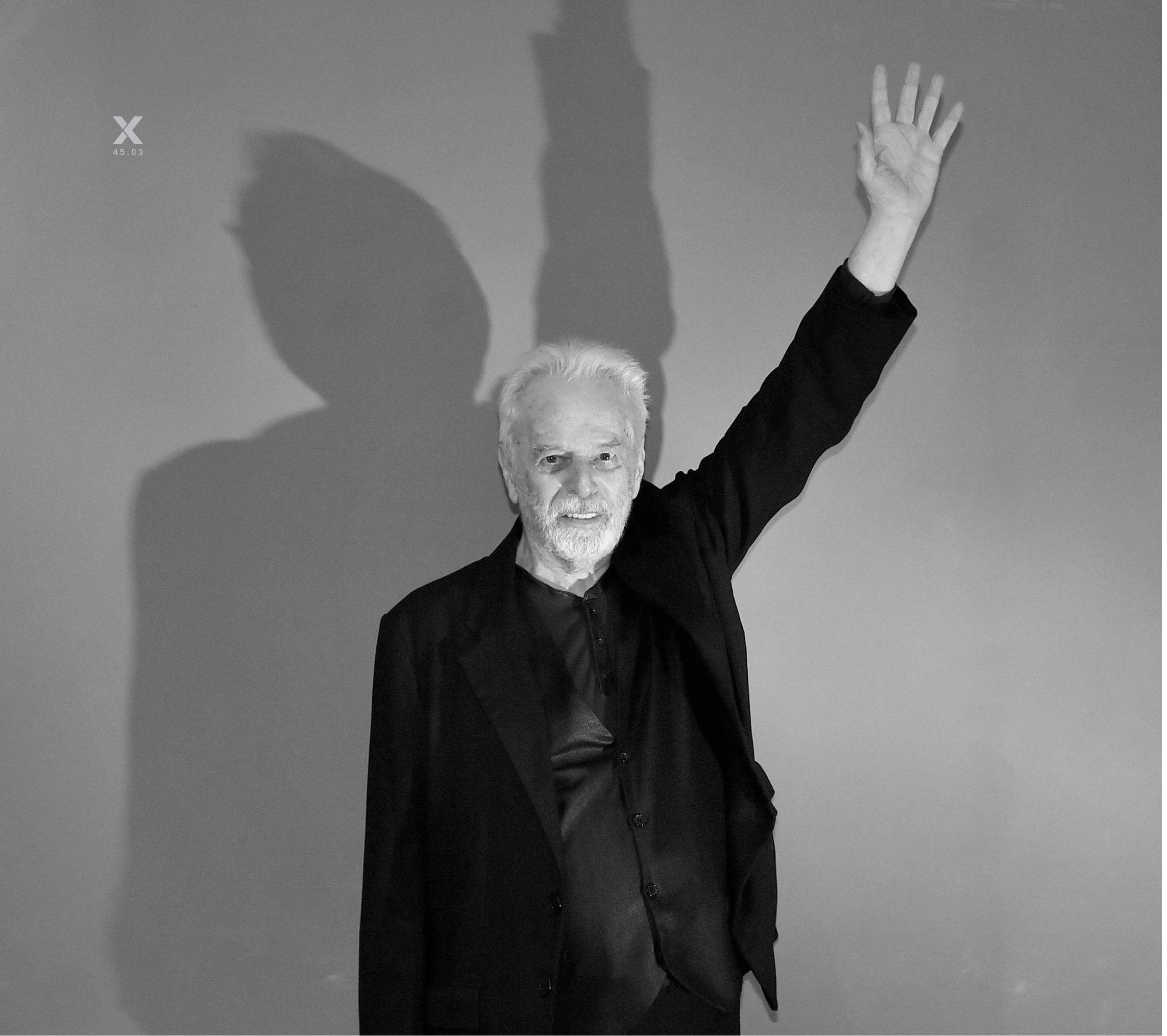
Chilean-French filmmaker Alejandro Jodorowsky at the 69th Cannes Film Festival in France on 15 May 2016
CREDIT: Loic Venance / AFP / Getty images
Jodorowsky has had plenty of brushes with the censors in his long career. Full frontal nudity has been either covered up or cut from his films and from his acclaimed comic book series, The Incal. And when his early plays were censored by the government in Mexico, where he also spent a lot of time, he reacted by co-founding Panic Movement, an uninhibited performance art group in Paris. Having lived in France for much of his life, he has also spoken of losing his friend, the French cartoonist Georges Wolinski, when terrorists stormed the Charlie Hebdo office in Paris. “Wolinsky. Duele” (“Wolinsky. It hurts”), he tweeted on the day the artist was murdered in January 2015.
Jodorowsky, once a man with a reclusive reputation who had a two-decade gap from filmmaking, now tweets every day to over a million followers. “Twitter is the literature of our 21st century,” he has said. “Better than Haiku. I do it every day now.”
The first English translation of his poem What One Must Not Silence is published opposite by Index on Censorship. It was inspired by a quote from Austrian-British philosopher Ludwig Wittgenstein, “Whereof one cannot speak, thereof one must be silent.” Jodorowsky argues the opposite: one must speak.
When asked about his inspiration for the poem, Jodorowsky gave Index an equally poetic statement, like a cryptic inner dialogue:
“What compelled you to write What One Must Not Silence?
Reason asks questions, the heart gives the answer. What is the essential question?
It doesn’t begin, it doesn’t end. What is it?
This.
What is ‘this’?
Life.
And what is life?
Reason asks questions: words. The heart gives the answer: heartbeats.”
What one must not silence
Obliged to live every moment as though on the way back
from a voyage on which treasure was never discovered,
returning to the present, back home with empty hands,
as if it all was still left to do,
as if pausing was no longer being,
and the only way to live was to create utopias,
Wittgenstein, in his Tractatus Logico-Philosophicus, said:
“Whereof one cannot speak, thereof one must be silent.”
Yet it is precisely that which cannot be spoken
which must be said aloud,
dipping one’s tongue into the invisible changes words
into a mirror,
to set sail in boats we know are without a crew,
taking no further interest in the enigma of what or who
transformed them into phantoms,
an untouchable yet dense presence which we have to
approach like a blind man
within this universe where all is a miracle, or an approximation
made of wax!
In the steps of a blind man plunging his white stick
into the ubiquitous centre,
where the eternal origin of life
bubbles forth.
We can say nothing of this, so all the more reason why in the darkness
he should be our guide.
If we accept our ignorance it becomes a lantern:
beneath its its apparent emptiness, divine flames lie in wait.
Yet here and now nothing remains beyond a look
a few voices, a few fleeting glimmers, and hurrying steps.
Footnotes
Poem translated by Amanda Hopkinson