




Abstract

Award-winning Turkish journalist
It has an honourable past. It has defended the common good from powerful groups under many different headlines: from war lies to child abuse, human trafficking to stock market manipulation, political skullduggery to dossiers on corruption. It has overthrown presidents and ended wars.
Investigative journalism has changed the world, prevented injustice and informed humanity. It is driven by people who combine scepticism with bravery and patience.
But it is now tired. The traditional media has lost readers. Investment has declined and investigations require time, budgets and manpower.
Attacks on investigative journalists have increased. Desk journalism and sensational reporting have predominated. And increasing amounts of information have created the illusion of a transparent world.
Information today is being hidden in legal loopholes, behind the phrasing of complex legislation which enables corruption and allows it to be secretly stashed away. Or else hidden in the haystacks of data piled up in front of the public.
The biggest difficulty, and most important responsibility, of investigative journalism is to distill the useful information from this data, sort out the parts which serve the public good, turn this all into knowledge, and present this in an easy way for a public accustomed to infotainment to understand.
Take the example of the Panama papers: we have the biggest data leak in history. We’re talking about a data haystack of 12 million pages. To scan through the offshore accounts of thousands of businessmen and politicians, locate the irregularities and expose the network of relationships could take decades.
But we do have one chance: international solidarity.
Ever-widening communication networks not only create opportunities for the co-operation of global capital, but also present the same opportunities for solidarity among journalists.
A good example of this is the International Consortium of Investigative Journalists. The group, which calls itself “the world’s best cross-border investigative team”, has expanded to include 190 journalists from 65 countries. Under the group’s leadership, journalists in different countries have begun decyphering the web of power relationships in their own regions, forming what is essentially an international knowledge bank.
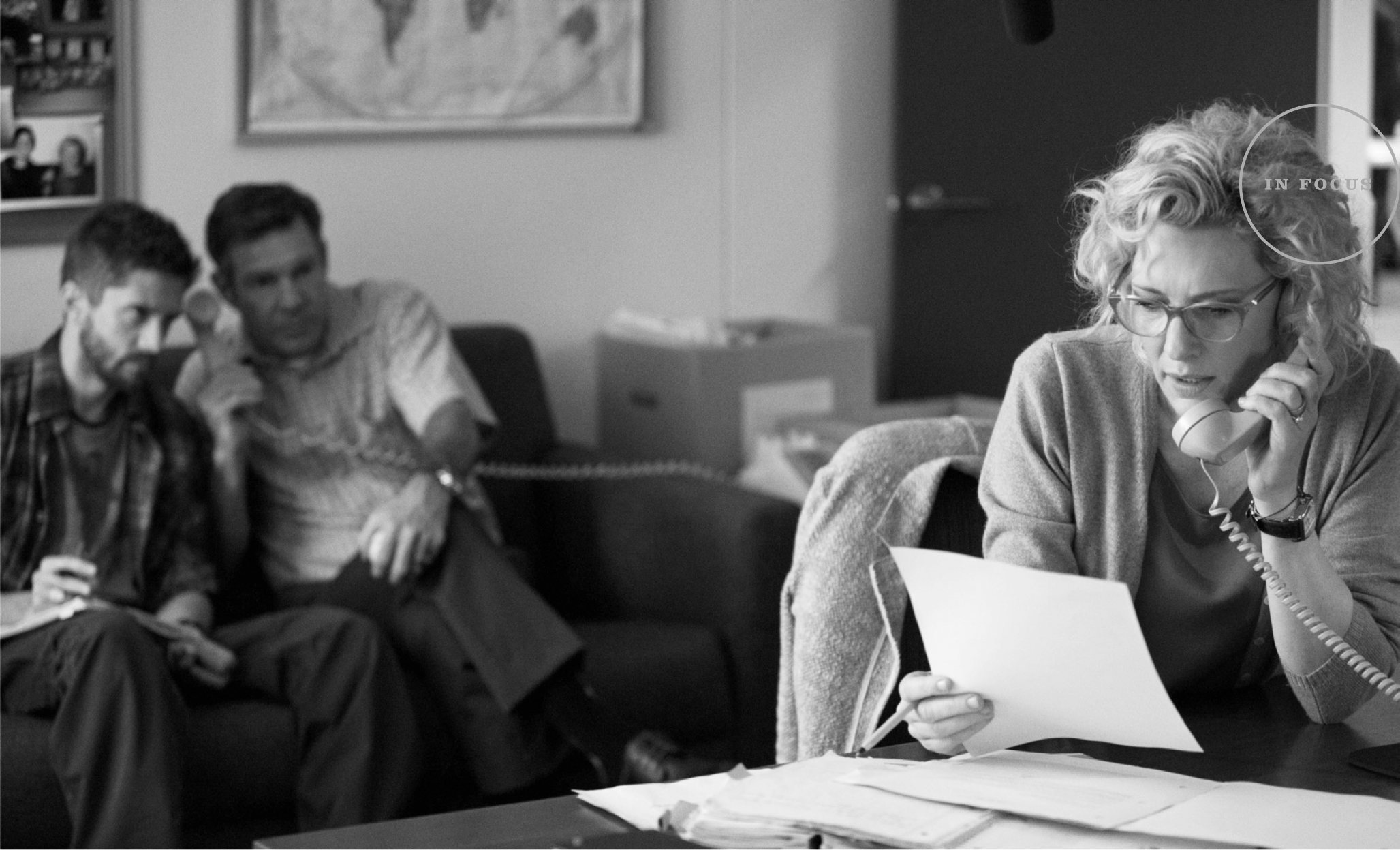
The 2015 film Truth covered the journalistic investigation into then President George W. Bush’s military service
CREDIT: Sony Pictures/Courtesy Everett/REX/Shutterstock
With the help of computer technology and transnational co-operation, journalists have been able to process the Panama data and connect the clues for publication.
The complexity of the issues at hand has required professionals such as lawyers, tax officials, computer engineers and economists to join the team. Investigative journalism has now gained both an international and an interdisciplinary dimension.
This example of solidarity heralds the birth of another opportunity for co-operation: in many countries, journalists are threatened, attacked, imprisoned or killed because of their research. An international network of journalists must be able then to take over the half-finished work of these reporters.
I must take on the work of my colleagues in Mexico who have been murdered for their investigation into relationships between drug smugglers and the police.
And our Mexican colleagues must rush to the aid of the German journalists being investigated for publishing documents implicating the German government in the illegal sale of arms to Mexico.
While German journalists researching the arms trade must complete the investigation into the weapons trafficked into Syria by Turkish intelligence, an exposé that led to my colleague and I being jailed.
This “follow-up” principle must be introduced at a global level. Investigative journalists should not feel alone in the face of threats. The powerful ought to fear that their repressive actions will provoke more international interest and more research.
A media which the powerful believe can be intimidated by censorship, repression and legal damages has more need for investigative journalists and for international solidarity, than ever before.
The disappearance of investigative journalism means uninformed electorates, ordinary people who are unaware of being economically exploited, and dictators prospering because of restrictions on reporting
But teams working together for the public good, who have the bravery to challenge repressive governments and the determination to face down threats, can combine international solidarity and modern information technology.
This is the road of hope which leads from the crossroads at which investigative journalism now stands.
Footnotes
Translated by John Butler