




Abstract
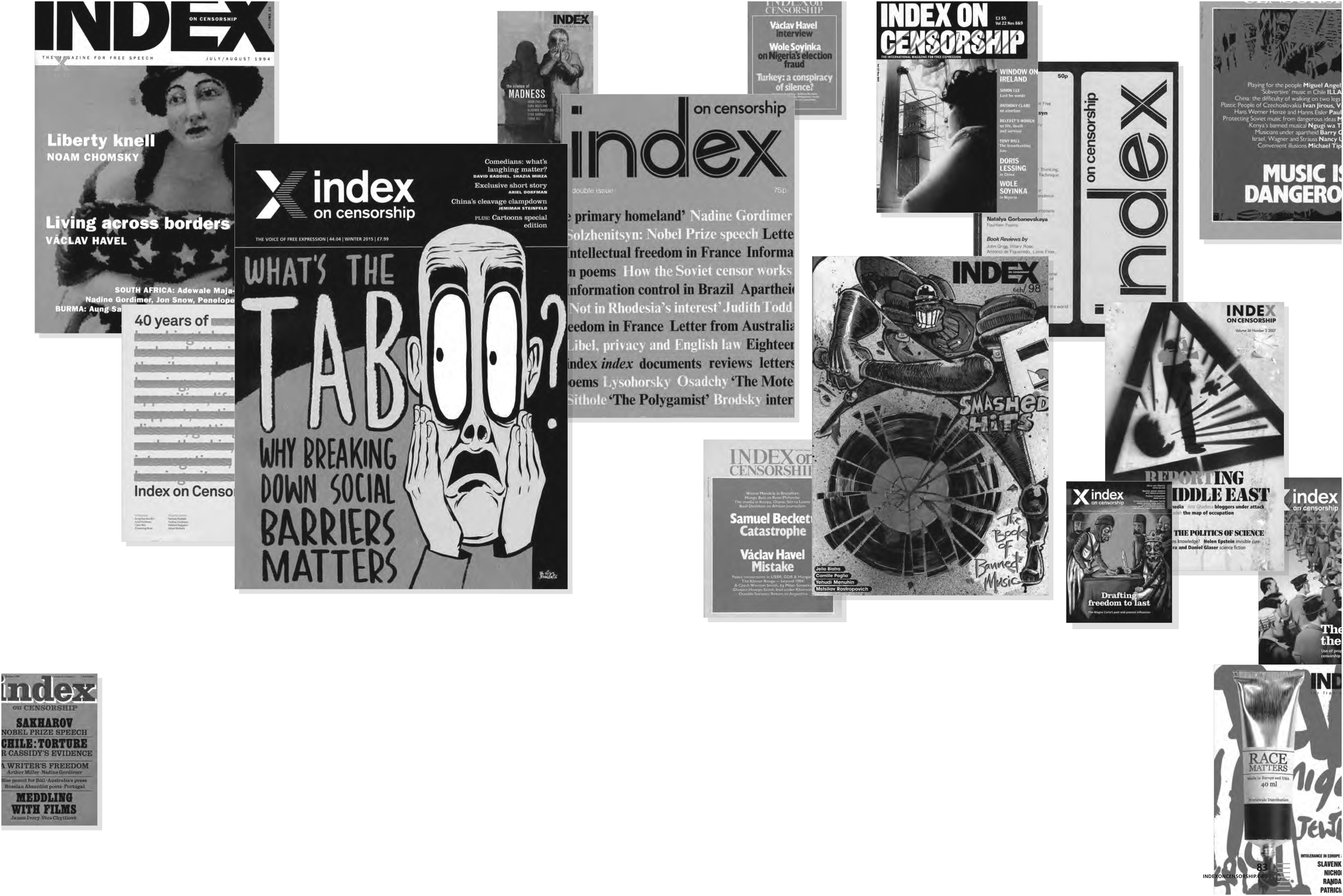
It all began with an open letter in The Times and Le Monde from the Russian dissident Pavel Litvinov protesting against the trial and imprisonment of the writers Yuri Galanskov and Alexander Ginzburg in Moscow. Stephen Spender sent a telegram of support. Litvinov replied, suggesting that Spender should set up an organisation to publish these developments in pursuance of the right of expression of opinion, a broader concept than censorship, although the call was for free speech.
The membership of the new organisation was self-selecting from among the literati and prominent academicians of England, at the behest of David Astor personally. The chairmanship was inspirational. Not noted publicly for his interest, Lord Gardiner brought to the institution in its early days a calm solidity in its management that sought financial support, initially from abroad. Gerald Gardiner himself steered the circle of eminent figures through the problems of international membership, recently established in the International Commission of Jurists in 1957 and Amnesty in 1961 (later to become Amnesty International). As the Labour government’s Lord Chancellor from 1964-70, Gardiner had given the political push to both organisations, a push that they needed for recognition. But, more significantly, it was Gardiner who in 1966 had prompted, and indeed promoted, the right of the British citizen to obtain his or her individual petition to the European Commission on Human Rights and its supporting Court of Human Rights at Strasbourg.
Around the time of Litvinov’s plea for an international organisation to publish the words of fellow dissidents, I had immersed myself as a legal practitioner in the declaration of freedom of expression, espoused in Article 10 of the European Convention on Human Rights. That article has never been more important than in today’s global world of digitalisation.
While the WSI proclaimed its existence to the widest-possible audience and not just to the English-speaking audience, Index’s first editor was Michael Scammell, a graduate of Slavonic Studies at Nottingham University.
Scammell’s later activities as a biographer – notably of Arthur Koestler – gave a flying start to Index, but its birth could not be safely guaranteed. The search for a captive title was uneasy but like some labels it has stuck firmly to its avowed aims. It was the word “index” which troubled the gathered cognoscenti who, instinctively progressive in political thought, disliked the title’s nomenclature to Rome. No doubt the geographical link with the signing of the European Convention on Human Rights saved the day. The additional marker “on Censorship” was the rescuer of a difficult decision.
Throughout five decades of uninterrupted publication, Index has maintained its distinctive voice, with contributors displaying its reach well beyond these shores. Its characteristic is that it never lost its provocative pleas as a supporter of its authors. Litvinov should be well satisfied with the product of protest. But where next?
If one views the current scene of censorship, whether it be self-censorship or state intervention on individual speech, one is struck by its intrusion elsewhere – in universities and other paragons of human knowledge. There is much to be concerned about. The ambit of freedom of speech, which may be qualified by other public interests, needs close examination and protection from other interests that do not apply as qualifications of the proposed rights. It is a core function of Index to scrutinise the scope of Article 10 of the convention. At a time when the convention is under threat of extinction (as some ministers aver) or modification by a domestic bill of rights (as other ministers might claim) vigilance is called for. The road is clearly marked ahead, without any diversionary influence that smacks of authoritarianism.