




Abstract

Journalist
South African President Jacob Zuma addresses supporters of his ruling African National Congress at a rally to launch the ANC’s local government election manifesto in Port Elizabeth, 16 April, 2016
CREDIT: Reuters/Mike Hutchings
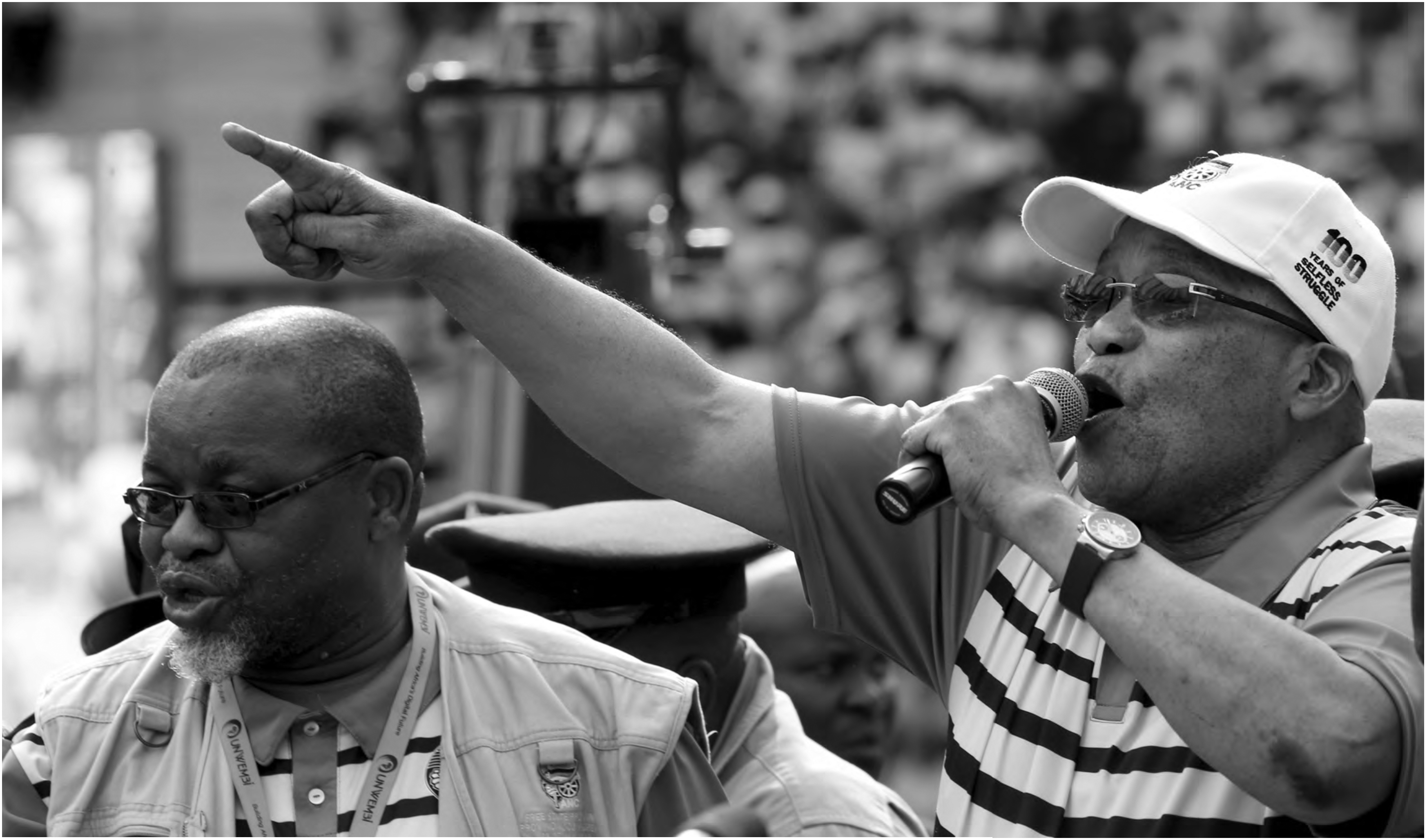
Commentators put down the poor turn-out to a mixture of bad organisation and disenchantment among ANC supporters.
But as soon as journalists started tweeting about the half-empty stadium, government spokespeople and party-faithful tweeters and trolls started disputing the facts.
The party later had to admit that the rally, addressed by beleaguered president Jacob Zuma, had been poorly attended and they attempted to blame local leaders.
The headlines in the local Daily Dispatch, two days later (18 April 2016), trumpeted: “ANC demands answers from provincial leaders over poor manifesto attendance.”
The stadium and not the contents of the party’s election promises eventually became the story.
The disturbing thing was that it took a day or two for this to emerge and the immediate response from the ANC had been to use social media to dispute the facts and criticise journalists who were reporting what had really happened.
The ANC closely monitors its online reputation. I had my own experience of this when, early in January, before the manifesto rally, the ANC had banned me from one of its gatherings after I posted a tweet criticising the party’s culture of high-roller parties attended by “pantypreneurs”, a term used to refer to women looking for advancement in exchange for sexual favours.
The tweet soon trended, fuelled by responses from other tweeters; with the responses from accounts with no avatar being the most vicious.
The ANC’s main gripe was that my criticism was racist, with party spokesperson Zizi Kodwa telling News24: “We will take action against her because we think it is unfortunate for a person who comes from such a profession to make such remarks, but it means within the media there are racists like her who harbour hatred towards black people [and the ANC].”
The withdrawal of my accreditation for the gathering (later retracted) was criticised by ANC leaders and members in private messages which were sent to me. They said they disagreed with their party’s view that it was a racist tweet, but they told me they preferred not to say this on public platforms for fear of reprisal.
Journalists have, however, excercised more caution since this and a few other incidents, at least on social media platforms.
Three months after the storm surrounding my tweet, a colleague warned me, by way of a direct message on Twitter, that a tweet with a sarcastic overtone about a female ministerial ally of the president at an ANC elections event could get me into similar trouble, and that it would be better for me to delete it.
“[It] is going to get you into trouble. Just watch. I feel bad that we have to censor ourselves, but I would quickly take it down.. I feel really bad.” When I followed this up with her, the journalist declined to be interviewed or quoted about the topic.
Then, in late April, the ANC wrote to its members through a WhatsApp group, insisting they should not write tweets, whether good or bad, about the manifesto launch of the ANC splinter and rising opposition group, the Economic Freedom Fighters, which had just filled Soweto’s Orlando Stadium for their rally.
Instead, ANC members flooded Twitter about their own door-to-door election campaigns that day.
Formally, the government has adhered to the freedom of speech clause in the South African constitution, which celebrated its 20th anniversary this May, but politicians have tried to find loopholes.
Government sympathisers have explored media ownership in an attempt to influence coverage to suit the ruling agenda. At least two newspaper houses – The New Age/ANN7 and the Independent Newspaper Group – are now owned by businessmen close to the ANC.
Twitter has, however, proven to be a wider, and somewhat cheaper, way of trying to slant or silence political debate.
Thulasiswe Simelane, a political journalist at independent broadcaster eNCA, told Index that he felt there was an “ANC Twitter lynch mob”, possibly run by volunteers.
“They are not that coordinated, but they meet their objectives, which is to silence all of us,” he said. “I think the space for debate and intellectual engagement is being shut down by this mob mentality. It may not be censorship in the traditional way, but basically you also start questioning yourself.”
The racialisation of politics meant many people on Twitter questioned Simelane’s own political stance as a black reporter working for a company that is critical of the governing party, he told Index.
“You’re dealing with people who, in most instances, made up their mind about where you stand, and they think they know what your politics entails,” Simelane said.
“[You begin to assume] that their complaints about you are valid, and then you want to ‘self-correct’.”
Radio personality Gareth Cliff became one of the most high-profile media casualties of recent political debates when he was accused of racism and fired by broadcast company M-Net as a judge on the popular singing contest Idols.
He was sacked for saying those, including the ANC, who wanted to prosecute a woman who posted racist remarks on Facebook early in January did not understand freedom of speech.
Cliff later apologised for his remark and a court overturned his dismissal and it was agreed that he wasn’t racist.
The controversy had an effect on political and race debates in the media, as journalists told me privately they feared coverage of stories, especially on Twitter, could be misconstrued and even cost them their jobs.
Stephen Grootes, a political reporter and talk radio presenter at the Johannesburg-based 702 station, agreed that race debates, which often included criticism of journalists, were more fevered in election years, but argued it was part of the nature of South African politics and not necessarily part of any party’s campaign agenda to close down debate. Even so, he found himself choosing his words carefully.
“We have a lot more discussion about race in election years than any other time, partly because voting [in South Africa] is about identity, and race is about identity. Everyone blames the politicians, but it is a structural thing,” he told Index.
His way of coping is to be more self-aware of his identity as a white, middle-class journalist, and to watch the way he talks about issues.
“You can’t talk about politics in South Africa without discussing race, the two are so intertwined,” he said. “I found that if I give an opinion, one or two people will say: ‘Of course you will say that because you’re white or just another biased white, middle-aged man’.
“I can’t divorce myself from my identity because I grew up with it, but it doesn’t stop me from trying to change myself to a person who better understands the black South African experience in a way I didn’t when I was younger.”
Instead of posting racist comments on social media, people should change the way they think, he said.
“They shouldn’t say: ‘don’t say anything racist’, but just don’t be a racist,” he said. “Change how you think, that is the issue. White South Africans can’t escape that attitude we grew up with, and we still live in those communities, and our braais [barbeques] haven’t changed that much. But do what you can to change, and to change how you think,” he said.
Does this changing not amount to self-censorship?
“There is that danger for journalists generally,” he said. “But what that means is that you must sharpen your analysis.”
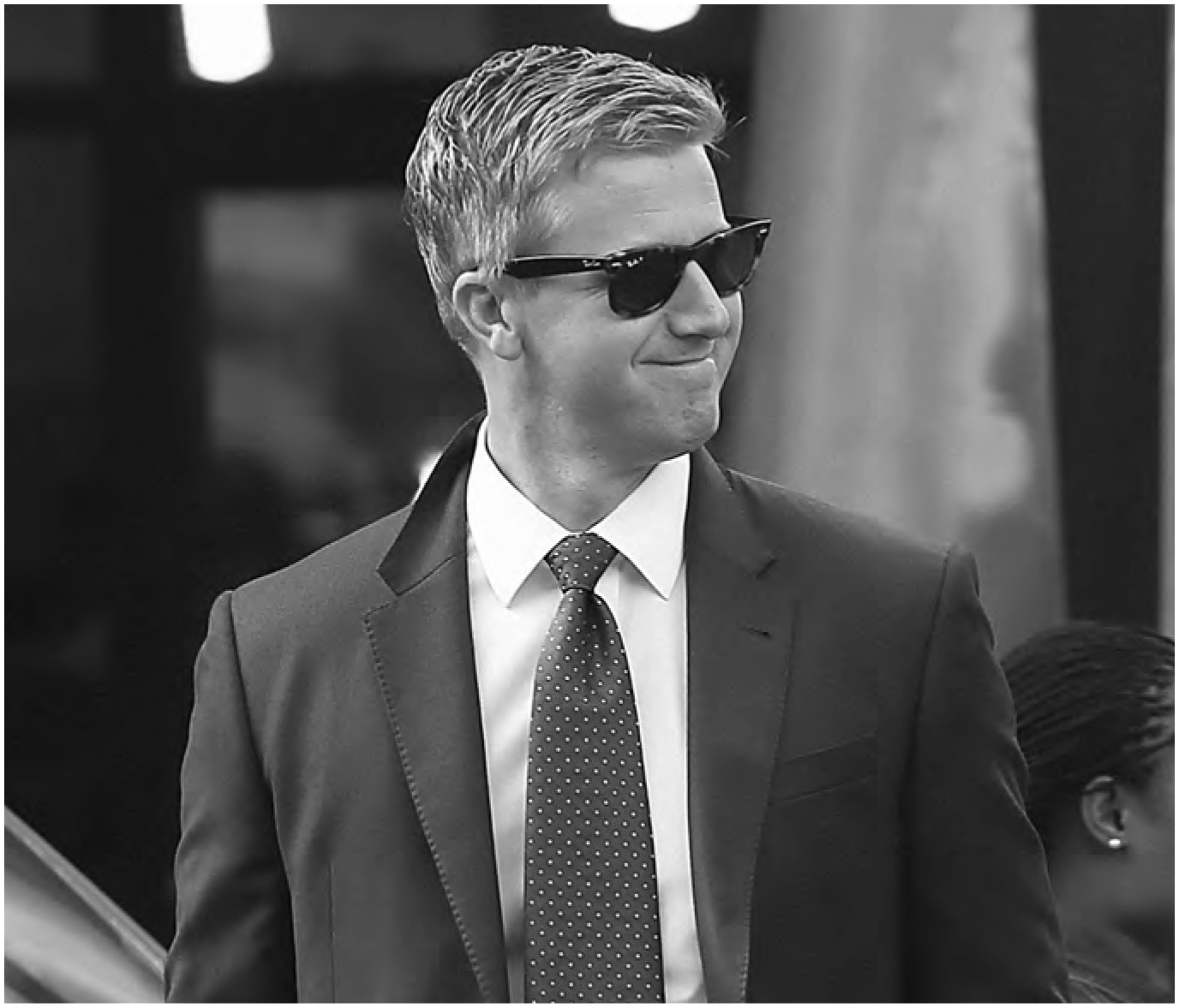
South African Idols judge Gareth Cliff was dropped from the show after accusations that one of his tweets was racist. He later won a court case, and was reinstated
CREDIT: AP/Press Associations Images
For example, he said, when Thekiso Anthony Lefifi wrote a piece in the Business Times about a black chief executive driving a Maserati, the journalist was criticised for policing black wealth. Grootes said the criticism was correct, but it would have been a story if a minister or a government official, who earned less than a chief executive, was driving a similar car.
He said in the light of the racism debates: “I have found I have thought more deeply about things that I want to say, and it sometimes stops me from saying what I want, and sometimes it doesn’t.
“It is not going to stop me from, for example, being critical towards Zuma and the decisions he makes, but sometimes it makes me question why I’m critical in certain ways and makes me think about politics,” he said.
As for social media, Grootes said it was too limited a medium for vast debates about race, which he preferred to conduct in a longer discussion or opinion piece where he could explain himself properly.
Cape Town-based editor of the online news site News24, Adriaan Basson, agreed. He said: “[Twitter’s] format is not ideal for nuanced debating or argumentation, because it gets lost in 140 characters.”
He admits to having censored himself on social media.
“Because of South Africa’s unique political and racial circumstances, I am aware of my identity and how people view me before I comment. I don’t necessarily see this as a bad thing, but I know lots of colleagues and friends who are afraid to debate or engage on social media for fear of retribution,” he said.
Some journalists at the Afrikaans online news site Netwerk24, which he headed, reported being called “traitors” by readers when their opinion pieces were read as an attack on Afrikaans-speaking people, the Afrikaans language or traditional Afrikaans educational institutions.
“Some journalists were even shunned by their families for expressing certain views,” he said. Basson also said spin doctors or social commentators attacked reporters personally based on their race, and this was especially bad in election years.
“It is up to the individual journalists how much this will affect your work or not, but I have seen some younger journalists where this personal criticism had a chilling effect on their approach and morale,” he said.
William Bird from Media Monitoring Africa said research by his organisation had not covered self-censorship on social media, but one of the studies did find that “women are more frequently subjected to vile attacks [on Twitter], and it gets more personal faster, even if writing opinions, or tweeting their own views. Men get accused of being Democratic Alliance stooges, for instance, but women get disgusting things. I don’t know if it’s a deliberate thing,” he said.
In South Africa the DA was among the first to start experimenting with social media for political propaganda, in the 2009 general elections, and its former leader Helen Zille advocated its use as a way for her party to bypass what she felt was biased coverage and communicate directly with voters.
By 2011 some ANC leaders experimented with Twitter and by 2014 its formal social media policy encouraged members and leaders to communicate using tools like Twitter and Facebook.
The immediate and widespread feedback on what journalists write, whether it be on social media, websites or traditional media, can affect the way they approach stories. Negative feedback – on Twitter, from the public reaction of politicians, or in private communication – can have a silencing effect. When it overlaps with race in a country like South Africa where identity is an important backdrop to politics, journalists can end up slanting their reporting to escape the virtual noise and persecution. They might even leave social media platforms or tone down reporting, but this narrows the democratic space for debate and diversity of opinion.
It’s best in a fast-moving news environment to heed the time-tested advice of fair and self-aware reporting – across all platforms. This might not prevent attacks, but at least reporters can emerge strong and with their credibility largely intact.