




Abstract

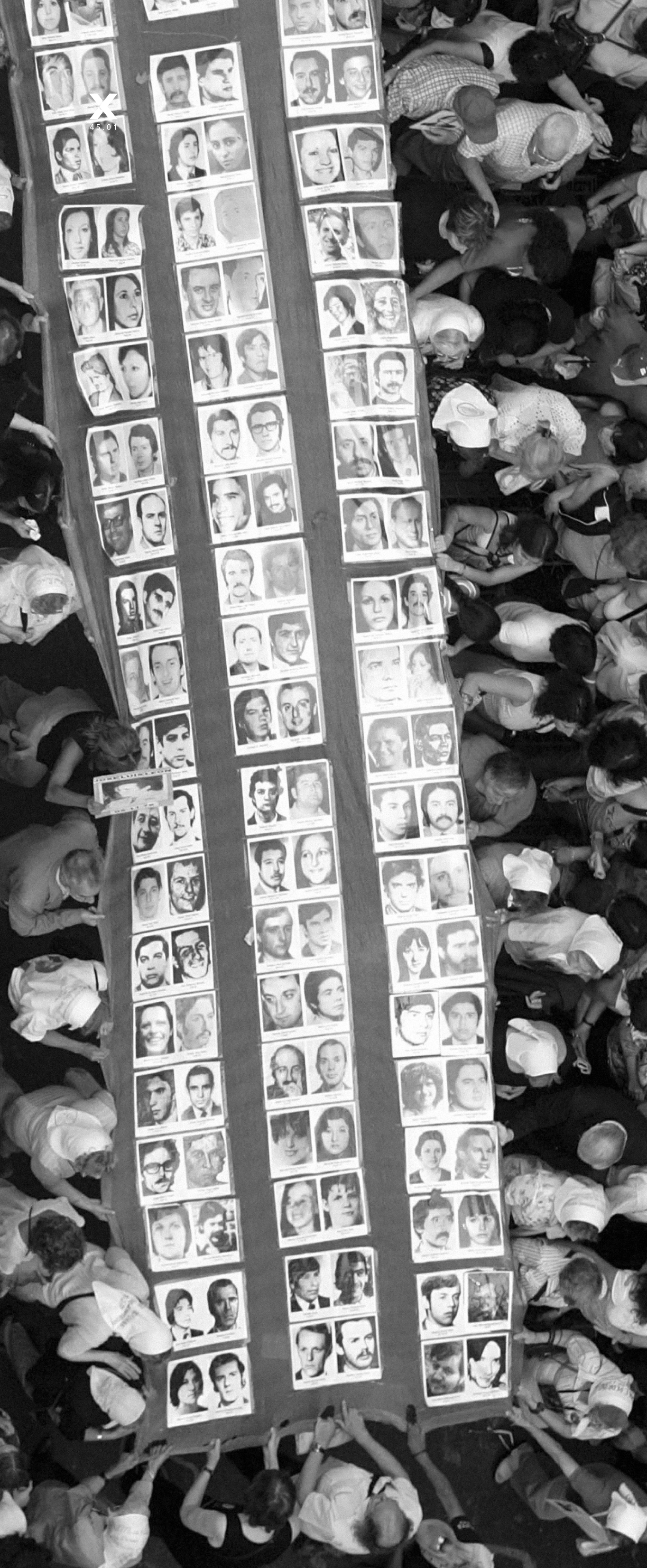
On the 40th anniversary of the Argentinian coup that led to the disappearance of around 30,000 people,
Members of the human rights group Madres de Plaza de Mayo (mothers of the disappeared) on the 30th anniversary of the 1976 military coup (March 24, 2006)
Credit: Marcos Brindicci/Reuters
That short sentence, announcing a woman’s disappearance in unknown circumstances, is taken from a 1977 issue of Index on Censorship magazine. There were no further details. It is unlikely anybody had further details to give. The entry was part of a regular feature that was integral to this magazine’s early years. At the end of each issue, the Index Index listed violations of free expression taking place around the world, from magazine closures and threats of violence, to imprisonments and murders. Arranged alphabetically, under subheadings for individual countries, it ran from the magazine’s inception in 1972 until 2012.
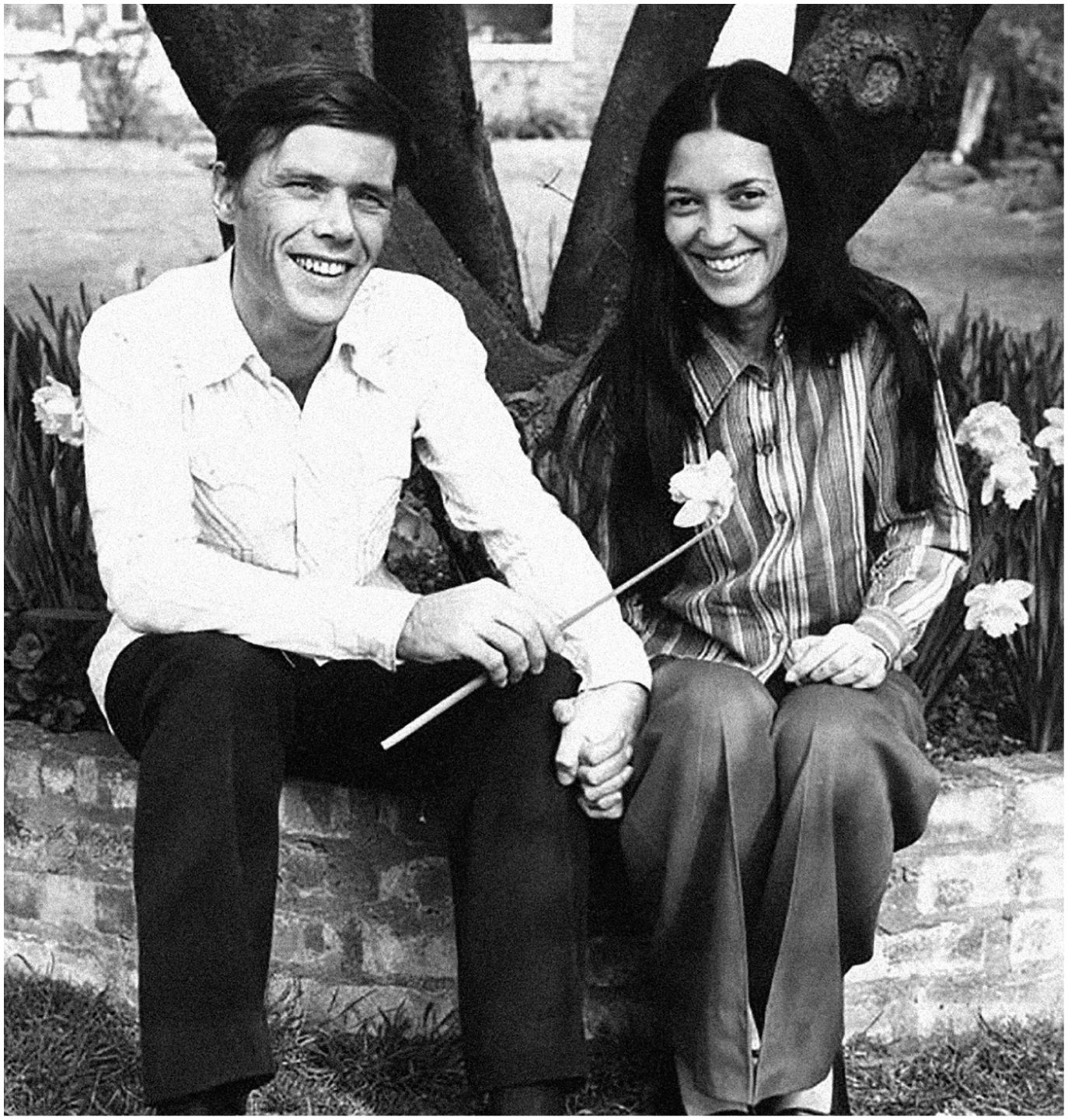
Cristina and Richard Whitecross were also listed in the Index Index. The couple were under surveillance for hosting political refugees who had fled after General Augusto Pinochet’s coup in neighbouring Chile. One of their guests, the dean of the University of Santiago, was arrested with them. “He survived,” Cristina Whitecross told Index on the phone from her home in Oxford this year, “but I was made to watch while he was being tortured.” Whitecross said she was never physically tortured herself, but Richard was beaten on various occasions and they feared for their lives throughout.
Reading the entries for Argentina during its dictatorship years shows the frightening pace that the military junta’s grip on power strengthened and censorship restrictions became tighter than ever. After overthrowing President Isabel Peron on 24 March 1976, they launched a brutal regime, which led to approximately 30,000 people being “disappeared”. The junta was brought down at the end of 1983, and more details gradually came to light about their clandestine torture centres, the bodies thrown from planes into the River Plate, and the stolen babies, many of whom have families still searching for them today.
The collated entries from Argentina in the Index Index during this era run to 14,000 words and hundreds of individual stories. The story of Cristina Whitecross (née Lange) and her husband, Richard, features in a 1976 issue: “Cristina Elvira Lange, a lecturer in linguistics, together with her English-born husband, Richard Whitecross, a commercial representative of several British publishing companies, were arrested by the security forces on 24 November [1975] on charges of contacts with guerrilla groups and have since been detained without trial under the country’s ‘state of siege’ in the Villa Devoto prison in Buenos Aires.”
To this day, Whitecross believes they were saved by a couple of fortunate occurrences, including a disruption at a military news conference not long after they were arrested. “General Videla [the leader of the regime] held a press conference to tell the world they were good guys,” she said. “They invited lots of foreign journalists and our personal friend, Stuart Russell from Reuters, was there. Of course, you had to hand in your questions beforehand, and after Stuart had asked his, he continued. He said to Videla, ‘I can’t report favourably on the coup while you have Cristina and Richard Whitecross and no one knows where they are.’ It was a huge scandal and it was pretty daring of him because journalists disappeared too. It was also extremely important for us because immediately after that we appeared [as registered prisoners] in Villa Devoto prison. In other words, they had to recognise that we were somewhere. Before that, you were held in a sort of limbo and that was dangerous.”
They were finally released after 138 days and moved to the UK, where they built lives working as publishers and human rights campaigners. They had two sons, one of whom is an actor and teacher, the other is a filmmaker who, inspired by his parents’ experiences, co-directed the documentary Road to Guantanamo with Michael Winterbottom.
Reading the Index Index chronologically, issue by issue, the unfolding horror story is as frightening as it is indiscriminate. The early issues, even before the junta took power, show the early crackdown on left-wing magazines, but soon an extreme paranoia saw everyone from language teachers to whole families of psychologists appearing on the lists. There’s also poignancy in the reports’ brevity; those we know survived are listed next to those that didn’t.
Cristina Whitecross with her husband Richard after they were released from prison in Argentina
Credit: (right) Rualam Ma-teeyoh / Shutterstock
Haroldo Conti, a writer and teacher, never returned to his home after armed men raided it in May 1976. His case remains one of the most famous from the era. Index on Censorship published news of his disappearance in September 1976, after information had been fed back to London. Later in 1981, the magazine also carried an article by Gabriel García Márquez titled The Last and Bad News of Haroldo Conti. Describing the lead up to the disappearance, Márquez wrote: “In February 1976, Martha [Conti’s wife] gave birth to a boy, whom they named Ernesto. From then on, Haroldo Conti hung a notice opposite his desk: ‘This is my place of combat, and from here I’ll not move’. But his kidnappers never knew what the notice said, because it was written in Latin.”
Ernesto Conti, now in his forties and working in political communications, spoke to Index from Buenos Aires. “I was tiny when my father was kidnapped. We went into exile with my mother and I spent my first 10 years outside of the country,” he said. “From when I was very young, my mother tried to unfold all that had happened, while taking into account that I was still a child. I remember my father always seemed very present. Then, as I grew up, it became clearer, and I began to access information for myself, asking not just what happened to my father, but also who was my father.” It’s a story he is now trying to pass on to his own young son.
Such is Conti’s legacy that in 2008, part of the Esma military school, which was used by the junta as a torture centre and has since been reclaimed as a museum, became the Haroldo Conti Cultural Centre.
The Buenos Aires Herald, an English-language newspaper, bravely decided to report on Conti’s disappearance at the time. Andrew Graham-Yooll, an Anglo-Argentine journalist who worked for the paper at the time and later became editor of Index on Censorship, still remembers the day he found out the news at a lunch meeting. “I had friends of Conti telling me I had to publish and there was a naval officer who said ‘Don’t you dare, you know what will happen to you.’ I left without saying anything.” He published straight away, but admits everyone was terrified.
The previous mouth, April 1976, the Buenos Aires Herald had also courageously confronted the junta’s ban on mentioning the disappeared by publishing extracts of a ruling that officials passed to the press on small slips of paper, without a letterhead or signature. It reported: “From April 22 it is forbidden to report, comment or make reference to subjects related to subversive incidents, the appearance of bodies and the deaths of subversive elements and/or members of the armed or security forces, unless these are announced by a responsible official source. This includes kidnappings and disappearances.”
While they were locked up, prisoners had their own techniques for trying to share information with the world. Those inside Villa Devoto prison often shouted out names in unison, hoping that their voices would be heard above the walls and in the surrounding neighbourhood. Those that were freed desperately tried to memorise information about their fellow captives, so they could pass on messages and news of their whereabouts.
Graham-Yooll regularly fed information about the disappearances to Index on Censorship and Amnesty International, before being forced into exile with his family. “I’d send it via airmail, but never too thick and never anything as ostentatious as an airmail envelope. I also used to send old-fashion telegrams to Amnesty via the Daily Telegraph, as a cover-up.” Graham-Yooll left the country after the Buenos Aires Herald was raided, but returned to Argentina.
Reading through the Index Index, it is easy to assume those who were released and left Argentina were then free from surveillance, but Whitecross said it was not that simple. She remembered a visit to her Oxford home from a suspicious man, posing as a gas technician. “When I called the gas board, they said they hadn’t sent anyone and they didn’t work on Saturdays, which is when he said he’d come back. To this day, I don’t know if this was related, but we knew from [what happened in] South Africa that groups get infiltrated. In Argentina’s case, they used people from the navy. And there were cases of people being followed, so it felt perfectly possible.”
Richard Whitecross died in 2009 after suffering from Alzheimer’s disease. “At one point he had a flashback and thought we were back in prison and he was telling me to be careful. It was heartbreaking, but then he was back to his normal, lovely self.”
Cristina Whitecross remains as defiant today as she was at the time. As they boarded the plane after being released, she remembers being questioned by a police officer. “He asked if I was being released thanks to General Videla. And I said, ‘Can I rephrase that and say I am being released in spite of General Videla?’.”
Argentina’s Dirty War
24 March 1976
A military coup d’état, under General Jorge Videla, overthrows President Isabel Perón
22 April 1976
Memo passed on to press, forbidding them to mention kidnappings and disappearances
22 December 1981
General Leopoldo Galtieri takes over as leader of the military regime
2 April 1982
War against Britain over the Falkland Islands breaks out in the South Atlantic, and lasts for two months
10 December 1983
Argentina returns to civilian rule as President Raúl Alfonsín assumes power
