




Abstract

In 1987 she decided to stage Othello in her native South Africa, bringing “the moor of Venice” to life at Johannesburg’s iconic Market Theatre. It was just two years since Prime Minister PW Botha had repealed one of apartheid’s most reviled laws, the Immorality Act, which banned sexual relationships between people of different races. Even without the legislation, many white South Africans baulked at the idea of interracial desire. No wonder, then, that Suzman’s production attracted what she has described as “millions of bags full of hate letters from people who thought that this was an outrage”.
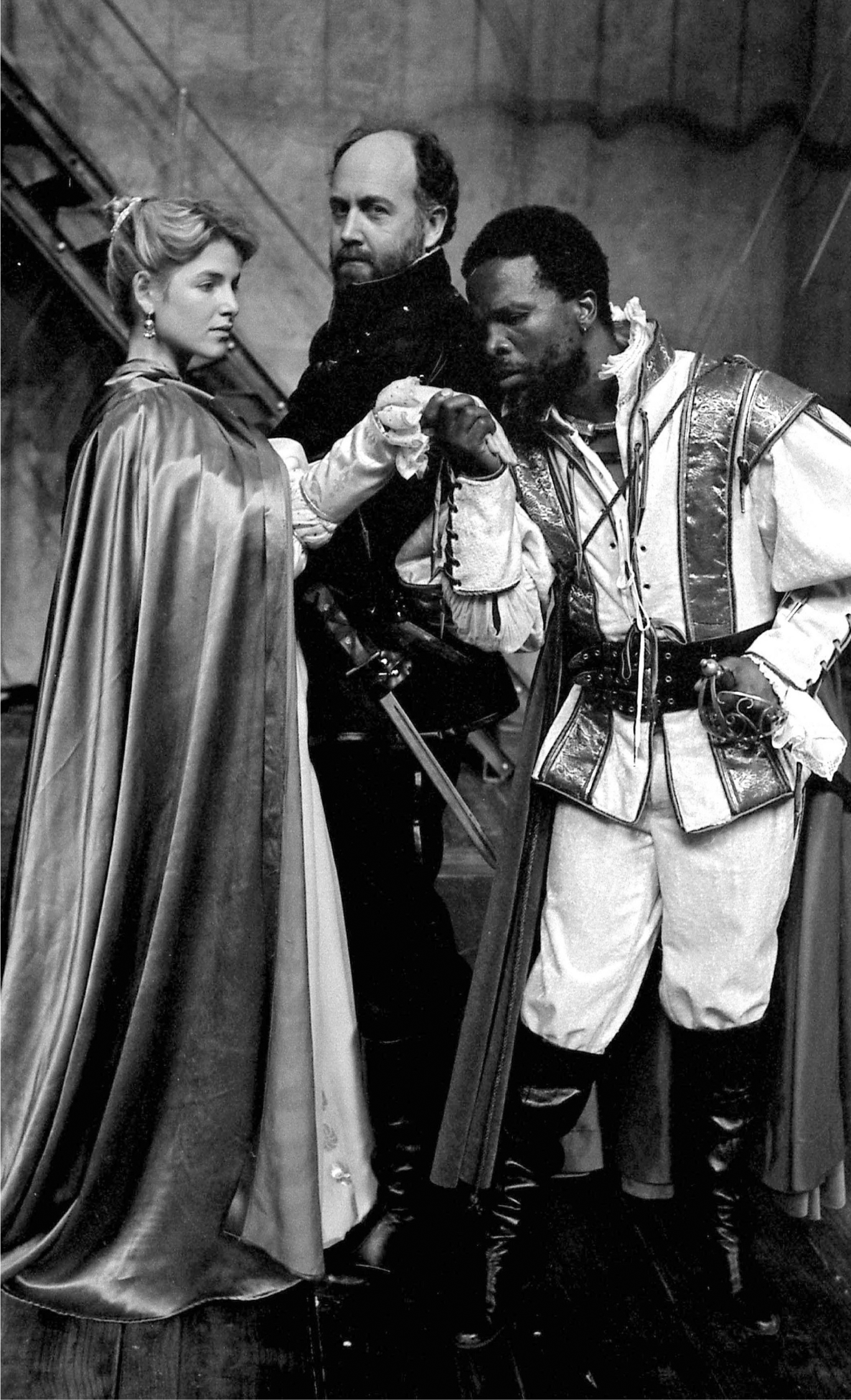
An erotically charged embrace between the white Venetian Desdemona and the black titular character, who was played by John Kani, drew the most horrified reactions. Suzman told the Open University in 2011: “Well, I tell you, there were lots of seats banging up the first night that happened at the Market Theatre, and people marching out and swearing and, you know, all that was going on. We thought yes, right on, that’s it, we’re touching a nerve here.”
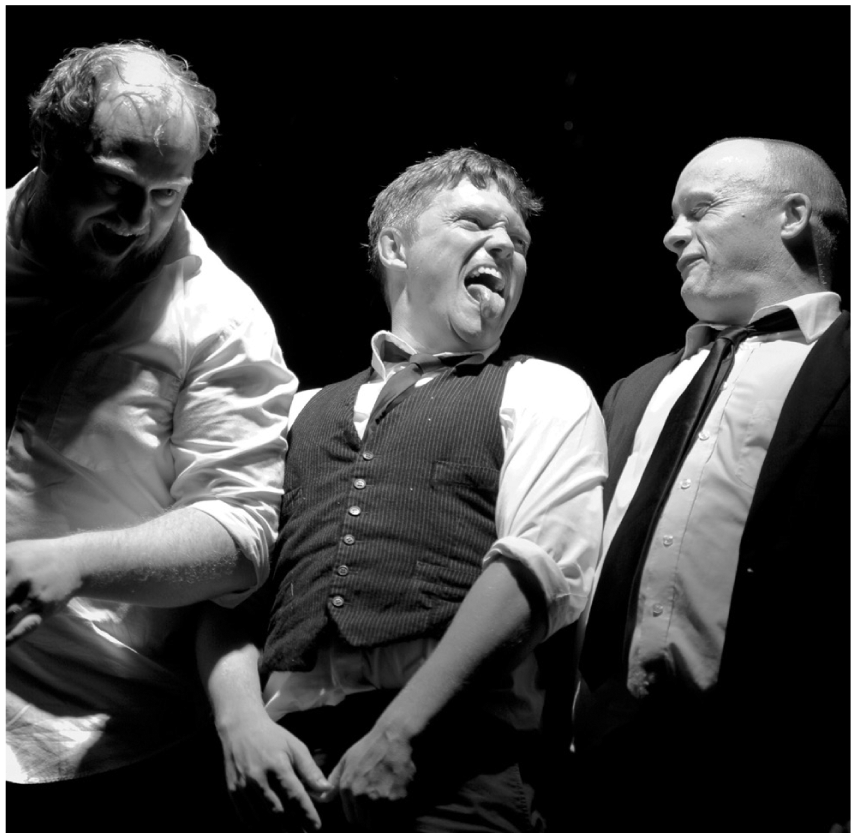
Actors Albert Pretorius, Rob van Vuuren and James Cairns in the politically charged production The Three Little Pigs, written by Tara Notcutt and staged in Grahamstown, South Africa
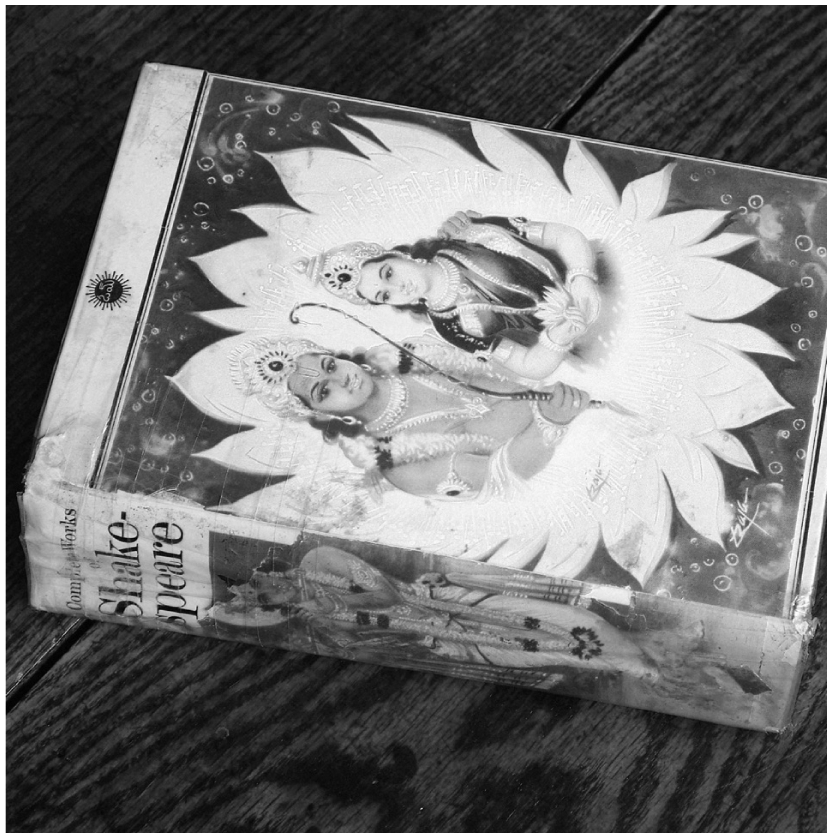
Sonny Venkatrathnam asked his wife to send him a copy of Shakespeare’s complete works while he was imprisoned on Robben Island in the 1970s. The book was passed around inmates, including Nelson Mandela, and became known as the Robben Island Bible
Performers Joanna Weinberg, left, Richard Haines, centre, and John Kani, right, during a performance of Othello, directed by Janet Suzman at the Market Theatre in Johannesburg, in 1987
Credit: (bottom left) Jaco Marais; (left) Christopher Jones / Alamy; (right) AP Photo/Ruphin Coudyzer
Nerves were touched, certainly, but in a country famous for sweeping censorship and restrictions on freedom of movement, speech and association, the play was not banned. Why? Because the apartheid government “would have been the laughing stock of the world if they had banned Shakespeare”, Suzman told Index.
“Any government would be really embarrassed to ban Shakespeare,” she said. “The apartheid government was frightened of ridicule. Everyone is frightened of laughter.”
The government’s rather scattershot, arbitrary approach to censorship also helped. The ruling National Party, Suzman said, stuck pretty much to the letter of the law – and Shakespeare was not mentioned by name in any legislation. So the show went on. It wasn’t just the regime whose reaction had worried Suzman, though: before Othello began at the Market Theatre, she and Kani decided to approach the leaders of the then-banned African National Congress to ask for their permission to go ahead. “It was important for John to get the sanction of his brothers [to take part in a work by] this dead white man.”
Three years later, the ANC was unbanned. In 1994 it became South Africa’s first democratically elected and black-led government. Theatremakers no longer have to worry about their work being hauled to a censorship board that won’t countenance any commentary on racism.
But Tara Notcutt, a playwright and director, said there has been a dearth of groundbreaking post-apartheid Shakespeare plays in recent years. Notcutt created the politically charged The Three Little Pigs, an allegorical examination of South African current affair, which premiered in 2012 at the National Arts Festival in Grahamstown in the country’s south east. She told Index on Censorship that she feels Shakespeare and other established, more universal playwrights have taken a back seat to original, local theatre now that artists needn’t actively fear the government. And what, in that outspoken and uncensored climate, is the state of South African protest theatre?
“I think the term ‘protest theatre’ is something which people associate with satire against a government, but I’ve found more recently that it can be more subtle than that,” Notcutt said. “Something like Rob Murray’s Waterline is a human look at the water shortage crisis in the Eastern Cape [province], which – yes – is protesting against the conditions, but I personally wouldn’t call it protest theatre. It’s more subtle, sophisticated and beautiful than my 1980s connection to the term.” Her play The Three Little Pigs, an examination of high levels of government corruption, drew “virtually no” condemnation or contempt from those in power.
Notcutt continued: “We got a lot of support for the things that we said in it, and I think that’s because people generally agreed and felt the same way about what we said. But we’re also really aware that the play was, for the most part, only seen by a certain group of people – that is, middle class, mostly white audiences. Different ages, sure, but I’d go so far as to say that opinions that disagreed with what they saw were few and far between.”
Chris Thurman, an associate English literature professor at the University of the Witwatersrand, believes there’s another reason that Shakespeare doesn’t feature strongly on the political theatre agenda.
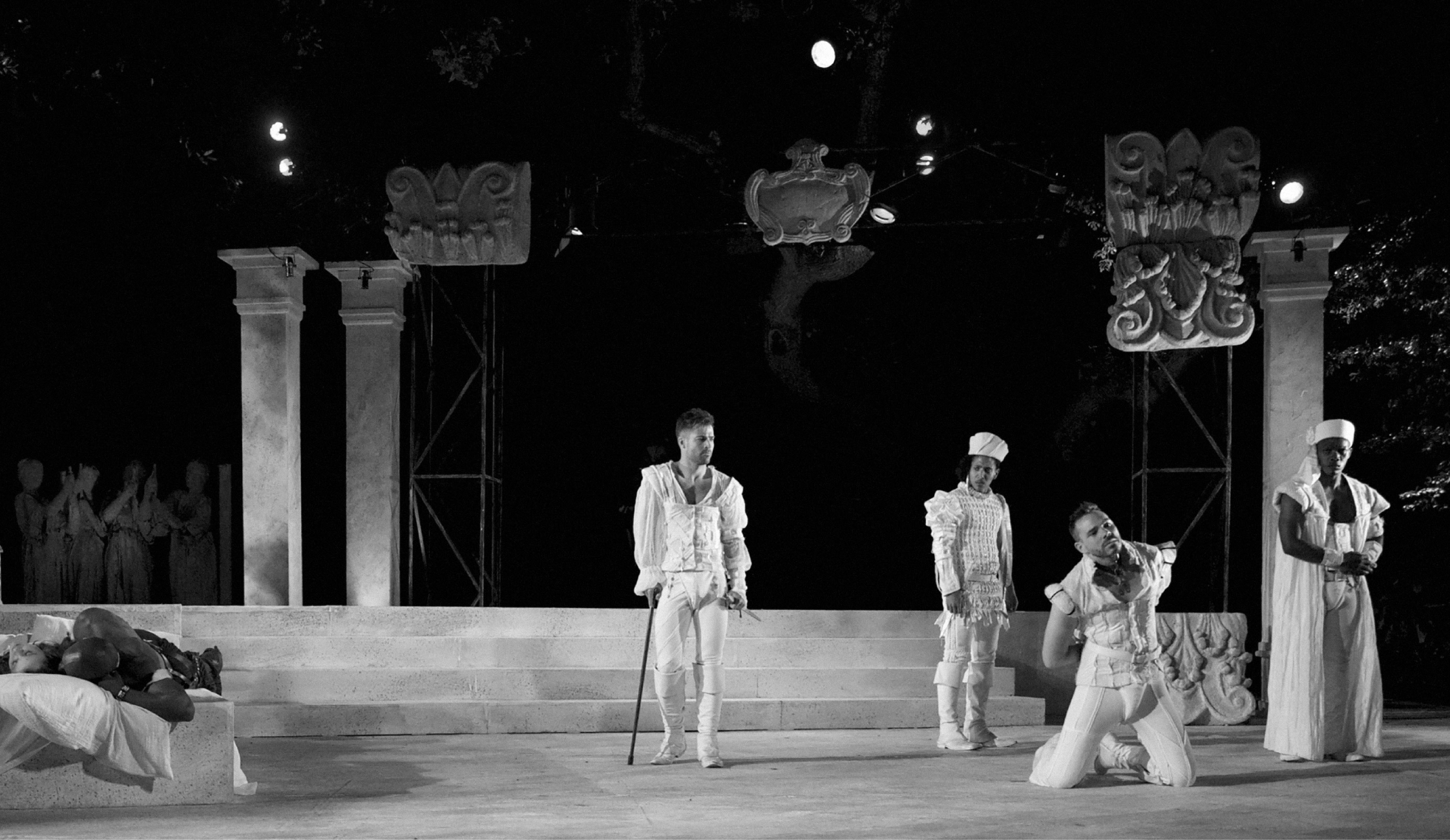
Fred Abrahamse’s 2016 production of Othello at the Maynardville Open Air Theatre, Cape Town
Credit: Bronwyn Lloyd
“I think part of the reluctance is that previous attempts to use Shakespeare’s plays as allegories for South African history or contemporary events have flopped,” Thurman told Index on Censorship. “I’m thinking of the Market Theatre Titus Andronicus in 1995 and the Baxter Theatre ‘African’ Tempest in 2007. Yael Farber’s SeZaR! [Julius Caesar] in 2000 was also a significant production, although one that, I think, buys into the essentialist, inaccurate sense that some plays ‘fit’ South Africa or some generic idea of Africa. These ‘generic ideas’ involve the themes of witchcraft, violent coups and the supernatural.”
“It may be that over-determined allegorical uses of Shakespeare to deal with South African issues just don’t work – they lack the nuance needed to tackle local complexities if you are too ‘faithful’ to the Shakespearean text as a template into which these things can’t be forced,” Thurman said.
As for Othello, the play recently had its second run in two years at Cape Town’s 65-year-old Maynardville Open Air Theatre. If any seats banged up, they would have belonged to bored school children on a class trip. Does Suzman think Shakespeare remains relevant as a form of political commentary in a free society?
For her, the answer is an unequivocal “yes”. Rewatching that 50-year-old production of The Wars of the Roses made her think “no one has topped him for political playwriting”.
“The wonder is that Shakespeare didn’t get his head chopped off in his time. He kept his head down, below the parapet, by setting his plays in historical times. People pluck the present out of history.” She said his writing also leaves itself “open to interpretation”, making it “elastic” for directors who use his text to entertain or caution. “Shakespeare lends itself to anything,” she said. “The glove fits any hand. You can tap lightly with it or punch hard.”
Hiding Shakespeare on Robben Island
In Othello, “a black man is bullied by a white thug” – that’s how Dame Janet Suzman describes it. But while bringing William Shakespeare’s story to the stage during the apartheid era became feasible, finding a copy of the text proved much harder. Suzman told Index on Censorship she couldn’t even pick up a written version of Othello from the local university bookshop, which she’d assumed would stock a wide range of literature.
One place she might have found it was the notorious prison on Robben Island. There, ANC and Pan African Congress leaders, such as Nelson Mandela, Robert Sobukwe, Walter Sisulu and Govan Mbeki, were imprisoned. Sonny Venkatrathnam was a prisoner on the island from 1972-78. During that time, authorities briefly relaxed the rules to allow inmates to have one book – other than a religious text – in their possession. As Venkatrathnam explained decades later to British playwright Matthew Hahn, he cleverly asked his wife to send along a copy of Shakespeare’s complete works. This, of course, contained far more than just one book.
The Robben Island Bible, as it became known, was passed around to many of Venkatrathnam’s fellow inmates. It was confiscated at one point when the rules were changed arbitrarily again, but Venkathrathnam used religious greetings cards on the cover to disguise it as a holy book. Hahn explores the story in his play, the Robben Island Bible. The book made headlines after Mandela’s death in December 2013 when it emerged that the global statesman had signed his name alongside this passage from Julius Caesar:
“Cowards die many times before their deaths;
The valiant never taste of death but once.
Of all the wonders that I yet have heard.
It seems to me most strange that men should fear;
Seeing that death, a necessary end,
Will come when it will come.”