




Abstract

Playwright
Zimbabwe is a country with a difficult socio-economic and political environment. Keen on retaining power, the liberation government has devised ways of keeping dissenting voices silent. They have fostered Judeo-Christian values and patriarchal practices on society, adding to instruments such as the Censorship and Entertainment Act, Access to Information and Protection of Privacy Act, and the Public Order and Security Act, which are used as tools to impede and ban artistic expression. The censorship laws in place are enacted as if purely to prohibit artistic expression that is deemed to be politically incorrect, of an improper sexual nature, or depicting any sexuality other than heterosexuality or anything that demeans national heroes.
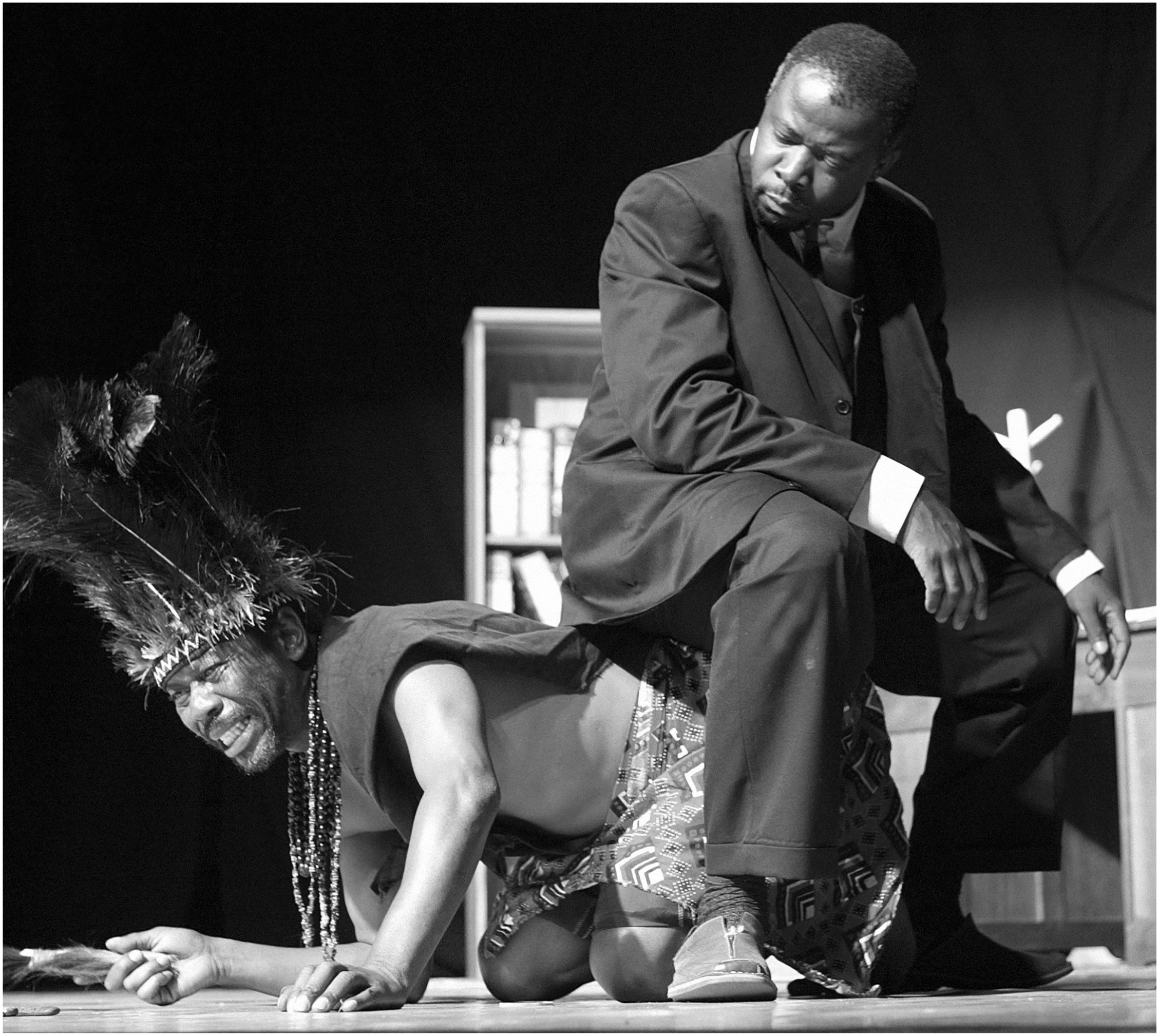
Theatre in the Park, an artist-led initiative that leased a space in a public park in Harare, has had its plays banned. One such play is Super Patriots and Morons, which was performed in 2004, depicting a senile head of state who refuses to let go of the reins of power. The play was banned after it had had its full run at Theatre in the Park and performances in almost all 10 provinces of the country. It became the first official play to be banned in independent Zimbabwe.
Daves Guzha, who commissioned the play, told Index on Censorship of his experience: “I was shocked, disgusted and humoured by the ban … We were told the play was likely to cause alarm and despondency … Because when you create work, the first audience you want to see the work is that of home … And you want to be able to use that work 10 years later as a measure to say, we were there then, and where are we now?”
Theatre in the Park hosted a performance of Othello in 2012 and the Globe Theatre’s performance of Hamlet in 2015. In both cases they didn’t have difficulty securing censorship clearance and they weren’t advised to change a line or two in the text, as has been the experience of some theatre makers. This year they will be staging Julius Caesar at the Theatre in the Park’s newly built venue in Harare Gardens, and they are keen on seeing what surprises the text will bring them.
Actors Daves Guzha (right) and Mackey Tickeys in a scene from the 2004 production Super Patriots and Morons, the first play to be banned in independent Zimbabwe
Credit: Reuters
Discriminatory application of the law has also seen plays that were clearly anti-establishment not being banned, while in other cases artists are arrested on charges of criminal nuisance. With the birth of opposition politics in the late 1990s, protest theatre became a popular genre in Zimbabwe and saw the rise of new voices, including Mandisi Gobodi, Raisedon Baya and Blessing Hungwe, whose popularity came out of the controversy surrounding their work. When Hungwe’s play Lovers in Time was shown at a local festival in 2014, the organisers got into a fracas with purported agents of the law. They were angered by the representation of Mbuya Nehanda, an iconic spiritual leader of the first liberation struggle. They couldn’t understand why Nehanda, whom they have since appropriated into a card-carrying member of the party posthumously, would be re-imagined as a transgendered youth in modern-day Zimbabwe.
Shakespearean texts that have been studied over the years in Zimbabwean high schools include: King Lear, which saw a senile king making mistakes and seen as a commentary on state leaders who stay in power past their sell-by date; Julius Caesar, which pushes the idea of the people taking back the power and betrayal; Hamlet, which paints a picture of succession battles, and Twelfth Night and As You Like It, which have homo-eroticism and some reversal of gender roles. All these themes would raise the censorious eyebrows of the state if tackled in a modern play. Could it be Shakespeare’s texts are allowed because the language is considered archaic and as such cannot possibly have a bearing on the mind-set of the people it reaches?
Playwright and arts critic Raisedon Baya told Index that the exceptionalism over Shakespeare is something to welcome: “The censorship is more political than anything, used a tool to intimidate and instil fear … Usually it is the police or central intelligence officers who come and tell you cannot go on … when it comes to foreign texts like Shakespeare, they appear to be unworried about the content of the plays … With Shakespeare plays you can adapt the text to speak to local experiences … We need to embrace Shakespeare.”
In a country where legislative leaders are given the titles of “father” and “mother of the nation”, it becomes difficult to call them on their mistakes when you have been taught to never dishonour an elder by questioning them.
Disempowering a person starts with taking away their ability to think and speak for themselves. Children learn to allow thought to enter the mind and escape in speech without reserve. With adulthood one would have been conditioned to believe that there are things that are not thought of, let alone put into speech. The laws are enforced in such a way the censored start doing the job of the censor. You and your neighbour become the watchers.
Young playwrights are fired up by the need to change their lived reality. They create, but often with a worry of what will happen to them after freely expressing themselves. Some would rather steer clear of volatile topics, leaving them with a straitjacketed view of society which stifles their creativity. Zimbabwean society has over the years built its own socio-religious and political taboos, which have become synonymous with the state power. Writers ought to be exposed to the understanding that most of these taboos foster harmful practices, marginalising and stereotyping particular groups, denying them their basic rights, silencing divergent views to the detriment of the nation, creating myths about our national history that produces disaffected and disconnected youth, and sanitising hate speech, as well as other forms of violence.
There is no doubt that the Zimbabwean playwright needs to take back the space of dialogue. There are great lessons to be had from Shakespeare’s work; not just in the fact that his works have transcended time and place, but that 400 years after his death his ideas are inspiring new generations in a distant country in southern Africa, unchecked.