



Abstract

Now Argentina has a new president,
As Argentina’s mainstream media would have it, the villas are a no-go zone. Their residents, the villeros, are generally depicted as criminals or low-life immigrants. According to the non-profit organisation Techo, which works on housing projects in the villas, the media actively exacerbates the already extreme levels of exclusion by fuelling social stigmas. “[The slums] are a symbol of the inequality of the region,” Leonardo Báez, head of international communications for Techo, told Index on Censorship. “The media are accomplices in this. Often their coverage doesn’t go into detail, it doesn’t explain the roots of poverty.”
La Garganta Poderosa is working to change this and empower the villeros. The villa-based collective, which takes its name from Che Guevara’s famed motorbike, has done much to give a voice to slum-dwellers in Argentina. And it’s done it by playing the media at its own game: running a magazine.
La Garganta Poderosa (which translates as “the mighty throat”) reports on the culture and society of the villas, as well as broader political issues. Since launching in 2010, it has regularly landed scoops that make headlines throughout the country; its covers tend to feature portraits of prominent and politically engaged public figures. Football legend Diego Maradona has posed for them wrapped in a Cuban flag, smoking a cigar, in open support of the Cuban government. They have photographed Bolivia’s President Evo Morales holding a surfboard, in reference to Bolivia’s demand for access to the sea. Even the usually media-shy Lionel Messi got in on the act, when his screaming photo appeared on the front page, demanding justice for the murder of a trade union activist. And in September, the national media picked up on their investigation into the number of women killed since a nationwide protest against domestic violence in June. A calendar marked every death: 40 in just three months.
“We have a clear strategy,” one of the magazine’s editors told Index. “If we put on the cover a broken sewer, or a flooded room, or any symbol of our fight for adequate housing, it would be in sync with our identity, but it wouldn’t have much reach beyond our neighbourhoods. It would have no repercussion in the places we want to influence.” And indeed, it seems that they are starting to reach readers beyond the villas: the magazine now sells around 20,000 copies every month, some of those from kiosks in the city’s ritzier neighbourhoods. It has 210,000 followers on Facebook and 70,000 on Twitter. The team has also published a book that compiles the magazine’s best 15 reports.
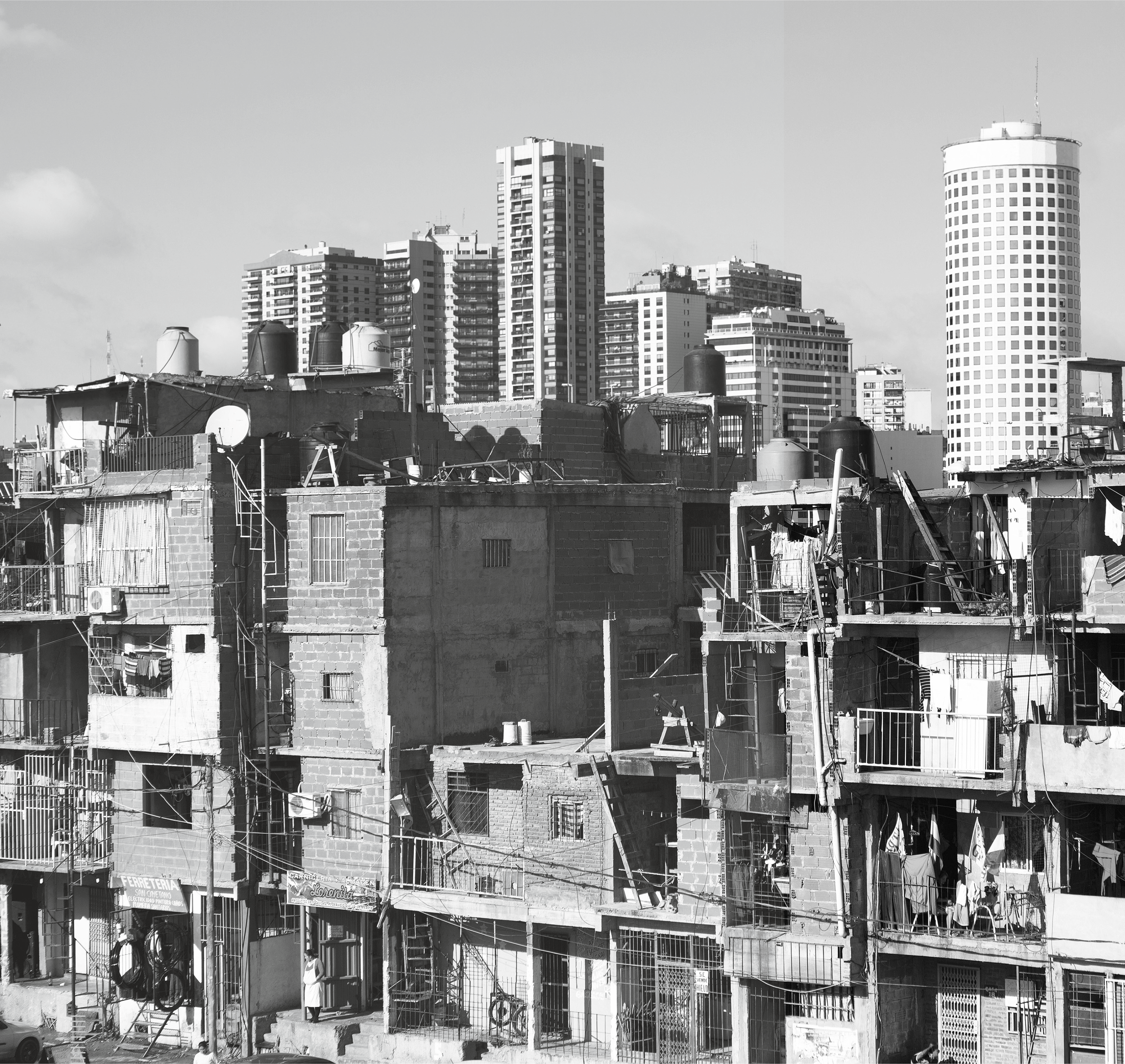
Villa 31, one of Buenos Aires’s fast-growing but underprivileged areas, where residents are taking on the mainstream press by making their own rival publications
Credit: Sunsinger/Shutterstock.com
All of this in spite of its decision to remain fiercely independent, not only from sponsors (sales and donations are the main sources of financing), but also from mainstream journalists. The writers and editorial staff are drawn from villas across the city, and hardly any of them have a formal training in journalism. There is no room on its team for big egos: while the writers put their names to their articles, they prefer to remain anonymous when they give interviews in deference to the magazine’s status as a collective enterprise. Editorial decisions are taken and developed jointly in meetings.
Many of Buenos Aires’s villas are tucked away on the outskirts of the city centre, but Villa 31 is located just metres away from Retiro station, the city’s main transport hub, and on the fringes of the expensive neighbourhood of Recoleta. It has been growing rapidly, its brick and aluminium shacks rising higher and higher between the bridges of the city’s ring road.
Based in Villa 31, Mundo Villa is another community-run media project that is working to redress the balance in news coverage. It started in 2008 as a print newspaper, and has grown to comprise a TV station, a radio channel, a monthly magazine and a website. Its reporters are youths from different villas, who take part in weekly journalism workshops, and report on everyday issues such as flooding, sewage overflows and protests over living conditions. They also show the positive side of living in a villa, including reports on community projects and cultural activities.
Paula Stiven, an editor at Mundo Villa, said the mainstream media tends to focus on showing that life in the villas is just drug trafficking and delinquency. “They want to show that such problems come from the poorer sectors and do not involve the rest of the society. It’s an outlook that is harmful to those who live in the most vulnerable areas.” Pablo Vitale of the Civil Association for Equality and Justice (an NGO that offers legal support to the villeros) pointed out that the slums, which house many labourers, actually tend to grow in times of economic prosperity. “Villas are very important in the city’s urban dynamic,” he added. “Those who live in them are those who work in the city and build it.” By giving a full picture of how villas operate and contribute to society, and so putting their poverty in context, Mundo Villa aims to counter the media caricatures. But it also shows the positive side of living in a villa, by reporting on successful community projects and cultural activities.
Argentina elected a new president in November, former mayor of Buenos Aires Mauricio Macri, who has pledged to urbanise the capital’s villas. There has also been controversial talk of moving Villa 31 outside of the city centre, into a suburb. Macri’s supporters think that by improving the country’s economic issues there will be less proliferation of villas; his critics say he has already failed to make progress on this issue in his eight years as mayor, saying that he invested less than 1% of the city’s budget on villas.
Despite the efforts of community media organisations, widespread prejudice toward the villas endures, and equality remains a distant hope. “We are still far from getting services and infrastructure, and we still have innocent friends who are getting killed,” said one member of La Garganta Poderosa. Yet as the villeros battle to make themselves heard across society, their efforts are helping to usher in an important community consciousness across the villas. “They can’t compete with mainstream media,” said Vitale. “But at least they can be taken as a reference by those who live in the slums, helping forge a sense of identity.”