



Abstract

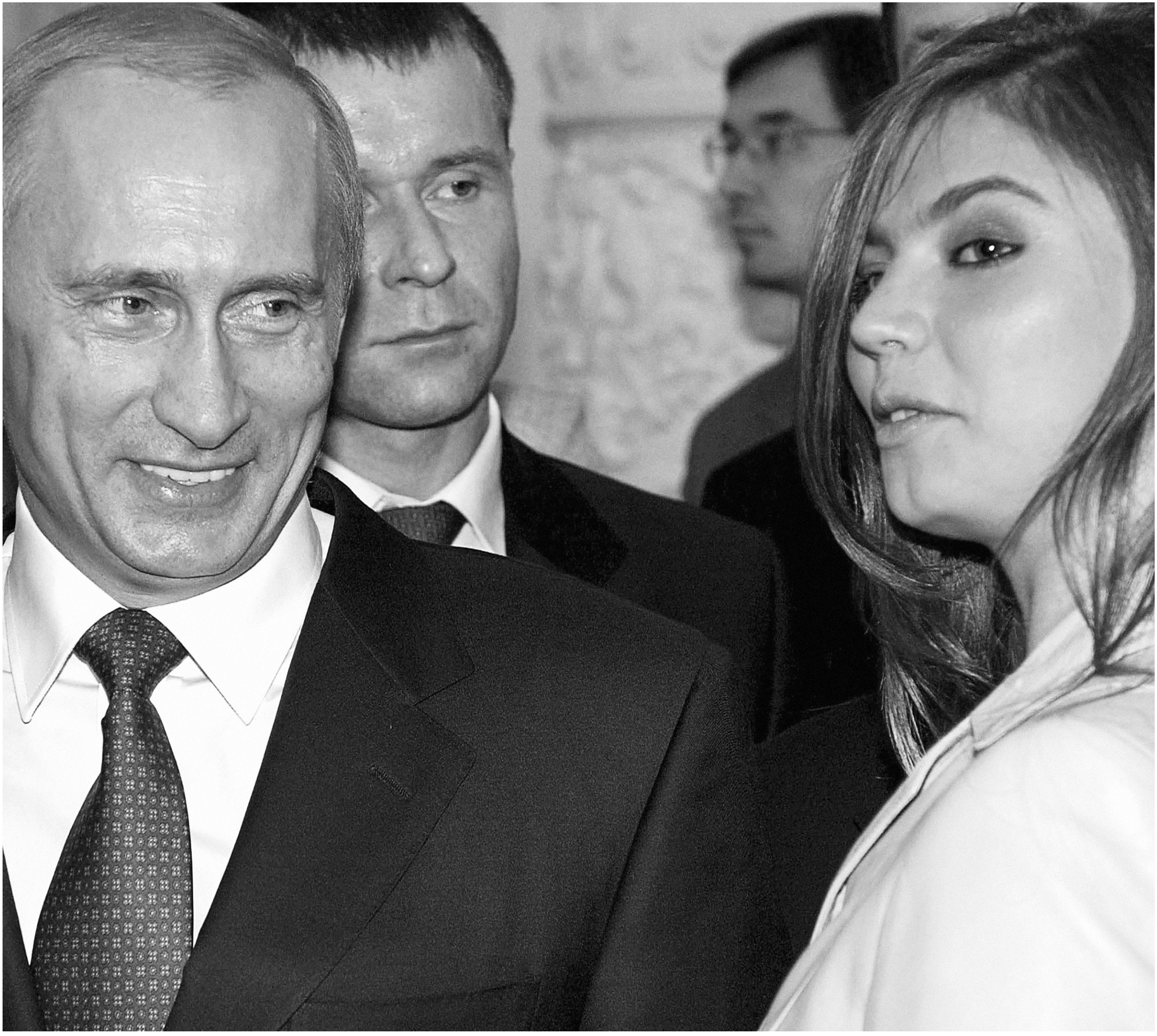
A rare photo of Russia’s President Vladimir Putin and Olympic gymnast Alina Kabaeva, who is rumoured to be his lover but is kept out of the domestic press
Credit: ITAR-TASS Photo Agency / Alamy
The president’s private life, talking about a divided Russia, suggesting the Soviets committed similiar crimes to the Nazis or causing any kind of religious offence are all out of bounds if you want an easy life in Russia. And many Russians do, says
“
I took the mic and said, “Yes, you are right, Russia can be divided into several different states” – and immediately the politician sitting next to me took my microphone away. “You are a provocateur,” he whispered to me, and turned to tell the audience that Russia is never going to fall apart, it is absolutely out of question, and the unity of the country is as valuable for him as an opposition activist as it is to the authorities.
The sociologist spoke next and repeated: Russia is not going to fall apart.
The political scientist said the same: Russia will always be united; we can’t even consider a different scenario.
I was surprised at first, but then I realised these are experienced people. You never know who will be watching the conference footage. If a Russian TV channel shows a Russian politician or a scientist saying Russia can fall apart, he will be in serious trouble.
Taboo topics in Russia are not a result of public discussion or public agreement. Nowadays, they are set by law. It is not the people who decides which topic is taboo, but a state official, sitting in his office.
New laws forbid inciting secession – to even talk about Crimea leaving Russia.
New laws forbid accusing the Soviet regime of having committed similar crimes as the Nazis during World War II.
New laws even forbid speaking about LGBT people and behaviours in a positive light near children.
Even death will not save you from persecution. Sculptor Vadim Sidur, who died in 1986, became a subject of a police investigation in August, after a group of religious fanatics smashed an exhibition of his work in Moscow. The exhibit, entitled The Sculptures We Cannot See, featured non-conformist works that had to be kept hidden in basements during the Soviet era, and included images of a naked Christ without a loin cloth. After charging the leader of the the protest with disorderly conduct, the police then ended up investigating whether the works of the sculptor were offensive. A bill that criminalised offending religious believers was signed into law by Putin in 2013, a year after the Pussy Riot group staged a protest in Moscow’s Christ the Saviour Cathedral.
Other taboo topics are not listed in statute. For example, discussing the personal lives of leading Russian officials, especially the president. Russia has a strong culture of tabloid newspapers, featuring all the juiciest bedroom stories and deadliest secrets, but they only dare deal with showbiz stars or opposition politicians. When a tabloid published a story about Putin divorcing his wife to marry a young Olympic champion in 2008, it was closed down the next day. Formally it was the newspaper owner, a former KGB general and now a banker, who took the decision to stop the publication, but the lines of power are not hard to see. Putin himself said of the story that he would not allow journalists to “stick their snotty noses” into his life.
When the whim of the president can so easily put restrictions on people’s work and life, they fall into step. Many people persuaded themselves Putin was in the right – his family has nothing to do with his political activities. This became a point of public agreement for the whole nation, a natural taboo that does not need any formal rules. People are afraid to talk about this topic and they believe it was their own decision not to.
When Putin became president, he said he wanted to keep his two daughters out of the public eye to protect them. At that time Russia was at war in Chechnya and terrorist attacks were not rare in Moscow. But that was 15 years ago. The girls have grown up, yet their lives remain top secret. In January 2015, I revealed on my blog that one of them, Katerina, has been living under a false name and is a professional dancer, running publicly funded projects at Moscow State University. The state is allocating huge amounts of money to the work, yet the largest Russian newspapers didn’t dare to openly write about the daughter of the president.
A system of voluntary rhetorical restrictions has become normal and accepted in Russia. Call it political correctness, Russian-style. The main difference is that this is not a device for protecting minorities, but to protect the majority. One can insult gays as much as one pleases, because the society does not see homophobia as something bad; on the contrary, a statement in support of gays will become an insult of public morals. You can say whatever you want about atheists, but you are in trouble if the clergy are insulted by your words.
And the list of whose feelings you cannot insult is increasing. Musician Andrey Makarevich has had his concerts cancelled since he began publicly opposing the annexation of Crimea. The most famous case of recent times was an audience poll on the Dozhd TV (TV Rain) channel, when, at the end of 2014, viewers were asked if they thought Leningrad should have been surrendered to Germany during World War II. After complaints, they amended their wording within minutes, but it was too late. As a direct result, various cable and satellite companies said, in January 2015, that they would no longer broadcast the channel. Nobody now dares to ask such questions.
These are the hallmarks of a closed society, but they also provide opportunities for potential revolutionaries. The more taboos there are, the wider the choice of topics is for starting a public conversation about ways to broaden the strictly limited horizon of public life within today’s Russia.
Translated by
The unspoken tradition
Death, illnesses and unhappiness are still also taboo, but these were not initiated by the authorities. In late Soviet times, power belonged to a generation of old sentimental men who survived the war and Stalin’s terror. They did not want to think about anything bad; they wanted to protect their grandchildren from unpleasant thoughts. If you watch any Soviet children’s movies, however much action there is, not a single child dies – that was an unspoken rule. In 1986, a joint Soviet-Japanese cartoon, Adventures of Lolo the Penguin, was released. It was the first time blood was seen on the screen in a Soviet children’s film.